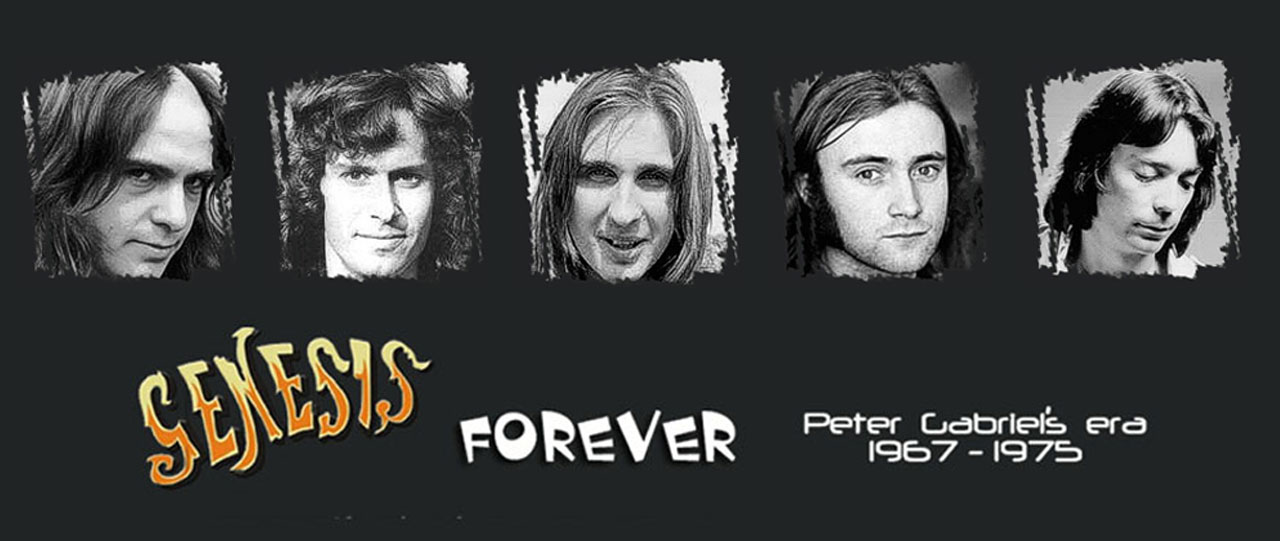


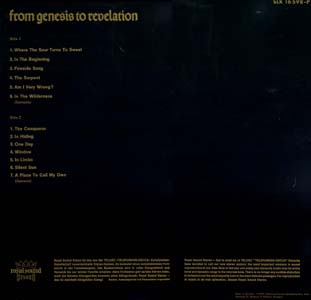
 It shows no or at best only the most minuscule traces of the style that would make them well-known later, and therefore frequently meets with a refusal and lack of affection. Justly so?


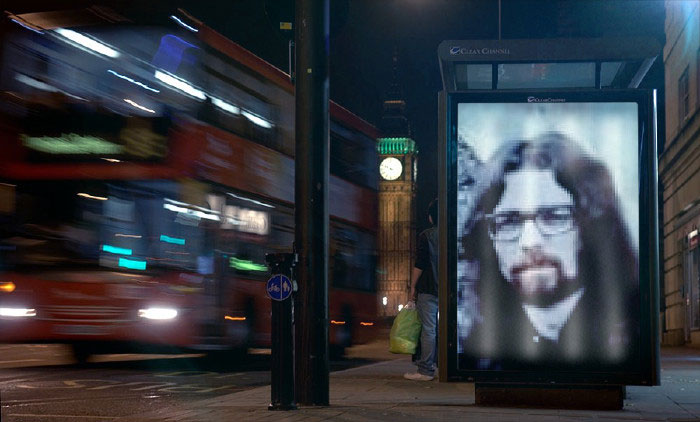

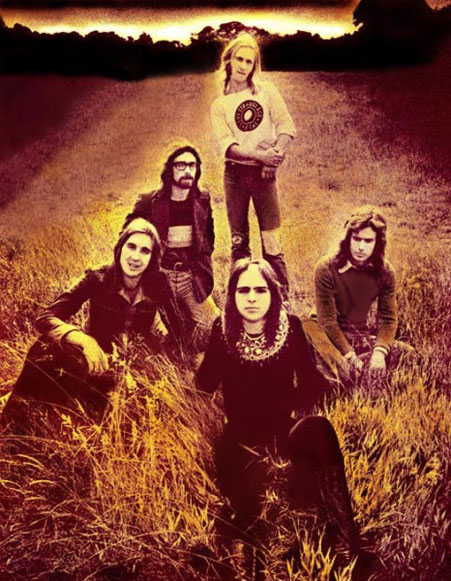




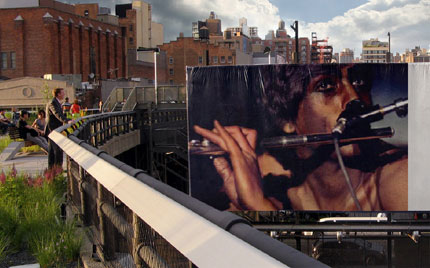
On Feb. 25th of 1977, former Genesis frontman Peter Gabriel released his solo debut album, his first of four untitled efforts (usually referred to as either "Peter Gabriel 1" or "Car," due to its rain-soaked-windshield cover image). The album was a commercial and critical hit, though Gabriel would go on to greater success on both fronts in the decade to come.
But the LP did spawn one of his best-remembered singles: "Solsbury Hill," a partly enigmatic, partly autobiographical personal statement that stands as one of the most immaculate pop/rock songs of the late '70s. Here are 10 reasons why the song still stuns today.
1. 7/4 Time. Writing a perfect pop song is hard enough, but writing one in an imperfect time signature is damn near impossible. The 7/4 stomp of "Solsbury Hill" is one of its indelible and striking features, that feeling of a beat missing in every measure giving the song a constant sense of struggle -- and subsequently, of endurance. The fact that it's always noticeable but never distracting is a tremendous accomplishment for Gabriel as a songwriter, and makes "Solsbury" a standout from the very beginning.
2. The heartbeat. Part of the reason the song's unusual time signature works is because it's all in the guitars -- that gorgeous spider web of an acoustic riff (played by Lou Reed and Alice Cooper guitarist Steve Hunter) circling the song's perimeter and providing its pristine, immediately recognizable framework. But if the guitars are undoubtedly the blood pumping through "Solsbury Hill," it still all stems from the beating heart of the drum thump, steady throughout, keeping the song even-keeled, marching forward and undeniably alive.
3. The flute hook. The list of iconic flute hooks in rock history is not a particularly long one, and is undoubtedly crowded with applicants from Jethro Tull, one of the few prog bands to match '70s Genesis for both popularity and pomposity. But "Solsbury Hill" keeps it simple: Four notes, a clarion-call sound-off at the beginning of each lyric, incandescent but not obnoxious. A lesser arrangement would've resorted to a trumpet, but the song is far too stately for such brassiness, and the flute's sturdy quiver is a perfect musical representation of the lyric's anxious confidence. Played by Gabriel himself, by the way, because he's just got it like that.
4. The scene-setting. Not even Martin Scorsese establishes the shot this well: "Climbing up on Solsbury Hill/ I could see the city light/ Wind was blowing, time stood still/ Eagle flew out of the night." Doesn't matter if you've never been within 500 miles of Somerset, England -- with those 28 opening syllables, you're right there with Gabriel, sharing in his moment of revelation. It's the first and only time the song's titular location is mentioned, but the mental image it invokes is burned in your mind for well longer than the four-minute runtime.
5. "My heart going, boom boom boom..." There's not really a chorus to speak of in "Solsbury Hill" -- a melodic shift at before the last four measures of each verse signifies the arrival of some kind of refrain, but there aren't many repeating lyrics, except for this line, which shows up in each of the three verses. (If you were to try to identify "Solsbury Hill" to a friend, you'd undoubtedly either try to sing the guitar riff or this lyric.)
It's a brilliant, understated through-thread for the composition: A moment of true fear and excitement, the onomatopoeic triplets resounding far greater than a more literal "my heart beating so fast" possibly could've. When performing the song live, Gabriel's drummer echoes the "boom"s himself; it's kinda redundant, since each word already echoes so loudly.
6. The guitar zooms. "Solsbury Hill" only builds in subtle ways. The song hits the round running -- launching right into its primary guitar riff, with its groove is already in cruise control by the end of the first measure -- and it stays relatively consistent throughout its runtime, with Gabriel and legendary producer Bob Ezrin merely adding thin layers of drums and synths for texture. But following the final verse and semi-chorus, a distorted guitar slide zooms in like a jet passing unexpectedly overhead, sending a chill down the song's spine -- a moment of release well worth the three minutes of acoustic tension leading up to it.
7. The outro yelping. The song closes by fading out on its central groove, though by then it's added enough new coats of flute, guitar and synth that it sounds more celebratory than ever before. That feeling of exhilaration and triumph is best demonstrated by the yelps, grunts and other non-verbals that start to scream out of each ear as the song draws to its end, like an entire village rejoicing in Gabriel's victory.
8. The trailers. Despite becoming a rock radio perennial, "Solsbury Hill" was only a minor hit upon its initial release, peaking at No. 68 on the Billboard Hot 100 in 1977. A big reason why the song lives on is due to its constant resurfacing in film trailers, particularly for coming-of-age dramedies like 2004's In Good Company, and more recently for 2016's blockbuster sequel Finding Dory. Because its melody and lyric have become such immediately identifiable shorthand for personal journey, the song always serves to make a film's central story feel inherently profound -- even helping to turn horror classic The Shining into a story of emotional growth and human connection in a viral faux-trailer from 2006.
9. It's about Genesis, but it doesn't have to be. The story of "Solsbury Hill" -- of personal epiphany, of hard decision-making, and of breaking free -- was unsurprisingly interpreted to be inspired by Gabriel's split from his old group, and the singer-songwriter has explained, "It's about being prepared to lose what you have for what you might get, or what you are for what you might be. It's about letting go." It makes sense, and it certainly enriches the song to know just why Gabriel was worried about his friends thinking he "was a nut," for making the risky choice to leave his best-selling group to go his own way.
But it doesn't really matter. The beauty of Peter Gabriel's first solo single isn't in its backstory, it's in its foreground -- every word and every note carrying the tingling feeling of inspiration, of the entire world being right there at your fingertips. Really, the details of Genesis' career arc feel like small potatoes within the realm of the song's grandeur, as would any other such literal explanation. Some songs just feel like they're about something greater, and "Solsbury Hill" is one of them.
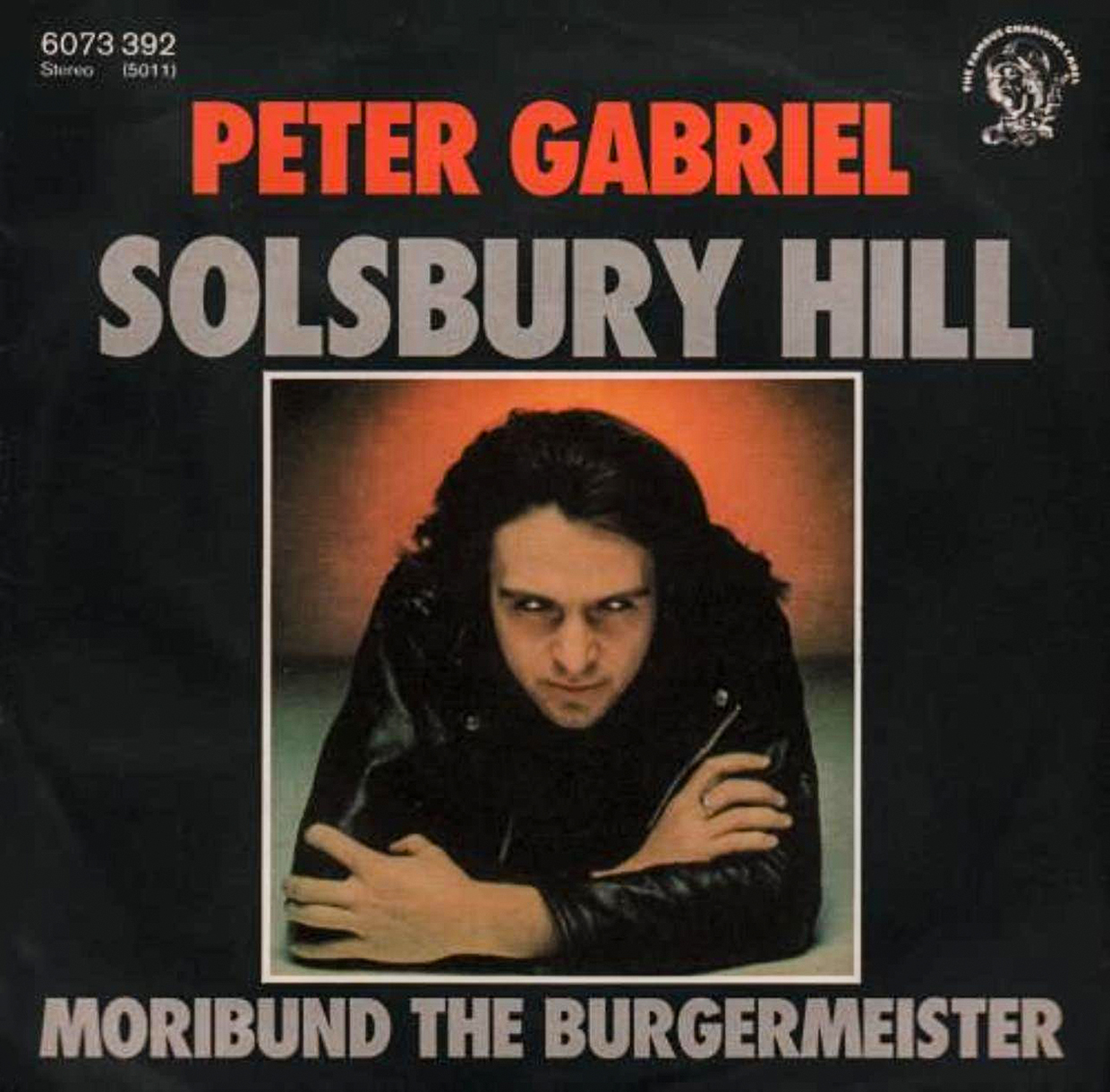
10. The single art.A bizarrely scowling image, with Halloween-esque credits and Gabriel brooding like Tommy Wiseaux, and the inelegantly titled "Moribund the Burgermeister" advertised as the B-side. If the single could become a classic with this as the cover, you know the song had to be goddamn good.
https://www.youtube.com/watch?v=WeYqJxlSv-Y
This montage of live performances of Solsbury Hill includes footage from Rockpalast (1978), Live in Athens (1987), Secret World Live (1993), Growing Up Live (2003), New Blood Live (2011) and Back To Front (2013).
Live concert releases available at PeterGabriel.com:
Back To Front Live ► smarturl.it/PG-BackToFrontLive
New Blood Live ► smarturl.it/PG-NewBloodLive
Growing Up Live ► smarturl.it/PG-GrowingUpLive
Secret World Live ► smarturl.it/PG-SecretWorldLive
Live in Athens 1987 ► smarturl.it/PG-LiveinAthens1987
Solsbury Hill was Peter's fist solo single and features on his debut, self-titled album, that was originally released in 1977. It's been a firm live favourite ever since as this video shows.