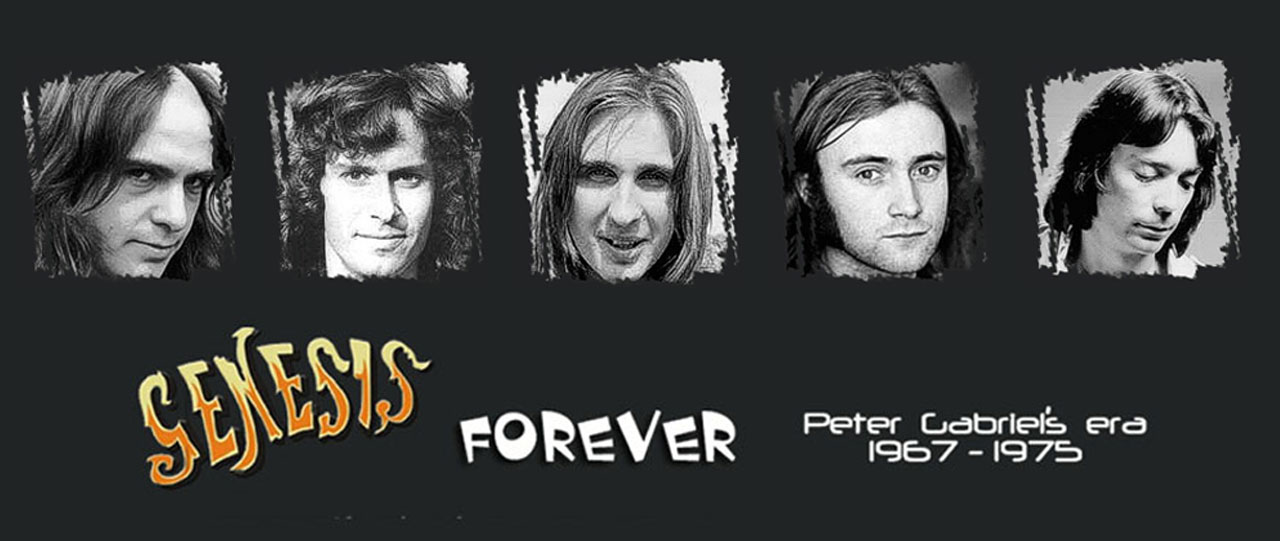


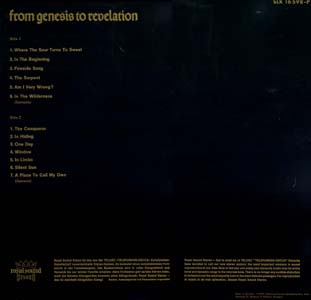
 It shows no or at best only the most minuscule traces of the style that would make them well-known later, and therefore frequently meets with a refusal and lack of affection. Justly so?







Virtuoso - The Lamb Collectors Reviews

The Ultimate Lamb

The Lamb In Phoenix

Something Inside Me

Providence Lamb

Maple Leaf Lamb

Lamb In Los Angeles
Lakeland Civic Center Concert Hall, Lakeland, FL – January 11th, 1975
Disc 1 (49:19): The Lamb Lies Down On Broadway, Fly On a Windshield, Broadway Melody Of 1974, Cuckoo Cocoon, In The Cage, The Grand Parade Of Lifeless Packaging, Rael’s Story (part 1), Back In N.Y.C., Hairless Heart, Counting Out Time, The Carpet Crawlers, The Chamber Of 32 Doors
Disc 2 (66:39): Rael’s Story (part 2), Lilywhite Lilith, The Waiting Room, Anyway, Here Comes The Supernatural Anesthetist, interlude, The Lamia, Silent Sorrow In Empty Boats, The Colony Of Slippermen, Ravine, The Light Dies Down On Broadway, Riding The Scree, In The Rapids, It, The Musical Box
Virtuoso have been plumbing the Genesis Lamb soundboards the past year and Ultimate Lamb is the latest. Using the second of what are called the Mike Rutherford soundboards, this captures the Lakeland Florida show on January 11th, 1975. It was utilized on From One Fan To All Others (Stonehenge STBX 016/STBX 017/STBX 018) and The Lamb Lives (Backstage BKCD 033/034) in varying degrees of quality. Virtuoso
“For nearly 20 years, avid ‘Lamb’ fans did not have much to rejoice about as far as live recordings were concerned. One of the Los Angeles performances was recorded by the King Biscuit team, one of the Wembley shows was recorded by the BBC, but in both cases only highlights of the concert ever reached the airwaves. As for audience recordings, only a handful (and often not the best) emerged as bootleg LPs, none of them offering a full ‘Lamb’ show, complete with encores. Patient fans had to wait until the mid-nineties for some full ‘Lamb’ live recordings to finally surface. The two most notorious shows to appear on bootleg CDs at the time were soundboard recordings of two Florida concerts: West Palm Beach, recorded on January 10th 1975, released by the Oxygen label under the title of ‘The Lamb Descends On Waterbury’ (???), and Lakeland, from January 11th 1975, released on the Backstage label under the title of ‘The Lamb Lives’. It is now known that both these recordings were doctored with patches used to fill in some missing segments but, at the time, the release of both CDs came as a welcome surprise for all Genesis fans. For the first time, fans could finally hear a full ‘Lamb’ performance presented in fantastic sound quality.
Maple Leaf Gardens, Toronto, ON – December 16th, 1974
Disc 1 (65:12): The Lamb Lies Down On Broadway, Fly On A Windshield, Broadway Melody Of 1974, Cuckoo Cocoon, In The Cage, The Grand Parade Of Lifeless Packaging, Rael story part 1, Back In N.Y.C., Hairless Heart, Counting Out Time, Carpet Crawlers, The Chamber Of 32 Doors, Rael story part 2, Lilywhite Lilith, The Waiting Room, Anyway, Lamia, Silent Sorrow In Empty Boats
Disc 2 (33:40): The Colony Of Slippermen, Ravine, The Light Dies Down On Broadway, Riding The Scree, In The Rapids, It, The Musical Box, Watcher Of The Skies
Maple Leaf Lamb contains an excellent and atmospheric soundboard recording from the Toronto show on the Lamb tour. The audience sound very far away and the keyboards tend to dominate the mix in favor of the guitar (which is unfortunately normal for Genesis), but the vocals and drums are very clear and there is really nice detail in the performance. There are two big cuts in “Anyway” leaving only a fifty-eight second fragment and eliminating “The Supernatural Anesthethist” and a cut in “Lamia’ which eliminates all but the final verse and guitar solo. The other major cut in the tape is most of the first encore “The Musical Box” leaving only the final fifty-four seconds. These cuts are very strange and raises the question of what the sound engineers were doing during the performance? Nevertheless it is a bonus to have what we do have since the sound is great.
Western New York and eastern Ontario, between Buffalo and Toronto, has been a stronghold for Genesis fandom since the early days of the band and is a love that has never waned. Most of the shows on the tour were booked in theaters, but such is the devotion that when Genesis played Toronto they were booked in one of the biggest arenas of the entire tour. The bigger arena probably had an effect on the playing at the beginning of the show since they get off to a very sluggish start. “The Lamb Lies Down On Broadway,” which normally starts as a fanfare for the piece, sounds more like a tentative dirge lacking in energy and excitement. Steve Hackett has a nice performance in “Fly On A Windshield.” Steam is picked up for “Cuckoo Cocoon.” Some say that Tony Banks flubs his solo in “In The Cage” but he plays it fine. He does apply a deep echo however giving a vague feeling to the song. Phil Collins plays this in arena rock mode eschewing any kind of subtlety.
Gabriel’s first Rael story is a straightforward summary of the narrative in the up coming numbers. “Back In N.Y.C.” sounds weak but Hackett, who is the star of this show, really shines on “Hairless Heart,” playing with both passion and restraint. The “Carpet Crawlers,” with Bank’s chromatic keyboard theme is always one of the highlights of the show and is one of Genesis’ most glorious creations. They play it to perfection in Toronto. Gabriel continues the narration in the second Rael story “The Chamber Of 32 Doors.” He makes a humorous observation when, in describing Rael’s transformation into the Slipperman, he says, “and this neat little affair concludes by Rael eating what is left of their bodies. Which in turn turns him into an ugly, lumpy, bumpy, humpy species of humanity. Not totally dissimilar to Mr. Phil Collins here on my left.”
“The Waiting Room,” between Hackett’s squealing guitar and Gabriel’s flute, has a very strong early King Crimson sound to it before Banks comes in with the melody. “The Colony Of Slippermen” is the opportunity for Gabriel to ham it up in the costume, but the show loses momentum about this time too as the show limps through “The Light Dies Down On Broadway.” It is a shame most of “The Musical Box” is missing because, judging by the final minute, it sounds like a great version. Also very good is the second encore “Watcher Of The Skies.” Collins in particular punctuates the doom laden mellotrons with creative drumming bring a new dimension to the piece. Maple Leaf Lambis packaged in a double slimline jewel case with excellent artwork. The colorful picture on the front of the Lamia pyramid is gorgeous to see. Overall, despite the missing pieces of the show, this is another very good Lamb soundboard to have.
Civic Plaza Assembly Hall, Phoenix, AZ – January 28th, 1975
Disc 1 (48:55): The Lamb Lies Down on Broadway, Fly On A Windshield, Broadway Melody of 1974, Cuckoo Cocoon, In The Cage, The Grand Parade of Lifeless Packaging, Rael’s story, Back in N.Y.C., Hairless Heart, Counting Out Time, The Carpet Crawlers, The Chamber of 32 Doors
Disc 2 (65:33): Rael’s story, Lillywhite Lilith, The Waiting Room, Anyway, The Supernatural Anaesthetist, The Lamia, Silent Sorrow in Empty Boats, Colony of Slippermen, Ravine, The Light Dies Down on Broadway, Riding the Scree, In the Rapids, It, The Musical Box
The first Lamb show in the west was in Boulder Colorado on January 20th. Genesis then played several shows in California before coming to the Civic Plaza Assembly Hall in Phoenix, their only Arizona date. The Lamb Lies Down In Phoenix utilizes the third tape to surface of this show, the almost complete soundboard recording. It first surfaced on Civic Plaza Assembly Hall (Satellite 6 SAT0108-A/B) in very similar sound quality.
On the whole the tape is well balanced except for times when Peter Gabriel’s mic cuts out by the second half. The first four seconds of the show are missing, there is a tape flip at 4:11 in “The Waiting Room,” and Gabriel’s story before “The Musical Box” is missing. The only real difference between this and the Satellite 6 release is Virtuoso handle the cut better.
The engineers who made the tape knew what they were doing by raising the different instruments higher in the mix when there is a solo or emphasis. At times Banks’ keyboards dominate the mix, at others Hackett on guitars and still Phil Collins’ drums.
The double album rock opera was released on November 29th, 1974 and Genesis spent the greater part of three months touring in the US before bring the show to Europe. Phoenix occurs four days after the popular Los Angeles show and is in the final week of shows.
An article from the March, 1975 Circus magazine contained an article written before the tour.
“Blue denim delinquent: American rock audiences at first had been inclined to heckle Peter’s subtly atmospheric monologues, chattering during the quieter mood-building instrumental passages. After three carefully planned tours, however, even the most skeptical concert-goers were entranced by Genesis’ dramatic representation of ‘The Musical Box’ and Peter’s breathtaking flight through the air at the climax of ‘Supper’s Ready.’ Now The Lamb Lies Down On Broadway (on Atco) had replaced those old favorites, and even Peter’s image had changed drastically. He had cropped his long locks and combed them over his bald streak.
“His sleek black jumpsuit had given way to sneakers and bluejeans. Though the band had given their all to provide a totally entertaining reenactment of some of their most imaginative songs ever, the insistent question remained. Aside from the success of their first few concerts with The Lamb, could Genesis convince the world’s largest rock audience to take an extended trip into an unfamiliar fantasy world?
“Back in his Manhattan hotel room, Peter admitted to Circus Magazine that Genesis had had their doubts about presenting the entirety of their recent double album as the basis for the most important tour of their career. ‘We were quite worried about introducing the whole of The Lamb to audiences all at once. This new show is very experimental for us,’ Gabriel acknowledged, biting into a banana. ‘In the past we’ve tried to introduce new material in twenty-five minute segments, phasing it in with the better known songs gradually.
“It’s also been difficult achieving a balance between the musical performance and the triple-screen slide presentation that helps the listener to visualize Real’s story more easily. The slides are a much stronger element than ever before, and to a certain extent, they’re an additional risk. They shift attention away from my performance somewhat, although now that I’ve worked with them onstage, I think they do provide an interest-point when the going gets a little heavier lyrically.'”
The opening “The Lamb Lies Down On Broadway” sounds a bit tentative, but “Fly On A Windshield” sounds incredible. Even though the audience sounds far away in this recording, several shouts are audible at the very beginning of “In The Cage.” The first Rael story, about the main character buying the book about finding erogenous zones, is very straightforward and lacking in the wit that would be obvious in later shows.
“Back In N.Y.C.” is very strong, but “Counting Out Time” sounds very interesting with the contrast between Banks’ goofy percussion and Hackett’s violent guitar lines. The tension is thankfully released with a gentle version of “The Carpet Crawlers.” In the second Rael story Gabriel gets into impromptu rhyming by saying, “Those of you familiar with the affliction of drummers will know perhaps that the only way these lumps and bumps can be successfully removed is by the severing of the sexual organs. Performed in the colony of Slippermen by the notorious Dr. Diper the reformed sniper who for a very small fee will guarantee to remove your very own windscreen wiper.”
The second half of the show begins with “Lillywhite Lilith.” Both Gabriel and Collins sing along which only makes sense since this was the first song Collins wrote with the band when he joined in 1971. During the surreal “The Waiting Room” Steve Hackett plays a bit of the fast guitar riff of “Dancing With The Moonlit Knight.”
The beginning of “The Lamia” is cut but the track is still over eight minutes long. The vocals are a bit obscured in “The Colony Of Slipperman” since Gabriel was wearing the bulky suit, and he also messes up the lyrics to “The Light Dies Down On Broadway.” He forgets to sing “The gate is fading now, but open wide, But John is drowning, I must decide Between the freedom I had in the rat-race, Or to stay forever in this forsaken place” and sings the second verse again: “Subway sounds, the sounds of complaint The smell of acid on his gun of paint. As it carves out anger in a blood-red band, Destroyed tomorrow by an unknown hand.”
Some shows on The Lamb tour had two encores, but all three Phoenix recordings reveal that only one, “The Musical Box,” was played. Gabriel’s story is cut out but a but of dialogue is present when the tape cuts in: “…take two. This is a trip we learnt in…ah, how to build suspense. It stars the occasional part of Nick the roadie.” Obviously there was a malfunction with the equipment and Gabriel resurrects the Nick the roadie sketch from the Selling England By The Pound tour.
The encore set in the Lamb shows always sound like a celebration by the band for getting through their rock opera and some of the best versions of the classics can be found on these tapes. This version of “The Musical Box” is better than most any other version played in Italy three years before. It is a great ending to a great show.
Palace Theater, Providence, RI – December 8th, 1974
Disc 1 (50:33): Intro, story of Rael part 1, The Lamb Lies Down On Broadway, Fly On A Windshield, Broadway Melody Of 1974, Cuckoo Cocoon, In The Cage, The Grand Parade Of Lifeless Packaging, the story of Rael part 2, Back In NYC, Hairless Heart, Counting Out Time, Carpet Crawlers, The Chamber Of 32 Doors
Disc 2 (78:55): the story of Rael part 3, Lilywhite Lilith, The Waiting Room, Anyway, Here Comes The Supernatural Anaesthetist, The Lamia, Silent Sorrow In Empty Boats, The Colony Of Slippermen, Ravine, The Light Dies Down On Broadway, Riding The Scree, In The Rapids, It, the story of Henry and Cynthia, The Musical Box, Watcher Of The Skies
Genesis’ Providence show on the Lamb tour occurs within the first week of the tour the night after the big New York show. An excellent quality audience recording has been in circulation and is the source of all the previously released silver pressed titles including Brother John Is Number Nine (Alternative Recording Company GNV018), Rael Imperial (Highland HL059/60#G7), From One Fan To All Others (Stonehenge STBX 016/STBX 017/STBX 018), and The Lamb Lives (Backstage BKCD 033/034).
Providence Lamb utilizes the newly circulated Dan Lampinski tape which, like the others, is simply spectacular. It picks up with extreme clarity every note from the stage and also the dynamics of the performance with only a cut at the beginning of “The Chamber Of 32 Doors.” The virtue of Lampinski’s tapes are their ability to convey the
It was a snowy evening in Providence that night. Gabriel explains the delay at the start of the show due to the leak in the ceiling allowing rain to fall onto the stage. An interesting anecdote regarding the show was posted: “Another little tidbit of info on this show from Dan Lampinski’s brother. It was a miserable night in Providence with snow and then heavy rain. Peter Gabriel refers to the rain leaking through the roof directly over the stage.
“It was quite a delay until the rain stopped and the tarps were removed from the gear. What Mr. Gabriel doesn’t tell you is that directly across the street from the theater was a Dunkin Donuts. Genesis arranged for dozens and dozens of donuts and gallons of coffee to be brought into the lobby, all for free because of the delay. Dan convinced me to go to this concert despite the fact that I had no idea what the Lamb was. I was mesmerized and to this day I still say it was the single best concert I have ever seen.”
The tape opens with Gabriel explaining to the audience why there is a delay, point out the rain falling on the equipment about the advertising for the show which “was something appropriate to bullshit…” Once the music gets underway they deliver a very powerful and aggressive Lamb, probably due to frustration. This is particularly evident with Hackett in his early numbers “Fly On A Windshield” and “Hairless Heart.”
Gabriel on the other hand sounds quite vulnerable in “Cuckoo Cocoon” and “Carpet Crawlers.” This tape is very good at picking up his and Collins’ distinct voices in the latter as they sing the lines together.
It is in the second Rael story before “Lilywhite Lilith” where there are loud crackling noises and Gabriel jokes about “raindrops keep falling on my synthesizer.” The middle section of the narrative has some of the best moments on this tape with Gabriel’s descriptive vocals concerning the Lamia. His vocals are clear in the Slipperman too which sometimes is obscured by his massive costume. The show ends with two very good encores, a very heavy thirteen minute version of “The Musical Box” and eight minutes of “Watcher Of The Skies.” Providence is one of the most well known Lamb shows which it deserves and Virtuoso did a good job with pressing onto silver this excellent sounding tape.
Shrine Auditorium, Los Angeles, CA – January 24th, 1975
Disc 1 (64:12): Introduction Rael Story (Part 1), The Lamb Lies Down On Broadway, Fly On a Windshield, Broadway Melody Of 1974, Cuckoo Cocoon, In The Cage, The Grand Parade Of Lifeless Packaging, Introduction Rael Story (Part 2), Back In N.Y.C., Hairless Heart, Counting Out Time, The Carpet Crawlers, The Chamber Of 32 Doors, Introduction Rael Story(Part 3), Lilywhite Lilith, The Waiting Room, Anyway
Disc 2 (62:39): Introduction Rael Story (Part 4), Here Comes The Supernatural Anesthetist, The Lamia, Silent Sorrow In Empty Boats, The Colony Of Slippermen, Ravine, The Light Dies Down On Broadway, Riding The Scree, In The Rapids, It, Watcher Of The Skies, The Musical Box
When Genesis’ Los Angeles Lamb show surfaced on Wolfgang Vault many year ago, it ended years of complaints and consternation over the fate of one of the band’s most famous shows. Much of the show was released officially in 1998 but missing the encores and with overdubs in the vocals, guitar and, some argue, in the organ as well.
The Lamb Rock Opera (Vintage Masters Premium Series VM-008A/B) was a tremendous release when first issued in 2007. Lamb Master In Los Angeles is a very nice upgrade. The sound is more lively and Virtuoso addressed the minor imperfections on the tape such as the reel noise and the small cuts in the second half.
The band sound nervous but hit a good stride with “In The Cage”, one of their favorite stage numbers that stayed in the set-list for the next twenty years (give or take a tour or two). “At this particular point in the story our hero Rael is moving underground in an almost perfect reconstruction of the streets of New York City. And with his childhood memories he begins to think about his first romantic adventures….” before speaking about the erogenous zones before “Back In N.Y.C.” Many have pointed out the performance of “Back In N.Y.C.” as being quite poor, but Gabriel spits out the lyrics with particular venom.
“Hairless Heart” is one of the big Steve Hackett numbers, one he plays even now on his solo tours, but this version sounds slightly tentative and is obvious why Hackett chose to re-record his part for the official release. “Carpet Crawlers” is an all-time classic rendition with Tony Banks delivering a particularly poignant version of the latter.
In the third Rael story Gabriel picks up the narrative, speaking about the hero being lead by Lilywhite Lilith into a cave and Rael seeing the bright light filling the room. In general, travelogue instrumentals are difficult to pull off given the high probability of being too obscure.
But “The Waiting Room” works very well in this place between the straight recitative of “Lilywhite Lilith” and the introspective “Anyway.” “Mr. Phil Collins on my radiant left” he says afterwards. Gabriel’s final Rael story is as obscure as the narrative of the piece, speaking about “windscreen wipers.”
“Here Comes The Supernatural Anesthetist” is the beginning of the finale and features Gabriel sharing vocals with Collins augmented by Hackett’s delicate melodies. Two firecrackers go off near the beginning of “The Lamia”, which is an eight minute long piece which reiterates musical themes from earlier in the work in a hazy, dreamy fantasia. “The Colony Of Slippermen: The Arrival” elicits two cheers from the audience.
The first is when Gabriel arrives onstage wearing the costume, and the second is when the genitalia become deflated. The vocals during this piece are louder than the others, probably because he had to hold the mike close to his mouth in the enormous costume. “The Light Dies Down On Broadway” is a reprise of the title song but in a slower, sadder key until the work ends with the up-tempo closer “It.”
This isn’t the best version since Collins drops his sticks in the middle of the piece. Genesis rewards the Los Angeles audience with two encores, “Watcher Of The Skies” and “The Musical Box.” Some have called the latter one of the best versions of the classic and it is certainly very good. Bits of “The Colony Of Slipperman” and “The Musical Box” surfaced a couple years ago on a German television show which confirms this concert was also professionally filmed.
Virtuoso have released several very good Lamb shows in the past couple of years, but this may be their best achievement. This is the best sounding release of the famous show and is worth having.