

 It shows no or at best only the most minuscule traces of the style that would make them well-known later, and therefore frequently meets with a refusal and lack of affection. Justly so?







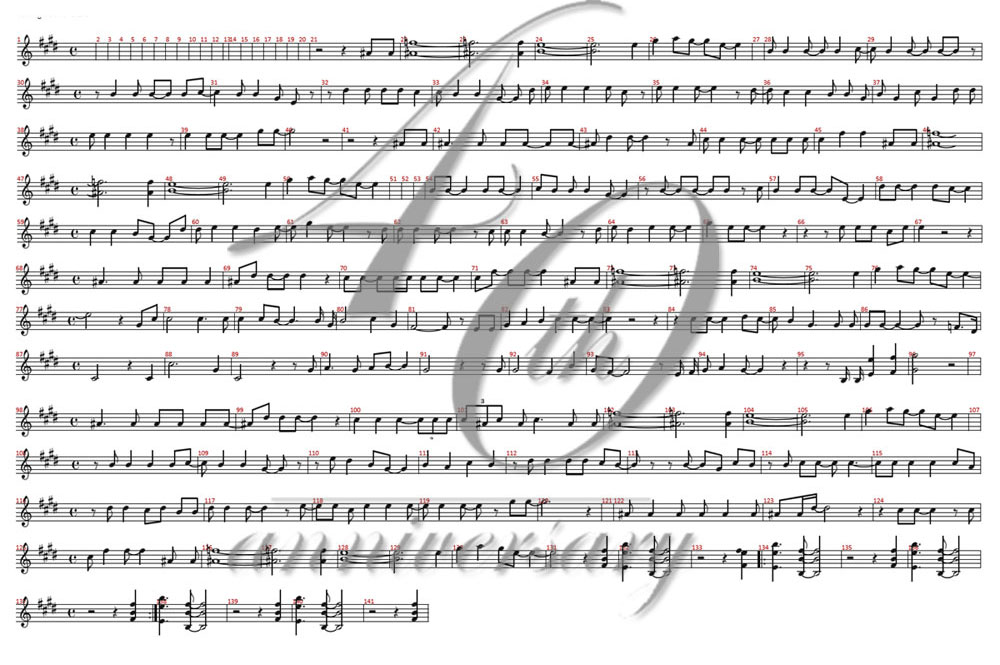
Analysis: Lamb series introduction/impetus
This is the "intro" examination of the title track of the Genesis Archive re-tracked 1975 Live Lamb LA concert, released in 1998.
For more about the 1998 Peter Gabriel re-tracking of Genesis' Live Concert at the Shrine Auditorium, in LA, in 1975 - - Part 2 is the side-by-side, phrase by phrase breakdown of WHICH Peter G. is singing the song, and WHERE !
**Genesis engineering guru Nick Davis used manual trigger points on a Sony 3348 machine's internal memory to accomplish these amazing edits - and not ProTools non-linear digital editing. AMAZING!. Note: Gabriel's RealWorld Studios is located in Box, England near Bath. This is where the pick-up vocals were cut...but, Nick Davis "married" the Live Shrine track with Peter and Steve's flown-in material at The Farm, in Surrey.**
Analysis/Comparison: Lamb (Title Track) Part 2
An insightful look into the re-tracking of the Gabriel-era Genesis live performance at L.A.'s Shrine Auditorium, in 1975 - for the 1998 Archive 1 collection release.
This NON-commercial, educational video delineates how Genesis' editing guru - Nick Davis - collaborated with Peter Gabriel & his Real World Studios to fly-in partial-phrase replacements - utilizing the internal memory of a Sony 3348 Digital Tape deck (in an era just prior to the widespread advent of ProTools DAW computer-editing systems). Incredibly difficult and painstaking work - at The Farm, in Surrey!
Analysis: Fly on a Windshield
continuation of the comparative analysis series - highlighting the "restored" portions of the 1975 Shrine Auditorium historic concert of the Lamb. Gabriel and Hackett were called upon to  do partial re-trackings of their respective vocal and lead guitar parts, in 1997 - due to injury and technical problems on the night of the actual concert.
It was the only "dry" multitrack recording made on the tour which was Peter Gabriel's last with his originating group.
Accompanying the musical analysis are many of the photographs taken at the (also) historic set of concerts in Cascais, Portugal - which occurred shortly after the country's Carnation Revolution (bloodless coup).
Analysis: Broadway Melody of 1974
A stroll through a image-laden, historical cavalcade of fading American Pop Culture icons..thanks to the Gabriel-penned, allegorical-based "Broadway Melody of 1974" from Genesis' Lamb Lies Down on Broadway (restored Shrine Auditorium version - contained on their Archive 1 collection, released in 1998). There was no vocal re-tracking by the 47-year-old Gabriel on this version..only digital restoration....so I go through the historical perspectives - complete with informational backgrounders mentioned in each line of this metaphorical song.
Many thanks to Kevin Holm-Hudson (author of the superlative "Genesis and the Lamb Lies Down on Broadway/Ashgate Publishing)...and all the anonymous internet authors who have provided key insights and opinions as to understanding this unique rock opera.
This is a NON-commercial, educational video...meant to elucidate upon the extraordinary genius of 5 brilliant young 24-year-old men, in their musical prime!
Analysis: Back in NYC
A serious, in-depth examination of the FULL vocal re-tracking of "Back in NYC" - for 1998's Archive 1. I both compare it with the original recording (done live off the soundboard of LA's Shrine Aud. in Jan 1975) and go more deeply into the reasons behind this Gabriel-based concept leading Genesis to experiment with American Pop Culture and its Proto-Punk era. Also, covered is the underlying philosophical underpinnings of Carl Jung and the Tibetan Book of the Dead (a Gabriel fav read at the time of the writing of the Lamb) and how this is a guide for the surreal story's protagonist - Rael.
Analysis: Cuckoo Cocoon
A continuation of the series of the re-tracked 1975 Live Shrine Auditorium recording of "The Lamb Lies Down on Broadway"...analyzing and comparing the original with that of the Archive 1 collector edition version (which featured "flown-in" updated vocals & flute performances by the then 46-year old Peter Gabriel).
I also go over the possible impetus and meaning of the song's lyrics...and how it relates within the Hero's Journey of Rael.
Analysis: In The Cage Part 1
This is Part 1 of my analysis of the powerful "In The Cage" - complete with a Phil Collin's 3 Sides Live comparison audio clip,
Part 2 provides a side-by-side comparison of old and new Gabriel tracks...
Analysis: In The Cage Part 2
A side-by-side comparison of the Gabriel re-tracked 1998 Archive version of "In The Cage" with its live Shrine Auditorium counterpart. Also included is a short discussion of the possible existential/philosophical references PG built in to the lyrical content of the Lamb.
Analysis: Grand Parade of Lifeless Packaging
A demonstration/discussion analysis of the Live/Re-tracked version of the "Grand Parade of Lifeless Package" - 1975's Shrine Auditorium King Biscuit concert versus the 1998 re-tracked Genesis: Archive version of this same concert. Also addressed - the controversial involvement of Brian Eno in the Lamb project.
Analysis: Carpet Crawlers Part 1
A re-edit w/new non-linear supporting audio clips to refine what you hear over my studio's JBL speakers. Please use headphones or earbuds to fully appreciate this aural boosting!
This is the demonstration/comparison of the 1998 vocal re-tracking of the song "Carpet Crawlers", by Peter Gabriel, for the Genesis Archive 1967-1975 compilation.
Analysis: Carpet Crawlers Part 2
The demonstration/comparison of the 1998 vocal re-tracking of the song "Carpet Crawlers", by Peter Gabriel, for the Genesis Archive 1967-1975 compilation. These newer vocal tracks were integrated into the ONLY multi-track recording made of The Lamb Lies Down On Broadway tour - L.A.'s Shrine Auditorium, in January 1975. PG had partial laryngitis (his lower register), Steve Hackett was recovering from a severed tendon, in his hand..so both re-tracked some their work, for the release of this "Live" recording. For Gabriel, this represented nearly 80% of his vocals - which Nick Davis (utilizing the internal memory of a Sony 3348 digital tape deck & 1997 Sonic Solutions DAW (early) non-linear digital editing) expertly "sewed in" the 47-year-old voice into the already existing Live audio envelope, created in 1975 at the Shrine. Really impressive editing work...not to mention PG's challenge to sing in the same key/emotional range as his 25-yr-old self!
This analysis is meant to show WHY he decided to re-track his vocal parts (due to the laryngitis)..and how it was meant to be the only way he & Genesis could give us fans a "Lamb Reunion", of a kind.
Analysis: Anyway
An Analysis of multiple restorations of the song "Anyway" from the only 16-track recording made of the original Lamb Lies Down on Broadway concert tour (Jan 1975, Shrine Auditorium, Los Angeles):
Comparing the TWO, different restorations by Genesis' Engineer/Curator - Nick Davis - Archive 1 Collection & Genesis Live (2009 digital re-mastering for Live Box Set) with that of the original Shrine recording.
Analysis: Lamia
A side-by-side comparison & analysis of the live LA Shrine Auditorium 1975 concert performance of "The Lamia" with that of its counterpart - the re-tracked version of Genesis Archive release of 1998 (vocal and guitar solo re-tracked by Misters Gabriel and Hackett).
Analysis: Colony of Slippermen Part 1
This is a companion video to the video, below: it's fun and insightful look into the Nick Davis directed re-tracking process of the Gabriel-era Genesis' live concert presentation of the "Lamb Lies Down On Broadway" - a the Shrine Auditorium (in LA, Jan 1975). I describe what led up to the (then) 47-yr-old Gabriel re-tracking nearly 80% of his 25 year old self's vocals & how could have done it, back in 1998, had they had today's ProTools program.
Analysis: Colony of Slippermen Part 2
A side-by-side comparison of the full Genesis song "Colony of Slippermen" from the live recording of "The Lamb Lies Down On Broadway" (Shrine Auditorium LA 1975) with the vocally re-tracked version Peter Gabriel voiced at his RealWorld Studios, in 1998 (for Archive Genesis 1967-1975 set). Gabriel's voice was hampered by both a cumbersome full-body costume (and suffering from partial laryngitis) during this live date - which led him to re-cutting this song...and a majority of the others, as this was the ONLY multi-track recording made of the live Lamb Tour, in 1974/75. Enjoy!
 One of rock's more theatrical bands comes up with its most musical LP to date, showing they can come over just as well on record as on stage with this semi-concept LP. Highlights are the recognizable Peter Gabriel lead vocals and the strong organ instrumental backup. Band sometimes sounds like some of the "electronic" British groups, but on this double package they show themselves more as a skilled rock group whose instrumental trickery is a means to the good music end. Several possible singles here, but expect strongest play to come from the FM markets.
- Billboard, 1974.
I wanted to call this the most readable album since Quadrophenia, but it's only the wordiest -- two inner sleeves covered with lyrics and a double-fold that's all small-type libretto. The apparent subject is the symbolic quest of a Puerto Rican hood/street kid/graffiti artist named Rael, but the songs neither shine by themselves nor suggest any thematic insight I'm eager to pursue. For art-rock, though, it's listenable, from Eno treatments to a hook that goes (I'm humming) "on Braw-aw-aw-aw-aw-aw-dway." B-
- Robert Christgau, Christgau's Record Guide, 1981.
The most successful album for Genesis was, whisper it, a concept album; a loose concept though, more a fantasy of adolescent preoccupations put to music. The trouble with fantasy, except in the hands of an exceptional story teller, is that the images and allusions are private, understood and of real significance to the author alone. Effort taken to delve into the meaning of The Lamb Lies Down... could well be time wasted but both Gabriel's essay/story and lyrics are printed in full in the booklet making them amenable to further study.
The complicated staging for The Lamb Lies Down... was taken to America and broke the band there in a big way. It came as a major surprise therefore that this was the last album recorded by Gabriel.
Compact Disc certainly makes far more of the scene-setting sonic interludes produced for the album by Brian Eno than vinyl ever did. The recording however was not the most technically advanced for its time.
- David Prakel, Rock 'n' Roll on Compact Disc, 1987.
This, the last Genesis album with Peter Gabriel, is a sprawling two-disc thematic album concerning a character named Rael. Keeping with that theme, it includes pastiches of Broadway show music, plus the group's typical mixture of folk, rock, and classical influences. If this is not the first Gabriel Genesis album to buy, it ultimately may prove the most satisfying. * * * * *
- William Ruhlmann, The All-Music Guide to Rock, 1995.
Because its narrative is fairly oblique, The Lamb Lies Down on Broadway works as a flowing, almost formless concept piece, a musical journey rather than a dogmatic treatise. * * * * 1/2
- Gary Graff, Musichound Rock: The Essential Album Guide, 1996.
In its prime, this English prog band set the standard for concept albums with this weird, wild but incredibly coherent tour de force. An art-rock classic among theatrical, story-driven efforts, if a trifle bloated and pretentious, this intense double record was an epic swan song for charismatic singer Peter Gabriel before, some disgruntled fans say, "Phil Collins turned the group into a shallow hit machine." * * * * *
- Zagat Survey Music Guide - 1,000 Top Albums of All Time, 2003.
Although 1974 can be seen as the apogee of progressive rock excess, this album is dark and brittle with spare instrumentation. Recorded in rural Wales at a difficult time for Genesis, with Peter Gabriel's vocals captured separately in London's Island Studios, the album actually displays the group at their most bite-sized.
Gabriel was, at that time, being courted as a serious writer and took it upon himself to write a modern-day Pilgrim's Progress, which begins with Rael, a leather-clad Puerto Rican street punk, seeing a lamb -- wait for it -- lying down on Broadway. Whether anyone, Gabriel included, really understood what it was about is open to conjecture, but the double album features some of his most consistent writing and the band's pithiest playing.
"Back in NYC," covered by Jeff Buckley on his final recordings, signposts punk; "In The Cage" is as readily climactic as "Supper's Ready," but in just eight minutes; "Carpet Crawlers" gave the group another anthem; and "The Chamber Of 32 Doors" allows the soul music that Gabriel was steeped in as a teenager to spill over.
With its clean, modern, Hipgnosis cover, the album was finally released to general acclaim at the end of 1974. It is a vocalist's record, which is why the musicians hated it, and Gabriel loved it. Clear that he would never again be allowed quite so much leeway on a Genesis album, at the end of the grueling world tour to support the album, he was gone.
- Daryl Easlea, 1001 Albums You Must Hear Before You Die, 2005.
From back when Peter Gabriel was their singer and Phil Collins merely the drummer, this double-LP concept album follows a street urchin's misadventures in the New York underworld. An essential classic-prog album.
- David Browne, Entertainment Weekly, 5/13/2005.
This sometimes talky art-rock epic is more than two hours long. That's a significant time investment, considering the primary lyricist, Peter Gabriel, intended audiences to follow his tale of a half-Puerto Rican juvenile delinquent on the loose in New York from start to finish. Inevitably, you lose something by parachuting in somewhere in the middle.
Still, by parachuting in, you can quickly determine whether you're tempermentally disposed toward Lamb, one of the towering peaks of progressive rock. Cue up the eight-minute "In the Cage," on disc 1. Listen to its mad-hatter keyboard arpeggios and thrashing tilt-a-whirl rhythms. Check out the music edge in Gabriel's voice. If the fitful, sometimes suffocating, trapped-in-a-psychodrama feeling of the tune makes you curious about what happens next, go back to the beginning and settle in for a rare treat. If, however, you're not completely enthralled, stay away. (Instead seek out the less demanding Genesis album Trick of the Tail.)
While Lamb's lyrics overflow with visions of majestic grandeur (practically a prerequisite for British art-rock), the music exhibits a grind-it-out grittiness, with muscular, at times even funky, polyrhythms. It's possible to love Lamb and not care at all about the story: The band's cohesive attack is intriguing enough to atone for any stray moments of overblown pageantry.
When Lamb was released in 1974, drummer Phil Collins told an interviewer that "It's about a schizophrenic." Gabriel called his primary character, Rael, a "split personality." Attempting to rescue his brother John, Rael finds himself swept underground, where he encounters grisly video game-style fantasy figures that impede his progress. As the work goes on, the real and subterranean worlds interconnect in odd, hallucinatory ways. By the end, it seems that Rael is on a youth's quest to discover himself, not his sibling. Cosmic? Yes. Go down that rabbit hole. All will become clear.
- Tom Moon, 1,000 Recordings To Hear Before You Die, 2008.
Written by Derk van Mourik
 You could write a book about the story behind the album and some people probably have. Lots of great interpretations can be found on the Internet and my aim in this review will therefore not be to give an in depth explanation of the story and the lyrics but to concentrate on the musical side of the album, using the lyrics as a guide.
The album starts of with the titletrack The Lamb Lies Down On Broadway, introducing Rael, the main character of the story. The song starts with Tony Banks' frenzied piano playing, which slowly increases in volume before the rest of the band joins in. Mike's heavy bass and Tony's energetic piano make this a quite aggressive song, especially compared to Genesis' earlier work. Tony Banks began to increasingly dominate Genesis' music at this time, at the cost of Steve Hackett, whose guitar can hardly be heard in this song. This track was also released as a single, but it did not rock the charts.
Rael is caught by a cloud of dust and loses consciousness in Fly On A Windshield. This is a short song, just gentle mellotron and acoustic guitar with Gabriel relating Rael's experiences in a very laid back manner.
This calm is deceptive because as soon as his voice ebbs away Broadway Melody Of 1974 kicks in and we are treated with one of the most bombastic pieces of music Genesis has ever written. Steve's atmospheric guitar playing has moved to the foreground, supported by Tony's mellotron. Peter delivers the lyrics in a combination of narration and singing.
The bridge between Broadway Melody Of 1974 and Cuckoo Cocoon sets the tone for all musical interludes that are to follow. Very gentle, often only Tony's keyboards accompanied by Steve or Mike on acoustic guitar.
The first part of Cuckoo Cocoon is largely based around a riff by Steve, and has the feel of a ballad, a feeling only augmented by Peter's lamenting voice. Rael regains consciousness but finds himself in a place he does not recognize. The second part of the song features Peter on flute, supported by some delightful piano.
The bass line that opens In The Cage is one that Genesis fans can recognize in their sleep: simple yet so characteristic. Soon the mellotron joins in and Peter tells us of Rael's bleak situation in a very subdued voice. Tony steals the show again, first with the Hammond organ, which carries the song through its first three minutes, and then with a blistering solo on the ARP, which can be considered legendary. What follows is a very aggressive part, really heavy bass, and an angry Peter relating Rael's rage about being locked up inside a cage. A reprise of Tony's solo leads us into the final part, once again supported by the Hammond, and some great bass playing by Mike. The last minute of the song is really a bridge to the last track on side one.
The Grand Parade Of Lifeless Packaging is a fun song in the vein of such early gems as Happy The Man and Harold The Barrel, although the lyrics describe an altogether different situation. They tell us about Rael visiting a factory where the commodities that flash by on conveyor belts are actually human beings.
Peter's voice is heavily distorted, an effect he would use on more than one occasion on the album. The song, which starts of very gently, slowly increases in intensity with Peter screaming together with the mellotron and some great drumming by Phil Collins. I haven't said much about Phil's drumming yet but his true gems on this album have yet to come.

Side two opens with Back In N.Y.C. The song starts with the same bass line used for In The Cage but before long Mike switches to bass pedals. Back In N.Y.C. is a prime example of the more aggressive direction Genesis took with The Lamb. Gabriel shouts his way through the lyrics and the music is as hard and cold as steel in places. The song regains some of its warmth when the piano enters the foray. The lyrics tell us about Rael's violent youth in a New York gang.
Hairless Heart is a delightful instrumental, starting with acoustic guitar and gentle organ. Steve reappears for some of his trademark playing, as explored in previous songs like Firth Of Fifth. The 'chorus' is all Tony, mellotron and synth form a beautiful rich tapestry of sound. The song flows into Counting Out Time, recounting Rael's first romantic encounter and the problems that arise from the way he addresses the situation. Musically it is a lot less serious than the better part of the other tracks on the album, and probably one of the most suitable Genesis songs for dancing! It was completely written, both the music and the lyrics, by Peter.
Carpet Crawlers is a beautiful ballad. Peter's very gentle voice is supported by a nice interplay between piano and guitar. The main part of the song is carried by Mike's very warm bass playing. Steve's guitar adds its sad voice in the background. Rael has realized he must get out of this situation he's in but he don't know how.
Another song largely by Peter's hand is The Chamber Of 32 Doors, which closes the second side of the album. This song has a very desperate feeling to it, both musically and lyrically. Rael is looking for someone to help him find the way out, finds no one and is left alone, totally lost and helpless.
Side three opens strong with Lilywhite Lilith. This song had already been written a long time ago and was once part of an epic affair called The Light, which reportedly lasted over forty minutes and was a mining ground for many later Genesis songs (The Cinema Show among others contained parts of The Light). The guitar is used in a supportive role again with keyboards being omnipresent, giving the song depth.
In this part of the story, a mysterious woman named Lilywhite Lilith leads Rael out of the chamber of 32 doors into a big cave, the waiting room.
The instrumental of the same name starts of with some weird random noises. Its seems like Genesis are testing the limits of their instruments and discovering hitherto unknown applications! The second half of the song has more structure. It sounds like a jam session and indeed the live version of The Waiting Room was also called The Evil Jam.
Anyway opens beautifully with some vintage Tony Banks piano playing. Peter's voice sounds aloof and distant as if Rael is watching himself from somewhere above. Having been left alone in the waiting room, Rael thinks he is about to die. Tony's piano melody carries the song into the bombastic middle section, featuring a guitar solo by Steve Hackett, his first real solo on the album. The final part of the song is a reprise of the first part, with an extra melody line on the ARP added in.
Death comes for Rael in Here Comes The Supernatural Anaesthetist. This song has a large role for Steve's guitar: this time it's Tony who is hardly present in the song, except to the end of the song where his mellotron beautifully complements the guitar.
Rael does not die, but instead is allowed to escape from the cave. Outside he comes to a pool where he has a sexual encounter with The Lamia.
The main melody line of this song is another great piano piece by Tony. In addition, mellotron, organ and RMI can all be heard laying rich tapestries at various stages in the song. Peter's voice beautifully conveys Rael sense of wonder at his dealings with the lamia, and the song is ended in style with a long guitar solo.
Silent Sorrow In Empty Boats is an instrumental, the title actually being a part of the lyrics to The Lamia. Just like The Waiting Room this sounds a lot like a jam. A guitar riff is repeated throughout the song, with the mellotron fading in and out.
Peter Gabriel as Rael The same weird collection of effects that can be heard in The Waiting Room form the intro to the first track of side four of the album, The Colony Of Slippermen. It has three named parts, the first being Arrival where Rael meets the slippermen who just like him have had an encounter with The Lamia. Musically the song harks back to the Foxtrot days, with a large role for the hammond. A Visit To The Doktor brings Rael face to face with Doktor Dyper. The Doktor castrates Rael in order to prevent him from becoming just like the slippermen. Rael's member is placed in a tube which is subsequently stolen by a Raven, an event adorned by another blistering ARP solo. The raven drops the tube in the water that flows at the bottom of a ravine.
The rushing of the water and the howling of the wind through the ravine is portrayed in the instrumental Ravine. A very atmospheric, filmic piece of music.
The Light Dies Down On Broadway is based on the same melody as the first track of the album, The Lamb Lies Down On Broadway. It features some very emotional guitar work by Steve.
Rael gets a glimpse of his home but just as he is about to escape he hears his brother John, who seems to be drowning in the river below.
The lyrics for this song were written by Tony and Mike, because Peter was running out of time. Not coincidentally this is also the only lyric that has been written in the third person. All the other lyrics are written in the first person, from Rael's perspective.
Rael decides to go down in the water and try to save his brother. This song, Riding The Scree, features some of what I consider to be Tony's most virtuoso playing. The ARP has really been stretched to its limits for the solo in this song! Also be sure to notice Phil's drumming: it's among the best he has ever done for Genesis, although on the live version he's even better!
In The Rapids is made from the true Genesis mould: great mix of acoustic 12-string and electrical guitar. Rael catches up with his brother but when he looks at his face he discovers it's not his brothers face but his own!
The very uplifting and energetic it closes the album. The jazzy feel of this track would later also appear in songs like In That Quiet Earth and Duke's Travels. Lyrically it is very difficult to interpret. One interpretation could be that Rael has come to terms with his life up to his journey and that this whole ordeal was meant just to get him to that point.
It Is Rael, It Is Real!
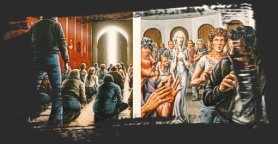 After the album had been completed, Genesis went on tour and performed The Lamb live in its entirety for one hundred and two times during the last quarter of 1974 and the first half of 1975. Peter had costumes made to portray several persons and creatures in the story on stage. Some of those costumes, like the one for the hideously bloated slippermen, were so cumbersome that they caused Peter great difficulties with moving and even singing! Some of the vocals were so unintelligible that when a live version of The Lamb was released in 1998 most of the vocals had to be redone.
In fact, since everybody's attention was drawn completely to Peter's stage presence, his star was rising rapidly while the rest of Genesis seemed to become no more than his backing band.
Silent Sorrow
It was for this and other reasons that Peter decided to leave the band after the tour was completed. He felt more and more constricted within the band format and he feared that it would become harder and harder to get his ideas accepted by the group. The other four members were shattered by the news and especially Tony Banks practically begged Peter to reconsider. As we know now, he did not succeed.
In a way, The Lamb was also the beginning of the end for Steve Hackett. He experienced the same problem as Peter, in that he couldn't get his ideas accepted by the rest of the band. And it didn't help that he was never very good friends with Tony, who was the most influential member of the band, especially after Peter had left. Steve would stay for another two years but the cracks that had appeared would prove to be irreparable.
Both Peter and Steve became very successful solo musicians and Genesis proved they could survive very well without their erstwhile members by first dispelling Peter's ghost with the phenomenal A Trick Of The Tail and then becoming one of the most famous rock bands of the world in the eighties.
The Light Will Never Die Down
The Lamb Lies Down On Broadway is a true milestone in the history of Progressive Rock. Both lyrically and musically it has inspired countless of other bands, albums and songs, and not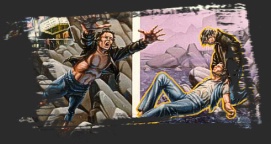 even always inside the Progressive Scene. For recent examples, think of Aragon's Mouse and IQ's Subterranea.
Looking at the whole of The Lamb, one can say that the first disc is more consistent and accessible whereas the second disc contains some experimental pieces which some listeners might feel breaks up the flow of things. Maybe Genesis did overreach themselves a tiny bit by aiming for a double album, indeed, Peter Gabriel himself admitted that he took more on his plate than he could digest when he demanded that he be the sole lyric writer, but nowhere do I get the feeling that there's unnecessary music on the album.
Genesis was a truly unique entity when Peter Gabriel was in the band, producing albums, which without exception have become classics. Albums that were progressive in the strictest sense of the word, taking the previous album and improving upon it. In that sense, The Lamb Lies Down On Broadway is Genesis at their peak, the crown on that remarkable period of time.