

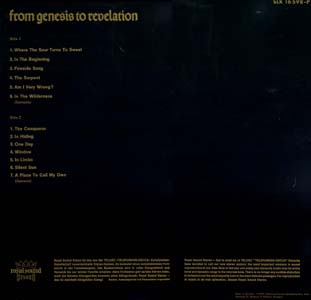
 It shows no or at best only the most minuscule traces of the style that would make them well-known later, and therefore frequently meets with a refusal and lack of affection. Justly so?


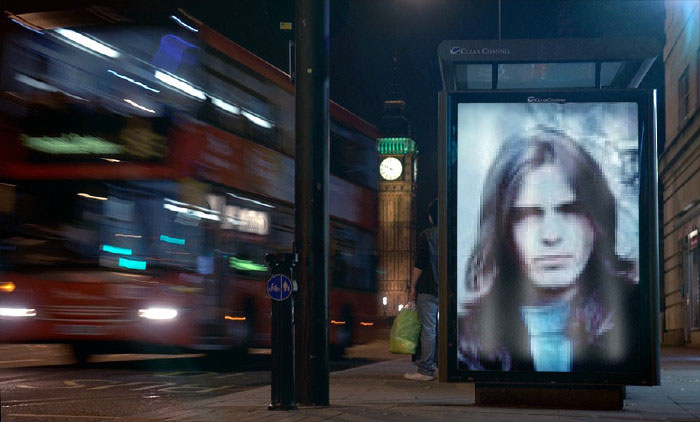
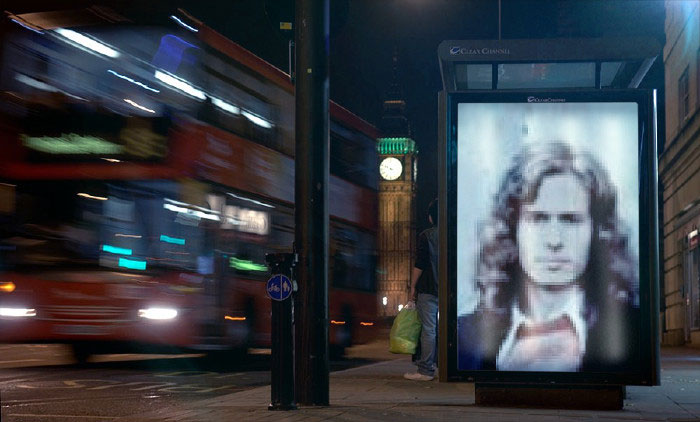
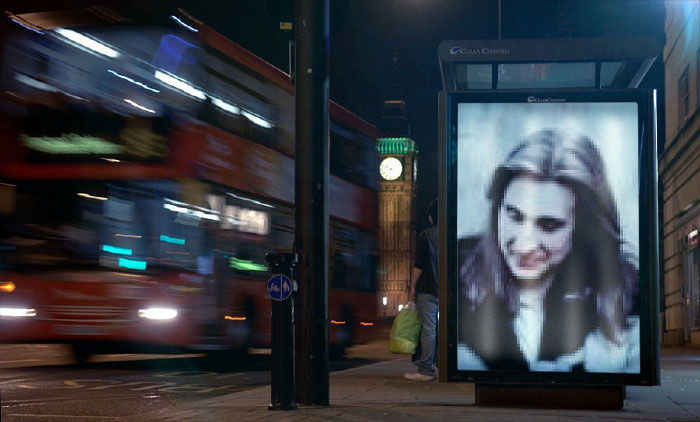
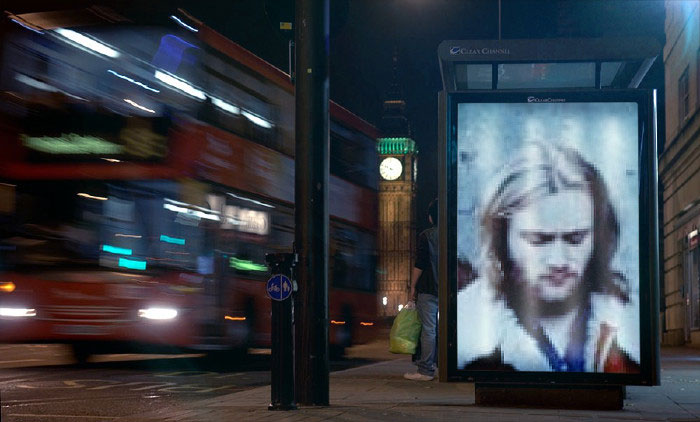
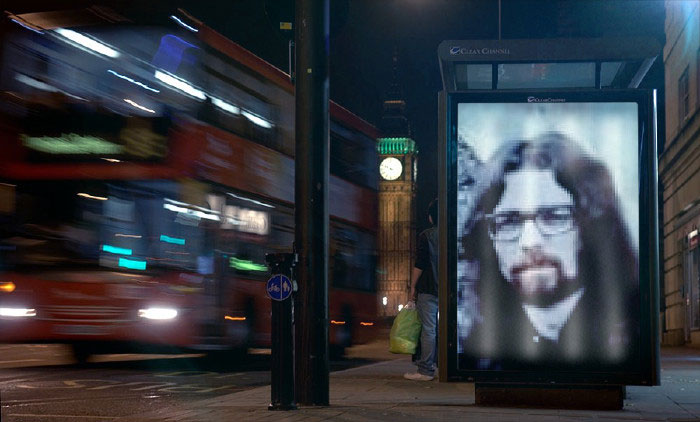

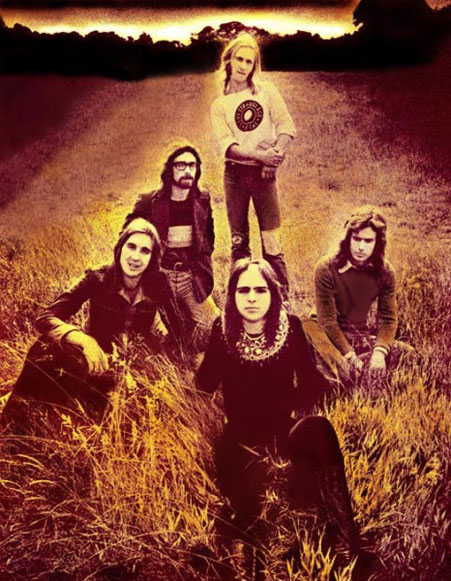




 |
 |
 |
 |
 |
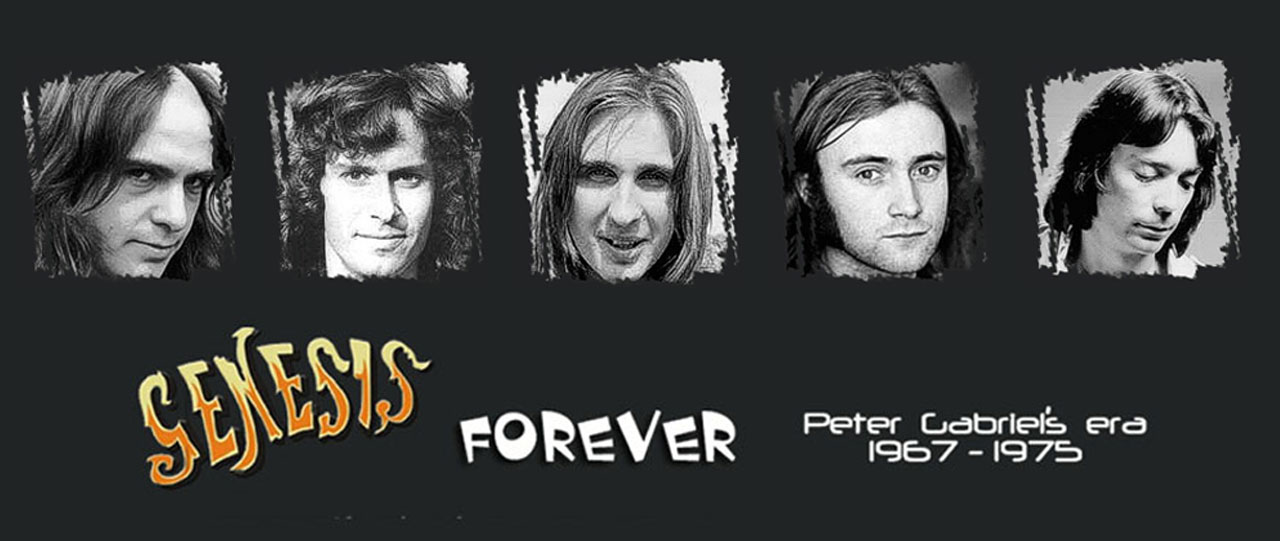
| PETER GABRIEL | TONY BANKS | MIKE RUTHERFORD | PHIL COLLINS | STEVE HACKETT |
 Genesis must be the most successful high school band of all time. Formed at England's exclusive Charterhouse school in 1967, they have come, over the course of some fifty years and numerous personnel changes, to exemplify intelligent adult rock music.
From the very beginning Genesis were different. Founding members Peter Gabriel, Tony Banks, Mike Rutherford and Anthony Phillips had musical ambitions well beyond their age, and their earliest work displayed the influence of classical music as much as pop.
By the time they recruited drummer Phil Collins in 1970, the young group had already established a reputation for elaborate, complex songs and dynamic live shows.
When you think of some of the biggest rock bands in the world, many come to mind - Led Zeppelin, Pink Floyd, The Beatles. These revolutionary bands have something in common - they all originated in England.
Another one of the biggest bands to come out of England is Genesis. Since its beginnings back in the late 60's, Genesis has brought rock fans a consistant stream of music with an inconsistant line-up. In the band's 40+ year history, eleven band members have played with the group. It all started back in 1967, when members from two seperate bands, The Anon (Rivers Job, Richard MacPhail, Rob Tyrell, Anthony Phillips, Mike Rutherford) and The Garden Wall (Tony Banks, Peter Gabriel, Chris Stewart), joined together to make Genesis.
The first lineup included Anthony Phillips, Mike Rutherford, Tony Banks, Peter Gabriel, and Chris Stewart. They sparked the interests of producer/songwriter Jonathan King, who inspired them to take up the title of Genesis.
Peter Gabriel
 He is one of the few artists who has not only changed with the times, but has blazed new trails every step of the way during his over-thirty-year career. His metamorphosis from eccentric, theatrical frontman to astute pop artist to world-music enthusiast marks one of the most impressive evolutions in rock history.
Tony Banks
 Tony Banks started his career with Genesis in 1967 as the pianist/keyboardist, after the emergence of the Charterhouse School Bands The Garden Wall, which Tony was a member, and The Anon. Tony, who plays with a Bach style, also tends to introduce many excellent sound effects and reinforcing chords to the band's music. On occasion, Tony has also been known to pick up the guitar.
Michael Rutherford
 Mike Rutherford started his career with Genesis in 1967 as their bassist/rhythm guitarist after the emergence of the Charterhouse School Bands The Anon, which Mike was a member, and The Garden Wall. Mike is the only other original member of Genesis, other than Tony.
Steve Hacket
 Formerly a member of various minor bands, including Canterbury Glass, Heel Pier, Sarabande and Quiet World, the latter releasing a solitary album on Dawn Records in 1970, Hackett joined Genesis as guitarist in early 1971.
Phil Collins
 Phil Collins is one of those very rare breeds of artists who combine musical accessibility and overwhelming popularity with the respect of their most illustrious peers. One of the world's best-loved vocalists, Phil has also worked with artists as iconoclastic as Brian Eno, Robert Fripp and John Cale.
PHOTOS FROM 70s
GENESIS TODAY
BORN: October 2nd, 1950, Guildford, Surrey, England
 A founding member of the long-running art-rock band Genesis, Mike Rutherford also made the occasional excursion into solo projects, most notably the pop combo Mike + the Mechanics. Born October 2, 1950 in Guildford, England, Rutherford formed Genesis while a student at the exclusive secondary school Charterhouse; beginning with their 1969 debut LP From Genesis to Revelation, the group earned a devoted cult following for their richly complex, theatrical approach, reaching their creative peak with the 1974 double album The Lamb Lies Down on Broadway.
With the subsequent departure of frontman Peter Gabriel, however, Genesis installed drummer Phil Collins as lead vocalist, pursuing a more concise, pop-oriented direction which resulted in the mainstream chart success of records like 1980's ...And Then There Were Three and 1981's Abacab. In the meantime, Rutherford issued his first solo effort, 1980's Smallcreep's Day, a concept album based on the Peter C. Brown novel; Acting Very Strange followed two years later.
While working in Genesis, guitarist Rutherford has had a solo career broken into two distinct phases. Smallcreep's Day was a concept album based on Peter C. Brown's novel, featuring vocalist Noel McCalla, formerly with Moon who made two Epic albums in 1976/7. But neither that nor the follow-up were commercially successful. Rutherford resumed his solo activity in 1985, under the name Mike And The Mechanics. He had two new songwriting partners - producer Chris Neil and former hit-maker B.A. Robertson. The group also had twin lead vocalists in Paul Carrack (ex- Ace ; Squeeze ) and Paul Young from Sad Cafe. The new formation created two US hit singles, 'Silent Running (On Dangerous Ground)' and 'All I Need Is A Miracle' and a million-selling album. The same line-up was retained for Living Years, whose title track was both an international best seller and an Ivor Novello award winner. Co-written by Rutherford and Robertson it was strongly autobiographical in its theme of the death of a parent. During the late 80s and 90s, the group was also a touring band, with the addition of Peter Van Hooke (drums) and Adrian Lee (bass).
Other Band Members 1967 - 1971
PETER GABRIEL
TONY BANKS
MIKE RUTHERFORD
PHIL COLLINS
STEVE HACKETT
|
|
|
|
|
| PETER GABRIEL | TONY BANKS | MIKE RUTHERFORD | PHIL COLLINS | STEVE HACKETT |
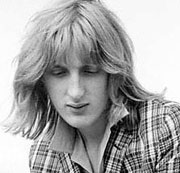 Anthony Edwin "Ant" Phillips, was born 23 December 1951, Chiswick, west London, is an English multi instrumentalist, first known as a founding member of the band Genesis. He played guitar and sang backing vocals until leaving in 1970, following the recording of their second album, Trespass.
He left due to suffering from stage fright, after being told by his doctor that the best thing would be to leave the band. He is known for his twelve string guitar work, and his influence can be heard throughout Genesis's early output.
Genesis's first album after Phillips's departure, Nursery Cryme, featured two songs which were holdovers from the days when Phillips was in the band: "The Musical Box" and "The Fountain of Salmacis".
After leaving Genesis, Phillips studied classical music (especially classical guitar) and made recordings in collaboration with Harry Williamson, Mike Rutherford and Phil Collins, among others. He played the keyboards on the demos for Peter Gabriel in 1976. His first solo album, The Geese and the Ghost, was issued in 1977.
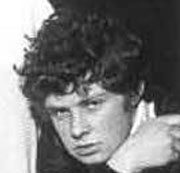 Christopher 'Chris' Stewart (born 1950), was the original drummer and a founding member of Genesis. He is now a farmer and an author.
A classmate of Tony Banks and Peter Gabriel at Charterhouse School, Stewart joined them in a school band called The Garden Wall, and they later formed another band with schoolmates Mike Rutherford and Anthony Phillips, called Anon. This band eventually became Genesis in January 1967. Stewart appears on the band's first two singles, "The Silent Sun"/"That's Me" and "A Winter's Tale"/"One-Eyed Hound."
Although several demos from Stewart's time with Genesis appear on the Genesis Archive 1967-75 box set, he is not credited with playing on any of them.
Mick Barnard played the guitar in Genesis for about six months as Anthony Phillips' temporary replacement and was quickly relieved by Steve Hackett.
Mick Barnard was a guitarist in the UK rock band, The Farm. He was also the guitarist of the band Genesis for a brief time, following the departure of founding member Anthony Phillips, the role for which he is perhaps best remembered today.
After leaving Genesis, Barnard embarked on a successful career in audio engineering, founding the Bel Digital Audio company in 1975.
Genesis' final concert with the Trespass line-up (Tony Banks, Peter Gabriel, Mike Rutherford, Anthony Phillips, John Mayhew) was on 18 July 1970, after which Phillips left the band. From 6 August to 17 September 1970 they played concerts as a four piece. Soon after that, Mayhew was replaced by Phil Collins, and the band played as a four piece with Collins from 2 to 23 October. The Banks-Gabriel-Rutherford-Collins-Barnard line-up played shows from 3 November 1970 to 10 January 1971: a total of thirty concerts and one television appearance. Barnard was then replaced by Steve Hackett, and this new line-up played their first concert on 14 January 1971.
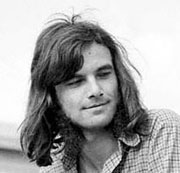 John Mayhew, (27 March 1947 – 26 March 2009), was the third drummer for the progressive rock band Genesis. He replaced previous drummer John Silver in August 1969. He appears on the album Trespass as well as the Genesis Archive 1967-75 box set. He was replaced in August 1970 by Phil Collins.
Mayhew grew up in Ipswich with his brother Paul who was some ten years older. His parents parted and John, who by then was in his teens, went with his father.
After that he saw very little of his brother, who had remained with John's mother. He inherited his love of music from his mother, and played with bands in the Ipswich area, moving to the London scene in the late sixties. In early 2009 Paul Mayhew had begun a search for him, having not seen John for 18 years and having had little to do with him since the early 1970s Mayhew joined Genesis in the summer of 1969 to replace departing drummer John Silver, who enrolled at Cornell University in the US to study leisure management. As well as being a professional musician, Mayhew was also a carpenter. He installed proper panelling and seating in the band’s transport, a former bread delivery van, as well as building the cabinet for a home-made Leslie speaker that would often grind to a halt during live performances.
John Silver replaced Chris Stewart in 1968 and the new drummer for Genesis. John had the fortunate pleasure of dumming on the first Genesis album From Genesis To Revelation. After the album had been completed John left the band.
Jonathan (John) Silver (born 1950) was the second drummer for the English rock band Genesis. He replaced Chris Stewart in the summer of 1968 and appears on their first full length album, From Genesis to Revelation, and on the Genesis Archive 1967-75 box set. He left the band in August 1969 and was replaced by John Mayhew.
In 1973 Anthony Phillips, Mike Rutherford and Phil Collins recorded a song dedicated to Silver, called "Silver Song". This recording and other versions of the song have been included on albums by Phillips. Silver also appears on the 1973 recording "Fantomas Opening Theme" which appears on Phillips' Archive Collection Volume II.
Peter Brian Gabriel
BORN: February 13, 1950, London, England
 As the leader of Genesis in the early '70s, Peter Gabriel helped move progressive rock to new levels of theatricality. In his solo career, Gabriel was no less ambitious, but he was more subtle in his methods. With his first eponymous solo album in 1977, he began exploring darker, more cerebral territory, incorporating avant-garde, electronic and worldbeat influences into his music. The record, as well as its two similarly titled successors, established Gabriel as a critically acclaimed cult artist, and with 1982's Security, he began to move into the mainstream; "Shock the Monkey" became his first Top 40 hit, paving the way for his multi-platinum breakthrough So in 1986. Accompanied by a series of groundbreaking videos and the number one single "Sledgehammer," So became a multi-platinum hit, and Gabriel became an international star.
Instead of capitalizing on his sudden success, he began to explore other interests, including recording soundtracks and running his company Real World. By the time he returned to pop with 1992's Us, his mass audience had faded away, and he spent the remainder of the '90s working on multimedia projects for Real World.
Following his departure from Genesis in 1976, Peter Gabriel began work on the first of three consecutive eponymously titled albums; each record was named Peter Gabriel, he said, as if they were editions of the same magazine. In 1977, his first solo album appeared and became a moderate success due to the single "Solsbury Hill." Another self-titled record followed in 1978, yet received comparatively weaker reviews. Gabriel's third eponymous album was his artistic breakthrough. Produced by Steve Lillywhite and released in 1980, the album established Gabriel as one of rock's most ambitious, innovative musicians, as well as one of its most political -- "Biko," a song about a murdered anti-apartheid activist, became one of the biggest protest anthems of the '80s. "Games Without Frontiers," with its eerie chorus, nearly reached the Top 40.
In 1982, Gabriel released Security, which was an even bigger success, earning positive reviews and going gold on the strength of the startling video for "Shock the Monkey." Just as his solo career was taking off, Gabriel participated in a one-shot Genesis reunion in order to finance his WOMAD -- World of Music, Arts and Dance -- Festival. WOMAD was designed to bring various world musics and customs to a Western audience, and it soon turned into an annual event, and a live double album was released that year to commemorate the event. As Gabriel worked on his fifth album, he contributed the soundtrack to Alan Parker's 1984 film, Birdy. His score was highly praised and it won the Grand Jury Prize at Cannes that year. After founding Real World, Inc. -- a corporation devoted to developing bridges between technology and multi-ethnic arts -- in 1985, he completed his fifth album, So.

Released in 1986, So became Gabriel's commercial breakthrough, largely because his Stax homage "Sledgehammer" was blessed with an innovative video that combined stop-action animation with live action. So climbed to number two as "Sledgehammer" hit number one, with "Big Time" -- featuring a video very similar to "Sledgehammer" -- reaching the Top Ten and "In Your Eyes" hitting the Top 30. As So was riding high on the American and British charts, Gabriel co-headlined the first benefit tour for Amnesty International in 1986 with Sting and U2. Another Amnesty International Tour followed in 1988, and the following year, Gabriel released Passion: Music for "The Last Temptation of Christ, " a collection of instrumentals used in Martin Scorsese's film. Passion was the furthest Gabriel delved into worldbeat, and the album was widely acclaimed, winning the Grammy Award in 1989 for Best New Age Performance. In 1990, he released the hits compilation Shaking the Tree.
Gabriel labored long on the pop-music follow-up to So, finally releasing Us in the spring of 1992. During the recording of Us, Gabriel went through a number of personal upheavals, including a painful divorce, and those tensions manifested themselves on Us, a much darker record than So. For various reasons, not the least of which was the fact that it was released six years after its predecessor, Us wasn't as commercially successful as So, despite positive reviews. Only one single, the "Sledgehammer" knock-off "Steam," reached the Top 40, and the album stalled at platinum sales. In 1993, Gabriel embarked on the most ambitious WOMAD tour to date, touring the United States with a roster including Crowded House, James, and Sinead O'Connor, with whom he had an on-off romantic relationship.
The following year, he released the double-disc Secret World Live, which went gold. Later in 1994, he released the CD-ROM Xplora, one of many projects he developed with Real World. For the next three years, Gabriel concentrated on developing more multimedia projects for the company.