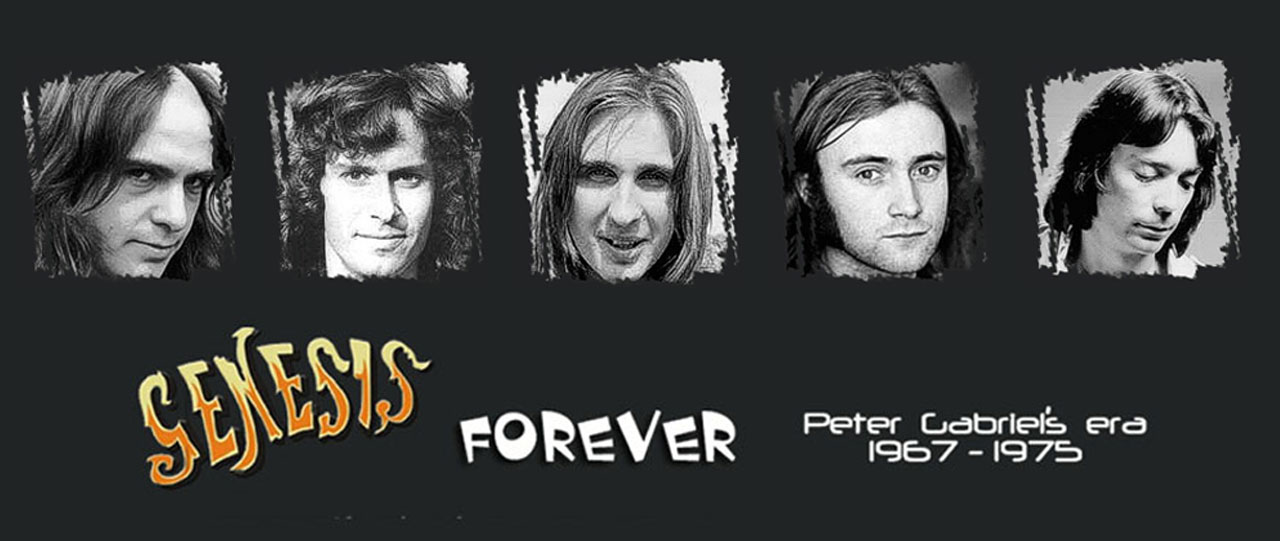


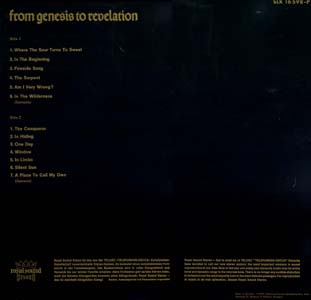
 It shows no or at best only the most minuscule traces of the style that would make them well-known later, and therefore frequently meets with a refusal and lack of affection. Justly so?


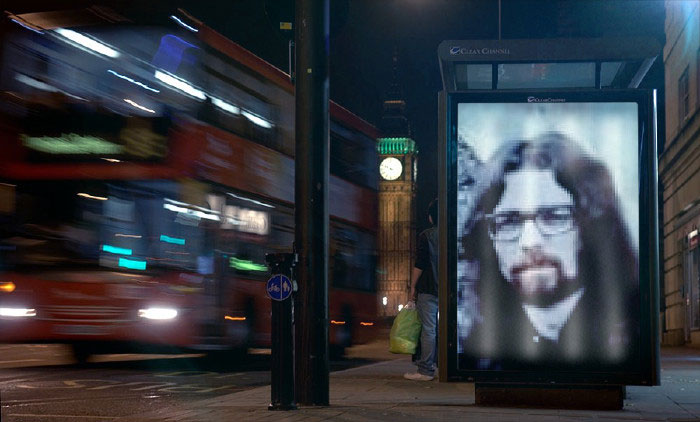

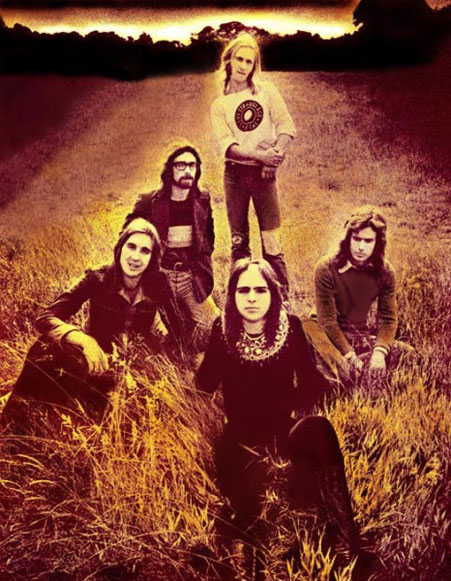




- SOUNDS special on Genesis' extraordinary US debut at the Philharmonic Hall, New York, 12.12.72.
From Sounds, December 23, 1972 Report by Jerry Gilbert.
(There are a couple of "drop outs" in the middle of the article - a few words and sentences were unreadable.)
"OK. Let's see your papers," barked the customs official at Kennedy International Airport. "But we are the papers," someone bounced back in diplomatically dulcet tones; whereupon we became integrated in the largest promotional campaign ever launched by Buddah and Charisma Records.
Genesis were up for sale in the biggest make-or-break attempt since Brinsley Schwarz played the Filmore East three years ago.
Promote
Top New York FM station WNEW had linked up with Buddah to promote a single show at New York's three thousand capacity Philharmonic Hall on 45th and Broadway, and all the leading American writers had homed in the gig - from Philadelphia, Boston, Detroit, and, of course, Los Angeles.
Acquaintances were struck up, reunions brought about and impressions exchanged during the heady atmosphere of anticipation at Buddah before the gig. And all because one New York radio station, in particular DJ Scott Muni - had been flooding the air with the new British wonder product. The seductive voice of Alison Steele had rammed Genesis down the throats of all WNEW listeners, Pete Gabriel tuned in apprehensively and then broke into a grin: "My life has changed since I started using Genesis," he mimicked, and by this time the whole event had become slightly surreal.
A double deck London Transport omnibus drew up outside the Americana Hotel on 7th and 53rd to take us to the gig and America's writers finally extricated themselves from their discourses on the [ars noya? - almost unreadable] of the English rock culture that Genesis represented and awoke to their new unprecedented environment. A double deck bus, wow, man, far out man. "Hey man if they have an accident down there do we have the same accident up here? Wow man far out. Hey man I've never seen Manhattan from this height before."
Try and picture the situation in which Genesis had suddenly become fixed. The politics of experience humming about their ears like a bad dream; no one wanted to be disappointed, no one was there for the slaughter but it was evident that no American critic would shed any tears if the gig went sour.
Shrewd
The interpreters and annalists have been stretched beyond the demarcation lines by English charlatans, it appears, and whatever they were going to make of the Genesis gig views were pretty certain to be dogmatic and polarised. Yet the shrewd mechanics behind the operation require some qualification for the initial maneouvres contributed in no small measure to the ultimate success.
WNEW hold an annual Christmas concert in aid of the Cerebral Palsy Fund. It's a goodwill concert, profits to charity, an exchange of gifts and a general exhibition of charity which, like everything else in New York, is tastelessly ostentatious.
Scott Muni is one of the big shots at MNEW and an Anglofile who picked up on Genesis as soon as Buddah had started the ball rolling. Soon he was playing tracks like 'Watcher Of The Skies', which may be edited down for a single release, and 'Supper's Ready', and as the campaign gained momentum so interest picked up in Philadelphia, Phoenix and, more important, in Cleveland, Ohio, which has suddenly become the place where trends begin.
String Driven Thing, the new Charisma band booked to support Genesis had also been given good air play on album tracks like 'Circus', and 'My Real Hero', and there was every chance that they would create a similar impact. But as the hours of hours approached, the acute sense of anticipation changed to one of mild foreboding.
Proceedings were thirty minutes late kicking off and the capacity audience were subjected to all kinds of platitudinous preamble as deeiavs [?] were introduced and they in turn did their PR thing for the Cerebral Palsy Fund. The slow hand-clapping which prefaced the arrival of String Driven Thing must have put the fear of God up them, but luckily they withstood the pressure, settled quickly and showed remarkable composure and equilibrium for such an inexperienced group.
They opened confidently with 'Let Me Down', and as if already primed to New York audienced they ignored the shit that was hurled sporadically and really got off on the predominant appreciation. By the time they reached 'My Real Hero' and 'Regent Street Incident', they had conveyed sufficient Scottish traits and British enthusiasm tto have convinced those who were willing to be convinced.
Some picked it up from Chris Adams' down to earth, almost self-indulgent rock and roll, others fixed on the petite waif-like figure of his wife Pauline and the freaks found something to associate with in the weird spectral appearance of Graeme Smith, who wove strange wafer thin violn lines over the top of solid rock and roll. String Driven Thing had their hassles - little equipment problems but the time they wrapped up the set with the traditional flavoured 'Jack Diamond' they earned their champagne and had justified a 3.000 mile journey for a mere 45 minutes.
Genesis' preparatory work had been slow and meticulous, allowing no room for last-minute slip ups - or so they thought. Richard McPhail and his road crew had crossed the Atlantic a week in advance to check out the hall, arrange the special effects and figure out an eleventh hour "rehearsal" gig before a handful of kids in Boston the night before. It was then that their worst fears were confirmed. The voltage changes into the American circuit had left problems with Tony Banks' organ and musically the Boston gig just didn't get of the ground. There were all kinds of sound problems although Richard was confident that an early start at the Philharmonic Hall would enable a satisfactory sound check well ahead of schedule. At least that's what would have happened had the Philharmonic Hall been available to the group on the afternoon of the gig.
"But we couldn't take over the hall until 4 o'clock," Peter Gabriel explained afterwards: "We didn't want to do it with only four hours' setting up time. In the end we didn't get the sound check done at all because Philharmonic Orchestra were using the hall, and it was the first time in two years that we haven't done a sound check before the gig. On top of that we were using strange equipment and the whole thing had become quite absurd." And that wasn't all, for Peter had become a victim of the Gorham Hotel's less than adequate ventilation and had woken in a stifled room with signs of catarrh and symptoms of flu.
Watching the group take the stage, Tony Stratton-Smith must have felt like the manager of an injury dogged football team making their first sorti into Europe. The MC gave a nice introduction, reminding the audience of Keith Emerson's recommendations and Genesis stormed straight into one of the best versions of 'Watcher Of The Skies' I have heard.
Problems
From there the impact intensified and when Peter Gabriel appeared through the darkness during the late stages of 'Musical Box' and the lights suddenly greeted the strange apparation of the fox's head and long red dress, the audience reacted volubly.
In retrospect the Gabriel mannerisms which we in England now take for granted, probably won the evening for Genesis in New York; I doubt whether the audience would have tolerated the ensuing hassles but for the shimmering mysticism which Gabriel constantly represented. He handled the situation beautifully, almost punctiliously, whilst being forced to concede that the band were only playing "at around 70 per cent". As one critic pointed out afterwards, the slightest evidence of glitter and razzle dazzle would have blown it completely.
As usual Gabriel prefaced his songs with fantastic stories, but it was after 'Fountain Of Salmacis' that the problems began. Mike Rutherford tried desperately to cure an intermittent buzz from his bass and as the breakdowns at the end of each number grew longer and more embarrassing, [...unreadable, sorry...]
"It demanded a lot of sensitive singing that I wasn't able to provide," Pete reflected, but the combined skills of Steve Hackett, gliding and whining staccato style across his new Les Paul, and Tony Banks strung out, detatched and insignificant on the right flank [ ... ] so the onus lent heavily on Peter Gabriel and drummer Phil Collins. "It was after that third number that I began to lose control of the situation because we were having all the hassles of the equipment," Pete recalled. "If we could have had all the facilities and the time to get things right then this would have been the way I'd like to have tackled America," he decided.
Meanwhile, the concert had continiud to balance on a fine edge as Genesis approached 'Supper's Ready'. Gabriel again came up with the perfect gesture when, during one of the all too frequent interludes, he produced a camera, strode to the front of the stage, focused on the audience and shot, flash gun and all. It evoked the sort of response that must have brought a deep sigh of relief from Tony Stratton Smith. "I've never been so nervous before a gig since I've been in the business," he declared. "The only comparable occasion was the Nice's first gig at the Fillmore East. But what impressed me was that in spite of the technical hang ups they got 100 per cent reaction," he added.
Combined
"I felt that if one was ever to take a gamble - and it was an enormous gamble - then it should be done with a group that (a) had a really fine show and (b) a group that was coming to the top of the curve in terms of confidence, the right point in time to do this sort of thing. It was a tremendous challenge for the band."
In a sense the band were a little too ambitious in tackling the epic composition, 'Supper's Ready', and sure enough just when it mattered most Pete Gabriel's voice failed him, disappearing at worst into a hoarse and inaudible whisper. [ ... ] to keep the number building towards something like its usual climatic ending; audience response, however, was fairly indifferent although the sporadic cry for some rock and roll which had shattered the silence earlier in the evening was repeated.
'Return Of The Giant Hogweed' brought back memories of early Family and it was a good number with which to close the show. Gabriel seemed to find a second wind and the show closed as powerfully as it had started with those that could move surging to the front, those that couldn't moving significantly into the aisles.
Genuine
The final ovation was tremendous by any standards. The reaction was genuine - the crowd wanted more - and that's an extremely rare sight for a little-known British band making their debut in New York. And so Genesis came back to do 'The Knife', after which the house lights were quickly up.
The band retired and the unmitiated might justifiably have thought it would be to celebrate their success. Instead they locked themselves away in the dressing room and would speak to noone. They were mentally exhausted, psychologically brought down because they'd played a million gigs better than that one. It was scant consolation that however well they'd played they could scarcely have created more impact. Mike Rutherford, the man whom the Gods had treated particularly harshly, appeared at the backstage door and was greeted with a bitter sweet mixture of congratulations and condolences.
It is on such occasions that aftermath parties become slightly embarrassing and it was conspicuous that the guests were well into their cocktails before Genesis had regained sufficient equilibrium to make it along to the Tavern On The Green on Central Park's west side. It seemed rather predictable that as the party swung into the morning and Genesis began to straighten out a little, there was still no sign of Peter Gabriel. He showed up eventually, but it was obvious that the gig had taken its toll and, like Richard MacPhail, his voice was suffering.
Next day the Buddah office was buzzing with genuine excitement excitement from the feedback that was starting to filter through and excitement as a result of what they had seen with their own eyes. Executives kept wandering past muttering superlatives at noone particular. Neil Bogart was "overwhelmed" everybody kept saying, and when the man himself fluttered by, sure enough, he was indeed overwhelmed.
Sha Na Na's manager kept appearing from nowhere and accosted all and sundry with a battery of beautiful lines. He eventually caught up with Peter Gabriel in one of the executive rooms where we congregated to hear a WNEW radio playback on the group. A rotound, jocular man, he duly approached Peter: "Y'know, your representative explained the group to me in such a way that I knew our relationship would be one of class warfare..."
The place broke up, the tension eased. Gabriel and Rutherford were in good spirits, Tony Banks and Steve Hackett were typically tacit and Phil Collins continued to grin and jest - just as he had been doing since the band arrived in the States. He was getting off on the entire junket and intermittent punctuations were purely incidental as far as he was concerned.
And so Thursday night the party made its way out to Kennedy Airport for a short stop over at London before flying out to Hamburg for what could only be an anti-climax - "a routine gig".
Memory
Peter Gabriel emerged from the 747 frantically pulling his hair across the shaved area of his head which two nights before had been glistening with white paint. Suddenly he was faced with the reality of customs officials and his one aim was to make himself look presentable and ease his plight. The customs deck - where the story came in, Peter Gabriel turned, proferred a hand, inquired in his humble manner whether there was anything else I wanted to know, and disappeared.
The gathering disseminated and the operation which had cost Buddha and Charisma a total of $16.000 to promote, was now a memory. Sixteen thousand grand for one operation - a small price to pay for an ephemeral onslaught which will be ringing around the United States for a long time yet.