

Written by Thomas Schrage


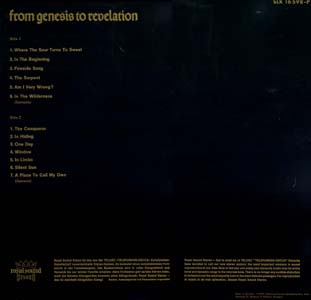
Genesis‘ first album was not called Trespass but From Genesis To Revelation. Many fans tend to count it as their zeroeth album. It shows no or at best only the most minuscule traces of the style that would make them well-known later, and therefore frequently meets with a refusal and lack of affection. Justly so?


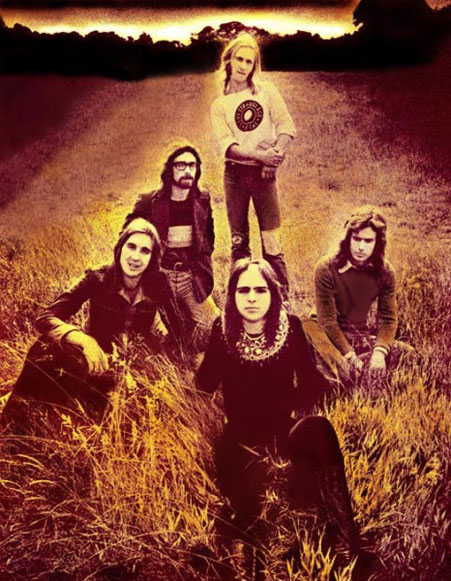
The band did not have the line-up they got known with yet. One could say they did not even exist. They came together to record demo-tapes in the first place. All of them knew each other from Charterhouse public school. The songwriter team Rutherford and Anthony Phillips asked Tony Banks to play the piano for them; Banks only agreed if he could bring his songwriting partner Peter Gabriel to record a song. Soon they were convinced that Gabriel’s voice sounded better than Phillips’ so he ended up singing on all the songs.

When he did not sing, Phillips played the guitar, a position he would retain up to Trespass. Initially, the drums were played by one Chris Stewart, though the drumming on the album would be done by John Silver. The drummer’s stool would not be filled permanently until Phil Collins joined Genesis. Only with him did the band find someone who was accepted as a full member and could incorporate himself.

These boys (most of them were around 17 at the time) managed to land a record contract with Jonjo Music in August 1967. That only meant that a single would be released. King was an alumnus of Charterhouse and had had quite a successful hit with Everyone’s Gone To The Moon. A shallow pop song though that may have been, he nevertheless seemed to be a person of success and influence, and they found it very promising that they could have him produce them.

Read More


The year was 1969. Among the many discoveries made that year was something called "the import record" - albums from England that were either different from those released here, or just plain never released in Athens.

I remember pulling together a stack of domestic promotional albums and heading to a downtown rendezvous, near Acropolis to a place called Plaka, where in a small records shop they were traded for a decidedly smaller stack of imports. One of them was a little item that had a black cover with gold lettering proclaiming FROM GENESIS TO REVELATION. It was the first effort of a British group that couldn't decide on their name, although the music was much more decisive - I immediately vowed to become a fan once they figured out what to call themselves....


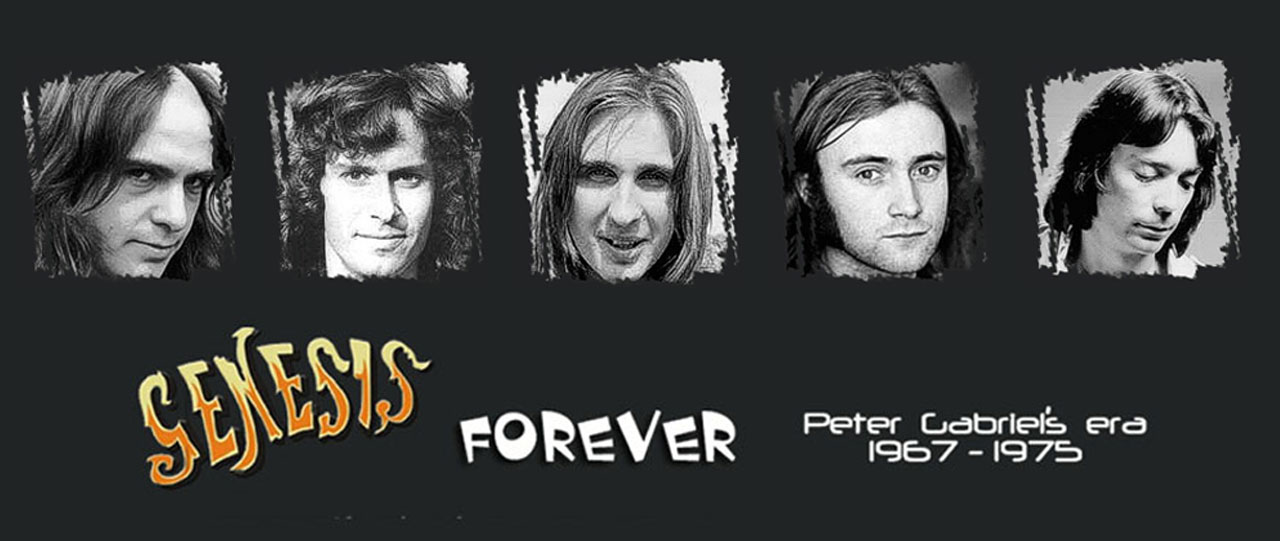
Genesis Group Members
Peter Brian Gabriel Gemesis 1970 - 1975
BORN: February 13, 1950, London, England
As the leader of Genesis in the early '70s, Peter Gabriel helped move progressive rock to new levels of theatricality. In his solo career, Gabriel was no less ambitious, but he was more subtle in his methods.
Anthony George Banks Gemesis 1970 - 1975
BORN: March 27th, 1950, East Sussex, England
Tony Banks started his career with Genesis in 1967 as the pianist/keyboardist, after the emergence of the Charterhouse School Bands The Garden Wall, which Tony was a member,..
Michael John Rutherford Gemesis 1970 - 1975
BORN: October 2nd, 1950, Guildford, Surrey, England
A founding member of the long-running art-rock band Genesis, Mike Rutherford also made the occasional excursion into solo projects, most notably the pop combo Mike + the Mechanics.
Phillip David Charles Collins Gemesis 1970 - 1975
BORN: January 31, 1951, Chiswick, London, England
Phil Collins' ascent to the status of one of the most successful pop and adult-contemporary singers of the '80s and beyond was probably as much of a surprise to him as it was to many others.
Steven Richard Hackett Gemesis 1970 - 1975
BORN: February 12th, 1951, England
Formerly a member of various minor bands, including Canterbury Glass, Heel Pier, Sarabande and Quiet World, the latter releasing a solitary album on Dawn Records in 1970, Hackett joined Genesis as guitarist in early 1971.


March 16th, 2015 By Jim Laugelli

I could have very easily chosen a number of other Genesis albums but I decided on this one simply because it features what is perhaps the most significant song in all of progressive rock: “Supper’s Ready.” My introduction to Genesis occurred 41 years ago and had one of the most profound impacts on my personal musical journey. On that night, in May of 1974, a friend asked if I wanted to see a concert. He had a few extra tickets for a Genesis show and no one to join him. I never heard of the band and for some reason thought they were probably some sort of acoustic act. As far as I recall, my friend knew little about the band as well. I believe someone just gave him the tickets. With nothing better to do I decided to check it out. When we arrived at the venue and had taken our seats I remember my curiosity ratcheting up when the pre-concert music over the P.A. was Mike Oldfield’s Tubular Bells. This signaled to me that I was probably going to hear something unexpected. Sure enough, when the lights went down and the crowd quieted, the opening chords to “Watcher Of The Skies” begins. I immediately leaned forward in my seat totally consumed by the sound of the mellotron.

As that instrument eases, the staccato rhythm of the bass begins and in the darkness a pair eyes appear, they seem to be searching, radiating, only to reveal a figure in a cape with bat wings wrapped around his head. The vocals then begin and until the end of the show I remain completely and utterly captivated. My mind was officially blown. It was a revelation. I left that show a changed person. This was music that went beyond my imagination. It was presented like theater, it told stories. In fact, before many songs, Gabriel told surreal little tales as a way of introducing the tunes. The next day I bought Foxtrot, and then Selling England By The Pound, Nursery Cryme and Trespass all in short order. I immersed myself in their music.

Foxtrot begins the band’s high point of three consecutive outstanding albums. It was released in 1972, a banner year for progressive rock that also saw the release of Close To The Edge by Yes, Thick As A Brick from Jethro Tull, Trilogy by ELP, Three Friends from Gentle Giant and a slew of other incredible records. For Genesis, Foxtrot saw them tackle ideas they started with their two previous releases, Trespass and Nursery Cryme. The level of complexity in song structure, the emphasis on theatricality and drama, storytelling and extended song form all reached a new level of sophistication on Foxtrot.

Read More

1967 - 1975
Discography Comments Compiled by Ikon Designing
Aside from a portion of the box set, this is the only commercially available live document of vintage Gabriel-era Genesis.
Official Album Releases Compiled by Ikon Designing
That's it. Genesis' most ambitious work to date that ultimately led to the shock departure of their much loved singer Peter Gabriel.
Genesis Album Artwork Compiled by Ikon Designing
The painterly texture of the album art is a very nuanced addition to the artwork., but with a plain light yellow-tan border, the artwork itself can feel a bit drab.
Jonathan King and the Name Compiled by Ikon Designing
In 1963 Peter Gabriel and Tony Banks met at Charterhouse, a boarding-school, that layed in the English county Surrey in the middle 1960s.
Before Phil Compiled by Ikon Designing
Once upon a time, in a land far, far away. . . England, I think it was called. . . There lived four young men. . Their names were Ant Phillips, Michael Rutherford, Tony Banks and Peter Gabriel.
The Glory Years Compiled by Ikon Designing
While recovering from this, he began writing Genesis' most ambitious project to date, "Supper's Ready," a 23-minute masterpiece
Touch of the Jaggers Compiled by Ikon Designing
On every level the band transcend any kind of expected performance standard. Musically they are so proficient they make that part of the job look like a secondary exercise.
Man behind the Mask Compiled by Ikon Designing
Genesis obviously differ from the dressed-up 12-bar that most bands unravel. And because of these very differences, the band have been slated over over their motives.
Hall of Mutant King Compiled by Ikon Designing
Lifeless was the performance of leader Peter Gabriel; the protagonist's name is Rael so it's surely no accident that Gabriel is a Roger Daltry sound alike.

'SELLING RECORDS BY THE POUND' - DISC FINDS TOMORROW'S STARS TODAY
From Disc Magazine, November 10th, 1973


He's not the easiest of people to interview," they said, "not that he's unco-operative, you understand, just very shy." Be that as it probably is, when this interview was due to start in Peter Gabriel's flat at the unconductive hour of 10 am. he was in far too much of a flap to bother about his inhibitions.

For a start circumstances demanded that the interview take place in the back of a car instead of in the flat. Then guitarist Mike Rutherford had just run someone over in his car, two cats were going berzerk rushing round the living room after each other in a fit of what could have been either pique or libido and Pete's telephone would connect him only with an engineer marooned at the top of a telegraph pole at the end of the road.

A calming cuppa seemed the only answer, so we consumed a hardy brew of lapsang souchong subtley blended with a couple of Tetley tea bags before piling into the car to set course for Shepperton Studios. [See the boot 'This Planet's Soil'.]

It transpired that Genesis were making an hour-long film of themselves at work for "general purposes" here and abroad. It was all supposed to have been done the previous day, but everything conspired to make sure that it wasn't so a second day's shooting lay ahead.

Before the interview some particularly vicious member of Disc's staff instructed: "Find out if his shaved V-shaped bald patch conceals a receding hairline." It patently (pardon the pun) doesn't since a few millimetres of stubble were much in evidence. Nevertheless, in these days when certain nameless stars are lopping positively decades off their ages it seems strange that a 23-year-old should want to look 30. What was the reason behind this multilation of the Gabriel tresses?

"There isn't one. It's just a cheap gimmick to make me rich and famous." And it works. The band's latest album 'Selling England By The Pound' was way up in the LP chart almost before it was released and their recent British tour was a near sell-out.

Now Genesis are off to crack America. They've only had two visits there in the past - one for a long gig, the other a tour. Almost apologetically Peter says: "If we only worked in this country, we wouldn't be able to afford to put on the show we do." The show, in case you haven't seen it, is a good two hours long, expensive to stage and very theatrical. "Of course, we could make a lot more money by shortening the set and doing two shows in one evening, but it wouldn't seem right."

The theatrics are very much geared to the music as Peter explained. "The difference between us and other bands who are into theatrics is that when we've recorded a song we decide how best to present it onstage rather than just put on costumes which bear no particular relation to the music."

Undoubtedly the visual side of the act has helped to attract a lot of new, younger fans to the band. "And I'm very pleased about it too," says Peter. "Maybe they don't understand some of the more complex elements in the music but I'd much rather have that energy than a bunch of complacent intellectuals."

Visually the show is becoming more sophisticated all the time and great importance is attached to it's development. One member of their crew was out on his ear after a recent Rainbow gig simply because he couldn't cope with the slides that are projected onto the band's impressive new backcloth.

"Actually the backcloth wasn't really what we wanted," he says. "We were going to have an inflatable plastic all round environment which could take much more film on it, but since the Summerland disaster fire regulations have got much tighter and what we had in mind would not have been allowed."

Soon the slides may be on their way out to be replaced with cartoons which Peter thinks are more effective. "We have an Italian firm working on the idea for us at the moment."

We arrive at Shepperton and filming is soon underway. The first song is 'I Know What I Like (In Your Wardrobe)' and watching, one can feel sorry for Peter having to do his mime of a lawnmower watched by just three or four rows of imported audience. Later, over lunch he admits that he's not particularly enjoying the filming.

"There's more atmosphere today than there was yesterday, but I think that when you have to do a song over and over again for the cameras it loses something with each take."

Strangely enough sitting in the studio's works canteen with his face masked with white make up appears to bother him not at all and he seems less shy behind the anonymity than he does bare-faced, but then he's almost as curious as the weird and wonderful fantasies that are his band's musical trademark.



Go back