

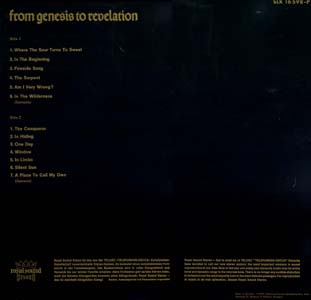
 It shows no or at best only the most minuscule traces of the style that would make them well-known later, and therefore frequently meets with a refusal and lack of affection. Justly so?


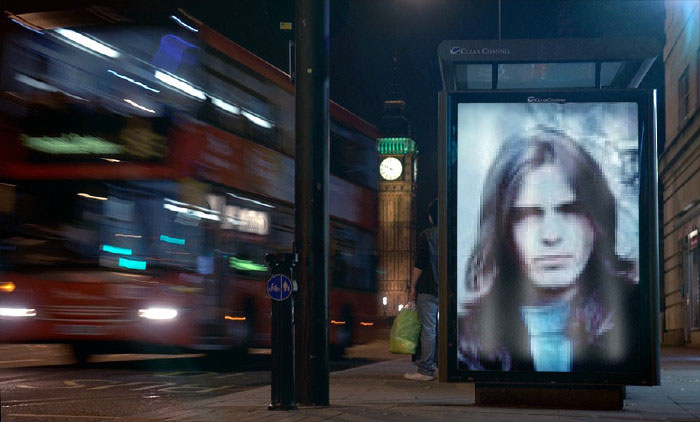
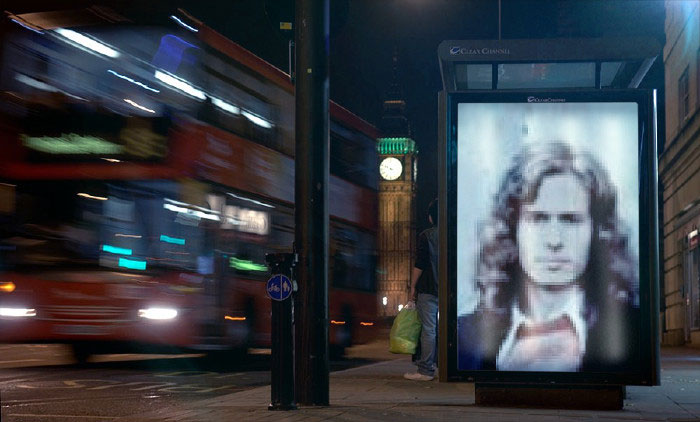
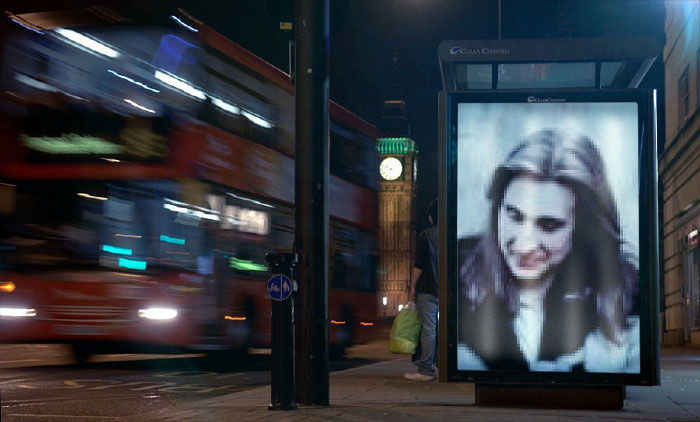
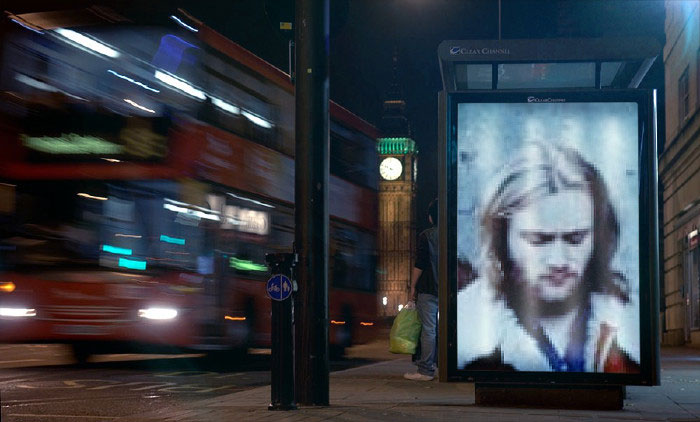
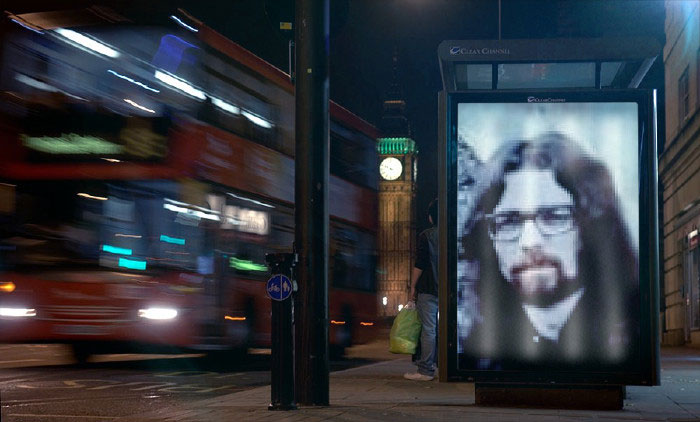

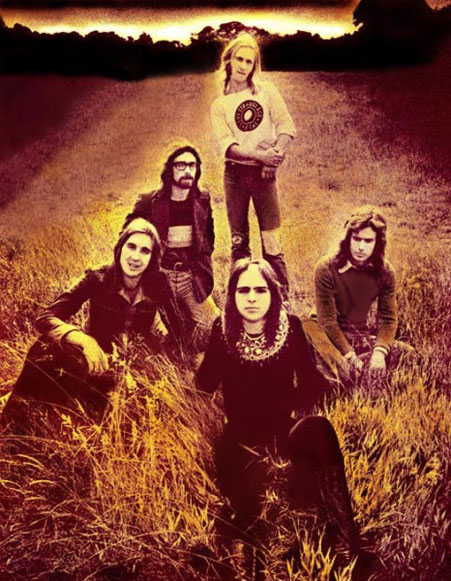




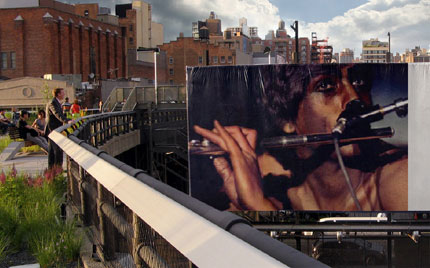
Rael cannot look away from those eyes, mesmerized by his own image. In a quick movement, his consciousness darts from one face to the other, then back again, until his presence is no longer solidly contained in one or the other. In this fluid state he observes both bodies outlined in yellow and the surrounding scenery melting into a purple haze. With a sudden rush of energy up both spinal columns, their bodies, as well, finally dissolve into the haze. All this takes place without a single sunset, without a single bell ringing and without a single blossom falling from the sky. Yet it fills everything with its mysterious intoxicating presence. It's over to you.
When it's cold, it comes slow.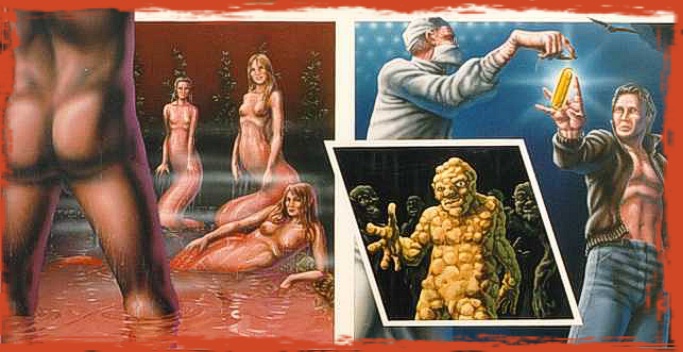
it is warm, just watch it grow. --
all around me.
it is here.
it is now.
Just a little bit of it can bring you up or down.
Like the supper it is cooking in your hometown.
it is chicken,
it is eggs,
[The strong egg motif of the last three albums Peter Gabriel did with Genesis is even more interesting when you realize that Peter supplied the lyrics for all three egg songs: Supper's Ready ("as sure as eggs is eggs"), Aisle Of Plenty ("it's scrambled eggs"), and of course here.]
itis in between your legs.
it is walking on the moon, leaving your cocoon.
it is the jigsaw.
it is purple haze.
[Yet another song reference: Jimi Hendrix's "Purple Haze".]
it never stays in one place,
but it's not a passing phase,
it is in the single's bar, in the distance of the face,
it is in between the cages,
it is always in a space it is here.
it is now.
Any rock can be made to roll,
If you've enough of it to pay the toll.
it has no home in words or goal,
Not even in your favourite hole.
it is the hope for the dope.
When you ride the horse without a hoof.
it is shaken, not stirred;
Cocktails on the roof.
When you eat right fruit you see everything alive,
it is inside spirit, with enough grit to survive
If you think that it's pretentious, you've been taken for a ride.
[If this line isn't a commentary on "art rock" and the generally held belief that it was a bunch of pretentious airy-fairy music, it would be surprising.]
Look across the mirror, before you chose de cide it is here.
it is now
it is Real.
it is Rael 'cos it's only knock and knowall,
but I like it.
Moving down the water John is drifting out of sight,
It's only at the turning point That you find out how to fight.
In the cold, feel the cold all around
And the rush of crashing water Surround me with its sound.
Rael manages to grab a rock, pull himself to the surface and catch his breath. As John is carried past, Rael throws himself in again and catches hold of his arm. He knocks John 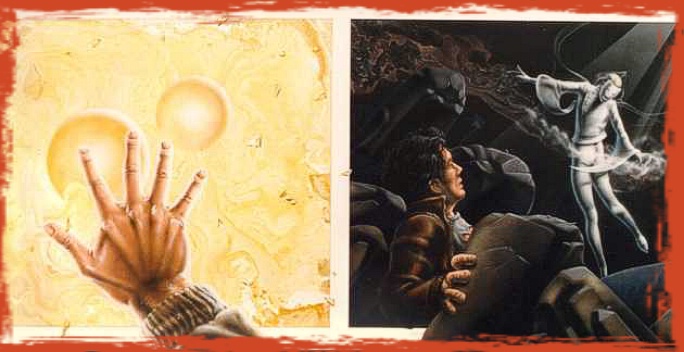 unconscious and then locking themselves together, he rides the rapids into the slow running water, where he can swim to safety.
Striking out to reach you, I can't get through to the other side.
When you're racing in the rapids There's only one way, that's to ride.
Taken down, taken down by the undertow
And I'm spiralled down the river bed, My fire is burning low.
Catching hold of a rock that's firm,
I'm waiting for John to be carried past.
We hold together and shoot the rapids fast.
But as he hauls his brother's limp body onto the bank he lies him out and looks hopefully into his eyes for a sign of life. He staggers back in recoil, for staring at him with eyes wide open is not John's face -- but his own.
And when the waters slow down
The dark and the deep have no-one left to keep.
Hang on John! We're out of this at last.
Something's changed, that's not your face. It's mine!
[As alluded to above, this song's lyrics were not written by Peter Gabriel. It was written by Tony and Mike. After a long time studying the Lamb, the phrasing in this song and the imagery will make it stick out more and more. For example "yesteryear" seems somewhat out of place, since Rael came from modern NYC to a reconstruction of modern NYC.]
As he walks along the gorge's edge,
He meets a sense of yesteryear.
A window in the bank above his head Reveals his home amidst the streets.
Through it he can see the green grass of home, well not exactly; he can see Broadway.
Subway sounds, the sounds of complaint
The smell of acid on his gun of paint.
As it carves out anger in a blood-red band,
Destroyed tomorrow by an unknown hand; --
My home. Is this the way out from this endless scene?
Or just an entrance to another dream?
And the light dies down on Broadway.
His heart, now a little bristly, is shaken by a surge of joy and he starts to run, arms wide open, to the way out. At this precise point in time his ears pick up a voice screaming for help. 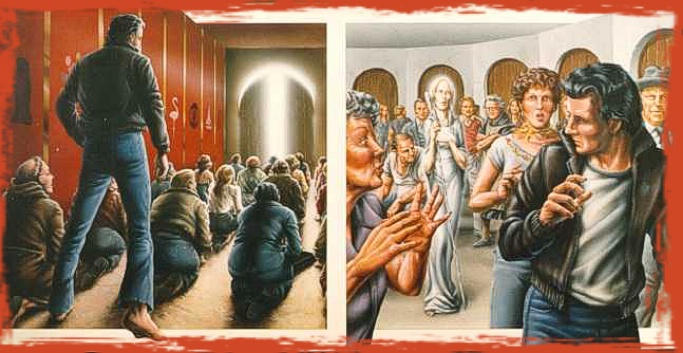 Someone is struggling in the rapids below. It's John.
Peter Gabriel:"And that isn't all, 'cause in the ravine, I see a huge plastic bubble saying 'Your brother is drowning here.' Oh dear!"
But as the skylight beckons him to leave,
He hears a scream from far below.
Within the raging water, writhes the form Of brother John, he cries for help.
He pauses for a moment remembering how his brother had abandoned him. Then the window begins to fade -- it's time for action.
The gate is fading now, but open wide,
But John is drowning, I must decide Between the freedom I had in the rat-race,
Or to stay forever in this forsaken place;
Hey John! He makes for the river and the gate is gone,
Back to the void where it came from.
And the light dies down on Broadway.
[Conjecture: had Rael decided to exit through the sky-light and return back to New York City, he would have simply reappeared right where and when he was when he started, and the whole thing would have begun again. By making this final correct spiritual decision to save his brother, in spite of the many times John had refused him aid, he allows himself to leave this purgatory into the true afterlife. Seeing his own face from the outside may represent his spirit being reborn into another body.]
He rushes to the cliff and scrambles down the rocks. It takes him a long time to get down to the water, trying to keep up with the current at the same time. As he nears the water's edge he sees John losing strength.
[Scree is defined as "a steep mass of detritus [ie rocky debris] on the side of a mountain". This word does not seem to be very commonly used in American English, supported by the fact that the editor had to consult an older desk dictionary to find a definition.]
Struggling down the slope,
There's not much hope.
I begin to try to ride the scree,
but the rocks are tumbling all around me.
If I want John alive,
I've got to ditch my fear -- take a dive,
While I've still got my drive to survive.
Evel Knievel, you got nothing on me.
[Knievel is a daredevil who performed dangerous stunts for money and recognition. He was popular in the 1970s, when the Lamb was written, and was more of a cultural icon then than now.]
Here I go!
He dives down into the cold water. At first he is thrown onto the rocks, and pulled under the water by a fast moving channel, which takes him right past John, down river.
They survive the ordeal and are presented with the offensive weapons in sterile yellow plastic tubes, with gold chains. "People usually wear them around their necks," said the Doktor handing them over. "The operation does not necessarily exclude use of the facility again, for short periods, but of course when you want it you must provide us with considerable advance warning."
Peter Gabriel: "So you see, my sexual organ and my brother John's were placed into fully sterilized yellow plastic tubes by the notorious Doktor Dyper, reformed sniper, with a decent fee and guaranteed to remove our very own windscreen wipers."
He places the number into a tube,
A yellow plastic "shoobedoobe".
It says: "Though your fingers may tickle
You'll be safe in our pickle."
As the brothers talk themselves through their new predicament, a big black raven flies into the cave, swoops down, grabs Rael's tube right out of his hands and carries it up into the air in his beak.
Peter Gabriel:"And I heard a flutter in the winds of the wings because a huge black bird called 'Raven' swooped down, -- swoop swoop -- grabbed the yellow plastic tube in its beak and hurtled off, flying away with the yellow plastic tube. Christ!"
Suddenly, black cloud comes down from the sky.
It's a supersize black bird that sure can fly.
The raven brings on darkness and night
He flies right down, gives me one hell of a fright.
He takes the tube right out of my hands
Man, I've got to find out where that black bird lands.
Rael calls for John to go with him. And he replies "I will not chase a black raven. Down here you must read and obey the omens. There's disaster where the raven flies."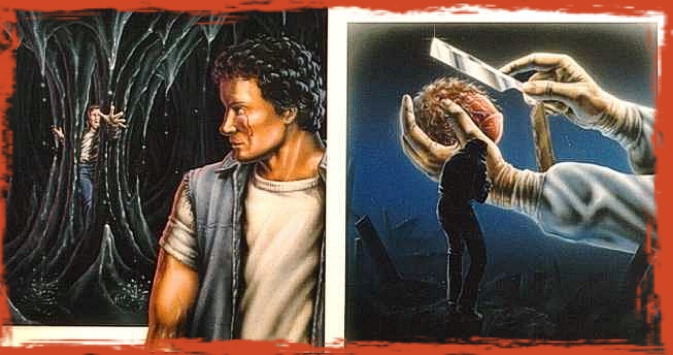
"Look here John, I've got to run I need you now, you going to come?"
He says to me. John: "Now can't you see Where the raven flies there's jeopardy.
We've been cured on the couch Now you're sick with your grouch.
I'll not risk my honey pouch Which my slouch will wear slung very low."
So once more John deserts his brother.
[The first time was in the cage.]
Rael: He walks away and leaves me once again. Even though I never learn, I'd hoped he'd show just some concern.
The bird leads Rael down a narrow tunnel, he seems to be allowing him to keep at a closed distance. But as Rael thinks he might almost catch hold of the bird, the tunnel opens and finishes at an enormous subterranean ravine. Casually, the raven drops his precious load into the rushing waters at the bottom. It's enough to drive a poor boy ravin' mad. Seeing the dangers of the steep cliff, our courageous hero stands impotent and glowers.
Peter Gabriel:"So I went off in hot pursuit, -- hot pursuit hot pursuit -- and just as I was about to catch on to the tail of the bloody bird, he dropped it -- It with it in it -- into a huge area of gushing water with R-A-V-I-N-E written in blue watery letters. 'It's going to the ravine' I thought."
[Once he spelled out "Rennies", the UK equivalent of Tums.]
I'm in agony of Slipperpain
I pray my undercarriage will sustain.
The chase is on,
the pace is hot
But I'm running so very hard with everything I've got.
He leads me down an underpass
Though it narrows, he still flies very fast,
When the tunnel stops I catch sight of the tube, just as it drops.
I'm on top of a bank, to steep to climb,
I see it hit the water, just in time, to watch it float away.
He follows a small path running along the top, and watches the tube bobbing up and down in the water as the fast current carries it away. However, as he walks around a corner Rael sees a sky-light above him, apparently built into the bank.