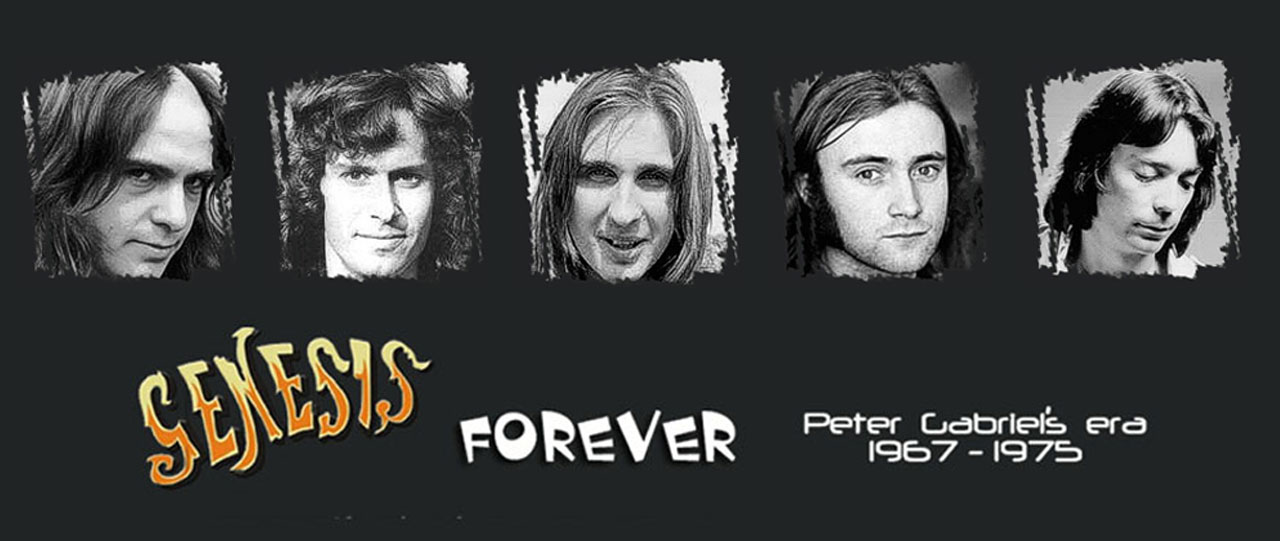


 It shows no or at best only the most minuscule traces of the style that would make them well-known later, and therefore frequently meets with a refusal and lack of affection. Justly so?








Peter Gabriel's longtime bassist, Tony Levin, recalls working on the 1977 album.
Forty years ago this week, Peter Gabriel released his self-titled debut album. It was a decade after forming Genesis, and two years after he’d left the band. While his departure seemed risky for him, and potentially catastrophic for his former bandmates, it all worked out well. Genesis drummer Phil Collins took over as lead singer, and the band — improbably — got even more popular, with many fans unaware that he wasn’t always the singer. Gabriel, however, made extremely experimental albums that found him a new, younger, edgier audience, many of whom were unaware of — or didn’t care about — his days as a prog-rock frontman. He, too, became a lot more popular after the split. Tony Levin played bass on that album and has been with Gabriel ever since. Levin spoke with Radio.com about his first time working with Gabriel.Brian Ives
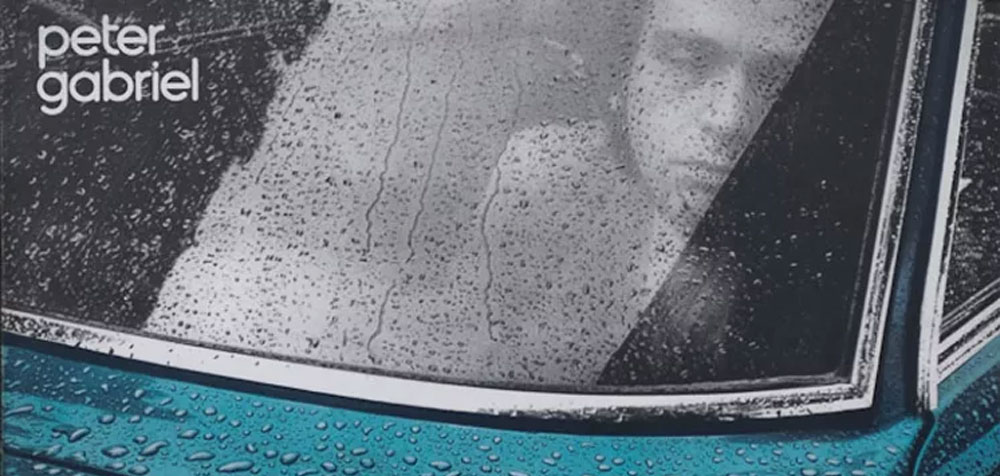
"My heart going boom, boom, boom!" Peter Gabriel sang on "Solsbury Hill," the breakout track from his self-titled solo debut album. His heart-pounding was understandable; leaving a band on the verge of success can’t be an easy decision, even for a visionary artist who was tiring of being part of a democracy.
But while he had become Genesis’ artistic beacon over the years — his final album with them, the concept double album The Lamb Lies Down On Broadway was very much his vision — he hadn’t quite figured out where he wanted to go yet. Indeed, Gabriel has said that discovering his voice as a solo artist was a long process: "It took me three albums to get the confidence and to find out what I could do that made me different from other people. And the first record really was a process of trying."
He’d hired Bob Ezrin to produce his debut, and many of the musicians on the album were Ezrin’s recommendations. One of those was bassist Tony Levin, who Ezrin had previously worked with on albums by Alice Cooper and Lou Reed, among others.
"I wasn’t primarily a rock player in those days," Levin recalls. "And I was lucky that Bob heard in my playing the kind of direction he liked for those albums. And especially lucky in being on those sessions of Peter’s, where I met him and guitarist Robert Fripp, both of whom I’m still making music with now, 40 years later." Fripp, then and now, is the guitarist and leader of King Crimson; Levin joined that band in 1981 and is in the latest iteration of the group.
"I really wanted the first record to be different from what I’d done with Genesis so we were trying to do things in different styles," Gabriel said of his debut album. Levin certainly couldn’t have replicated the singer’s earlier work: "I hadn’t heard Genesis, so I had no preconceptions about Peter. My impression of him — no surprise — is that his music was very distinctive. He had chord structures unlike any songwriter I’d worked with, and he was open-minded to new approaches with the music, new bass sounds. And, in addition, he was a really nice guy."
After years in the semi-democracy of Genesis with bassist Mike Rutherford and keyboardist Tony Banks, being a solo artist was uncharted territory for him: "I had been used to having roles defined," he said. "And so suddenly to find myself in a studio full of serious musicians (serious in terms of their ability and what they’d done and so on) was unnerving."
But Levin says he didn’t notice that nervousness in his new boss at all: "I didn’t get any sense about that, one way or the other. He was comfortable making the album, and worked well with the musicians, most of whom were strangers to him."
Gabriel noted that Levin’s contribution went beyond bass playing: "We were trying to do things in different styles. [There was] A bit of barbershop [quartet], which Tony Levin helped with," he said, referring to the a capella intro on "Excuse Me."
https://www.youtube.com/watch?v=YBEPL33bekw
"It was likely my idea, since I was a fan of that style of music," Levin says. If you’re a Gabriel fan who isn’t familiar with the deep tracks on the debut album, it’s worth going back and checking it out: there’s a sense of mirth on "Excuse Me" in particular — which also features Levin’s tuba playing — that isn’t on many of his more well-known songs.
"There were more bluesy things," Gabriel recalled. "A variety of songs and arrangements that were consciously trying to provide something different than what I’d done before." Indeed, "Waiting For the Big One" is the most traditional blues number Gabriel has ever done.
"That’s a style I like playing a lot," Levin notes. And the song took on a new life on tour. "When Peter performed it live, he used a wireless mic (a new invention at that time) to sing from out in the audience, getting there in the dark between songs and suddenly appearing, seated in the middle, with a spotlight then following him as he slowly walked back to the stage. It was a precursor to his later adventures floating out on the hands of the audience members during ‘Lay Your Hands on Me.’"
The album’s most enduring song, though, is "Solsbury Hill"; according to the setlist wiki Setlist.fm, it’s the song Gabriel has performed more than any other in his catalog; it’s also one of his most frequently licensed songs.
The song was written about leaving the secure environs of his band for the unknown, as he told Rolling Stone: "When I left Genesis, I just wanted to be out of the music business. I felt like I was just in the machinery. We knew what we were going to be doing in 18 months or two years ahead. I just did not enjoy that."
It was a rare split that benefitted both sides: Genesis would go on to be a stadium-headlining behemoth and Gabriel a multi-platinum superstar. And for those who know the song’s backstory, that’s surely part of its appeal: jumping into the unknown can be scary. But it can also lead to greatness.
And even if a listener doesn’t know the song’s context, it stands on its own due to it’s timeless, bouncy arrangement and its inspiring lyrics. For anyone looking to move on from a stale situation in their lives into an unsure new situation, the lyrics are sure to resonate: "To keep in silence I resigned/My friends would think I was a nut/Turning water into wine/Open doors would soon be shut/So I went from day to day/Though my life was in a rut/Till I thought of what I’d say/And which connection I should cut/I was feeling part of the scenery/I walked right out of the machinery." What if Gabriel hadn’t left the band? It’s easy to imagine the ’70s prog-rock version of Genesis playing the oldies circuit if Gabriel never left. Instead. each Gabriel album — and don’t come too frequently — is treated like a bona fide event by his international following. he still headlines huge venues and fills them with die-hard fans.
And while he left his longtime friends behind (it’s worth noting that the relationship between the former Genesis-mates has always been warm; he and Phil Collins have contributed to each other’s solo albums), his bond with Levin has lasted four decades. "We ‘clicked,’ as musicians and as people," Levin says. "For me, the first album was simply a chance to play really good music with a great artist and other very good players. Soon afterwards, it took a larger space in my life, because I happily accepted Peter’s offer of going on the road with him, knowing it would end my years of doing primarily recording work, and that it would lead to a focus on playing live – something I was hoping to move to because it’s more gratifying to me."
Clearly, playing live is gratifying to Gabriel as well, as he’s toured more than usual in the past few years (including a trek celebrating the anniversary of 1986’s So, and last year’s co-headlining tour with Sting). Meanwhile, fans eagerly await Gabriel’s first album of original material since 2002’s Up and seeing where his muse takes him. Over the course of his seven albums of original material (plus a covers album and a few film scores), every album seems to matter and to add to his legacy. There’s a life-lesson there: when your heart is going "boom-boom-boom" over a decision, take the scarier road.
© Radio.com, by Brian Ives