

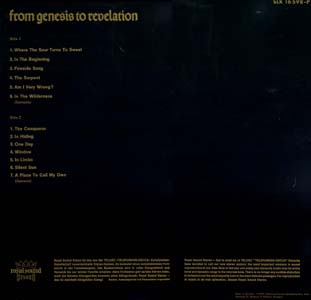
 It shows no or at best only the most minuscule traces of the style that would make them well-known later, and therefore frequently meets with a refusal and lack of affection. Justly so?


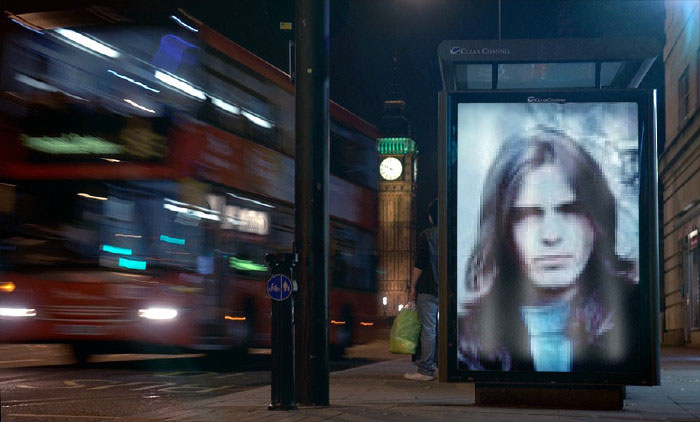
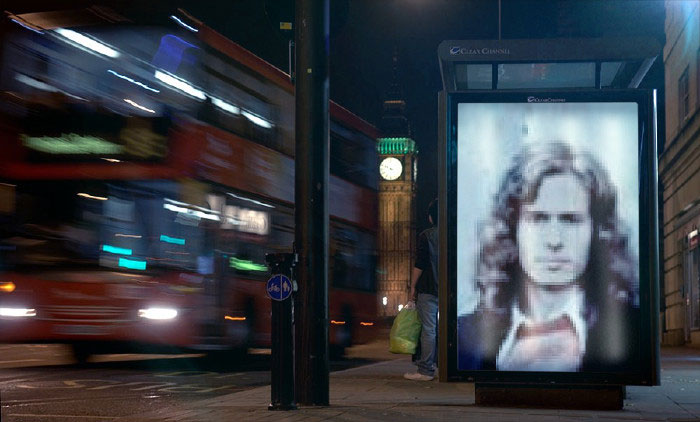
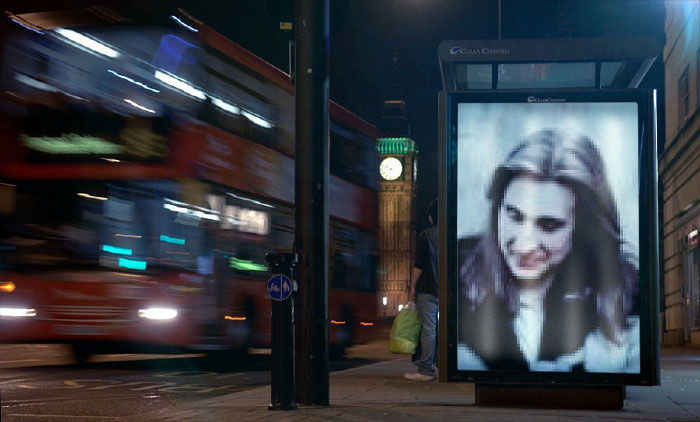
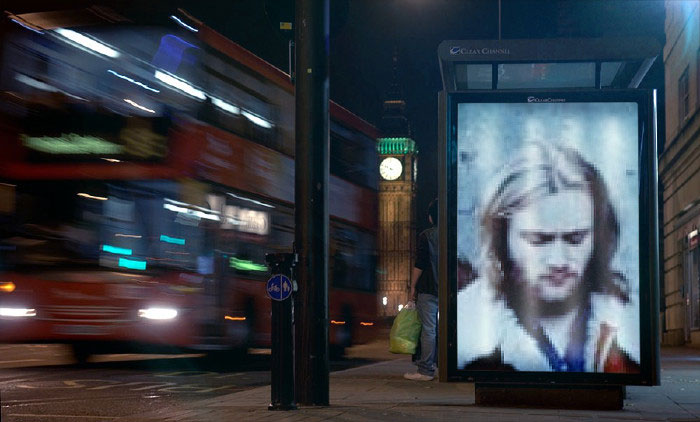
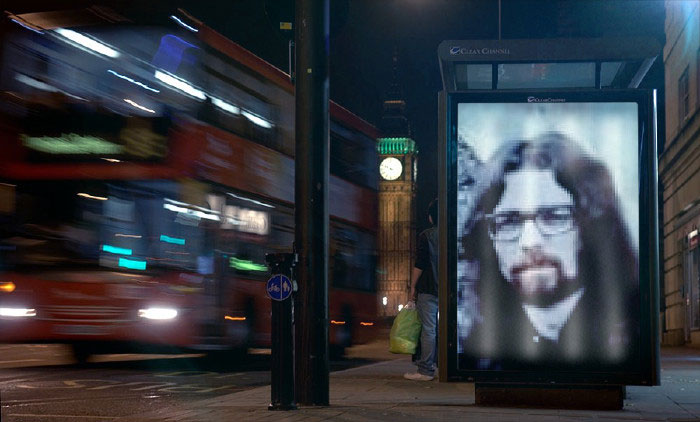

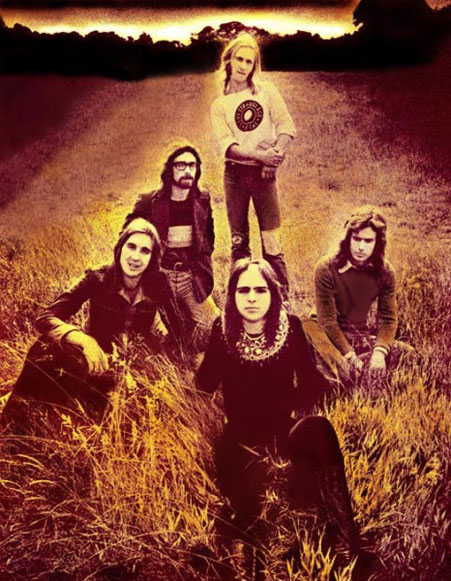




They’re the rock pioneers who sold 130 million records. But they also spent years fighting snobby critics – and each other. Are Genesis finally getting along?
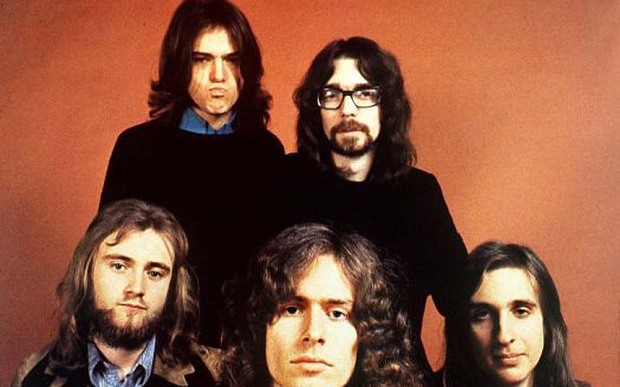 In the mid-Seventies, when Genesis were reaching the heights of their theatrical pomp, singer Peter Gabriel’s outfits often threatened to steal the show. “I was always afraid that these guys would start arguing about any of the visual costumes bits that I was trying to do,” says the man famous for performing dressed as a flower, angel, begowned woman, or some combination of all three. “So I would smuggle it in as late as possible when they were so preoccupied with getting everything else sorted that I could get away with whatever s--- was in my head.”
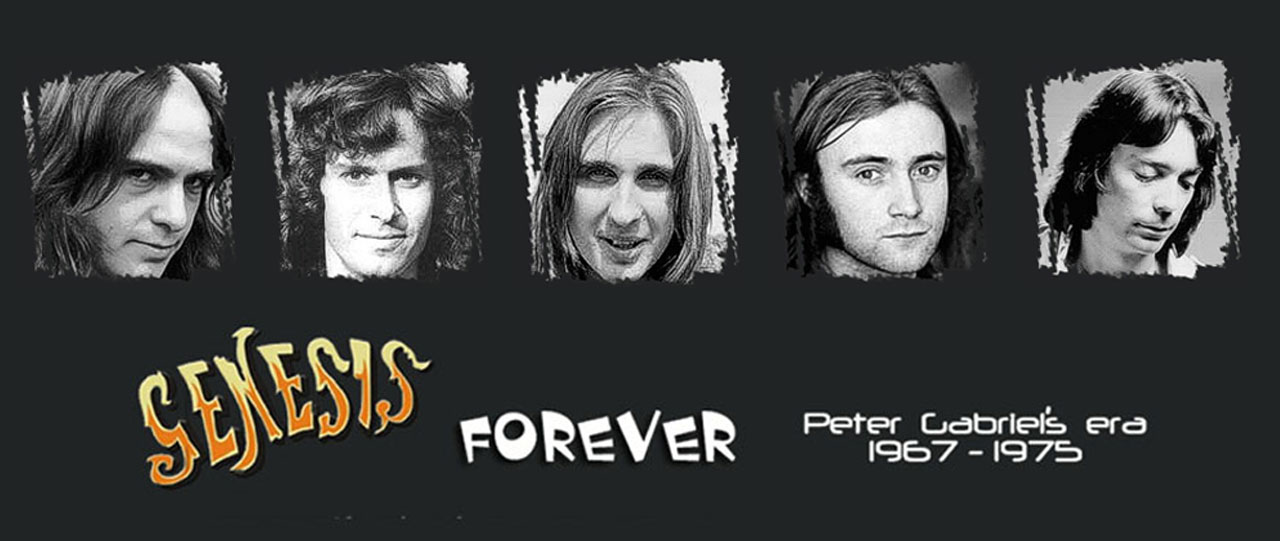
“These guys” are keyboard player Tony Banks and guitarist Mike Rutherford, his Charterhouse schoolmates with whom he formed the band in 1967; Phil Collins, the grammar school pupil and drama student from west London who joined on drums in 1970; and Steve Hackett, the guitarist who followed Collins into the line-up five months later, having placed an advertisement in Melody Maker seeking “musicians who are determined to strive beyond existing stagnant forms”.
Hackett found what he was looking for: Genesis would come to define, or even catalyse, the progressive rock era. Later, after Collins replaced Gabriel as frontman in 1975, they became one of the biggest stadium acts in the world. To date the band have sold 130 million albums. Factor in the members’ solo projects – notably, of course, Collins’s – and you’re looking at global album sales of 300 million.
And yet for all the musical adventurism that characterised early-period Genesis – the 23-minute epic Supper’s Ready and conceptual double album The Lamb Lies Down on Broadway (1974) being the obvious and famous markers – the band still weren’t prepared for Gabriel coming onstage dressed as a transvestite canine.
Collins remembers a particular show in Dublin. Genesis were playing a boxing arena and, in the middle of the set, he spotted Gabriel re-entering from the wings. He was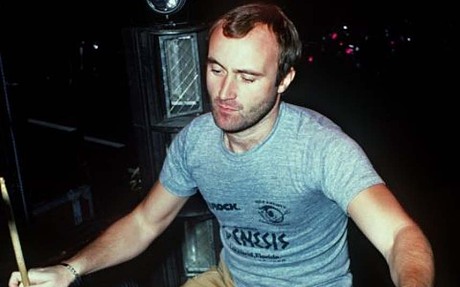 wearing a frock and a fox’s head. The drummer can laugh about it now, and he laughed about it then. The singer’s outrageous clobber generated extra front-page coverage in the music press. And it added “a nought on the end of our earnings… But the costumes at that point were not intrusive,” says Collins. “They just seemed to be part of what Genesis were and I was all for it. In a way, I wore my overalls and [Peter] wore his dress. It was just stuff to go to work in.”
These reminiscences are part and parcel of a multi-pronged and remarkable Genesis reunion this autumn. There is a BBC documentary, Together and Apart. The producers assembled all five musicians for on-camera interviews – the first time they had been in the same room since 1975. A month after its broadcast it is being released as a DVD, complete with extras, titled Sum of the Parts. And preceding all that is R-Kive – a three-CD, 37-track, almost four-hour compilation of the best of the band, plus the best of each of the key members’ solo material.
“When Tony Smith approached me about this, I nearly fell off my perch, I have to say,” says Hackett, referring to the band’s long-standing manager. His surprise was in part due to the fact that he has been long distant from the band – he left in 1977 as a result of the time-worn “musical differences”. Not that he has been estranged from the material for all that time. In the mid-Nineties, he released an album called Genesis Revisited, followed by a sequel 15 years later. In 2012, the guitarist undertook a Genesis Revisited tour, and this year is in the midst of a 20-country Genesis Extended tour (when we speak on the telephone, he is in Italy).
It’s a remarkable afterlife, and an intriguing venture. But as he explains: “The Genesis canon was so very rich in possibilities.”
None the less, “I didn’t imagine for one minute the band would want to incorporate some of the best-loved material by the individuals. That’s a very un-Genesis thing to do. On the other hand, you can’t ignore the power of not just the material we did together but separately. It becomes equally iconic at the end of the day.”
With the greatest respect, that might be overstating things just a little. But certainly some of the solo songs picked for inclusion by Gabriel (Biko, Solsbury Hill), Rutherford (Mike + the Mechanics’ Ivor Novello-winning The Living Years) and Collins (In the Air Tonight and Easy Lover, his duet with Earth Wind and Fire’s Philip Bailey) are classic pop hits.
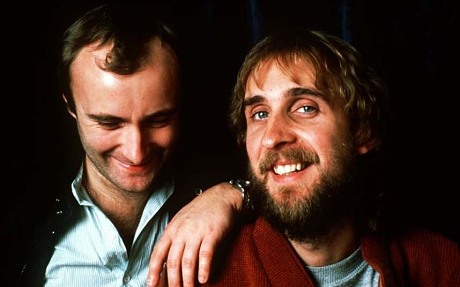 As to why it was an “un-Genesis” thing to do, Tony Banks says that “over the years we all felt quite strongly that we’d keep things separate. It gave everything an identity that it wouldn’t have otherwise.”
The documentary interviews, too, offer some pointers as to the band’s hitherto reluctance to, as it were, cross-pollinate. In his solo interview, Hackett says, “we were a very competitive band”. Collins says that with five musicians who could all write, “we beat each other into submission”. As evidenced by the breadth and depth of R-Kive’s three-dozen tracks, that creative hurly-burly was partly what made Genesis a vibrant and fertile band.
“Absolutely,” says Collins over the phone from New York. Although based largely in Switzerland, he has an apartment in Manhattan and is located in the city part of the time, near his girlfriend (a television news anchor) and his youngest children (who are in Miami with his third ex-wife). “We were all from different backgrounds. Tony, Pete and Mike obviously did the public school thing. Just that alone meant that I was a totally different animal ’cause I came from drama school, where anything went. And [at] public school you’re on such a tight rein – guitars being banned and all this kind of thing. I had a school band – it was encouraged.
“So those examples and everything in between meant we were all cut from different cloth. And even the guys that went to school together, there was probably more acrimony among that lot than there was between them and us.”
Indeed. As Gabriel explains in the documentary, the arrival of the breezy Collins added a much-needed dose of geezer-ish, let’s-get-on-with-it practicality. “Phil felt like a professional who played with other musicians, and was just getting on with the work, whereas we had all these intense dysfunctional family arguments going on.”
Those arguments reached their peak around the time of The Lamb Lies Down on Broadway. Gabriel tells me via email that the ambitious double-album “was intended to be an intense story of a young rebellious Puerto Rican in New York who would face challenges with family, authority, sex, love and self-sacrifice to learn a little more about himself. I wanted to mix his dreams with his reality, in a kind of urban rebel Pilgrim’s Progress.”
This elaborate narrative contributed to what is described in Together and Apart as the “prime venom” between the singer and Banks. “[Tony] just didn’t like me getting away with too much, or getting into a controlling position. He wanted to keep check on my power.” But in Gabriel’s long-held view, “if you really want to define a world, you have to let one person paint it. There weren’t many novels created by committee.”
Banks agrees that he still has issues with the album, specifically “sides three and four [of the vinyl], where the lyric gets in the way of some of the music… Stuff didn’t really climax like I hoped it would – unlike Supper’s Ready, which is a fantastic climax, albeit a little bit pompous in its own way. But it really worked, whereas Lamb… ends on a slight… It’s OK,” he says with an audible wince, “but it’s not the greatest piece we’ve ever done.”
Genesis also had ambitious plans for the live performance of The Lamb… They first toured it in the US, and for all the technical snafus that marred a show heavily reliant on screens, Rutherford describes “a multimedia event [that] was just an assault on the senses. For the public it was amazing – they hadn’t seen anything quite like it before.” That’s an understatement; at one point Gabriel emerged from a phallic structure wearing a costume covered in inflatable genitalia. “Visually, it was just adventurous, and a bit theatre-ish really. And in a sense that’s probably why you always thought there might be some theatrical way of performing it… I feel it could become a theatre piece … maybe a touring theatre piece. Who knows?”
The tensions surrounding, first, the making, then the touring of the album precipitated Gabriel’s departure.
“It was a difficult period for Pete,” says Collins, “because his first child was being born. And unbeknown to me, ’cause I didn’t ask – that’s how selfish we all were in those days – his first wife was having a difficult pregnancy. No one knew. I already had a family; I had adopted [daughter] Joely with my first wife. But he was the first one of us to have their own children. So he was the first person to go through those kind of emotional things.”
Professionally, too, Gabriel was conflicted. Collins recounts how William Friedkin, the director of The French Connection and The Exorcist, “had expressed interest in working with him because of his bizarre [lyrical] stories. So in that respect, when he said that he really wanted to explore this, and asked us to hang on till he’d done that and then he was gonna come back… We all being very young and bloody-minded said, 'No, you either stay or you go.’ And he went and we carried on for a brief time. But William Friedkin didn’t want to split the band up, he just wanted to see if these ideas could work, working with someone like Peter.
“So Pete came back, but we knew that things could never be the same again. You could see that the cracks had started, and when he came back, it was like papering over those cracks, and the cracks reappeared… But it wasn't so much artistic as personal things that were happening.”
By the end of the Seventies, Collins had his own “personal things happening”. He took time off from Genesis to try to save his own marriage – fruitlessly, as it transpired. Twiddling his thumbs at home in Surrey, “I just was occupying my time, because [Banks and Rutherford] were already ensconced in their first solo albums. So I was going to be doing nothing for a year. So I set up a studio in my house in Guildford, and started to just doodle around on the piano and record it. And In the Air Tonight was one such doodle.”
Collins says that he was as surprised as anyone when the song, released in 1981 as his first solo single, became an international smash.
“Being the drummer, we’re not prepared for things like this,” he says, laughing. He was equally wrong-footed by what emerged as the unbidden inspiration for his first solo album. “The story behind Face Value was my first marriage falling apart, which is widespread knowledge now.”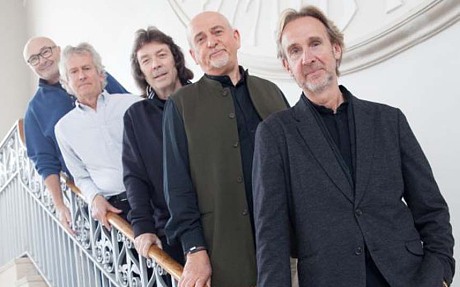
There began one of the biggest pop music careers of the Eighties. Collins racked up multiple No 1 hits on both sides of the Atlantic; inescapable songs such as Sussudio, Against All Odds and You Can’t Hurry Love encapsulated the decade. Courtesy of group hits such as Mama and Turn It On Again, Genesis may have become a stadium-filling concern. But Collins was even busier outwith the “day job”.
“It was great for him,” says Banks in Together and Apart. “He was our friend – we wanted him to do well. But you didn’t want him to do that well! Not initially. But it was the thing, and it kind of never went away… he was ubiquitous for about 15 years. You couldn’t get away from him. Nightmare,” he says, only half-joking.
Such candour and bonhomie make the documentary a revelation and a treat. Collins, no fan of raking over and repackaging the past, says that this is exactly what he wanted from the project. He told the director that getting the five of them in a room together would be key.
“That’s never been done. And I said I would make sure that I would be available whenever Pete could do it. And Pete made a day in London available and we all got together. And it was great. What you see on screen is true and not fabricated. No one’s going in there with painted smiles,” he says.
“And it was good to get a few things off our chests about the misunderstandings that maybe have come up. There are some out there that would claim that I was wringing my hands when Pete left ’cause I could take over and change the band. And I said on camera: 'I never bloody wanted to sing!’ I was happy to be the drummer.” But at the same time, he says: “So what? If I hadn’t been the singer, I would never have had a solo career.”
R-Kive is a reminder that Genesis was a British rock institution that also happened to spawn a brace of planet-rattling solo hits. “The point of the project is to remind people of the variety of songs and music that came out of a school band,” says Rutherford, who calls me from Germany, where he is touring with Mike + the Mechanics. “It’s an appreciation of what a wonderful time it’s been over the past 40-plus years.”
As to the question of whether Genesis will reunite once more, as they did for a tour in 2007, Collins’s health (he has troubles with his left hand and arm) and his personal circumstances (he wants to be around for his young boys) appear to make that a non-starter.
But who knows? The affection between these five middle-aged men who did so much together – and who did so much apart – is palpable on screen. And through the process of digging in their own crates, perhaps they’ll have uncovered a niggling sense of unfinished business.
But ultimately, says Banks, the fivesome’s impulse was: “Let’s just put it all out there and people can make up their own minds. Genesis have a slightly funny image in Britain, and I don’t really know why. We were hated in the late Seventies ’cause we represented an old kind of music. And a lot of the journalists who didn’t like us then ended up resenting us because we survived, I suppose.
“I think people stopped listening,” he says. “And Phil is still so often the butt of so many jokes. But I don’t know a person that doesn’t like In the Air Tonight – and I would say that drum riff is one of the strongest moments in pop music.”