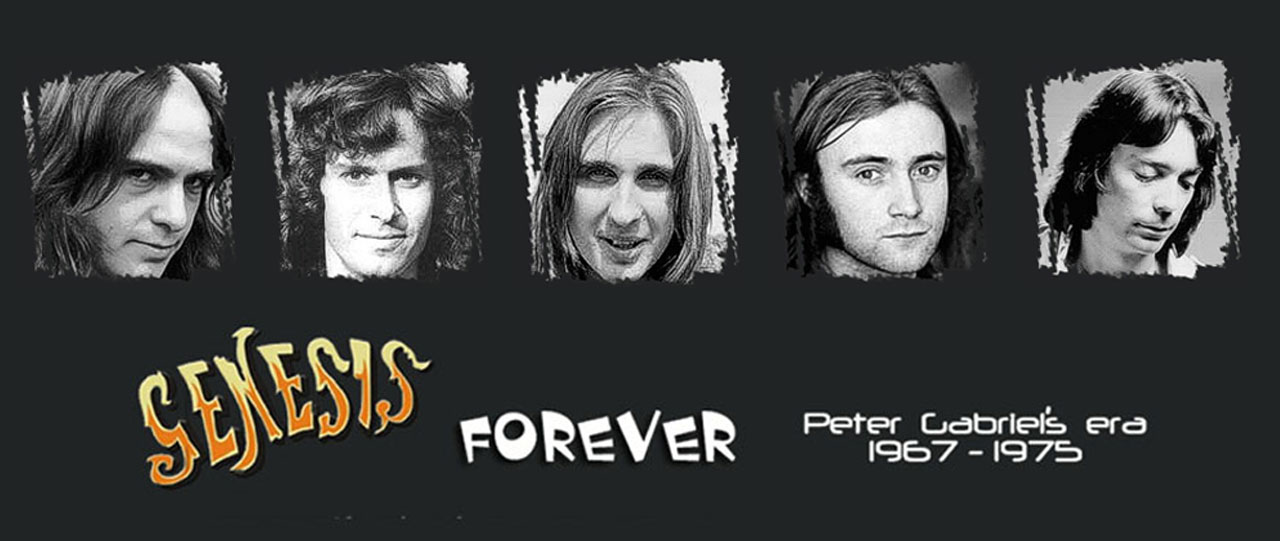



 It shows no or at best only the most minuscule traces of the style that would make them well-known later, and therefore frequently meets with a refusal and lack of affection. Justly so?










BY COLIN MCGUIRE - 10 January 2014
Colin McGuire is a columnist and a Music Reviews Editor here at PopMatters, as well as an award-winning blogger and copy editor for the Frederick News-Post in Frederick, Maryland. He has worked in newspapers for five years, writing columns, editing stories and trying to make sure the medium doesn't completely fall off the Earth anytime soon. You can follow him on Twitter @colinpadraic.
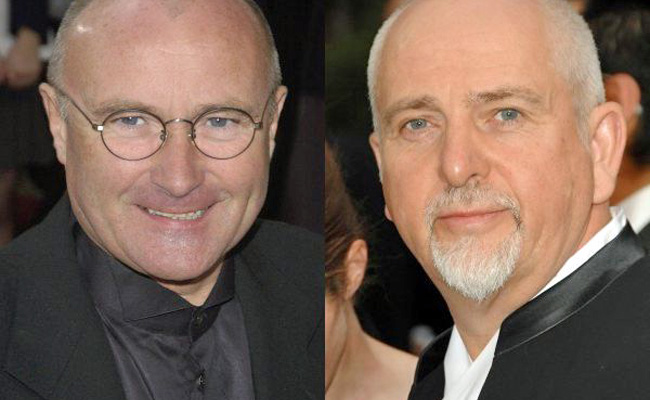 “I have started thinking about doing new stuff ... some shows again, even with Genesis. Everything is possible. We could tour in Australia and South America. We haven’t been there yet.” (“Phil Collins announces return to music”, by Lowenna Waters, The Telegraph, 5 December 2013)
This was what singer/drummer Phil Collins said to German media a month or two ago. It was another stop on his “Wait. I’m not done with music yet!” tour that most major media outlets have chronicled in recent weeks. On the road to promote his Little Dreams Foundation charity in Miami, Collins spoke at length about a renewed itch to one-day play music again that he sort of/kind of wants to scratch. Or, in other words (and as typical pop-star arm-chair decoding would suggest), Expect an arena tour and comprehensive box set by November 2015.
This is great news for the casual Collins’ fan, but it’s an even better quote for the die-hard Genesis enthusiasts to digest. Like it or not, step one toward finally getting the original lineup back together would be making sure the band’s drummer was even physically able to play—it was only 2011, remember, when he claimed he could never get behind the skins again during a fascinatingly dark Rolling Stone profile. We’ve already seen a reunited Collins-led collective head out on a victory lap (2007’s Turn It On Again tour), but imagining a real, live, Peter Gabriel-fronted trek would be ... would be ... well, it would be unprecedented.
At least for us Genesis obsessives. Why? Because it would complete the narrative. It would give voice to an era that’s been muted for far too long. It would afford fans under the age of 30 the opportunity to actually see what the band once looked like without having to settle for tribute acts such as The Musical Box, The Waiting Room or Trespass (no disrespect; they all do fine jobs, but come on, now). It would serve as a reminder for how expansive the band could be. It would put the criminally underrated Collins back where he belongs: Behind a drum kit.
And, most importantly, it would theoretically help put an end to the age-old debate that argues which era of Genesis is the best: Gabriel or Collins?
You see, as nostalgia continues to be in vogue within the fabric of a generation more obsessed with yesterday than it is today or tomorrow, the Leader of Genesis argument is one that occurs almost daily between any faction of fans who follow the English group. They sold out and became too corporate when Collins stepped into the spotlight, traditionalists argue. The Gabriel years were boring and hard to stomach, other listeners claim. It’s a back-and-forth as hotly contested in the prog world as the Beatles/Stones conversation has always been in the rock universe. You can’t be both; you have to be one or the other. It’s either Nursery Cryme or Invisible Touch. No room for compromise. No room for crossing lines.
“Peter Gabriel would’ve never led Genesis, nor any innocents whatsoever for that matter, down the path on which ‘I Can’t Dance’ became reality,” a commenter posted on a forum discussing this very topic. “At this moment I’d rather listen to Invisible Touch over Selling England by the Pound, Foxtrot, or any other of those purported Gabriel-helmed masterpieces,” another writer snapped. (“Peter Gabriel vs. Phil Collins”)
The differences between the two incarnations are subtle, yet extreme; many, though few. The analysis that goes into picking which form of Genesis is better is a contradiction of progressive proportion, a plethora of excuses matched with tepid testimonials rooted more in exposure than they are education. The whole premise is a chicken and egg discussion—if you first stumbled upon the Surrey standouts with The Lamb Lies Down on Broadway, there’s a large chance you believe that anything from 1975 forward is rubbish, and such is reversed if your initial exposure came from 1976’s A Trick of the Tail.
And this, friends, is why a proper reunion jaunt wouldn’t just be a fun exercise for fans of all ages and generations to consume; rather, it would also be an imperative event for any hope of leveling the which-era-is-better discussion once and for all.
See, the problem with labeling one regime better than the other in this particular instance is the mere fact that we haven’t seen at least one of them operate as a unit for nearly 40 years now. This works both ways, of course. Absence will forever make the heart grow fond, remember, and notions of what could have been (as well as what could be) fuel a more rose-colored perception of Gabriel’s stint as leader of the pack. Because he was the first guy to be front and center in Genesis lore, there’s a sense of authenticity quite literally impossible to find while considering any other perceivable lead singer.
Naturally, the first guy to do something doesn’t always mean he is the best man for the job—how are you doing, Pete Best?—but it does invariably mean that he was, well, the first, and that title comes with pedigree, status and an all-around level of supremacy over whatever the second act might be. It’s not necessarily fair, of course, but it’s also not untrue. The originator receives credit for the dream, even if that dream eventually turns into an outsider’s vision of reality. In this sense, Gabriel could never be matched when it comes to the Book of Genesis. In this sense, he is peerless.
But Gabriel’s dream wasn’t necessarily free of nightmares. Critics famously panned the group for being too dull and pretentious and arty and all-around weird when their first few LPs came out. “It’s difficult to find people willing to treat this record kindly,” writer Matt Blumenstein said in his recent review of From Genesis to Revelation, the band’s debut set. “Critics hated and still hate it, it went completely unnoticed in the public eye, and even the band itself prefers to pretend it doesn’t exist. Everyone just gives it that patronizing pat on the head, writing it off as a totally pretentious and juvenile effort to get the band off the ground.” (“Album Review: Genesis - From Genesis To Revelation (1969)”, The Examiner, 18 August 2012)
Enter Collins, who then took the band by its Squonk and subsequently sent Ripples through what would end up being a historically successful pop stardom run. Gone, in part, were the 193-minute opuses and in was a quirky accessibility matched with tender songs that liked to pop up on soundtracks to movies. The group went on to sell more than 100 million records (that number could double, depending on what you read), and the roots of one of the most important prog rock bands ever were essentially reduced to a 25-minute medley that would be performed at Collins-era tour stops.
“This sucks!” older fans would scream.
“Yeah, and ‘The Knife’ runs about eight minutes and 54 seconds too long!” younger supporters would counter.
The truth? Well, both are right. And both, of course, are wrong. Hearing “Illegal Alien” snuggled up against “The Lamb Lies Down on Broadway” was and is disrespectful to the latter’s epic incarnation, and honestly: You could shave at least three minutes off “The Knife” and still have a pretty decent tune.
The point? The Peter Gabriel era of Genesis is great for the same reasons the Phil Collins era of Genesis is great. And what are those reasons? Among them:
1. For as unique a singing voice as Gabriel has, Collins not only pulled off similar sounding croons with success, but he also blended in enough of his own to mirror it with a miraculous sense of tribute and originality. All told, there are only two people in this world who have a voice like Peter Gabriel and Phil Collins, and those two people are Peter Gabriel and Phil Collins.
2. The marathon song-lengths (i.e., the “progressive” side of the group) never stopped existing. “Driving the Last Spike”, which appeared on 1991’s We Can’t Dance, ran 10:08 while another track off that final Collins-era record, “Fading Lights”, went 10:16. Sure, it’s no “Supper’s Ready”, but remember: That thing had seven movements and nearly took up an entire side of an album. It’s not like these guys went all Green Day and started considering 2:30 a viable amount of time for a long-form single.
3. Much like the Gabriel/Collins marriage worked so well vocally, the Collins/Chester Thompson marriage on the drums turned out to be just as valuable. Thompson, one of the great seasoned players who has a resume that should make any respectable drummer blush, essentially clones everything Collins has ever done on the sticks, right down to his signature tom-tom sounds. As part of the live Genesis experience as anybody over the last 30 years, he’s become an unofficial member along with Daryl Stuermer, who himself fills in gloriously for Steve Hackett.
4. It’s Genesis. Many have tried to emulate their signature sound, but few (if any) have ever really succeeded. Be it “Watcher Of The Skies” or “Mama”, there is still that indescribable element that’s always been there when music from that name is played through speakers. There simply aren’t a lot of acts that sound like they sound. Shoot, even Phish couldn’t really pull it off when they helped induct them into the Rock and Roll Hall of Fame a few years ago. And if those guys couldn’t pull it off.
It all adds up to this: No matter which era of Genesis you might prefer, the notion of proclaiming one better than the other is an unfair way to try and pigeonhole some of the best progressive rock that popular music has ever influenced. You can chalk it up to closed minds or wannabe sophistication or ignorance or obsession with tradition or some hatred for the song “No Son of Mine”, but whichever way you cut it, the reality remains that one is not superior to the other. A little different, maybe. But better or worse, no way.
“I do think that Phil was a good singer for a large number of Genesis’ ‘poppy’ songs (he sounded quite nice once he started singing more aggressively in the ‘80s),” blogger John McFerrin wrote during his monstrous roundup of all things Genesis a few years ago. “I don’t totally blame him for ‘ruining’ Genesis by turning it into a pop band (though I do blame him a bit for making Genesis indistinguishable from his solo work there at the end); as a backing vocalist to Peter, he couldn’t be beaten; and most of all, HIS DRUMMING WAS FRIGGIN’ AWESOME. ... This was never the most consistent of bands (actually, one of the things that strikes me most about Genesis is that, in some way or another, every one of their albums represents some integral feature of the band in transition, whether it be the rise and fall of Steve (Hackett)‘s prominence, or the transition to being a pop band, or one of many other examples) but when they did well, they produced music so stunning that it continues to boggle the mind to this very day.” (“Genesis”)
It does. Give one listen to “Seven Stones” and follow that up with both parts of “Domino” and you’ll continue to find countless elements to value, despite the former coming from the Gabriel days and the latter being recorded when Collins was at the helm. It’s a hell of a run and it’s one that is so unfairly overlooked by all rock historians and/or experts that something needs to be done to cement the group in the minds of all pop music enthusiasts as something more than “That Band that Does That Weird Dance”.
That something could be one final properly reunited trek across the world. Gabriel has been active in recent years with his covers records, and his Back to Front tour has been hugely successful through both America and Europe. So, he’d be ready to don that “Britannia” costume one more time, right? And if Collins can be cleared to sit behind a drum kit for three hours a night, he could surely rock “Los Endos” like it was 1976 again before stepping out front to run through “Follow You, Follow Me” or something, couldn’t he? Tony Banks hasn’t stowed away his keyboards and Mike Rutherford doesn’t think that a Mike and the Mechanics reunion is happening anytime soon, does he?
Wait. I don’t sound too delusional, do I?
I hope not. Because no matter what era it is, Genesis is a band that deserves far more recognition than it receives these days. A tour would give us all one last, level-headed, all-things-considered memory of a group popular culture seems so willing and so eager to either forget or deride. It would close a final chapter yet to be written in the book of the band. Most of all, it would feel like much-earned resolution for a group whose story has become so bogged down by lame jokes and internal drama that it’s sometimes hard to remember exactly how great “I Know What I Like (In Your Wardrobe)” really was. After all, it takes a special kind of genius to write lines like “When the sun beats down/ And I lie on the bench/ I can always hear them talk/ Me, I’m just a lawnmower/ You can tell me by the way I walk.”
Gabriel wrote it. Collins immortalized it. And to this day, it still sounds uniquely genius. No matter which era it came from.