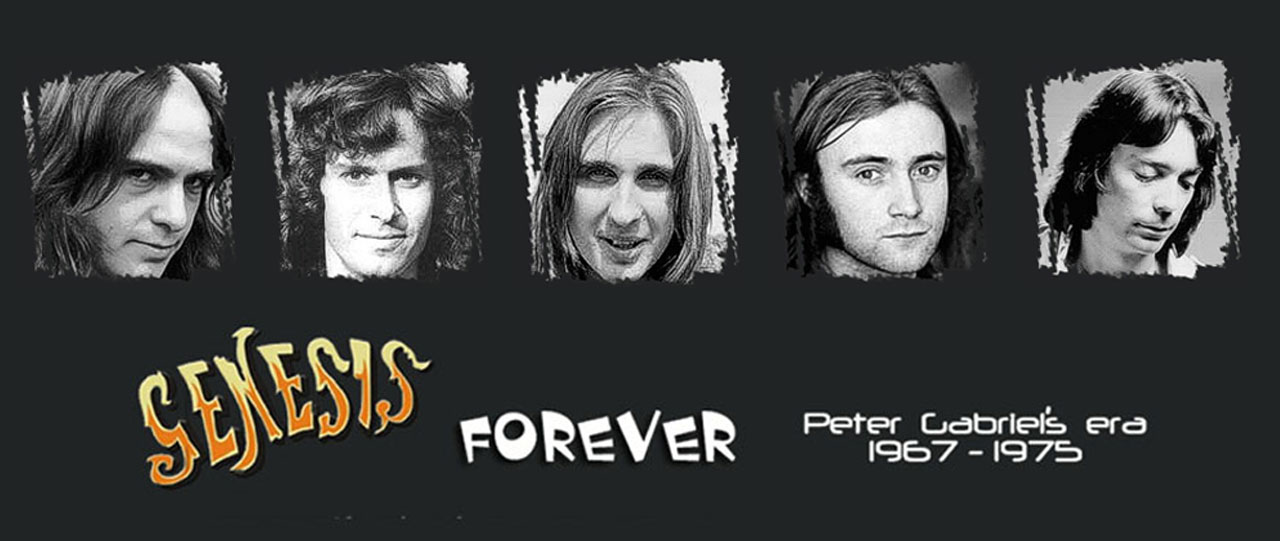


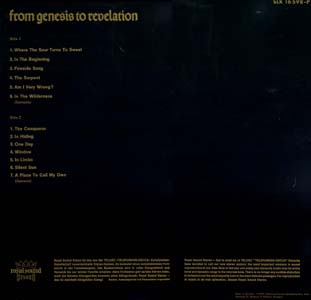
 It shows no or at best only the most minuscule traces of the style that would make them well-known later, and therefore frequently meets with a refusal and lack of affection. Justly so?




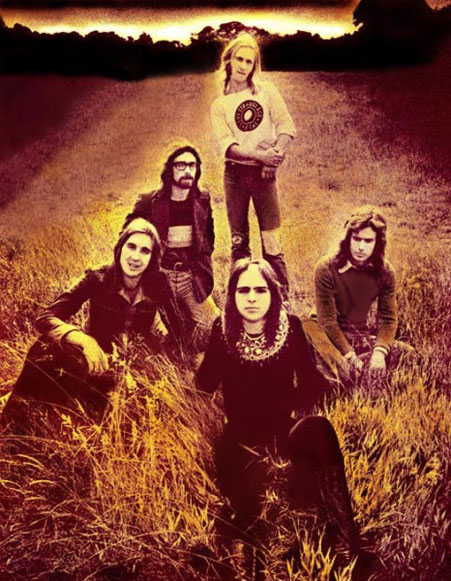




"Foxtrot" opens with the classic 'Watcher of the Skies', a prog rock masterpeice which also became a live set opener. The song boasts the worlds most instantly recognisable mellotron introduction before it launches into a semi sci-fi lyric which nods heavily in the direction of Keats' poem "On First Looking Into Chapmans Homer", from where the title was taken. James Joyce used the term in a part of his "Chamber Music" music too so that was quite possibly an influence as well. Remember, this was posh kids we were talking about here so Keats and Joyce are probably not as surprising influences as you might think !! With its strong bass, continual time changes and some extremely lively keyboard and guitar sounds it is unsurprisingly a popular song amongst hardcore fans. I would certainly put it up there in the top half dozen Gabriel era Genesis offerings. However, I am going to go out on a limb here, alienate myself from most Genesis fans and probably lose all credibilty as a reviewer by stating that despite the presence of at least three other classsic tracks on this album my favourite is the little mentioned 'Time Table'. A superb gentle little song lyrically packed throughout with long lost ideals and Arthurian imagery, a beautiful melody and some great understated musicianship it just got me from the very first time I heard it.
'Get 'em Out By Friday' is the first of the epic 'playlets' within the album although at eight and a half minutes it is most certainly the epic little brother on offer here. Gabriel does his man of many voices playing the roles of several different characters during a track which is basically having a pop at the UK's housing policies of the time. The opening verse sees the fat cat executive instructing his minion, known as The Winkler to evict the tenants of a property forthwith. However they refuse to leave and the lyric then basically tells the tale of The Winklers efforts to get rid of them by first increasing the rent and then by bribery. After a short instrumental passage we are then taken to the future where a TV announcement is made that human height is to be restricted to four foot so more people can fit into the properties that the fat cat business man has acquired. It doesn't actually say how they proposed to achieve this but hey thats what poetic license is all about. Its not all about the lyric either although that is obviously the songs main focus. Musically there is a ton of stuff going on with Gabriel himself contributing oboe, flute, tambourine and bass drum along with his multi faceted vocal.
'Can Utility and The Coastliners' is a favourite of many Genesis fans but it is certainly on e of the albums rare low points for me and I can't really see its standout appeal in amongst such good material. Lyrically the song is based on the legend of King Canute. A short instrumental 'Horizons' is played by Steve Hacket alone and again despite being very proficiently played is a little bit pointless to me and could easily have been left off. With a running length of over 50 minutes, which was extremely long for a vinyl album at the time, there were some issues with loudness as longer records have to be cut at a lower volume. Leaving out 'Can Utility...' and 'Horizons' would have made the album seven and a half minutes shorter ...... but still quite lengthy for the time ....... and given a louder cut. Of course in the CD age and with remastering this is no longer an issue but back in the vinyl days it was a minor issue for me at least as the volume needed to be cranked right up.
At almost twenty three minutes in length 'Supper's Ready' is almost more than an epic and is one of progressive rocks true masterpeices. Basically the song is composed in seven parts although there are some repetative themes which reoccur throughout the song. Gabriel goes straight into the lyric to 'Lovers Leap' without any introduction and delivers a beautiful vocal and melody over a backing which features a Hohner pianet which is basically a gentle electric piano, several acoustic twelve string guitars, a cello, a flute and bass pedals which were actually used quite heavily throughout the album by Rutherford. Gabriel claims the lyric was inspired by a real life supernatural experience that happened to him and his wife. He claims that one evening she started talking in a totally different voice and had a violent reaction to him holding up a makeshift cross. 'The Guaranteed Eternal Sanctuary Man' is a slightly harder faster peice which sees good use of Hammond organ and the first drum contributions by Collins. On the opening part he had been limited to cymbals, triangles and a bell. Gabriel's vocal is much harder and in more of a rock style than the gentle folkiness of the opener. A short reprise of which leads into 'Ikhnaton and Itsacon and Their Band of Merry Men' which is almost a full blown rock song with a guitar solo and some classic prog interplay of keyboard and guitar. 'How Dare I Be So Beautiful' is another slower section which is based on the Greek myth of Narcissus. At the end of the peice the lyric suggests turning into a flower to which Gabriel responds quizzically in the voice of a different character "A flower ?". That leads perfectly into 'Willow Farm' which features some truly wonderful lyrics, vocals and characterisation from Gabriel. How can you not like lines like "Mum to mud to mad to dad", "Dad Diddley office" and "Mum diddley washing" etc. Musically, vocally and melody wise the track is bouncy, jaunty, whimsical and total fun. Initially it was going to be a standalone track rather than part of the 'Supper's Ready' peice. 'Appocalypse in 9/8' is the heaviest segment featuring a powerful vocal from Gabriel and some pretty hard and complex playing from the band. It then leads into another reprise of the opening section 'Lovers Leap' during which Gabriel reverts to the gentler melody and vocal delivery of that opener but over the chord progression of the second part of the song 'The Guaranteed Eternal Sanctuary Man'. This acts as a segue into the final part of the song 'As Sure As Eggs Is Eggs' which provides a powerful ending with Gabriel's William Blake inspired lyrics which may also nod in the direction of Shelley with the King of Kings reference belting out over some pretty heavy instrumentation. I have one criticism and one criticism only of this epic track. Why was it allowed to fade out, surely after twenty three minutes it deserved an ending.
"Foxtrot" gave Genesis their first UK top twenty album and launched them into the big league of progressive rock. With his many character and costume changes Peter Gabriel ensured that live shows of the time were almost as much about theatre as they were about music. As good and talented as the rest of the band are this album positively reeks of the character and personality of Gabriel and although it is a genuine band effort I would have to say that the lyrics and characterisations of Gabriel are what makes this album stand head and shoulders above most progressive rock albums. The Genesis story would go down a different route in future years and many are firmly in either the Gabriel or the post Gabriel camp, with some completely disregarding one in favour of the other. Personally I am happy to have a foot in both camps and whilst "Foxtrot" doesn't quite have the polish or the mainstream commercial appeal of 'A Trick Of The Tail" it is still a five star classic album and is, for me at least, the highlight of the Gabriel years and maybe even of Gabriel's entire career.