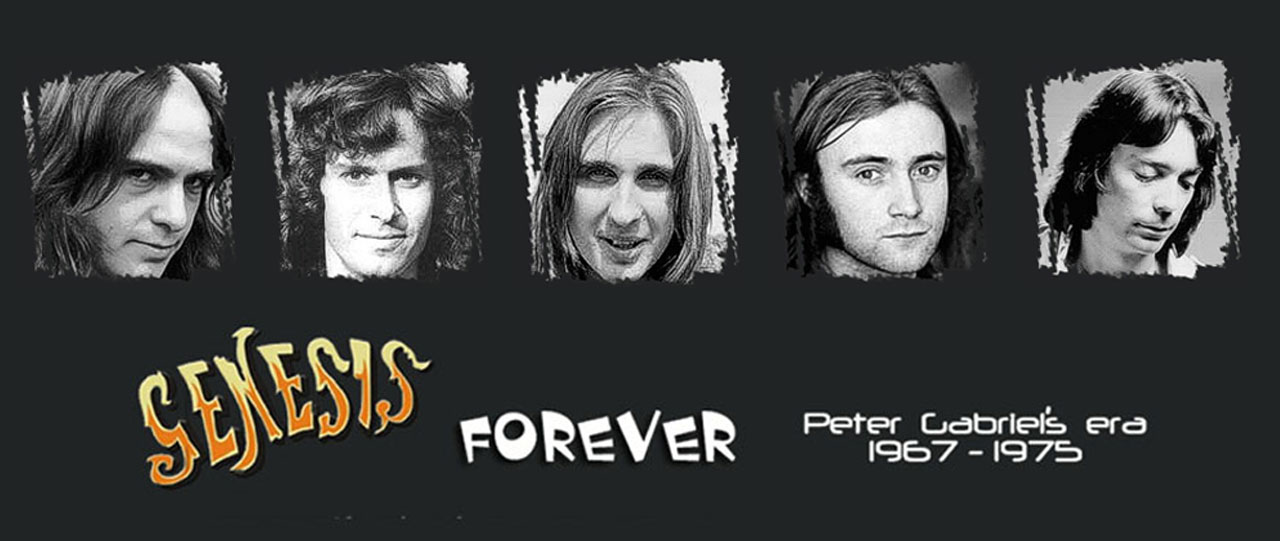



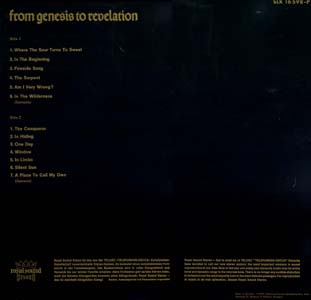
 It shows no or at best only the most minuscule traces of the style that would make them well-known later, and therefore frequently meets with a refusal and lack of affection. Justly so?



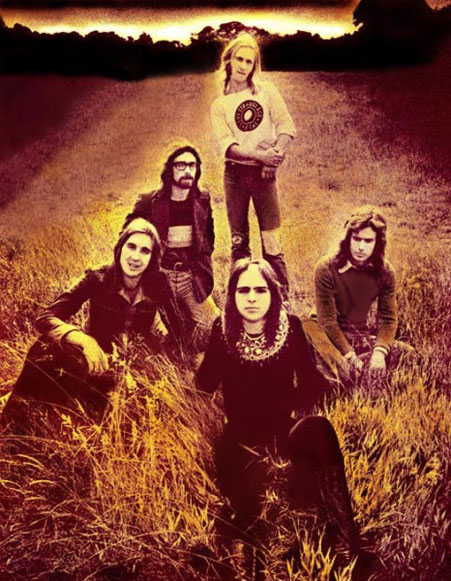




And the weird thing is, I've never even been a fantasy fan — the impressive thing is that you don't have to be.
1. "Watcher of the Skies", like many Gabriel-era Genesis songs, feels like the soundtrack to the speech that precedes an epic battle. And it's not like the band are trying to avoid that image — the constant, jittery one-note guitar backing evokes an oncoming charge, Collins' cymbal splash at 4:12 (and 5:44) sounds like a soldier firing a gun into the air to underline a point from General Gabriel, whose words craft fantasy/fairytale scenes with an emotional depth that most other progressive rock bands fumbled with (or didn't bother with in the first place). Gabriel, undergirded by the rest of the band, sounds like he truly cares about these characters (many of whom he imitates by taking on different tones of voice), and that's a refreshing thing to hear in a genre that usually gave us either aimless trails of words that turned out to be fairly meaningless (i.e. Yes) or a lot of clinical and crushingly annoying cynicism (i.e. King Crimson). Listen to the way Gabriel sings 'Creatures shaped this planet's soil/Now their reign has come to end' backed by those space-y organ chords — he sounds legitimately empathetic; it's like he's a guy who has to send a bunch of refugees off to another kingdom after his men have conquered their homeland.
And then later in the song, as if to acknowledge that things must go on, he sings 'From life alone to life as one/Think not now your journey done/For though your ship be sturdy/No mercy has the sea' and Tony Banks gives some chords that look down on it all like passing clouds.
2. Though Gabriel's utter conviction in his words is, as mentioned, very refreshing, it's something of a mixed blessing. "Time Table" doesn't entirely benefit from Gabriel's emotional force - though the lyrics themselves are good - because with the more ballad-esque piano arrangement the emoting sounds like over-earnest overkill. On the plus side, Banks' childlike toy piano solo is surprisingly charming. (Surprising, 'cause many of his solos are barely worth an adjective.)
3. "Get 'Em Out by Friday" is where they start having some real fun. By which I mean, silly fun. And all the better, too, since the narrative force of the lyrics needs this kind of eccentricity to last for eight-and-a-half minutes. It gets it: listen to the way the inverted keyboard chords compact with the drums in the intro, 25 seconds in; the way everyone hits the ground running as soon as Gabriel hits that first word; the radical tempo and dynamic shifts that make room for the meadowy flute-assisted jangle. It's easy enough to get lost in the shifting directions of the music. But don't ignore the words themselves, which demonstrate Gabriel's capacity for sly social satire. "Get 'Em Out" is inspired by the real-life greed of landlords in '60s and '70s England, who would gradually raise the rent ('just a bit...') to force the tenants out for further monetary gain in the future. Alarmingly relevant today, actually. Almost creepily so, in fact, since the flash-forward into the future (that's right, this is the kind of band that includes inaudible stage directions and theatrical scene-setting like 'EXTRACT FROM CONVERSATION OF JOE ORDINARY IN LOCAL PUBORAMA') lands on 2012. Gabriel's slip into falsetto on '...they'd take more money', and the line about 'buying all the properties that have recently been sold, taking risks oh so bold' gives you the prophetic gist.
4. "Can-Utility and the Coastliners" is the least structured track on the album; the least whole. It's bookended by a lovely Medieval-esque organ-acoustic guitar progression in a series of arpeggios, and Gabriel sings it very well indeed — his bursts of power and dynamic fluctuations are in full form. Hell, even the transition into the anxious forest dance part works for a minute or so. But then the song sinks into a totally unexceptional instrumental section that's only there to pad out the first side of vinyl. The organ in the last half is a bit overeager (shall we say), and the lyrics are just talk.
5. The fleeting guitar instrumental "Horizons" was a good choice to open side two, what with all the Sturm und Drang that came before. Aside from being a gorgeous showcase for the underused Hackett's classical phrasings (its cadences are quite Baroque), "Horizons" is also a great example of the sheer glorious tone the man was able to get.
6. "Supper's Ready" is usually cited as the band's peak achievement. And it probably is; it's a 23-minute suite with Tolkien-esque imagery that lyrically recounts nothing less than the history of the world — or, as a progressive rock band calls it, 'Tuesday night's practice.' And in terms of the physical strength of the music and the emotional content in the vocals, you can see why some people call the track the epitome or prog rock. Me, I think it's worth noting that not all of the parts are top-tier: "The Guaranteed Eternal Sanctuary Man" squeezes by on Banks' organ fills, but "How Dare I Be So Beautiful?" is a listless drift that only seems to exist because the band felt they should somber up after "Ikhnaton and Itsacon and Their Band of Merry Men", and the "Apocalypse 9/8" part (before they return to the "Lover's Leap" theme, superbly) is blah — Banks doesn't seem to be totally in control of his solos in the latter.
But for the most part, yeah, it's a pretty spectacular piece of work. The "Lover's Leap" part (the first three-and-a-half minutes) may contain the most plainly beautiful lyrics of Peter Gabriel's entire career, precluding the entry into a Narnia-type land with the kind of sentiment that is - not to get too sappy here - as universal and eternal as love itself. ('Hello babe, with your guardian eyes so blue/Hey my baa-bEE!, don't you know our love is true...' — that hiccup gets me every time.) "Ikhnaton and Itsacon" is probably my personal favorite thing Genesis ever did; I'm a sucker for triumphant music, and that piece is fucking triumphant, man — Hackett's guitar solo at 7:58 splits the sky. (Also, a good demonstration of Gabriel's humor: 'Something tells me I'd better activate my prayer capsule....' Yeah dude, that's probably a good idea...things are getting pretty crazy out here.) "Willow Farm" sees Gabriel get very goofy very abruptly ('...he used to be A BRITISH FLAG!') and continue with dwarfish voices trilling around in what sounds like good cheer (12:30-13:00). And the imagery throughout the entire piece is sundry and engrossing: a lazy sitting room with a lover by your side; a moonlit garden; dark-skinned warriors crouched on a hill waiting for battle! It's the kind of track that you put on and then just lie down and close your eyes and listen (but don't sleep). (I often do this anyway, but "Supper's Ready" seems tailor-made for that kind of sonic immersion.)