

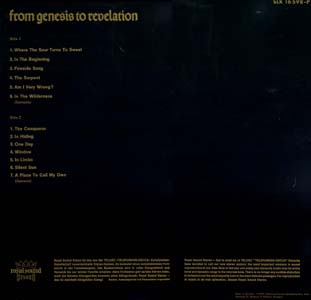
 It shows no or at best only the most minuscule traces of the style that would make them well-known later, and therefore frequently meets with a refusal and lack of affection. Justly so?







 Whee, this is one mightily frigged out record. My guess is that Peter Gabriel thought people were still taking him less seriously than necessary, due to all the fox dresses, willow farms and Harold the Barrels. So, one thing he hadn't still come up with was an extended, pretentious rock opera. As you might have guessed, this is a double album - a double-length rock opera. But ohmigosh, what a rock opera this is. Apparently, after a lot of squibbling one comes to the conclusion that it does have a plot: it's based on the lifestory and hallucinogenous experiences of a Puerto Rican tramp called Rael, in order to impersonate whom Gabriel even sacrificed his long hair and trippy stage costumes (some of them, of course - over the duration of the live Lamb show Peter still used to change quite a few outfits, including some gigantic monstruous "pods" and other different stuff; but normally, he just put on a ripped T-shirt and that was it). However, not even a supertalented scientist, heck, not even a 'supernatural anaesthesist' can decipher what the hell is really going on, be it in reality or in Rael's stoned mind.
This time Gabriel apparently didn't leave any modesty in his lyrics. You'll find everything here, it's like a 'Genesis encyclopaedia': tramps, anaesthesists, hairless hearts, deep caverns and imaginary (and real) cages, colonies of slippermen, obscure Greek mythology outtakes, quotes from hundreds of poets, writers and composers, and, of course, all of the band's clever and not-so-clever musical tricks. All of this makes for a really terrible first listening experience, you may believe me. Sitting through the entire album was originally a task worthy of a true Hercules. And even after repeated listenings, when one gets used to the music, lyrics and general atmosphere, there is still a nagging thought that pursues me - what's the meaning of this whole thing. Taken individually, the imagery of certain of these songs is working quite all right; but as a whole, the album is just one gigantic question mark. What's the sense of Rael pursued by a black cloud over Broadway, waking up in a cage, meeting the "carpet crawlers" and the Slippermen? What's the sense of him being castrated, and why insert all that scene where his brother John is falling over imaginary rapids and Rael chases after him in order to save him? What's the "It" that concludes the album? Don't even try to answer. It's a put-on. If it weren't for the form in which Gabriel and Co. dresses all that putrid stuffing, I'd probably leave my former rating of six as it was. Fortunately, on a pure musical level it certainly deserves better - after all, it's no worse than The Wall.
The main point and accent of the imagery has certainly changed (in fact, the album might be considered an all-out Americano anti-reaction to the purely British Selling England), but the band's sound is still for the most part the same, although they are slowly moving into the dubious "post-Gabriel progressive" territory, with Banksynths now playing a more prominent role (the main synth riff of 'It', for instance, while good in itself, almost coincides with the one used on 'Robbery, Assault And Battery' two years later). The sound is also quite energetic, roarin' and tearin', but... it doesn't always work.
Now look here, I'll be the first to admit that the album does feature a lot of interesting and sometimes even thrilling ideas (I'll be listing the best of these in a moment), but there's really too much filler. Sometimes a song starts out just fine and turns into a banal screamfest or into a particularly nasty Banksynth fiesta soon after. Like 'In A Cage', for example, the first verse of which is wonderful and the rest of which is... well, decent, although I used to hate it, but still, it's just a normal rocker, that never lives up to the glorious introduction ('I got sunshine in my stomach/Like I just rocked my baby to sleep...').
Among the best stuff on here I'd certainly have to point out the title track which is a golden classic and deservedly so. It really starts the album on a high note, with, once again, Gabriel's vocal performance (and Tony's tinkling piano - dump those synths, Tony!) making it stand out. And, like you know, the first disc is not really bad at all. Once again, I draw on comparisons with The Wall: Disc 1 is near-amazing, fresh, exciting, full of good melodies and rich with subtle, "light" atmosphere, but it's on Disc 2 where hell's bells finally strike and you have to hack through its jungles with a battleaxe.
Indeed. 'The Lamb Lies Down On Broadway'? Roaring and tearing, kicks the album off with an energy never matched afterwards. 'Fly On A Windshield'? Excellent atmospherics (gives a great feel of the black cloud slowly and rhythmically advancing on Rael), until suddenly the drums kick in and Tony and Steve play up a thunderstorm while Phil pounds like a mule. 'Cuckoo Cocoon'? Silly, refreshing "nursery" interlude. 'In The Cage'? See above. 'The Grand Parade Of Lifeless Packaging'? Incredibly catchy chorus. 'Hairless Heart'? Beautiful, beautiful instrumental, one of the most emotional, climactic melodies on here. 'Counting Out Time'? Ah, there's a real masterpiece - in between all these heavy progressive epics is etched a jovial pop number, devoted to Rael's memories of his early days, reading sex manuals before his first date and finding out all the 'hot spots' on pages so-and-so. Unfortunately, the manual lets him down in the end. (Here's another argument in favour of my hypothesis about Pete's deep sexual complexes, but I guess everybody already knows about that). 'Carpet Crawlers'? Another beautiful ballad, quiet, melancholic and with a philosophy of its own, not to mention the timeless Gabriel falsetto on 'you gotta get in... to get OOOOO-UUT!' 'The Chamber Of 32 Doors'? How could one forget the immortal lines about 'I'd better trust a man who works with his hands...'.
In the end I only left out 'Back In New York City' which is kinda ugly. But when it comes to Disc 2, I humbly lower my hands and turn off my head. BITS, yes, BITS and PIECES of songs on there are enjoyable, but in general it's just too plot-heavy and Gabriel is too busy proving his being well-educated and well-read for it to be consistently enjoyable. I don't want to say that these melodies really suck, but they really go overboard with their complexity, not to mention that musically, you get all the most necessary ideas on Disc 1, while Disc 2 just keeps repeating and recycling the same stylistics over and over until you're just sick. Besides, it features such minuses as 'The Waiting Room' - a load of stupid atonal noises that never trigger any nerve. The only three songs on that disc that I enjoy in their entirety are 'The Colony Of Slippermen' (more because of its intriguing theatricality than anything else), 'The Light Dies Down On Broadway' (because it's a reprise of the title track, as you understand) and the closing 'It'.
That said, I still raise my former rating to an eight (well, I promised it would almost definitely grow), because... well, because this is still a unique and highly intriguing album. I like the general style, too, although my main complaint is that I can hardly hear Mr Hackett at all: he was put very much in the background by Tony, and it becomes very noticeable if you put Lamb on immediately after Selling England. Poor Steve. Nevertheless, like I said, Tony rarely goes overboard with his synth stylings on here, and there's still quite a lot of piano and different instrumentation to spice up the pie. And out of all double-length progressive albums, Lamb after all these years still turns out to be the most accessible.
Of course, as everybody knows, right after the tour Peter quit Genesis, never to rejoin again except for a single charity concert; as he himself explained it, he was far too afraid to get trapped in a band whose popularity was steadily on the rise and become just your average artificial rock star. Well, supposedly he should have stayed around until 1981 or so - because Genesis didn't actually become a mass audience icon until the early Eighties. But to each his own ways, and after all, Peter's solo career easily beat out Genesis' together career.
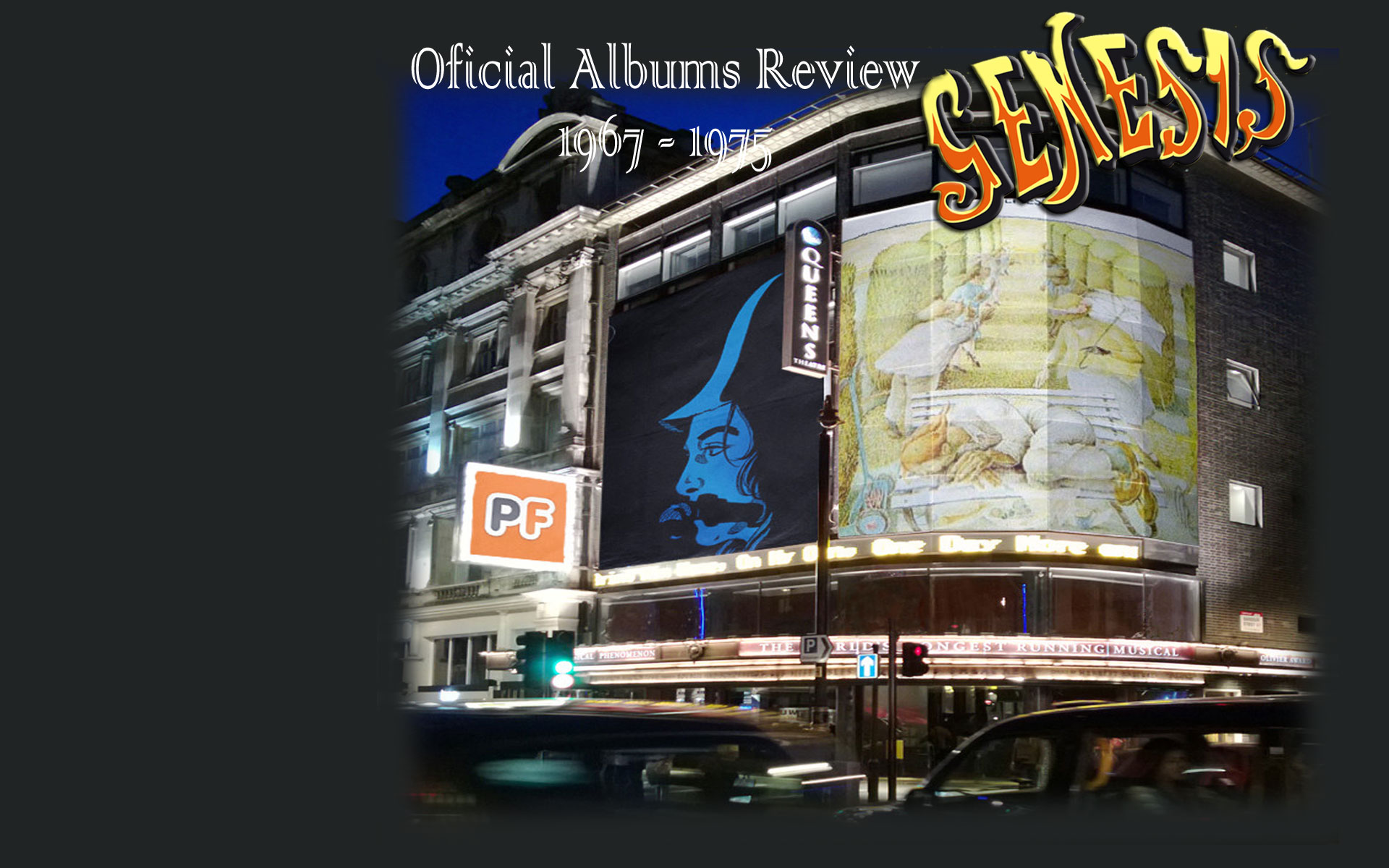 Yup, either this or Genesis' only reason for existence. Truly, if this one were not my first Genesis album, I doubt that I would ever think of getting deeper into the band. Nursery Cryme and Foxtrot might have been okay, but you have to work really hard in order to appreciate even some of the material, and a lot of it I still treat as absolute filler. Not so with this truly timeless effort. For once, the band seem to have resolved all of their problems. For once, the instrumental passages are suddenly not so boring or even not boring at all - and, quite often, they are downright beautiful. For once, Steve Hackett gets quite a lot of chances to make good use of his instrument (even though he's still exploiting that silly pedal of all things). For once, Tony Banks neglects his synths to play some fresh, exciting piano. For once, Gabriel puts a little bit of everything into his lyrics - from plain, good old-fashioned humour to ultra-bombastic, but still clever lyrics. And, for the first time, Phil Collins gets to shine with a self-penned song, and it doesn't suck! Now that's what I call an album.
Okay now, if we prefer to refer to exact track names, then this is what I'd say. The album opener, 'Dancing With The Moonlit Knight', is my current bet for best Genesis song ever. To my mind, the hidden potential of Gabriel's voice didn't come to light until the opening, almost accappella lines, in which majesty alternates with irony and sarcasm with lamentation. The instrumental break is superb, with the synths propelling everything to a fast, butt-kicking groove and Hackett's guitar catching up with the keyboards with gusto. And the closing section, with Mike Rutherford endlessly repeating the same acoustic four notes over and over with synth noises in the background, is simply beautiful, though it might be about thirty or forty seconds overlong. Then comes another favourite - their 'hit single' (which I put in quotes because it wasn't really a hit single, but it was the only thing close to a hit single in Gabriel's epoch) 'I Know What I Like (In Your Wardrobe)'. It demonstrates one thing: that Gabriel has finally become able to come up with short, but still thoroughly enjoyable pop tunes. But the lyrics? 'But I remember a voice from the past/Gambling only plays when you're winning/Had to thank old Miss Mort for schooling a failure'. Groovy. I love this song, too. It has it all: complex, but catchy verses, a bombastic refrain, and, above all, Phil's ingenious drumming (just listen to those rolls all over the place). Classic!
Next? 'Firth Of Fifth', yet another fan favourite. I expected to hate it because it was so pompous and self-indulgent, with lyrics ranking among the band's most pretentious (I wasn't even a bit surprised when I learned their author was Tony Banks and not Peter), but I can't deny the melody. And the instrumental part strikes me as being one of the most intelligently written pieces of music I've ever heard among prog rock tunes. The way that the tearful flute part, the sorrowful piano part, the upbeat synth part and the lamenting guitar part all mesh with each other and participate in creating a complete 'wall of tension'... wow, and then this 'wall of tension' suddenly comes crashing down with a 'consolation' synth part. Wow, now that's really clever. I can imagine that hearing this live might result in a catharsys. Classic, too. And then, after all this bombast, we suddenly go on into a three minute acoustic folkish ditty that introduces us to the songwriting and singing talents of Mr Phil Collins. Clever guy: actually, he can write a good song and knows how to sing it, too! Some might find 'More Fool Me' a bit too saccharin-ee for their tastes, but me, I'm just alright. I do agree that he was banally ripping off the Beatles, though, because sometimes it sounds like something John Lennon might have taped around as a demo, then thrown into the wastebin. That's a compliment to Phil Collins, in case you haven't understood.
Another epic - 'The Battle Of Epping Forest' - well, it might not be a fan favourite, but I've slowly grown addicted to it. For me, this is one fine damn jolly amusing song, with Gabriel just having lots of fun in the studio as well as, once again, demonstrating the unlimited capacity of his voice. Overlong? Hell, anything that's eleven minutes long is overlong. But it rarely becomes boring, that's for sure. There's a lot of catchy hooks all over the place, melodical as well as lyrical, and the part about the 'reverend' falling into the jaws of sin is downright hilarious, even if it really has nothing to do with the 'battle of Epping Forest' by itself. Unfortunately, this is where the album slowly starts to give in, because the final two songs (the instrumental 'After The Ordeal' and another lengthy suite, 'The Cinema Show') just don't thrill me that much. Not that they're bad: were they placed on, say, Nursery Cryme, they could have become the highlights there. On here, they just sound a little weak: 'After The Ordeal' is, let's face it, hardly necessary with the far superior instrumental arrangements on 'Firth Of Fifth', while 'The Cinema Show' borrows its melody from the first parts of 'Supper's Ready' and, even with that, displays very little energy. Because Selling England is, in its essence, an energetic album - the one that keeps your blood flowing most of the time. 'Dancing With The Moonlit Knight' shakes you, 'I Know What I Like' kicks you, 'Firth Of Fifth' simply moves you and 'Epping Forest' plainly confuses you. 'The Cinema Show' is more like 'Musical Box': it might thrill you, but it sure don't inspire you or rouse you. Not that everything needs to rouse you, of course, but still... but still, shucks! there's five great songs in a row, resulting in thirty-five minutes worth of great music, plus two good songs. Not to mention that the last minute and a half of 'Cinema Show' is really an independent ditty called 'Aisle Of Plenty' which is actually a reprise of the best part on 'Dancing With The Moonlit Knight'. Good lads! If you dig intelligent British prog rock at all, you can't live without this record. It's great to the point of being my favourite prog rock album of the year. Which year? Why, this year, of course! What other year I'd be living in?
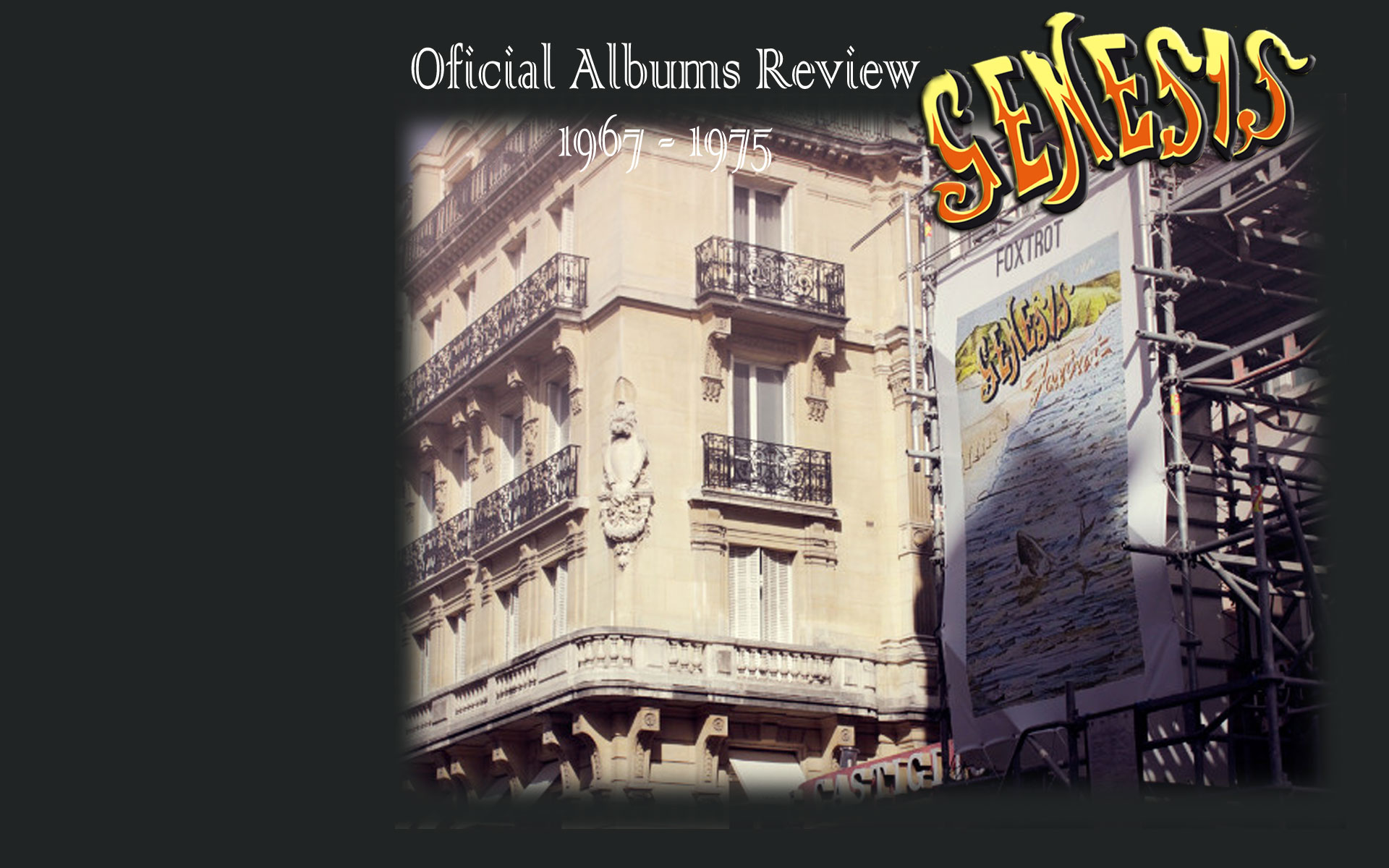 More of the same formula: lengthy marathons with boring instrumental passages, increasingly complicated prog lyrics and Gabriel's fantastic singing skills. But even better this time around; the instrumental passages are generally less boring because they tend to be shorter and more multi-part, the lyrics are getting interestinger and interestinger, and Gabriel's singing skills are on the rise again, as he goes deeper and deeper into his amazing brand of "rock theater".
Just like in Cryme, there are three lengthy marathons, but one of them is really long. You know, of course, what I'm talking about: the famous side-long 'Supper's Ready'. While you'll see quite a few reader comments condemning me for my initial rejection of the most part of the suite below, time has certainly improved my feelings towards it. Obviously, the suite was written mostly with the aim of "not falling behind" the other prog bands like ELP, Van Der Graaf Generator, King Crimson and particularly Jethro Tull, all of which had already released side-long pieces by the time - and some of them had done pretty well on the charts. But fortunately for us, Peter Gabriel was such a talented fella that the effort eventually turned out to be much more than an obligatory tribute to his predecessors.
'Supper's Ready' is basically Gabriel's take on the Apocalypse (actually, one of the parts is subtitled 'Apocalypse In 9/8') - I will not go into details on the song's 'spiritual essence' and the meaning of all of its individual sections, because all such things are rather debatable. There are lengthy resources for the explanation of 'Supper' on the Net, together with resources annotating The Lamb; check 'em out for yourselves. Here, it must be noted that most of the parts are supposed to have actual meaning, and the suite flows quite well. Kudos to the band, in particular, for actually providing us with quite a few melodies: the twenty-plus minute length is fully compensated by the multiple themes, ranging from soft and subtly ominous to gritty and openly aggressive. With all their pretentions and ambitions, they could have easily pumped out the Close To The Edge formula (a few good melodies diluted by tons of acquired-taste atmosphere), but instead they're in for some real musical meat. And thus, after a few listens that are needed to get used to the tune in general, it only sags in a couple of places: some instrumental breaks are, as usual, lengthier than they should be, and a couple sections like 'How Dare I Be So Beautiful' and the already mentioned 'Apocalypse In 9/8' are, well, overshadowed by the better moments. But when said moment is better, it's usually topnotch. 'Lover's Leap', with its tale of two lovers merging as one, is sad and romantic, driven forth by a gorgeous medieval guitar line; 'The Guaranteed Eternal Sanctuary Man' is climactic, with loads of wonderful atmosphere; and 'Ikhnaton And Itsacon And Their Band Of Merry Men' is a stomping piece of battle fury with Hackett at his very very best. The fun comes on 'Willow Farm', where Gabriel is the main and only star: it's one of his most impressive theatrical British deliveries ever. And 'As Sure As Eggs Are Eggs' brings us back to the climactic moments of the second part, culminating in the triumphant coming of the Lord 'to lead his children home, to take them to the new Jerusalem'.
Throughout, the band pulls out nearly everything out of their sleeves: Tony's playing is moderate and restrained, resulting in quite a few blistering organ and Mellotron passages, Rutherford is supplying pretty acoustic guitar, Hackett stays in the shadows but the presence of his guitar in the background is always noticeable, Phil is Phil, and Gabriel... no, his starry hour had yet to come with the next record, but his singing on 'Willow Farm' definitely puts him in the league of Supermen. If you haven't yet seen that video of the Genesis History, rent it if only with the aim of witnessing Mr Gabriel hop around the stage in his flower outfit while doing the 'Willow Farm' bit. An unforgettable experience. So screw the meaning - Apocalypse or not, this is simply a hodge-podge of enthralling musical ideas and inspired vocal and instrumental performances.
For me, however, side A hardly refuses to match Gabriel's interpretation of the Apocalypse on side B. Not all, of course: 'Can-Utility And The Coasters' is classic Genesis filler, it doesn't do a single thing for me. Some people seem to like it, but I don't see how it is better than, say, 'Harlequin' on the previous record. Genesis are essentially a power band: they very rarely get on by soft melodies alone, it's the contrast between soft and hard (I mean, upbeat and majestic) that makes their songs work. There is hardly any power in 'Can-Utility', just a lot of atmospheric acoustic guitar and a few more Mellotron notes that don't seem to achieve any positive effect.
But the fan favourite 'Watcher Of The Skies' is certainly a great song, even with all those corny Mellotrons that predict the much later murky Wind And Wuthering synth stylizations: the melody manages to be memorable while not being very simple (as usual), and the lyrics, pretentious as they might be, are at least funny (I don't know, I for one find a lot of fun in the lines 'maybe the lizard shedded it's tail/This is the end of man's long union with Earth'). It also manages to go from stately and calm to raging and rocking with the transition effectuated smoother than most prog rock bands could ever manage such subtle changes - courtesy of Mr Hackett, whose guitar technique is even more impressive than before.
Same goes for the more obscure 'Time Table', with Gabriel at his most 'universally-important' tone - the gorgeous chorus of the song is, well, gorgeous, and Tony's tinkling electric piano solo is utterly cute; why didn't the man stick to non-electronic devices more often in his life is way beyond me. But my absolute favourite on the album is the sadly ignored ingenious sci-fi tale of 'Get 'Em Out By Friday' in which the corporation of Genetic Control buys up all the housing on the planet and then reduces humanity to half its size so that they could make more money by putting twice as many inhabitants in each house. What a bummer, eh? Why hasn't Ray Davies come up with a rock opera like this? (Which, by the way, is no idle question: there's much more in common between Ray Davies and Peter Gabriel than you might imagine). 'Get 'Em Out By Friday' is a worthy inheritor to 'Hogweed', with an even more complicated, but an even more funny and entertaining structure and Gabriel taking pure delight in impersonating both the 'innocent lambs' and the 'big bad wolves' of the story. While the song is nowhere near as 'all-encompassing' as 'Supper's Ready', it manages to enthrall me even more successfully: after all, it's like an entire play stuffed in eight and a half minutes, not to mention the tons of cool melodies the band throws on here without any serious effort. Finally, Rutherford's two-minute classic guitar showcase on 'Horizons' is at least a brief relief after all those nauseating Banksynths. So you see, there's enough to make this record stand out even without the silly supper that's finally ready.
Whatever I might say, though, there may be no doubt that this is Peter Gabriel's peak as a lyricist. His exaggerated 'Britishness' shines through on all the corners, but it seems to be not the kind of 'conservative Britishness' that characterizes the Kinks, or the kind of 'medieval-minstrelian Britishness' that characterizes Jethro Tull. I'd call it 'fairy tale Britishness': in his imagery Gabriel relies on Germanic and Celtic mythology and old folk tales and pagan practices rather than on 'social Britain'. So, at least in this respect, we might say that Genesis certainly delved itself a unique niche in British prog rock. Let it stay there for all its worth. And move on to their glorious culmination!
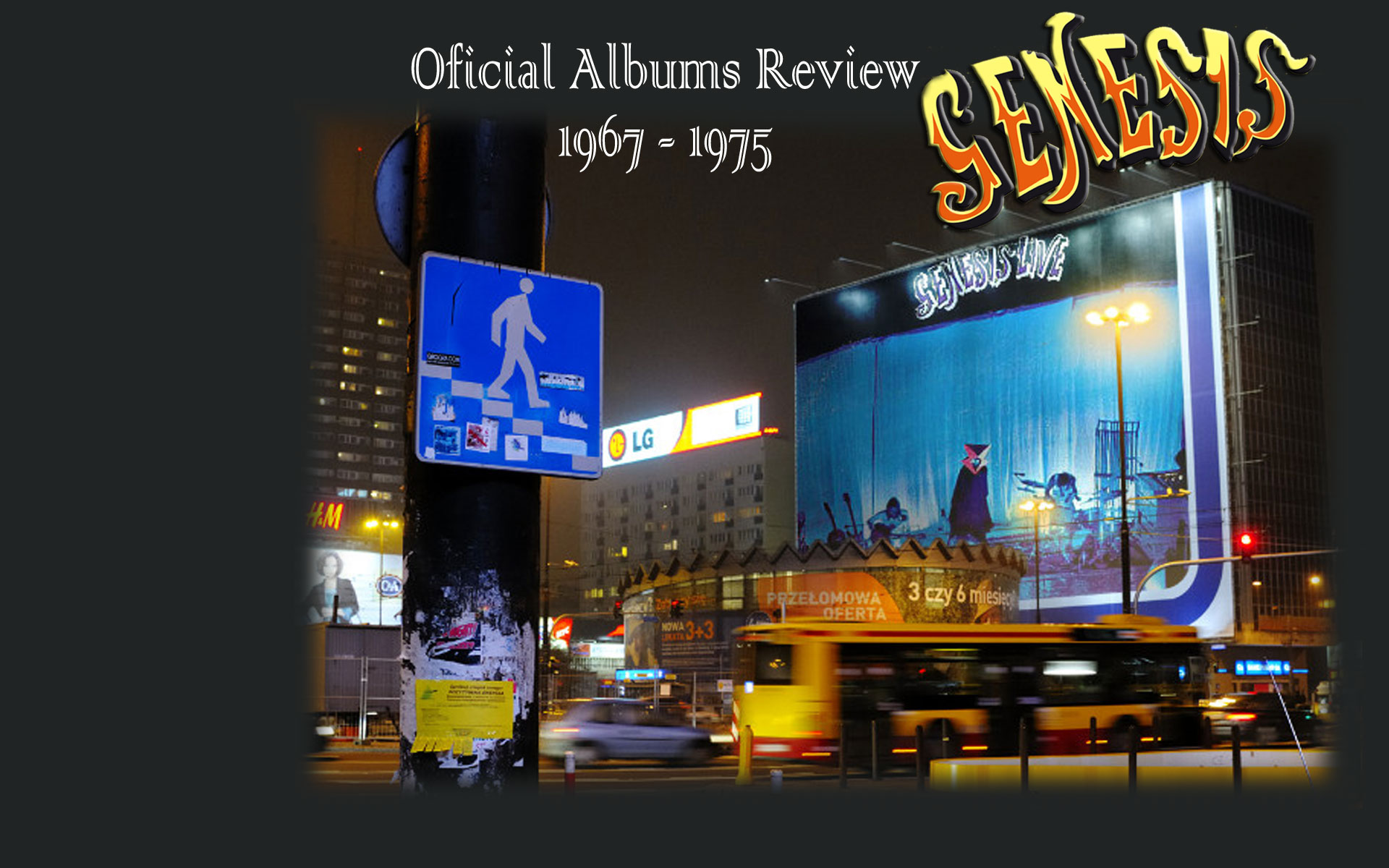 A cash-in, but it's really really strange that this is a single album. A single live album? When Yes were releasing a triple live set? Come on, Peter, what were you thinking about? Especially since the band's fans admit there were plans for a double live album, with 'Supper's Ready' and some other good shit (or bad shit). Anyway, there's no point of wailing for that now. I'd expect they beef up the new re-mastered version, but nope. No such thing - just the standard five tracks and not even a single stage story from Pete which he was so famous for. (Genesis fans don't need to bother, though: once you've picked up the boxset Archives, you'll discover everything you need and more). Pity. But let's talk about them, still.
This is a treat for the serious Genesis lover: no shorter filler stuff here, just the lengthy wankathons. Two of them from the recent Foxtrot ('Watcher Of The Skies', 'Get 'Em Out By Friday'), two from Cryme ('Musical Box', 'The Return Of The Giant Hogweed'), and one from the far-away Collins/Hacketless epoch ('The Knife'). All of these are amazingly great songs, no doubt, and treated with honour with fine performances, too. That's why I give this album a 9, even if it isn't quite fair: after all, it suspiciously resembles a 'greatest hits live' compilation, and I shouldn't rate compilations. On the other hand, it ain't a compilation. So scram it.
Despite the performances' solidity, they practically add nothing to the originals. The only more or less significant rearranging is provided for 'The Knife', probably due to the new band members' participation: in particular, Hackett's wild solos on the song completely wipe out the weak former playing of Anthony Philips, and so far seem to be one of his most noticeable and virtuoso performances on a Genesis number. Banks also adds a couple dull keyboard solos in some places, but, apart from that, Gabriel and the boys mostly stick to the old versions note by note. I must say that I am impressed anyway: out of all the prog bands, Genesis' studio sound was probably the most polished, with not a note out of place - even the lengthy instrumental sections never relied much on messy improvisations, being carefully planned, programmed and pre-rehearsed beforehand. It should have taken them a lot of practice to carry that sound from the studio onto their live show without losing any of the components, and the utmost in musicianship. They do pull it off: my worst complaint about the sound lies in the quality of the recording equipment, especially in the mix sphere - Gabriel's voice is often overshadowed (although that might have been Peter's own problem: with all those costumes, it was probably hard to keep the mike at short distance all the time). But the instruments are mixed in with enough care, and every song preserves its essence: the atmospheric Mellotron swirls on 'Watcher', the medieval solemnity of 'Musical Box', the.amusing theatricality of 'Get 'Em Out', the ominous feeling of catastrophe on 'Hogweed', and the apocalyptic madness of 'Knife', everything is here.
Gabriel, however, still manages to outshine all the others - his is the 'live note' on the album, as he is able to shift his vocals from one style to another, changing the expression at whichever point he wishes, while the others are completely tied down by the complexity of the music. Thus, 'Get 'Em Out By Friday' sounds even more theatrical here than it does on the origial, with Pete overdoing the stage pronunciation bit and obviously getting a lot of fun from himself. And although he misses making the expected "wild scream" on the 'turn and run!' section of 'Hogweed', he fully redeems himself on the later sections, at times aided by Collins from behind his drumset (not to mention the amusing 'scrapings' that Hackett inserts from time to time to illustrate the 'botanical creature stirs' passage).
However, in the general sense all of these minor distinctions do not make up for the album's expendable character. It is really difficult to realize why a non-diehard should take his time and money to go out and buy the record. Still, if you do treat it as a compilation, and if your stomach is strong enough to endure five non-stop (but brilliant) wankfests in a row, you might get a blast of it. I know I do, and, after all, it's interesting to see how these guys managed to cope with their, let's admit it, rather complex material onstage. They did manage.
Unfortunately, what the record refuses to present us with totally are the excitement and theatricality of Genesis' stage show (I mean, the songs are theatrical enough, but I mean the whole package). Apart from the front cover featuring Gabriel in one of his endless mascherades and one of his stories written in text form in the liner notes, there's nothing on here to suggest that this was a band with one of the most famous stage performances of the era. And the booklet itself is a real joke, with just a couple of muddy photos and only the most essential liner notes. Really. The re-mastering guys could have made a better job. Aww, never mind, the music on here still rules. Hell, I'd even say I like 'Musical Box' better when it's here than when it's on the studio record. Why? No reason. Just had to think of something encou raging about this album. And I still give it an eight if only out of sheer respect for such an excellent song selection.
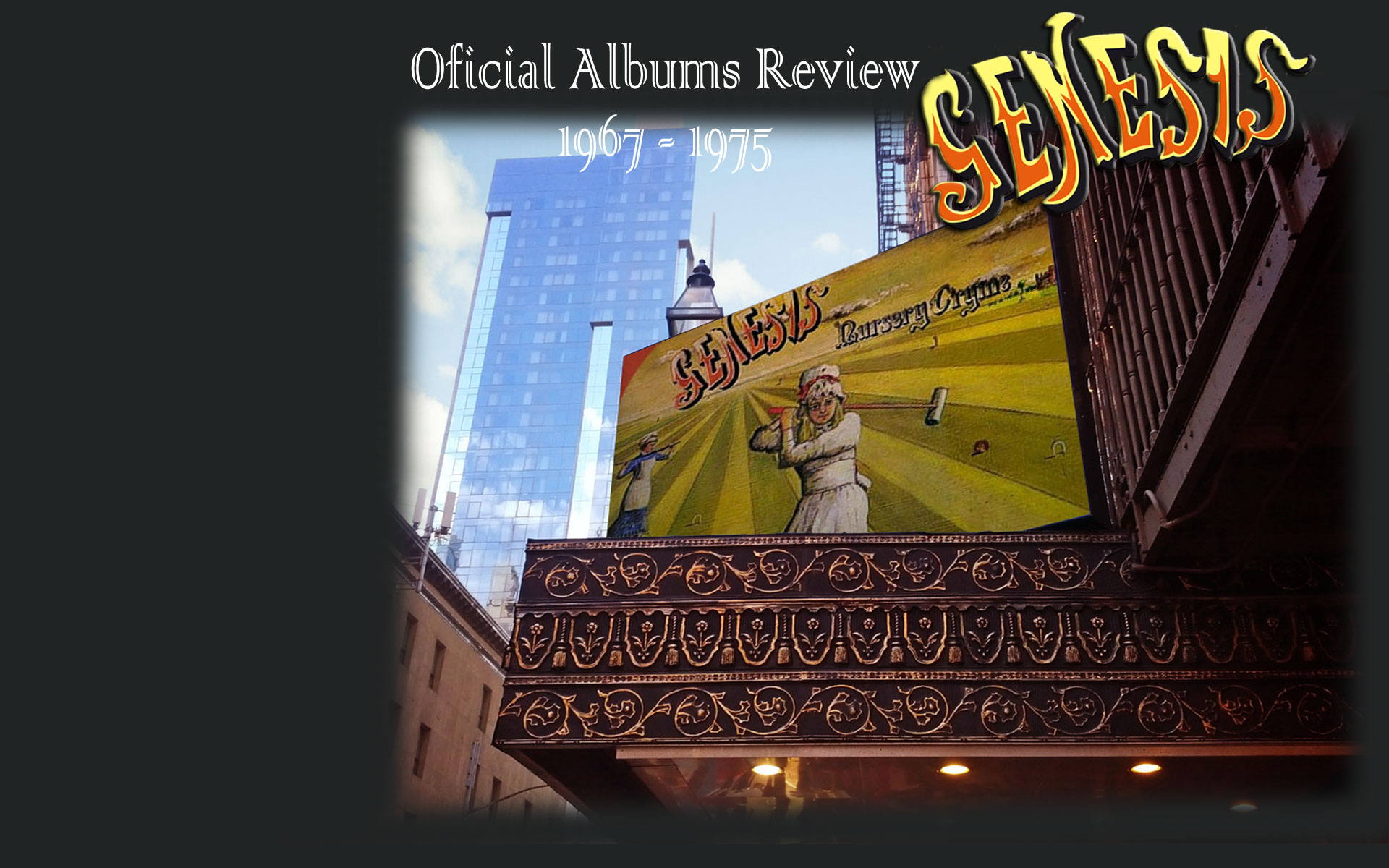 This is where the 'classic Genesis formula' finally falls into place, together with the acquisition of new guitarist Steve Hackett and new drummer Phil Collins - the cute little bald chappie with probably the most unpredictable career in the whole history of rock/pop. Back then, though, he did have all of his hair firmly in place and rarely ventured onto the steep path of singing, much less songwriting... oh man, those were the days. Not that I have any hard feelings towards Phil (except for ruining Clapton's career in the mid-Eighties, that is), but somehow he always looks more favourable on photos dating back to, say, nineteen seventy-three, than any time in the present. But let's get on with reviewing, shall we?
The new guys do contribute a lot of interesting stuff to the band's sound, from Phil's mature prog-rolls to Hackett's professional soloing (that is, when he does get a chance to do some soloing, which isn't that often, and even then he managed to procure himself an elaborate pedal which makes his guitar sound just like it was another of Tony's synths). But it's neither Collins nor Hackett that manage to beef up the rating for the record. Rather it is Gabriel's lyrics, which have finally matured to the point of being able to successfully compete with the lyrical brand of such cultural heroes as Pete Sinfield, Keith Reid or Jon Anderson, and, I'm not afraid to say it, to beat them at it.
The material is divided here into two groups: the three lengthy, pretentious marathons ('Musical Box', 'Return Of The Giant Hogweed', 'Fountain Of Salmacis'), balanced by a handful of shorter, not-so-pretentious ballads and suchlike. Those of you who hate lengthy pretentious prog rock, however, won't get much of the shorter numbers. See, at some point Gabriel obviously decided that the simple pop tunes he proved himself master of on FGTR were way too obsolete and dated (hey! that's what everybody else says about it, isn't it? but not me!), so he eliminated them and preferred to concentrate himself on weird verse structures and chord progressions that are so complicated it kinda makes you sorry about what you thought of that last Beach Boys album... What I'm trying to tell you, actually, is that these shorter numbers might sound nice, but none of them are memorable in the least - no matter how you try to get into them, all you'll be left in the end is some crazy background noise. While you're in, though, you might just as well enjoy it.
'Harlequin', while not possessing any distinct melody or distinct hooks, is at least pretty, in the Genesis vibe, and 'Harold The Barrel' is just a fantastic tune, sounding slightly like a medieval Brit folk song, but only slightly: it almost looks like it was built on a "cut-and-paste" principle, with several different melodies cut in little pieces and slapped one over another in a fashion that seems ugly and strained at first, but turns out to be brilliantly executed in the end. Of course, all this contributes to the tune's utter unmemorability, but the individual mini-pieces are all perfectly written and joined together. I kinda enjoy the actual story, too, though I admit it's a little hard to understand why Harold the Barrel was going to jump out of the window... 'For Absent Friends' and 'Seven Stones' kinda suck, though, both the melodies and the lyrics. Can't really enjoy them. Somewhat sloppy, if you ask me. Somewhat senseless, if you ask me, too. Come on now, what is 'Seven Stones' about, with its unclear images with unclear purposes? Sounds like a Trespass outtake to me. Oh, and for the record 'For Absent Friends' features the first ever apparition of Phil Collins in the role of lead singer, but that hardly improves the song.
Now, about the three lengthy marathons. These will take a really long time to get into, but you might do that, and once you do, you'll be happy about it. The lyrics are mostly swell - Lewis Carroll rip-offs with elements of black humour and gothic mystery on 'Musical Box', a fantazmo sci-fi horror tale on 'Giant Hogweed', and a lovely Greek myth about the Hermaphrodite set to music on 'Salmacis'. Out of these, 'Hogweed' is my favourite: the way that Gabriel recreates the atmosphere of panic created by the onslaught of the 'giant hogweed' against the planet is purely intoxicating, with the screams of 'turn and run! stamp them out! waste no time! strike by night!' being the most groovy part. Even the synths feel right in their place here, and the guitar/synth duet in the intro is amazing - an ultra-complex riff played at lightning speed in complete unison. And the main melody is, well, it kinda resembles something in between a music-hall tune and a martial rhythm. Very complex, yet very solid and memorable in the end.
But I also respect 'Musical Box' (a long-time fan favourite) for its beauty and, in part, even Pink Floyd-ian moments (the alternation of quiet and loud in the line 'and I see... and I feel... and I touch... THE WALL!' are certainly Wall-ish). And, finally, 'Salmacis' is just slick, with really talented and meaningful lyrics (after all, this is nothing but a retelling of an old Greek myth) and decent music. But, as you can see, my bet is on Gabriel more than anyone else. Only his singing can make these tunes come to life. So, when the instrumental parts (and they're not that short, I tell you) take over, you'll be bored, I tell you, unless it's a rare case of an expert Steve Hackett solo (he's especially demonic on 'Musical Box'). You - will - be - bored. Why? Because Gabriel and Hackett are the only real virtuosos in the band, that's why. And let me tell you that, as much as I respect (or don't respect) Phil Collins, he absolutely was not the perfect choice for a vocalist. Sure, his voice does sound a lot like Gabriel's, but he's got a lot less of a range, and he can never make a record come alive just by the sheer abilities of his vocal cords, as Gabriel often does.