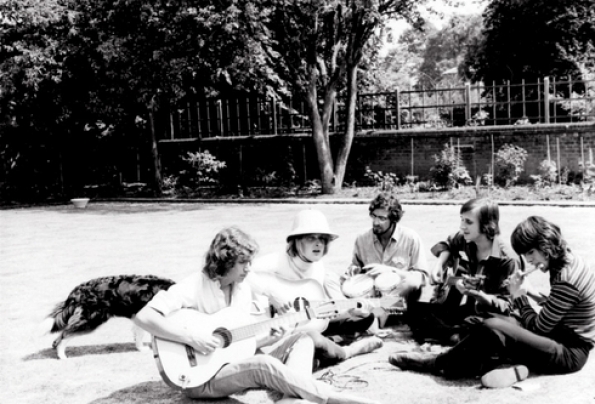
 The British rock band Genesis created its earliest music in the period from 1967 to 1975. With Peter Gabriel as its lead singer, the group made some of the most self-consciously complex popular music ever released. Music by early Genesis includes a number of lengthy compositions, such as 1972’s “Supper’s Ready,” a continuous, 23-minute, agnostic re-imagining of the Book of Revelation from the album Foxtrot. The 27 Genesis songs from 1970-1973 average 6:53 in duration. Four songs last from 10:29 to 22:50, fourteen from 4:47 to 9:38, only six have relatively normal pop song durations of 2:57 to 4:17, and three last from 1:36 to 1:47. The band’s final music with Gabriel comprised 1974’s The Lamb Lies Down on Broadway, a 90-minute, urban-decay, concept album. Music writers often dismiss progressive rock for having done nothing more than appropriated classical music. In fact, the music features a great deal of complexity and variety on its own terms, and it provides a classical-music substitute for many fans.
The music of early Genesis inscribes a vast array of fanciful/mythical  lyrics, elaborate melodies, strange harmonies and rhythms, unusual time signatures, varied moods, and unexpected changes in instrumentation, texture, and dynamics. Much of that was provided by the contributions of various musicians: guitarist Anthony Phillips until some of the material on the band’s 1971 album Nursery Cryme, guitarist Steve Hackett starting in 1971, bassist-guitarist Mike Rutherford, keyboardist-guitarist Tony Banks, drummer-singer Phil Collins starting in late 1970, and others. Gabriel co-composed about two-thirds of the band’s music, and as its lead singer contributed a prominent role in establishing the lyrics of many of its songs. However, even when he wasn’t involved in composing a song, his vocals ranged from powerful, emotional, “post-R&B” rock singing in a tenor range to theatrical characterizations sometimes in a high, eccentric countertenor style to gentle, vulnerable, often baritone moments. He frequently sang in all three styles within the same song. He also became well-known for the elaborate, often-bizarre costumes and makeup he wore to inhabit certain characters during the band’s live performances. In addition, he contributed flute parts to a number of songs and sometimes played tambourine, bass drum, or accordion.
In the autumn of 2014, a colleague of mine posted a link on Facebook to the music video of the much later, late-Cold-War era, mainstream Genesis rock song “Land of Confusion” from the 1986 album Invisible Touch. He had no issues at all in categorizing that song as “progressive rock.” However, there are increasingly-substantial differences from the music released by early, Gabriel-era Genesis of 1968-1974 through the periods 1976-1981 and especially 1983-1986, with Collins as lead singer. Rutherford said in the late 1980s that the shorter songs of the band’s early career, such as 1971’s three-minute song “Harold the Barrel” from Nursery Cryme, were meant as “pop songs.” In reality, though, even that song is highly eccentric and arty as compared to, say, the band’s similar-length 1986 dance-pop song “Invisible Touch.” Apparently, some members of the band no longer wished to remember or identify what had made their earliest music so unusual. On the other hand, even the writers of The Simpsons had ten-year-old Bart acknowledge in a late 2014 episode that post-Gabriel music by Genesis was “more popular, but not as good.”
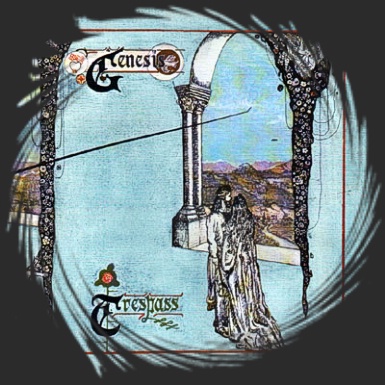 The ten-and-a-half minute 1971 Genesis song “The Musical Box” from Nursery Cryme was initially called “F#” (F-sharp) and originated in 1969 as instrumental music composed by Phillips. In the same year, the band re-worked the material as the just-under-four-minute piece “Manipulation,” which was part of the score for a never-aired television documentary. The band did not release the piece initially, but it appears as a bonus track on the Genesis 1970-1975 boxed set that was released in 2008. The eventual, studio version of the song wasn’t recorded until more than a year after Phillips had left the group. It begins with a simple, slow, folk-like, major-key, two-chord accompanied melody heard on Rutherford’s 12-string guitar (0:00-0:13). The song’s opening thus somewhat evokes the object of the song’s title. Presumably, however, that segment of music existed well before the lyrics came to associate it with that particular object and with a particularly-British nursery rhyme. Shortly thereafter, Gabriel begins to sing an expanded context for the nursery rhyme “Old King Cole:” such as, “play me my song”, but with the hearts of others now seeming “far from me,” which “hardly seems to matter now” (0:13-0:42). Banks plays twelve-string guitar for harp-like, arpeggiated gestures, as Rutherford changes over to electric bass, and Hackett adds steel-guitar-like, pedal-effected interjections to the still-gentle accompaniment. In particular, the protagonist warns that “the nurse will tell you lies of a kingdom beyond the skies,” but he is also lost in a “half-world,” which also “hardly seems to matter now.” He asks for his song once again (0:42-1:26).
The song’s texture then increases slightly, with Rutherford’s more prominent bass sound oscillating modally among three, very close pitches and Gabriel playing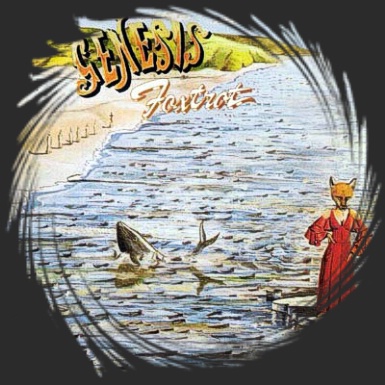 related, gentle, folk-like, flute lines (1:26-1:43). Then, he sings words about wanting “just a little bit more time left to live out my life,” surrounded by playful, “la-la” vocal syllables, and returns to playing flute (1:43-2:22). Next, something like the just-aborted instrumental style resumes with a similar texture and rhythmically contrasting, somewhat-static interwoven patterns. The music initially again features Gabriel’s flute, the continuing electric guitar, 12-string guitar, bass, and percussion mainly consisting of hi-hats, with the section sometimes centering on a chord just slightly above the work’s supposed tonal area (2:22-2:59). Collins at first delays the use of drums, but then switches mainly to them for a more rhythmically-aligned section that sometimes expands to include yet another, slightly-higher tonal area (2:59-3:16). The texture thins again as the protagonist once more repeats his request for “my song” (3:16-3:38). The song’s style then changes quite dramatically. First, though, you need a bit more context!
The album title transforms “Nursery Rhyme” to “Nursery Cryme,” and the album cover uses Paul Whitehead’s disturbing, related image of severed heads being batted about in a perverse game of croquet. The album’s liner notes provide a bizarre, pseudo-Victorian back story of a nine-year-old girl named Cynthia, who is depicted on the album cover, decapitating her eight-year-old friend Henry with a croquet mallet. Two weeks later she comes across his Old King Cole musical box in the nursery of his family’s home. As she open the box, Henry emerges from it as a spirit. He begins to age rapidly, grows a beard, and develops sexual desires for his former playmate, while still remaining mentally a child. His nursemaid hears the noise of his attempted sexual congress, enters the room, and smashes the musical box into the ghostly man-child, destroying both him and it.
In the first third of “The Musical Box,” Henry keeps asking for someone to open the object so he can emerge from his ghostly “half-world” and try to live out at least some part of the adult life that Cynthia denied him by killing him: i.e., “join with you.” In the song’s opening phrase, he asks for it to: “Play me Old King Cole.” However, it also sounds like: “Play me, Old King Cole,” and Henry indeed becomes a disturbing variation of that nursery rhyme character. Similar to the album liner-notes for the song, in live performances Gabriel introduced at least some of the band’s songs with expanded, spoken narratives. In addition, for this song he often wore an “old man” mask during its final verse, and costume and lighting effects were also used to make him look depraved and unnatural.
The last two-thirds of the song parallels Henry’s transformation, sometimes in a loud, active, progressive rock style. In particular, Hackett starts playing heavier and distorted chords, beginning with a descending slide gesture. Banks concurrently switches to a prominent organ sound from among his keyboards (3:38-4:08). The chords change from the earlier major and modal areas to the work’s parallel-minor tonal area, with “flat 7” chords also important and Banks at those two pitch levels playing a bouncy, two-chord pattern that solidifies the transformation. Meanwhile, Hackett provides more-conventionally-melodic, vaguely “classical” guitar solo passages. The section eventually includes Hackett’s “three in the time of two” triplets that float above Banks’ rhythmically-insistent keyboards and Collins’ busy, flailing drums and percussion (4:08-4:49).
The volume eases back to prepare for the next vocal section, with Gabriel singing the familiar words of the actual nursery rhyme itself: Old King Cole as a “merry old soul” calling for his pipe and bowl and his fiddlers three (4:49-5:46).
However, despite the temporary return to the music’s earlier, calmer texture, Henry has reached his tipping point, and the “tick tock” of the clock on the mantelpiece reminds him that his accelerated aging means that he won’t have a lot of time to get in a full life. His sexual desire begins, and the preceding, louder, transitional style resumes, including the vigorous drumming and percussion. Banks, though, now sometimes plays a guitar-like solo melody on his Hohner Pianet electro-mechanical piano, amplified through the distortions of a fuzz box. It sounds something like a guitar (though the gestures aren’t always quite right for one) and alternates with Hackett’s resumed, heavy, triplet-focused style, sometimes joining it in unison or in parallel, melodic thirds. The renewed hard-rock section also lasts about twice as long as the one from before the interruption (5:46-7:38).
The reason for Banks approximating an electric guitar on a keyboard is that for the making of parts of the album, Genesis was between guitarists, and Rutherford thus mostly had to play bass or else additional guitar plus bass pedals. In a related matter, some song-segments with two or more guitar parts feature Rutherford on guitar while he is also playing a bass part on a Dewton “Mister Bassman” electronic bass pedal unit. On Genesis Live (1973), you can hear him test the unit just before the band plays “The Musical Box,” and Gabriel makes a little joke about his band mate’s “unaccompanied bass pedal solo.” Also, the song’s guitar solo material was composed by the band’s interim, post-Phillips/pre- Hackett lead guitarist, Mick Barnard.
The volume eases back once again for the next vocal section and a turn, for the first time since the song’s opening, musical box gesture—to the work’s purported tonal area: F# major (7:38-9:02). Gabriel’s characterization of Henry creepily refers to getting to know Cynthia’s face and her flesh. He recounts the “waiting” and “time passed” of his rapid aging and how it “hardly seems to matter now.” The music builds again, though, to approach the song’s ending (9:02-9:14).
Henry gets angry, as Cynthia stands there with a “fixed expression” and “casting doubt” about his intentions. He gets very insistent, asking: “Why don’t you touch me … now, now, now, 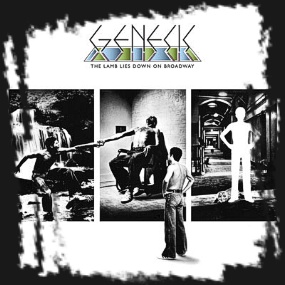 now, now?” The guitar and drumming elements become increasingly active (9:14-9:53). The closing instrumental music remains in that very tonal, major-key idiom, with especially-crisp chord-changes (9:53-10:29). The entire song gives the sense that contexts such as religion and nursery rhymes are often used by people to distract themselves and their children from the realities of such things as anger, violence, sexual awareness, and desire. As a final thought as to the importance of this song, a well-known, Montreal-based, early Genesis tribute band named itself after it, and the group has officially licensed various musical, visual, and spoken materials from Genesis.
Peter Gabriel left Genesis in 1975 and became a major artistic figure of the late 20th and early 21st centuries. He explored various genres, creatively used studio technology and electronic instruments (synthesizers, etc.), experimented with unusual musical structures, fused Western and non-Western ideas and sounds, sometimes addressed highly personal or otherwise disturbing issues, composed film and media scores, and also worked as an impresario, activist, and philanthropist.
Experiencing Peter Gabriel: A Listener’s Companion will be published by Rowman & Littlefield by September of 2016.