

 It shows no or at best only the most minuscule traces of the style that would make them well-known later, and therefore frequently meets with a refusal and lack of affection. Justly so?







Written by Karin Woywod
 Package
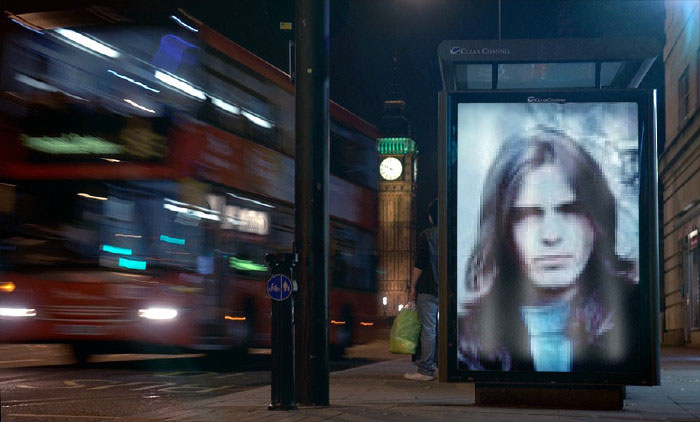
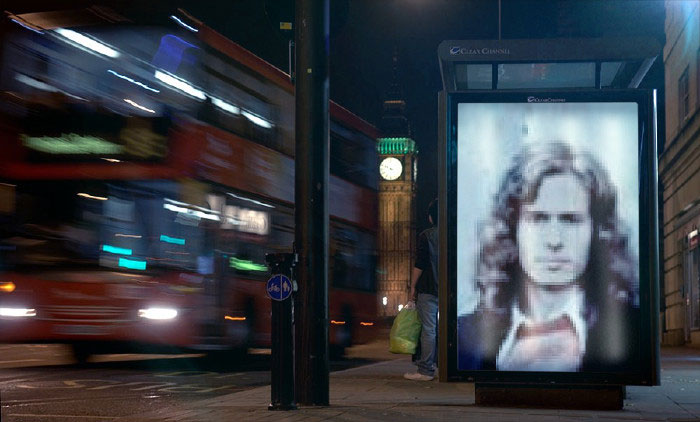
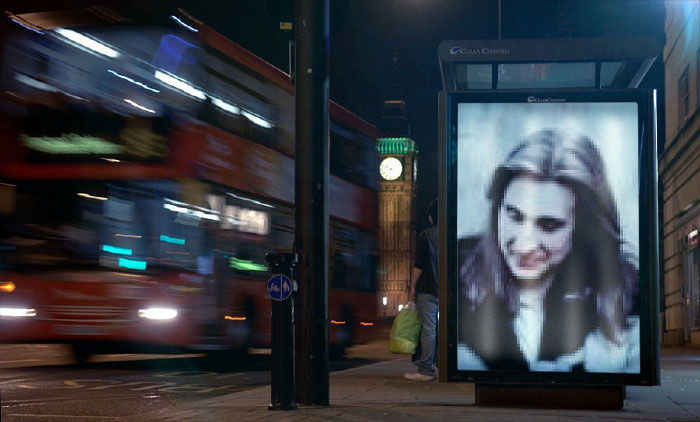
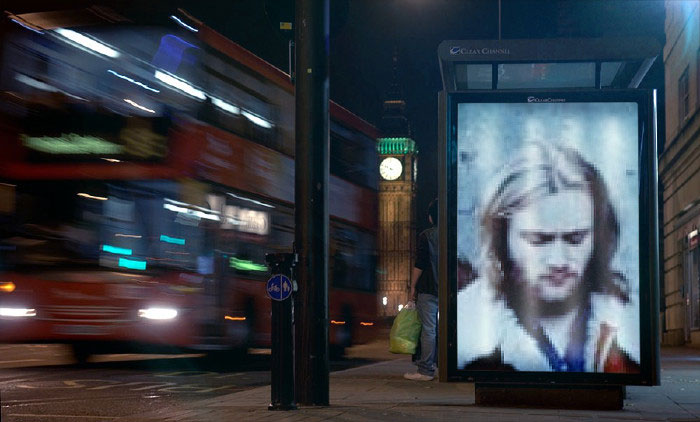
The DVD comes in a simple jewel case. The impressive cover is based on a Graham Dean painting. Dean is a highly esteemed artist. He has been a close friend of Peter Gabriel’s since the 70s. Dean is well known for his intense work on videos with Peter Gabriel, part of which was released in the 1993 version of the Solsbury Hill video. Graham Dean interviewed Peter and Anna Gabriel about this DVD (the interview was printed in the 2004 tour programme). One wonders if the portrait that was used for the DVD cover came about after that.
Said Graham Dean: "I think you [Peter Gabriel] have also come to terms with who you are as a person, which probably wasn't the case before. I think there are two sides to your character in a way. I mean there's this front man; the star, the rock person, which I think you have a need for. This theatrical side. But then you have this other shyer one, which is meddling in the background. And in a way now I think that these two have fused more than at any other time. I think this DVD shows that. But I also think you are definitely the product of your parents. Of all the people I know, you are a merge of their two personalities."
Contemplating the cover image one cannot help but wonder if the division into four parts perhaps represents various facets of Peter Gabriel’s personality, facets that come to the fore in this DVD.
The 10 page booklet contains many photos, some of them exclusively in this booklet while others have been previously used for the 2004 tour programme.
https://www.youtube.com/watch?v=IZXpHF5MCbc
Content
This is, first of all a documentary. When the project began, it was the intention of Anna Gabriel (Peter’s daughter and the director of the film) to document her sister Melanie’s first steps onto the stage and into a live situation with an audience numbering thousands. A “newcomer’s experience” story. This part of the documentary is really interesting. We get to see Melanie’s doubts about herself in the initial phase of the tour when she wanted to leave her vocal part to the keyboarder. We also accompany her during here improvement in singing quality and self-confidence during the tour. But, as Anna Gabriel said in the interview: "I've got a lot of stuff of her [Melanie], but then it drifted more onto him [Peter] as it went along." - Graham Dean: "As things do . . . he's like a magnet really isn't he?" - Anna Gabriel: "Unfortunately."
A 40 minute documentary then, filmed between 2002 and 2003 during rehearsals in Sardinia and the first leg of the Growing Up Tour on the North American continent. A documentary about the lives of musicians and their company On The Road, backstage and while they’re relaxing between concerts. A representative Making Of various elements of the Growing Up Show – how they developed and what was the concept behind them. Most of all a look at the people behind the show, how they deal with each other and with the pressure and the joys of touring, how they play tricks on and laugh with each other. And it is of course a look at three generations of the Gabriel family: We see Anna step away from her place behind the camera, Melanie as the backing vocalist, Peter as the driving force and dedicated family man, Peter’s parents backstage and Peter’s son Isaac as the much cared-about “spark of chaos” in their midst.
An interesting sidenote: The background music for the menu is an instrumental version of Baby Man. During the closing credits you can also hear part of the song’s studio version. This is quite remarkable since, as of today (2006) the song has not been officially released unless live. It may be released on I/O at some point.
Anna Gabriel had released extended versions some of the American impressions on www.petergabriel.com as “Anna’s Tour Diary”, but this of course is the final cut, and a fine one to boot. Since the focus is on the Gabriel family, the documentary aptly kicks off with moving images from the Gabriel photo album (Anna and Melanie as children, but also some rare mute super 8 snippets of 1977 Gabriel shows. The film quickly progresses to Peter Gabriel the performer today, and so the main topics have already been mentioned in the first ten seconds.
Anna experiments with various forms of expression, different recording material, a variety of cutting. She underlines what is being said in the interviews with charts that sport snippets from the statements. Though there is a surprise behind every corner, the effects are not used just to have them, and never are they tiring the eye of the beholder. Just like her father, she has an open mind, she is always curious. Her video collages are as colourful as the RealWorld design. She uses cymatics (moving patterns generated, as it were, by the sound) to emphasize a statement. These cymatics were also used in the 2002 and 2003 tour programmes, so there is another thing coming full circle here.
One of the main themes of Anna’s story is the bonding that takes place between the musicians and the musicians and the road crew, the friendships that evolve and the way all these people become a team, a community. It is as if a group of serious, grown-up people were suddenly put back into a high-school class. Suddenly you’ve got quite normal, silly people who enjoy playing tricks on each other or sticking their tongue out to the camera if one is present. That is what happens on tour. Stress levels are high and so everybody needs some stress release. The lighter parts of the documentary are composed from that and they’re good for many a chuckle. It also shows that the “family” is not just the Gabriel clan, but the whole big tour family the road crew turned into. Perhaps it even includes the fans (many of whom also travelling from gig to gig) whose reactions and statements were also used for the documentary.
This is a documentary, not a live DVD, and so most songs that can be heard are incomplete. Still, the viewer gets a good impression of the course of a tour and even of parts of the show.
In the beginning, however, we see Sardinia where the band rehearsed, in the pouring rain. Few images set the mood, it is an exotic place and a transitional one, too – it is half relaxation and holidays, half starting-point for the hard work for every single show. It is also the only point where Peter Gabriel had Anna change her documentary. In an excellent cut between two shots of Richard Evans in the rehearsal studio explaining that "This is the second day [in three weeks] where we've had Peter for longer than an hour" we see Peter enjoying himself in the Mediterranean Sea with just his head and toes above the water. Peter Gabriel insisted on inserting a correction pointing out his efforts and his part of the complete work in these last weeks before the tour.
Thankfully, other moments have not been cut out, and so we get to see a Peter Gabriel who hardly fits into a tight costume. A Peter Gabriel who, a bit clumsily, tries to realize a not quite feasible idea of Robert Lepage (Peter does a spontaneous dance, and every member of the band has dance the same steps). A Peter Gabriel who is cheekily challenged to a game of boule. The director of the film, his daughter, does not handle him with kid gloves.
It is precisely this that makes the documentary to intriguing. It is an intimate, refreshingly honest, humane, humorous film about what it is like backstage, being on tour. What is work on a tour like, what do people do in their leisure? How important are friendships and family? What are the people on stage like – and the fans in front of the stage? What is the spirit of this tour? What kind of man is Peter Gabriel? A song like Father, Son does not appear out of thin air. We find out how it came about complete with private material of Peter and his father doing yoga exercises.
To give you an idea about the content of this documentary: You get to see the preparations for the upside-down artistics for Downside Up as well as brief sections that show how charming Peter’s opening artists are. We et a close look at rehearsals for the Growing Up Live video with Hamish Hamilton, a brief glimpse at Robert Lepage who developed the concept of the show. We also find out about the intentions behind the use of the Zorb ball for Growing Up … to cut a long story short, we hear about every aspect of the tour. It is about people new to arena-size audiences, about travelling in chartered airplanes, about what happens immediately after the band leaves the stage and a slightly uncomfortable confrontation with the band’s performance ten years before and a boule challenge. Whenever Anna points out individual songs she also has the right interview questions to go with them. Usually the whole band has to answer, even if the replies may occasionally be tongue-in-cheek. But we shall not disclose more of the content because we do not want to spoil all the surprises…
Bonus Material
The bonus material is not subtitled. It includes a video for My Head Sounds Like That that Anna found apt images for (and these images were recycled for the live presentation of Darkness on the 2004 tour), the Making Of Sean Penn’s video for The Barry Williams Show ( a similar version of which could be seen at www.petergabriel.com, a gallery of Stephen Lovell-Davies’ programme, photoshoots of the individual band members and a veritable treasure which alone is worth buying this DVD: Anna Gabriel’s eleven-minute documentary of Peter’s solo performance at the Newport Film Festival, where Anna presented her documentary to a select audience before the actual release. This solo performance shows Peter Gabriel alone on piano. Whatever Peter may dream of doing, we will probably never hear these songs like that again (Washing Of The Water, That Voice Again, Solsbury Hill, Mercy Street, In Your Eyes, Father, Son). They’re stripped-down, simple versions that are made up of vocals and piano only, In Your Eyes excepted, where there also is a sampled rhythmtrack. They sound quite different, but they are paradigms of clear and pristine music, really bringing out the glorious beauty of the music. The songs play longer than those in the main feature so that one gets a good impression. Alas, none of these songs is complete. But we meet again with a much-grown Isaac again and his little pranks.
All in all...
This is not a DVD for the casual Gabriel fan who has only seen him once or twice. It is not a live DVD. The music is not the main feature, but only an explanatory device.
Who, then, is this DVD for? It is for all the fans who enjoyed the Growing Up tour, perhaps own one of the official live DVDs and would like to look behind the curtains to experience the essence of the tour and its band members again. It is for the advanced Gabriel fan who wants to know more about the man, the show preparations and his private life behind the scene. That alone is a precious rare thing for the fans, and it is an extremely intimate look behind the scenes because the film maker is Peter Gabriel’s daughter and because he was accompanied by his whole family on tour.
The Family Portrait DVD offers lots of insight and a very entertaining evening’s entertainment for the Gabriel fan. It should not be overlooked. The bonus material, or even the performance at the Newport Film Festival, is important enough to merit full attention.