

 It shows no or at best only the most minuscule traces of the style that would make them well-known later, and therefore frequently meets with a refusal and lack of affection. Justly so?







It was a life-changing experience...we hadn’t met many people that had been tortured or lost loved ones. And suddenly, there they were, talking to us. It’s very hard then to walk away. I was shocked people could go through some of the experiences and have their horrors denied, buried, and forgotten.
Rock & Roll Hall of Fame
Peter Gabriel was born in Woking, Surrey, and raised on his family’s 150-acre dairy farm. His father, Ralph Gabriel, was an electrical engineer and inventor who commuted to London while employees tended the farm. Peter’s mother, Irene, played the piano and came from a highly musical family. Peter was given piano lessons at an early age, but by age nine, he had rebelled against formal musical training. He rediscovered music as a boy of 11 when he became fascinated by the drummer in a small combo playing at a resort in Spain where the family had gone on holiday. He began writing songs and finding his own path in music, teaching himself drums, piano, and the flute.
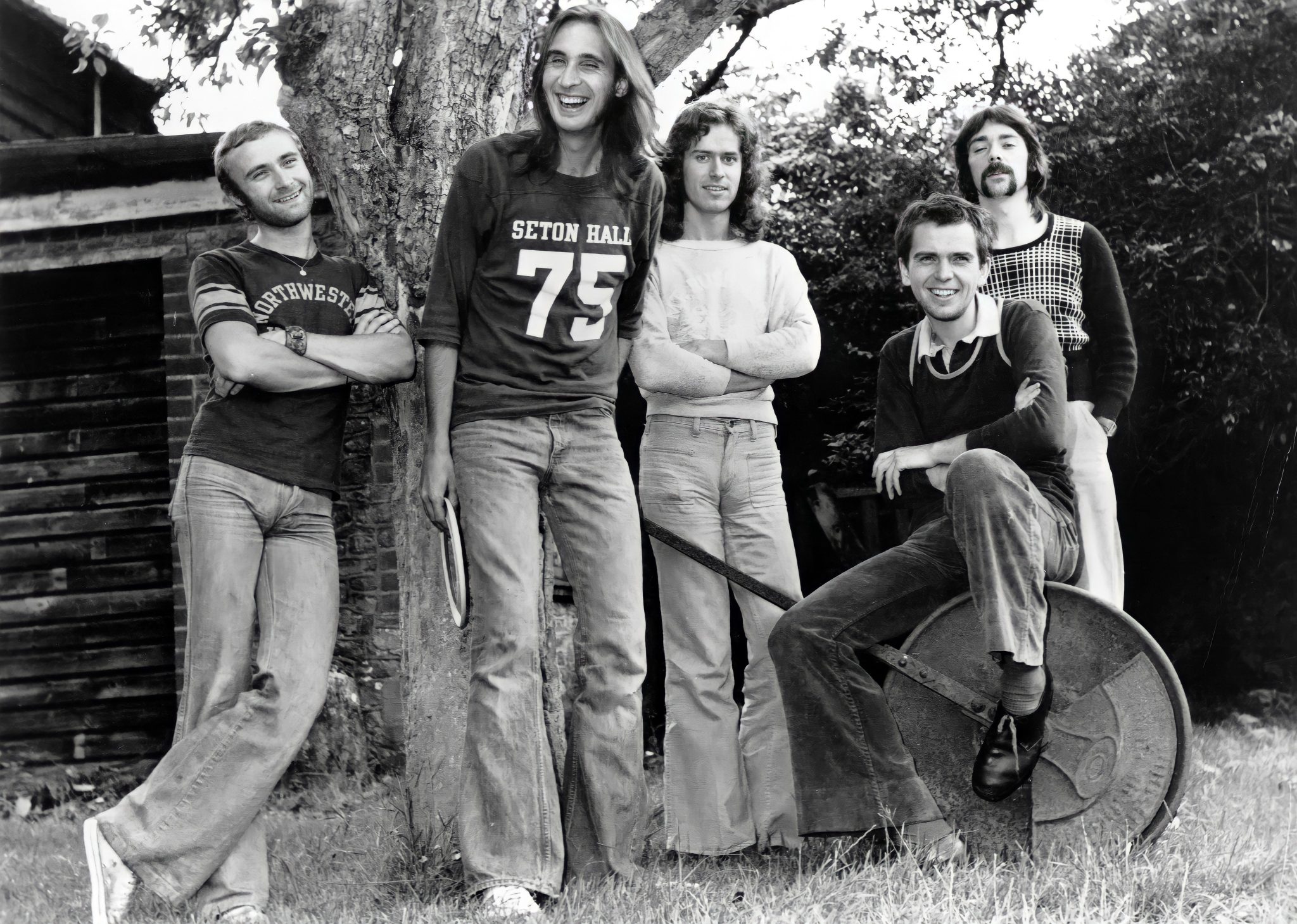
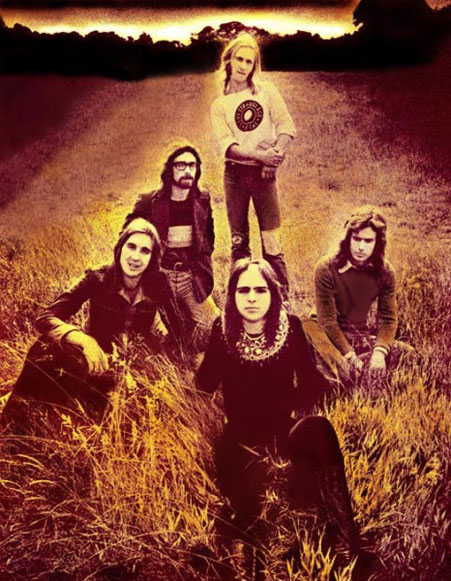
1972: The progressive rock group Genesis: (left to right) Drummer Phil Collins, bassist Mike Rutherford, keyboard player Tony Banks, lead singer Peter Gabriel, and guitarist Steve Hackett. (Michael Ochs Archives/Getty Images)
At age 13, he was sent to Charterhouse, one of England’s historic private boarding schools. Although shy, he sought out friends to play music with, and after drumming for a few bands in school, he moved from behind the drums to the front of the stage as the singer. Gabriel and his friends were inspired by American soul music, and he fondly remembers going to see the soul singer Otis Redding at a club in London. In his last year at Charterhouse, Gabriel formed a relatively stable group with schoolmates Tony Banks, Anthony Phillips, and Mike Rutherford, and they began writing original songs together. Gabriel’s band, called Garden Wall, played school dances and private parties in the neighborhood. At one school dance, Gabriel met Jill Moore, a student at a local girls’ school and the daughter of Lord Moore of Wolvercote. They began dating, although Gabriel’s focus on music now dominated his life.
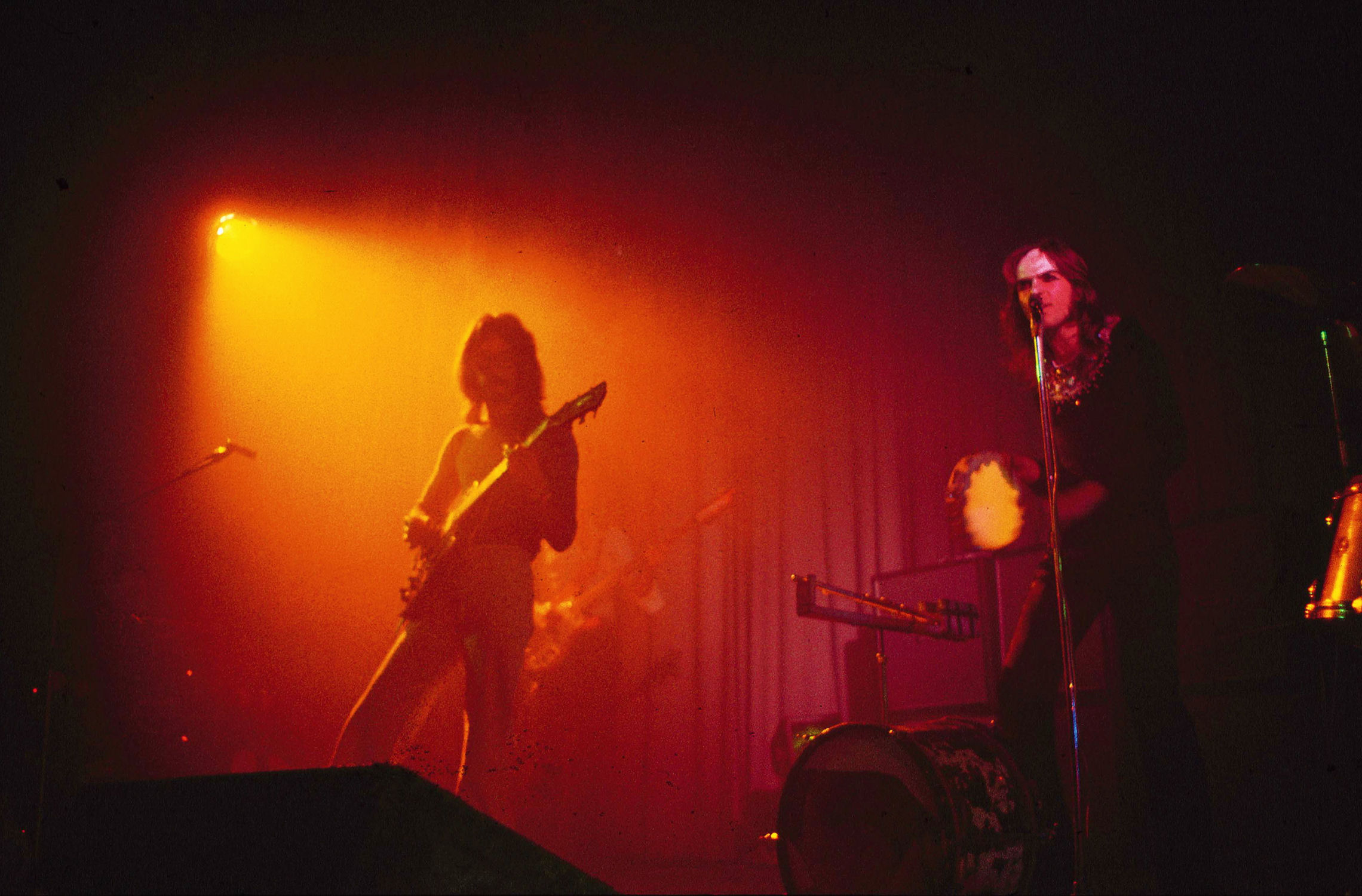
1974: Genesis lead singer Peter Gabriel and guitarist Steve Hackett performing at Colston Hall. (Fin Costello/Getty)
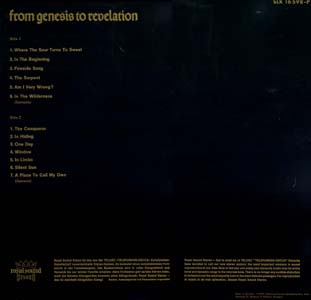
A Charterhouse graduate named Jonathan King had scored a hit single with “Everyone’s Gone to the Moon” in 1965. When King returned to the school for a visit, Gabriel’s friends gave him a tape the boys had made over their vacation. King was impressed with the songs, and the singer, and secured them a one-year contract with Decca Records. He also selected the group’s new name, Genesis. He produced their first single, “Silent Sun,” released in February 1968, but the record made little impact at the time. Later that year, King produced their first album, From Genesis to Revelation. The band’s music had evolved away from the soul-inspired numbers they had originally played to more elaborate and ambitious compositions, reflecting Gabriel’s interest in folklore and mythology. A pastoral fantasy scored with acoustic 12-string guitars, vocal harmonies, and a string section, their first album failed to make an impression on the rock-buying public. Jonathan King lost interest in the group and Decca did not renew their contract.
After graduating from Charterhouse, Gabriel and his mates began looking for a new record label and new management. With contributions from their families, they acquired professional equipment and began playing bars and youth clubs up and down England. Most audiences failed to respond to the dreamy acoustic music of their first record, and they began to develop a more aggressive, rock-oriented sound. Music business entrepreneur Tony Stratton-Smith signed the group to his new label, Charisma Records, for the lordly sum of £15 a week. In 1970, Genesis recorded Trespass, their first album for Charisma, featuring a mixture of acoustic and electric material. Not long after recording the album, original guitarist Anthony Phillips left the band. Guitarist Steve Hackett joined the group, and the group’s drummer was replaced by 19-year-old Phil Collins.
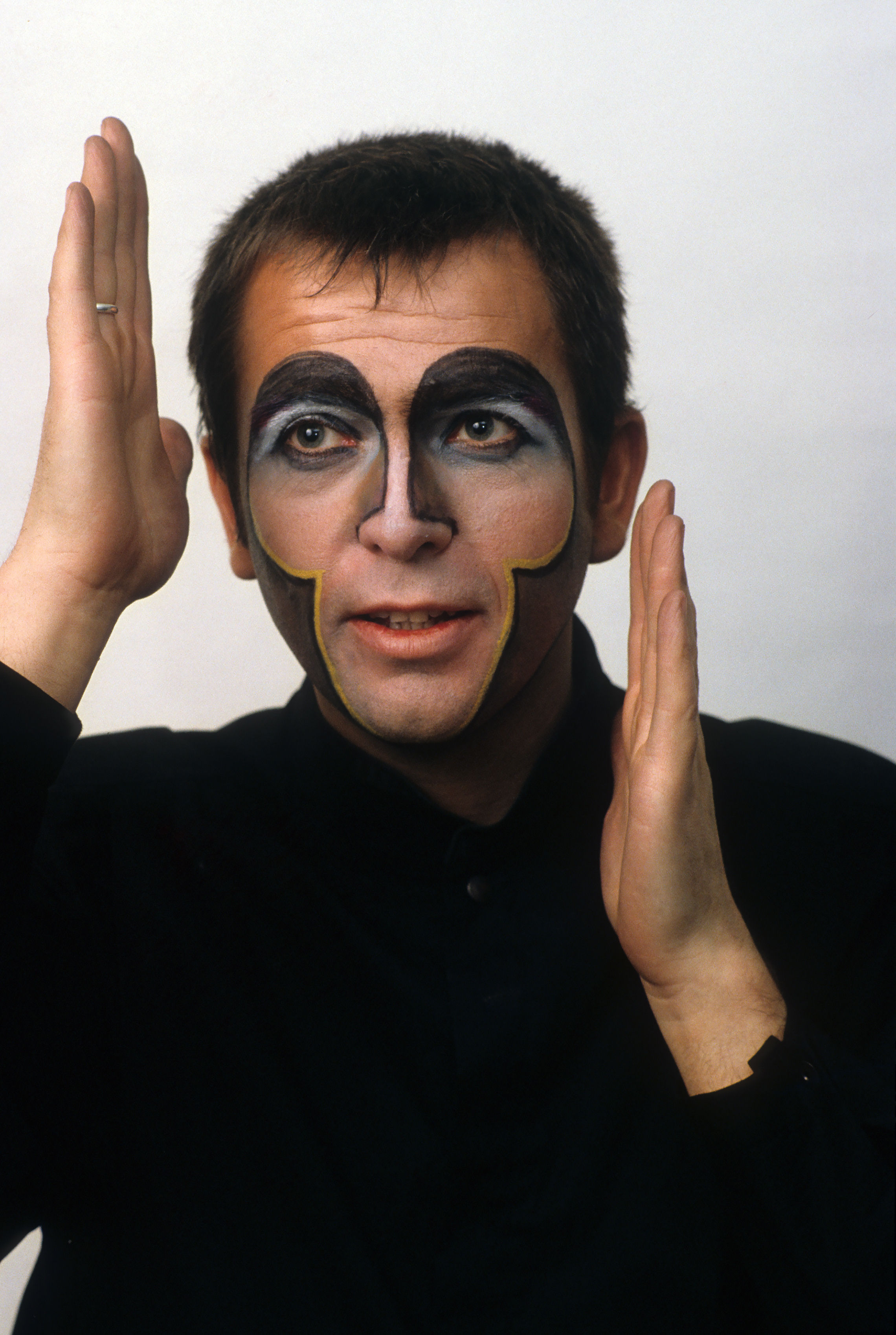
1982: Peter Gabriel wearing monkey make-up for the song “Shock the Monkey,” in Rome, Italy. (Luciano Viti/Getty)
In 1971, Peter Gabriel and Jill Moore married, with the blessings of their families. Although the sales of Genesis records were disappointing, the group’s live performances attracted better reviews, and they prepared to record a third album, Nursery Cryme. Although this album, too, did not sell well in Britain, it was a surprise hit in continental Europe. As the front man, Gabriel took the responsibility of entertaining the audience with improvised stories and tall tales during the band’s frequent tuning breaks and equipment failures. He later augmented these tales by appearing in a series of fanciful costumes, and the audience for the band’s live shows attracted increased attention from the music press.
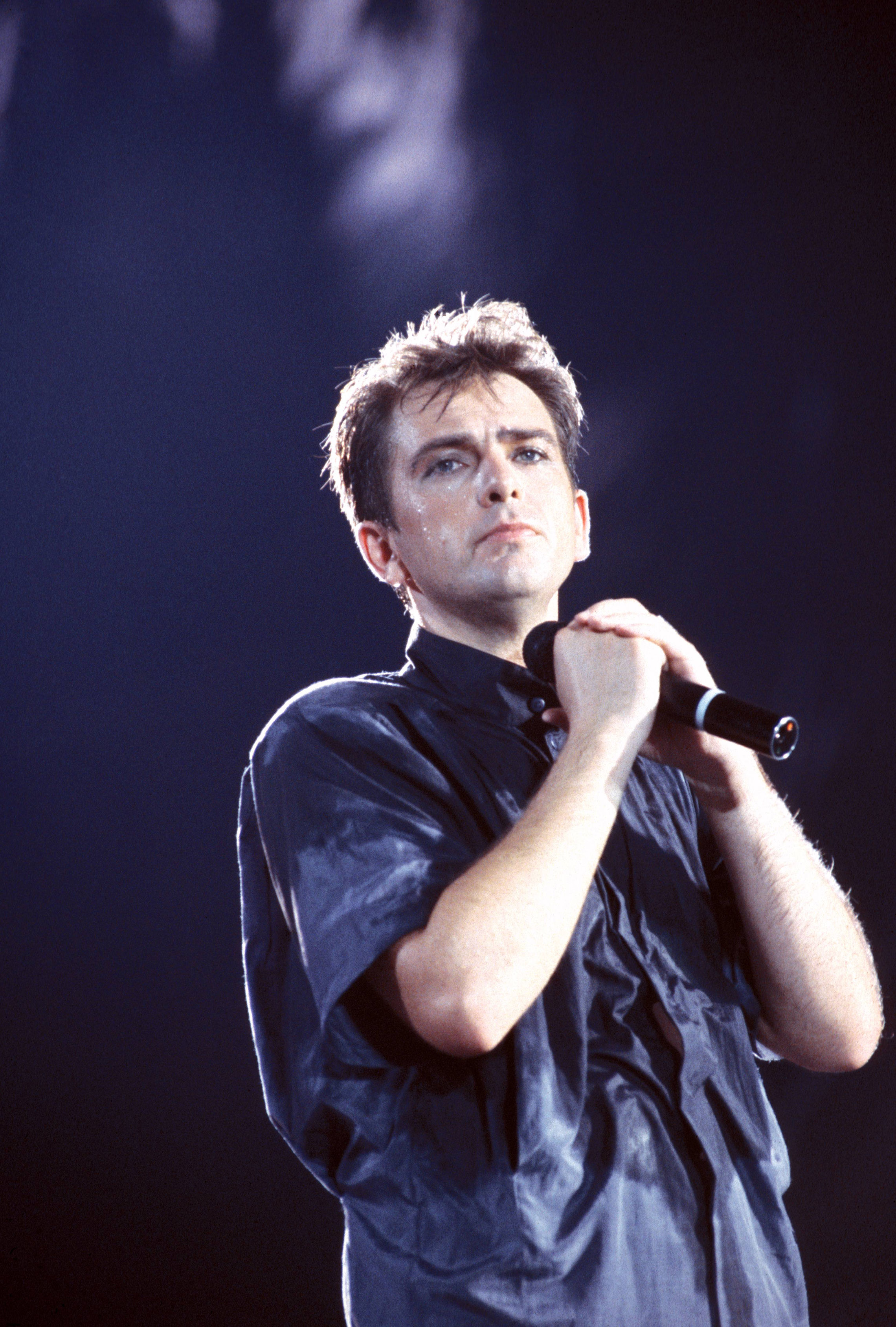
On May 19, 1986, Gabriel released his fifth studio album, So. So was a watershed release in his career. Its marriage of the artistic and the commercial made for an indisputable success, with the album quickly sitting atop the album charts on both sides of the Atlantic. Aside from some intriguing collaborations – with Laurie Anderson on “This Is The Picture,” Kate Bush on “Don’t Give Up” and Youssou N’Dour on “In Your Eyes” – it was the unity of singer, band and producer that made So such a crucial record in the Gabriel canon. (Photo by Ebet Roberts/Redferns and Getty)
The next Genesis record, Foxtrot, added a supernatural element to the group’s fairy-tale themes. It was the group’s first album to sell well in Britain, and the band booked their first American shows, including a well-received performance at New York’s Avery Fisher Hall. Besides his singing and storytelling, Gabriel made other contributions to the band’s sound, playing flute solos, shaking the tambourine, and kicking a bass drum alongside his microphone. Gabriel’s costumes became more extravagant, with face paint, masks, capes, elaborate headgear, and glittering jumpsuits. Genesis had now become one of the most popular live attractions in Britain.
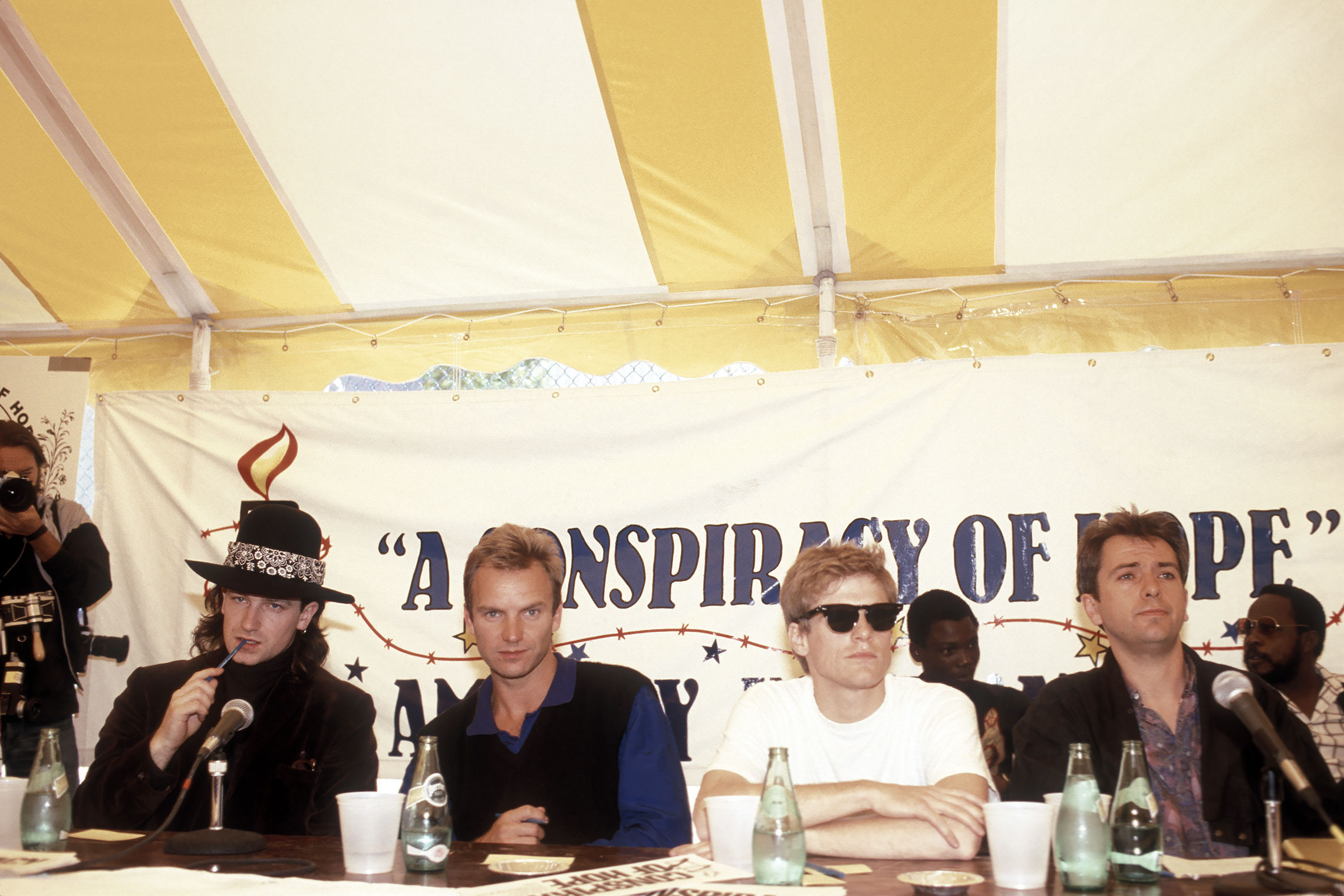
June 15, 1986: (from left to right) Bono, Sting, Bryan Adams, Peter Gabriel in a press conference at Giants Stadium for the ”Conspiracy of Hope” tour benefiting Amnesty International. (Photo by Ebet Roberts/Redferns and Getty)
In 1973, Genesis recorded their most successful album to date, Selling England by the Pound, which included their first hit single, “I Know What I Like (In Your Wardrobe).” Gabriel’s leadership of Genesis peaked with the creation of an ambitious concept album, The Lamb Lies Down on Broadway, in 1974. The record was released with a booklet containing an original story by Gabriel, which provided a dreamlike narrative informing the songs. To support the album, the group undertook a highly profitable North American tour, which featured one of Gabriel’s most outrageous costumes to date, the notorious Slipperman outfit.
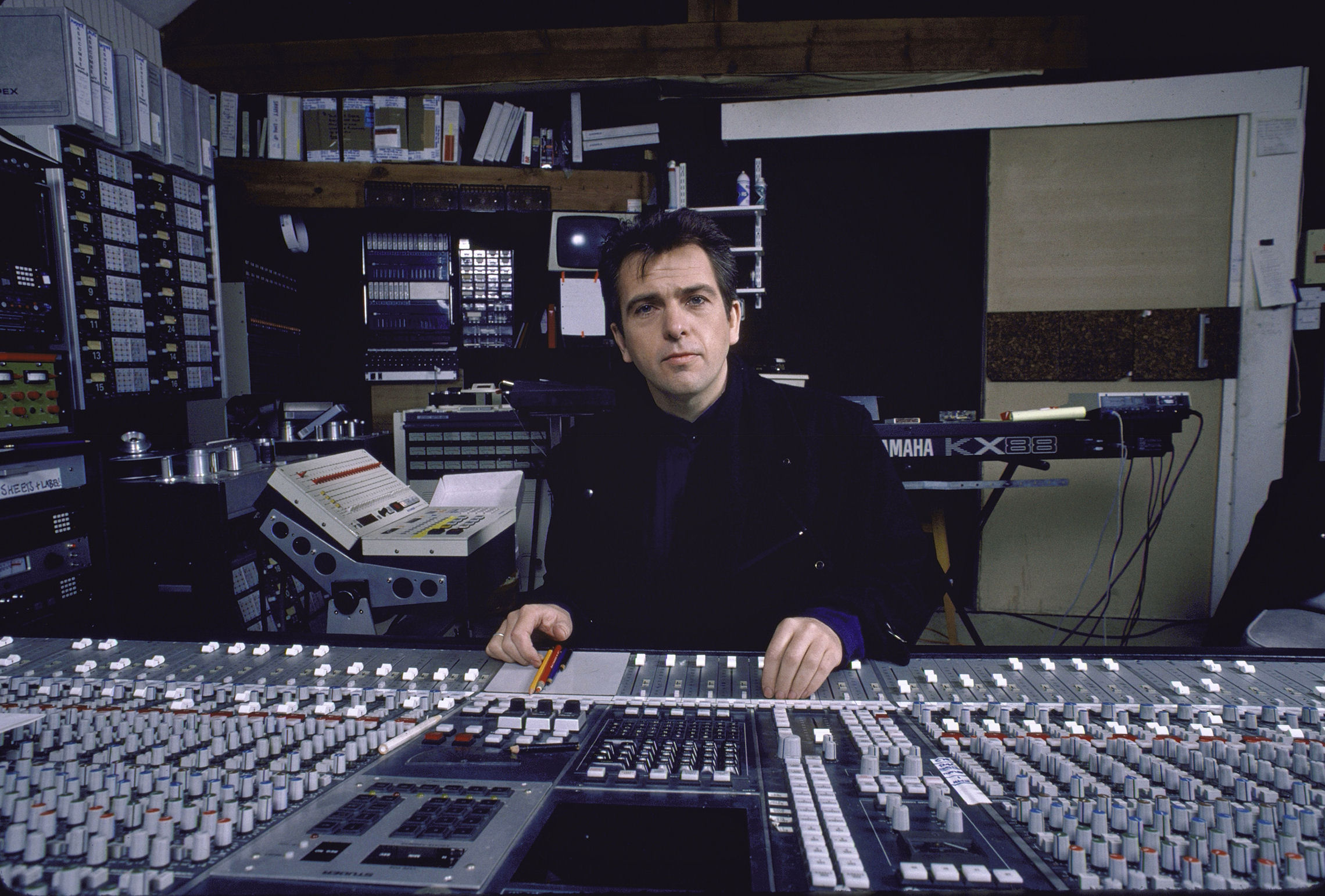
1987: Peter Gabriel in his recording studio in Ashcombe House at Swainswick in Somerset, England. Gabriel converted the house’s barn into his home studio and recorded three of his albums: Peter Gabriel/Security (1982), the soundtrack to Birdy (1985), and So (1986). (Photo by Peter Jordan/The LIFE Images Collection/Getty Images)
Gabriel’s wife, Jill, had a difficult first pregnancy, and their newborn daughter, Anna, required intensive medical care. In these circumstances, Gabriel was unwilling to leave his family’s side for rehearsals and recording sessions, exacerbating the existing friction between him and the other band members. In 1975, with the band enjoying its greatest success to date, Gabriel left Genesis.
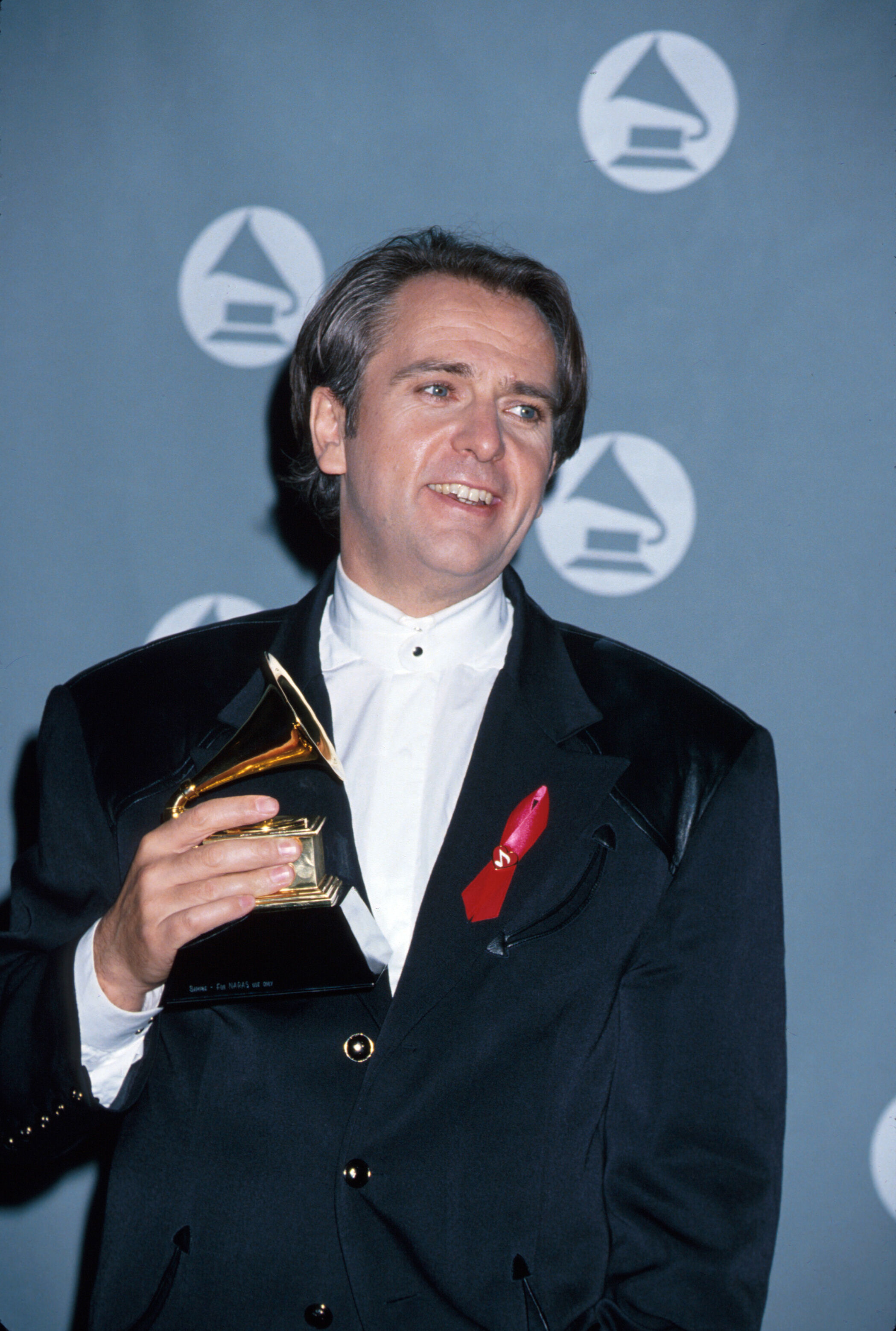
1993: Peter Gabriel holding his Grammy Award for “Best Short Form Music Video” for the second single “Steam” from his album Us at the 36th annual Grammy Awards. (Time Life Pictures/DMI/The LIFE Picture Collection/Getty)
At age 25, he faced the prospect of carrying on his career without the only collaborators he had ever known. He spent some months in relative seclusion with his wife and child at their home in Bath. After a year of preparation — and the birth of his second daughter, Melanie — he was ready to return to the music scene as a solo artist. His first solo album, titled simply Peter Gabriel, appeared in 1977. It featured a lush instrumental sound and produced the hit single Solsbury Hill.
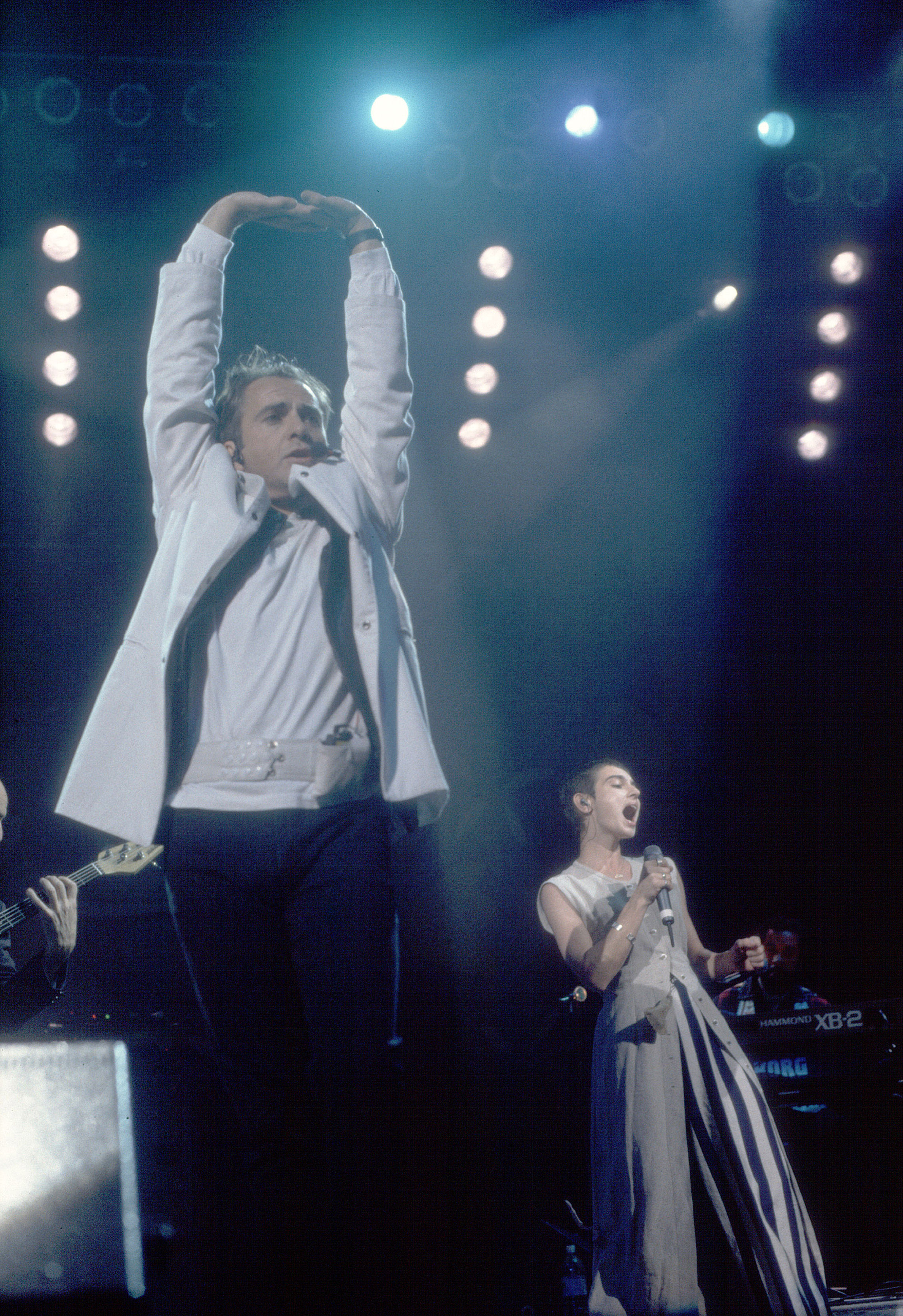
September 3, 1993: Peter Gabriel and Irish singer-songwriter Sinéad O’Connor perform together onstage at Marcus Amphitheater in Milwaukee, Wisconsin, during the U.S. tour of the WOMAD arts festival. (Paul Natkin/Getty Images)
Gabriel declined to provide titles for his first four solo albums, which are generally referred to as Peter Gabriel I, II, III, and IV, or by nicknames derived from their cover graphics — Car, Scratch, Melt, and Security. Gabriel toured extensively in the United States and Europe to support these albums. Shorn of the long locks he had worn in the early ‘70s, he adopted a more austere look, and by and large eschewed the flamboyant theatricality of his performances with Genesis.
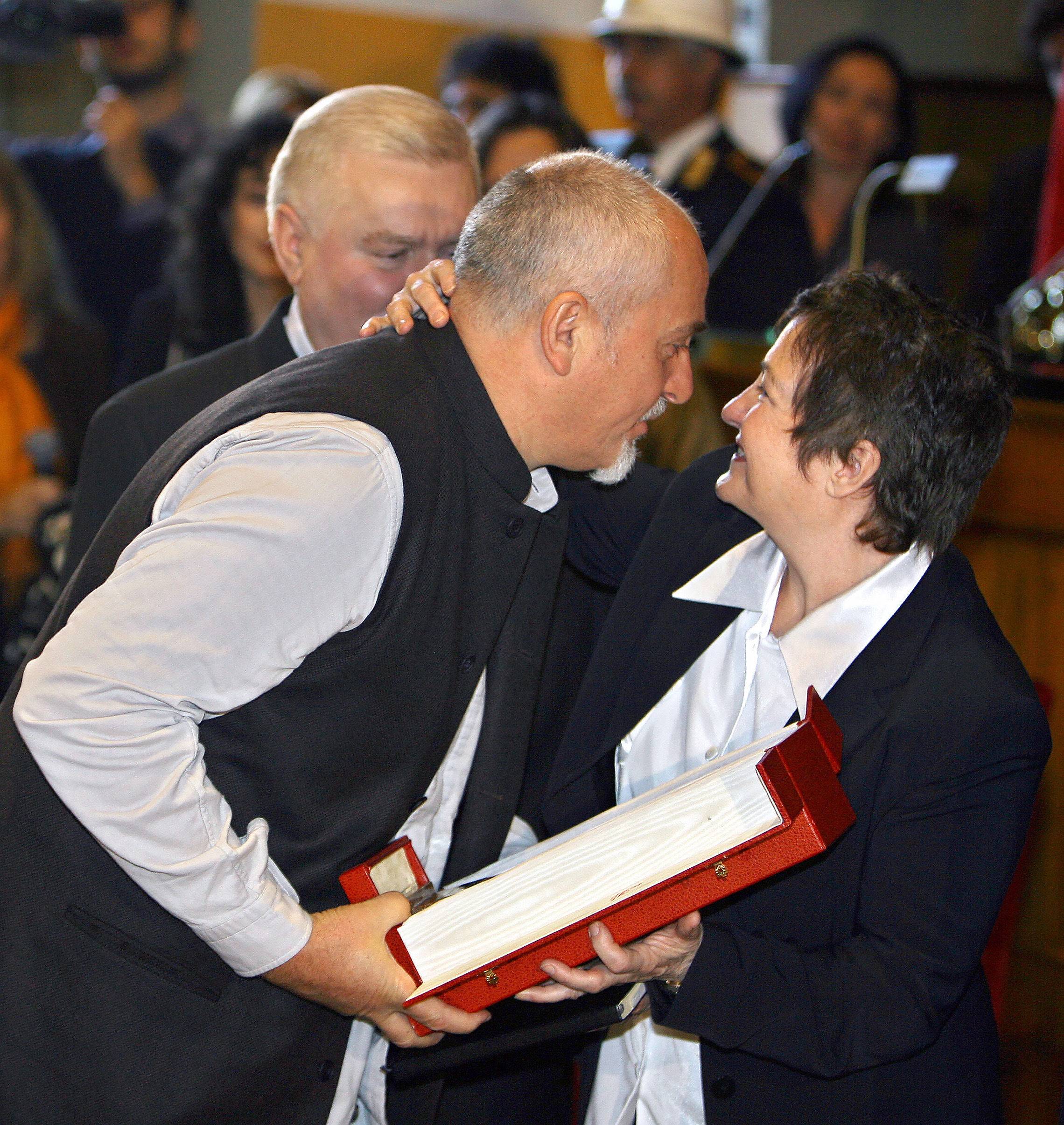
November 17, 2006: British musician and human rights activist Peter Gabriel receives the statuette Dafne of Peace as he is awarded the 2006 Man of Peace Prize from two Nobel Peace Prize laureates, Northern Ireland civil rights activist Mairead Corrigan Maguire and Poland’s former President and Solidarity union leader Lech Walesa, during the opening ceremony of the 7th World Summit of Nobel Peace Laureates in Rome. (PATRICK HERTZOG/AFP/Getty)
His second album was produced by King Crimson guitarist Robert Fripp, whom Gabriel had long admired, and featured a darker, leaner sound but produced no hits. His third solo album, which featured Genesis drummer Phil Collins and an innovative “gated drum” sound, produced the hits “Games Without Frontiers” and “Biko.” The album, released in 1980, was a much-admired artistic and commercial success, selling half a million copies in both the United States and in Britain, where it reached number one on the album charts.
The song “Biko,” a tribute to the murdered South African human rights activist Stephen Biko, marked a turning point in Gabriel’s career. For the first time, he directly addressed political and social issues — in this instance, the struggle against the apartheid system of racial segregation in South Africa. Gabriel had long admired the work of African and Middle Eastern musicians, and his own music increasingly reflected their influence. In 1980, he founded the WOMAD (World of Music, Arts, and Dance) festival to foster appreciation of the world’s diverse musical cultures.
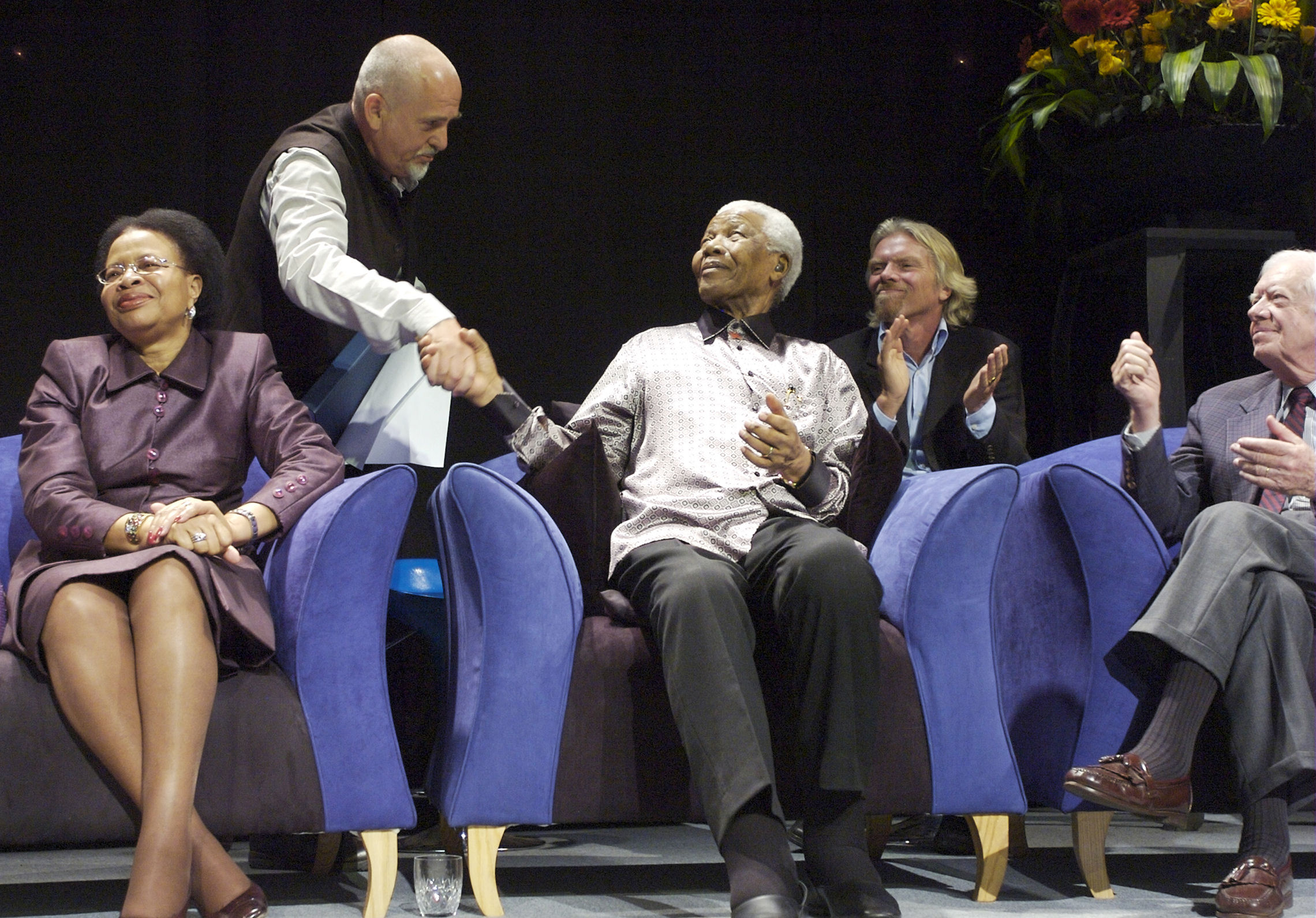
July 18, 2007: Peter Gabriel greets former South African President Nelson Mandela, in the company of Mandela’s wife Graca Machel, billionaire Richard Branson, and former U.S. President Jimmy Carter in Johannesburg, South Africa. On his 89th birthday, Nelson Mandela announced the formation of The Elders: a small dedicated group of leaders who will work objectively, free from vested personal interest, to help address global challenges. (© Getty)
Peter Gabriel’s fourth solo album, his first for Geffen Records, was titled Security for its U.S. release in 1982. Like its predecessor, it sold more than half a million copies in both Britain and the U.S. It featured the hits “I Have the Touch” and “Shock the Monkey,” and was notable for its creative use of digitally sampled sounds, reproduced with the Fairlight CMI sampling computer. The technique had previously been the province of experimental musicians, but Gabriel’s use was the first to reach a mass audience. Digital sampling has played a prominent role in popular recorded music ever since. The singer’s theatrical flair was once again on display in the video for “Shock the Monkey.” It became a favorite on the music video channel MTV, and the song became Gabriel’s first Top 40 hit in the U.S.
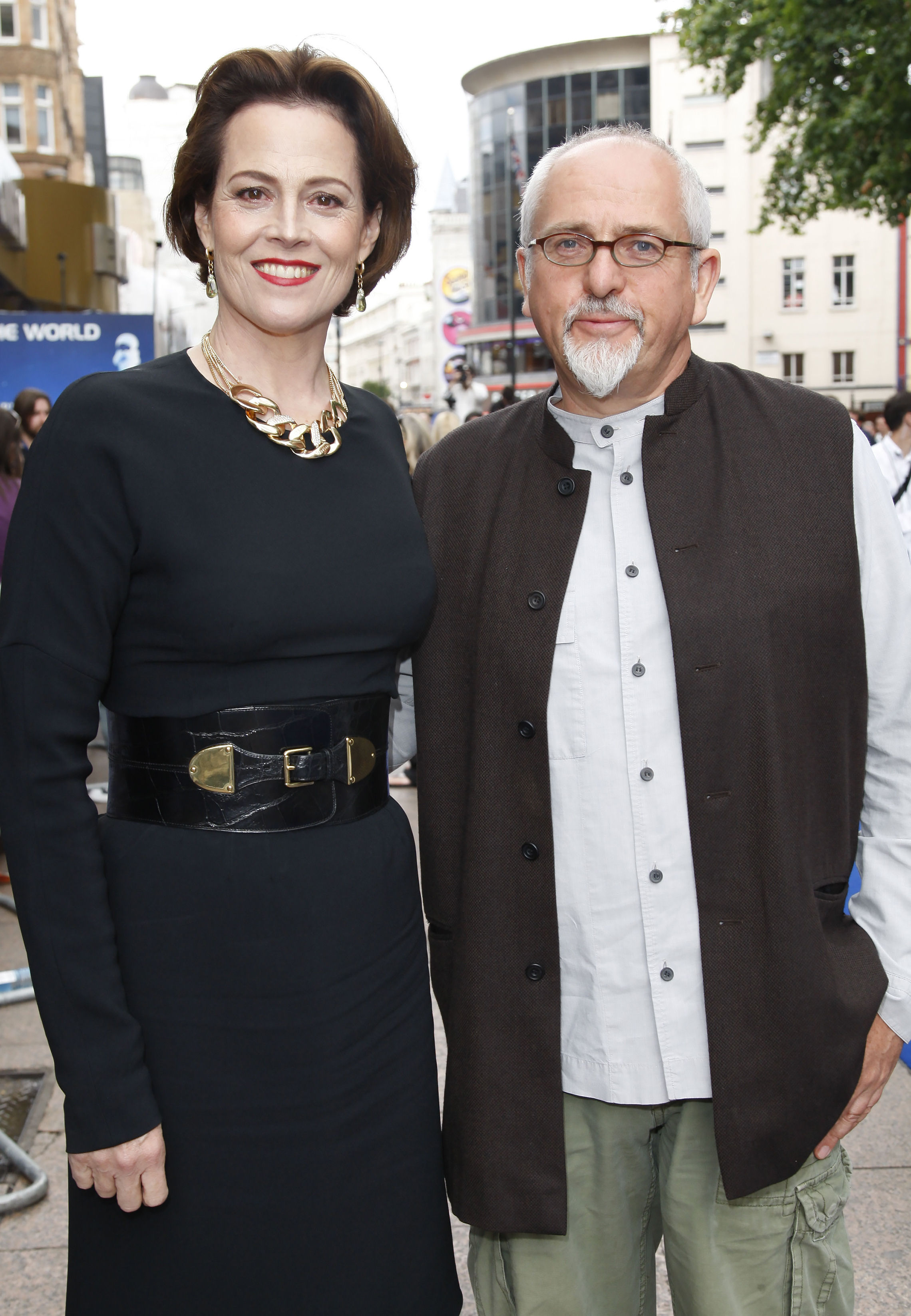
July 13, 2008: Actress Sigourney Weaver and Peter Gabriel attend the UK Premiere of the Pixar film WALL-E at the Empire Leicester Square in London. “Down to Earth,” co-written and performed by Peter Gabriel for the film, won the Grammy Award for “Best Song Written for a Motion Picture, Television or Other Visual Media.” (© Jon Furniss)
Four years elapsed between the success of Security and Peter Gabriel’s next solo album, but when it came, it would be the greatest success of his career. His 1986 album So featured the songs “Sledgehammer,” “In Your Eyes,” “Big Time,” and “Don’t Give Up the Fight,” a duet with singer Kate Bush. The album reached number one on the UK album chart, while the song “Sledgehammer” was the top-selling single in the United States. Gabriel received four Grammy nominations for his work on the record, which sold more than eight million copies worldwide, including two million in the UK and five million in the U.S. It has been estimated that the video of the album’s single, “Sledgehammer,” is the most played selection in the history of MTV.
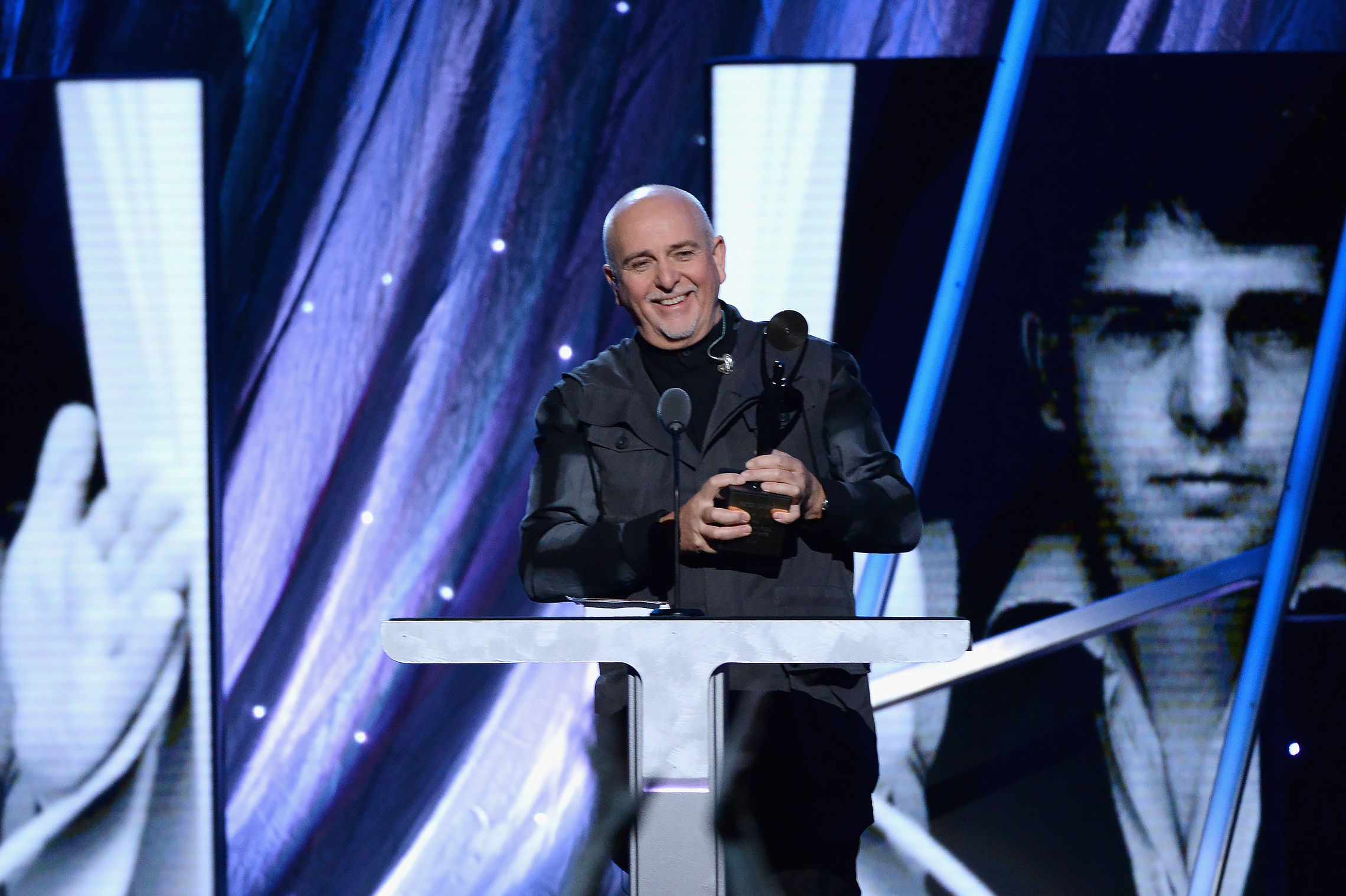
April 10, 2014: Peter Gabriel speaks onstage at the 29th Annual Rock and Roll Hall of Fame Induction Ceremony at Brooklyn’s Barclays Center in New York City. The Hall of Fame Class of 2014 included Nirvana, Brian Epstein and Andrew Loog Oldham, Linda Ronstadt, Cat Stevens, Hall and Oates, KISS and the E Street Band. (© Larry Busacca)
Over the years, Peter Gabriel’s song “Biko” had spread around the world and become an informal anthem for human rights activists. Gabriel was invited to perform in the “Conspiracy of Hope” tour, a series of benefit concerts for the international rights organization Amnesty International. He would play an even larger role in organizing subsequent concert tours to benefit Amnesty. A year of commercial success and escalating humanitarian commitments, 1986 also saw the end of Gabriel’s marriage to Jill Moore.
Fulfilling a longtime interest in cinema, Peter Gabriel began composing film scores in the 1980s, starting with the film Birdy in 1985. His score for Martin Scorsese’s 1988 film The Last Temptation of Christ was released as the album Passion, which brought Gabriel a Grammy Award, his first, for Best New Age Performance.
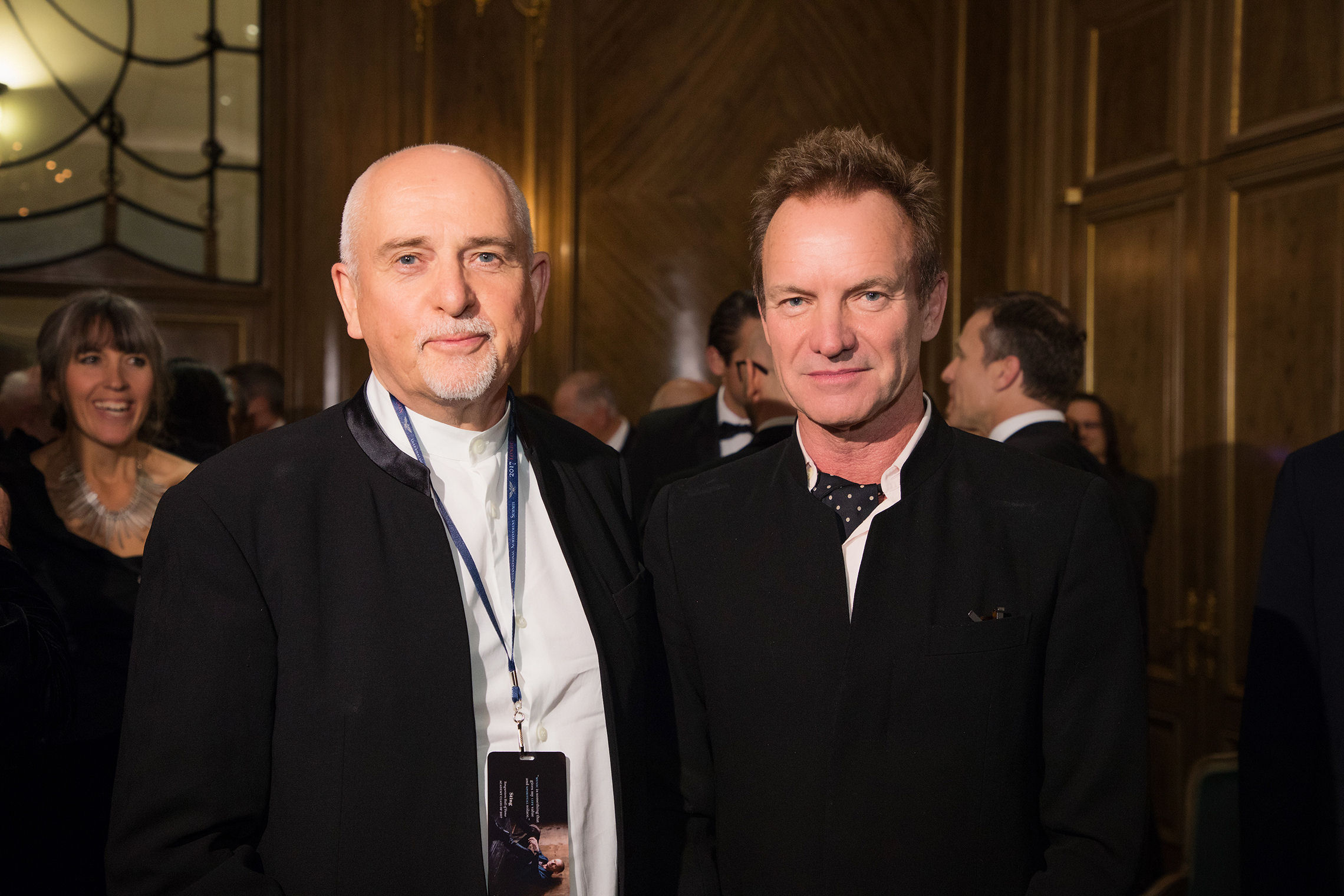
Two members of the Academy Class of 2017: Award-winning English singer-songwriters Peter Gabriel and Sting at the reception at Claridge’s Hotel in London, England, during the 52nd annual International Achievement Summit.
Two years after his first Amnesty concerts, Gabriel led the 20-concert “Human Rights Now!” world tour. In 1990, he traveled to Chile for the “Embrace of Hope” tour, celebrating the country’s emergence from years of military dictatorship. Gabriel’s touring and activism had largely kept him out of the studio until 1992, when he released the album Us, in which he reflected on the failure of his marriage and his strained relationship with his children.
Academy Awards Council member and the violin virtuoso Joshua Bell presenting the Academy of Achievement’s Golden Plate Award to Peter Gabriel during the 2017 International Achievement Summit at Claridge’s in London.
Gabriel undertook a world tour to support the Us album and shot a series of innovative videos, winning Grammy Awards for the videos of “Digging in the Dirt” and “Steam” and for his concert film Secret World Live. The same year, he founded the nonprofit organization Witness, which equips activists with film and video technology to document human rights abuses. Like his inventor father, Peter Gabriel has a longstanding interest in new technology. In 1999, he co-founded OD2, one of the first online services for downloading music.
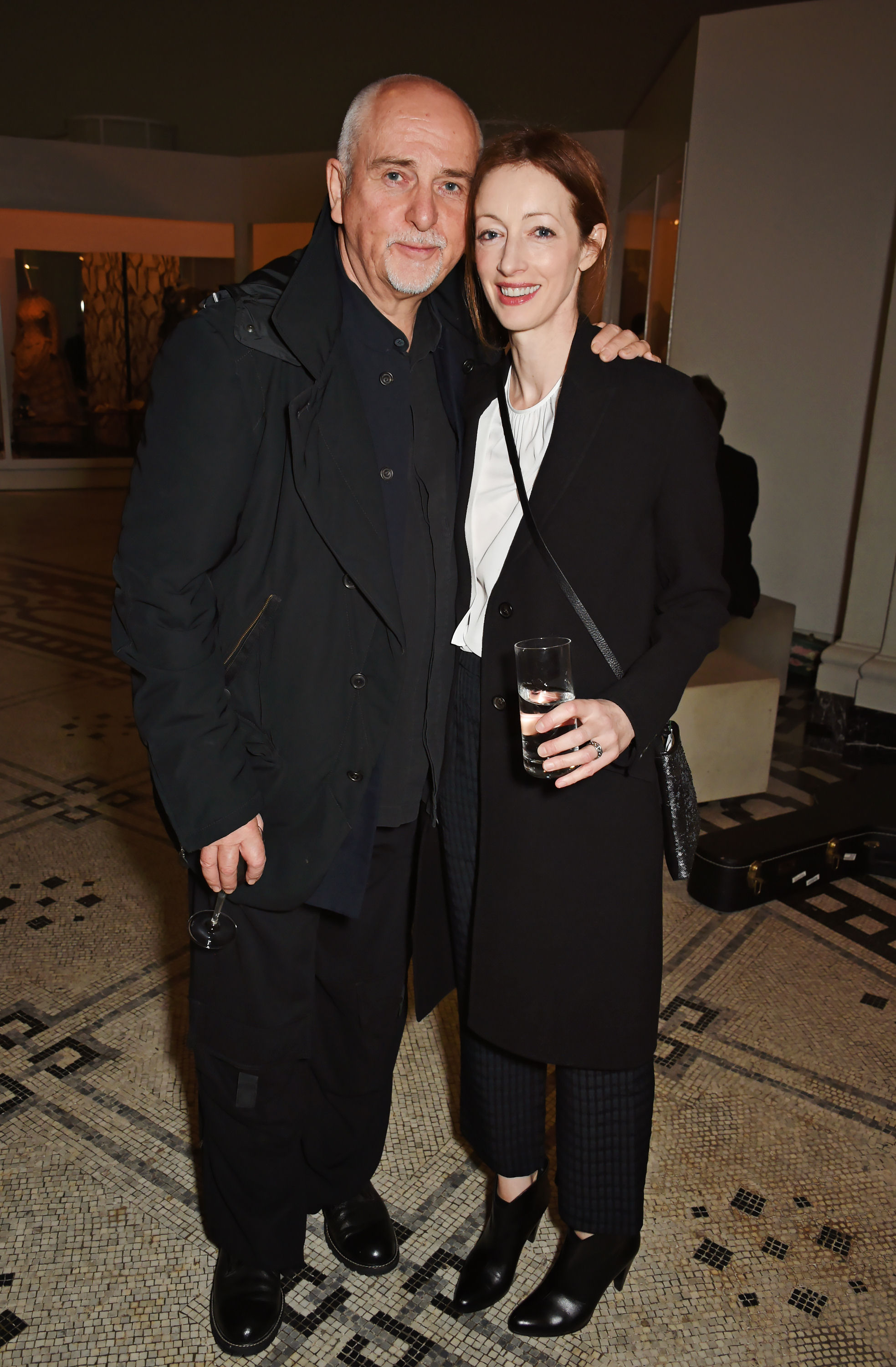
November 13, 2017: Peter Gabriel with his wife Meabh Flynn at the unveiling of the multimedia exhibition “The Adoration Trilogy: Searching for Apollo” by Alistair Morrison and hosted by Roger Daltrey. (David M. Benett/Getty)
Ten years elapsed between Gabriel’s fifth and sixth studio albums. He returned to the studio in 2002 to complete Up, a self-produced collection of longer songs. The album produced no hit singles but sold well worldwide, due to Gabriel’s international popularity, bolstered by years of touring. That year, Gabriel married Irish costume designer Meabh Flynn; they now have two sons, Isaac Ralph and Luc. His daughters by his previous marriage, Anne-Marie and Melanie, have worked with him often over the years, Anne-Marie as a filmmaker documenting his performances, Melanie as a vocalist in his live shows.
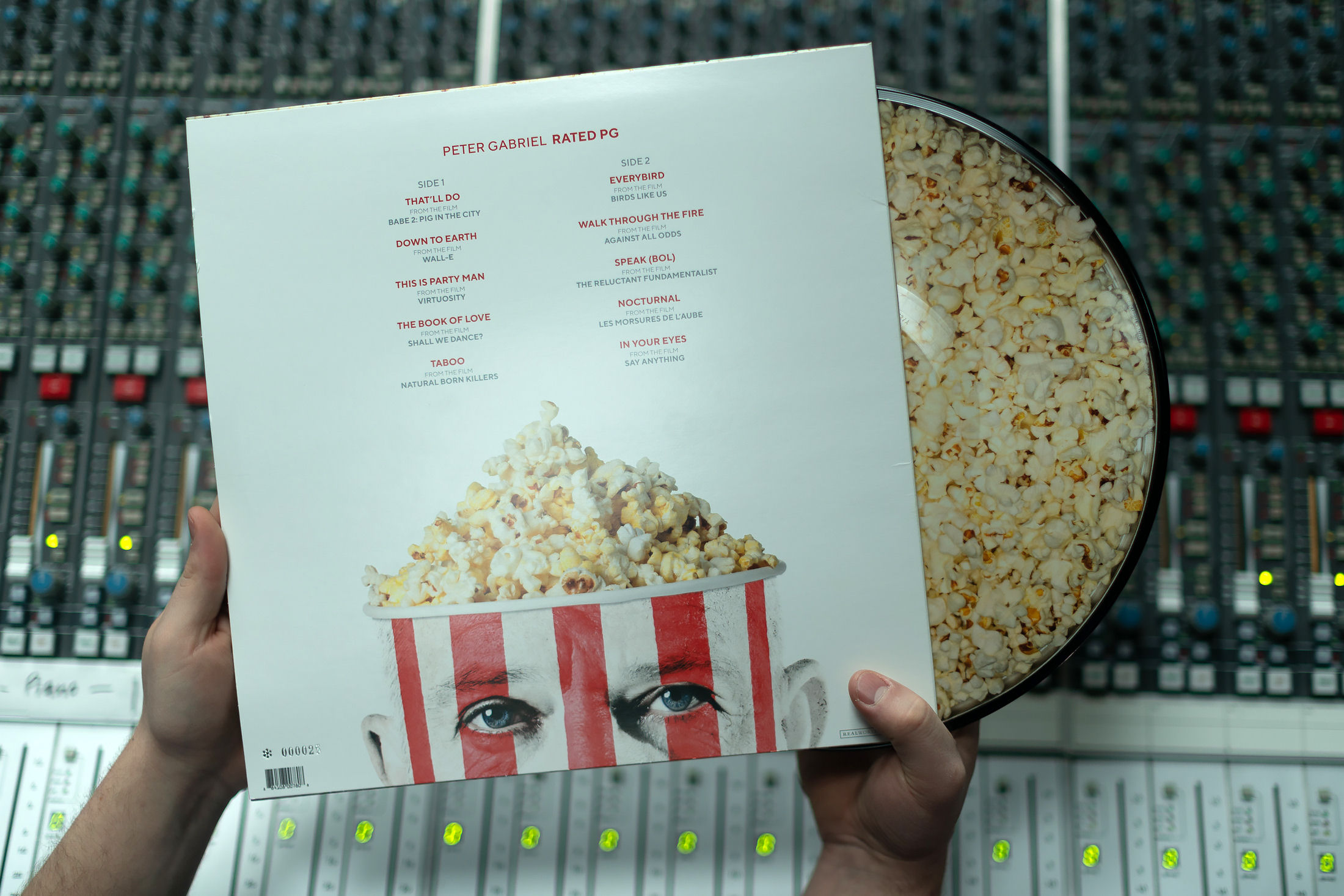
Rated PG, released April 13, 2019, is a collection of Peter Gabriel songs from the movies. Having always loved the combination of film and music (aged 17 he gave up a place at film school to pursue a career in music), Gabriel’s first opportunity to really marry these twin interests came when he w
In 2006, Peter Gabriel sang John Lennon’s “Imagine” for the opening ceremonies of the Winter as asked to create the music for Birdy in 1985.Olympics. Also that year, the World Summit of Nobel Laureates selected Gabriel for its Man of Peace Award, presented by Mikhail Gorbachev and the Mayor of Rome, Walter Veltroni. The following year, Gabriel and his friend, Virgin Records founder Richard Branson, recruited distinguished international statesmen, including former U.S. President Jimmy Carter, former Irish President Mary Robinson, and former UN Secretary General Kofi Annan, along with Archbishop Desmond Tutu and South African President Nelson Mandela, to form an organization they called The Elders, leveraging the moral authority of their long experience to resolve civil and international conflicts.
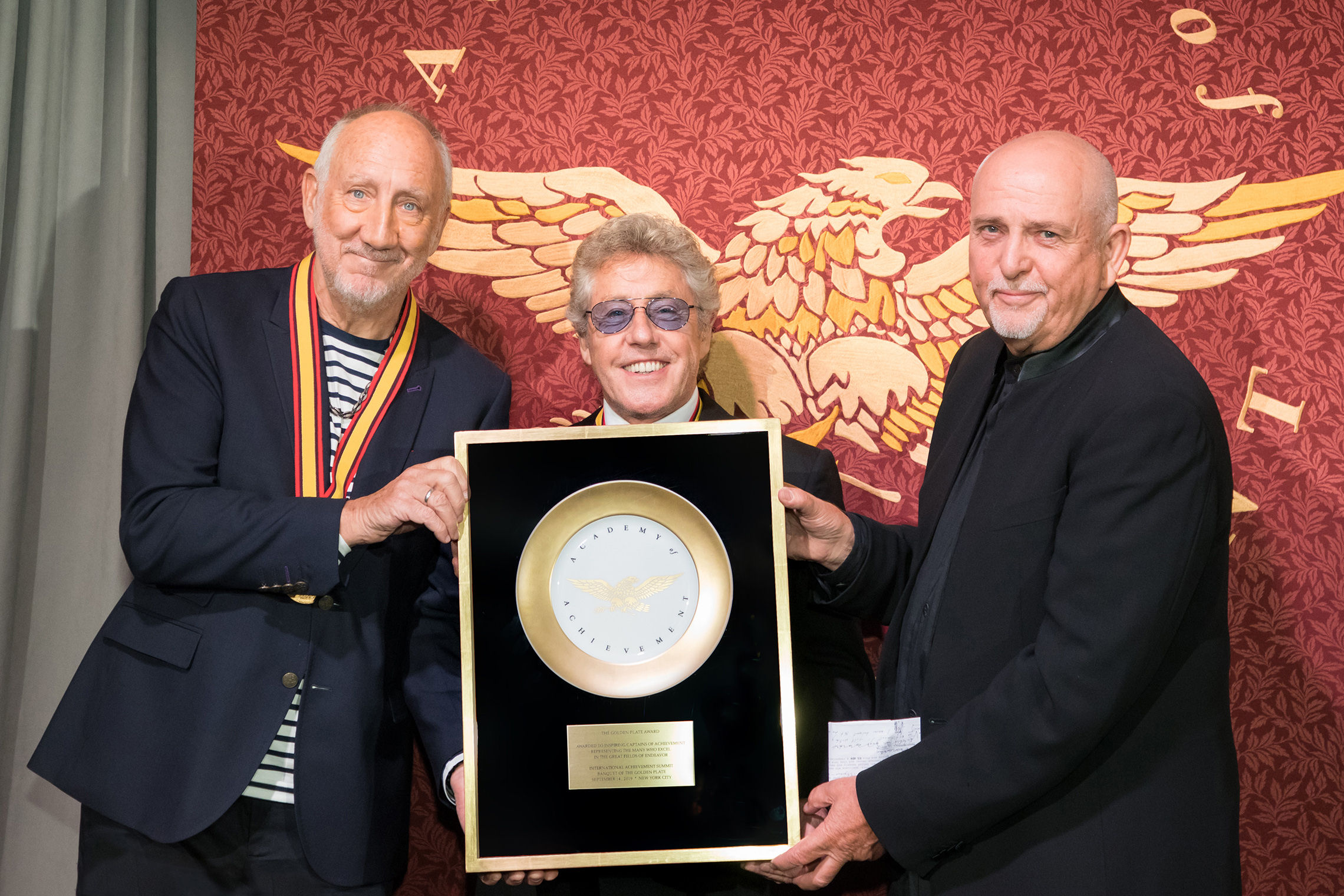
September 2019: Peter Gabriel presents the Golden Plate Award to The Who’s Pete Townshend and Roger Daltrey at the Banquet of the Golden Plate ceremonies during the International Achievement Summit in New York City.
Gabriel received another Grammy for the song “Down to Earth,” from the 2008 animated film WALL-E. Genesis was inducted into the Rock & Roll Hall of Fame in 2010. The same year, Gabriel released Scratch My Back, an album of songs by other writers. The following year, he produced New Blood, a collection of his old songs performed with full orchestra. Peter Gabriel was inducted into the Rock & Roll Hall of Fame as a solo artist in 2014. Today, he makes his home in Wiltshire, England, where he maintains a commercial recording studio and a record label, Real World Records. In April 2019, Real World Records released Rated PG, a compilation of songs Gabriel has composed or sung for motion picture soundtracks.
 Taylor Rae Hillestad is a professional artist & graphic designer from St. Paul, Minnesota.
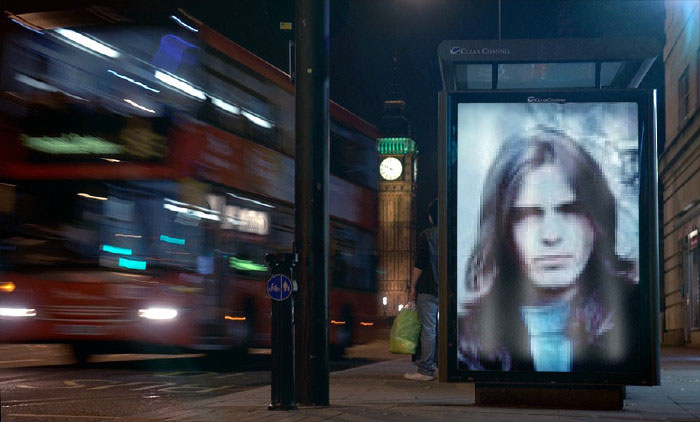
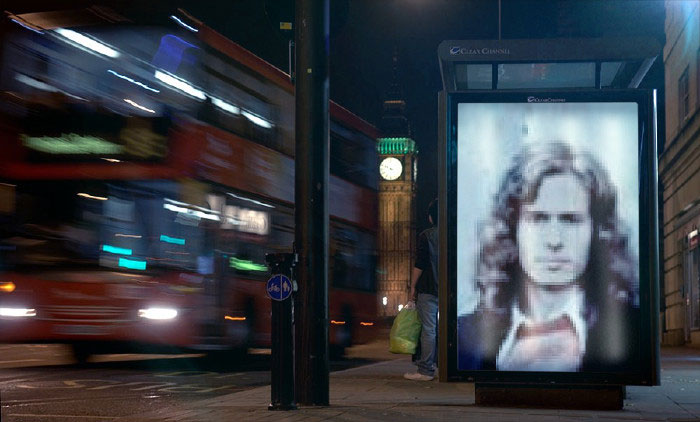
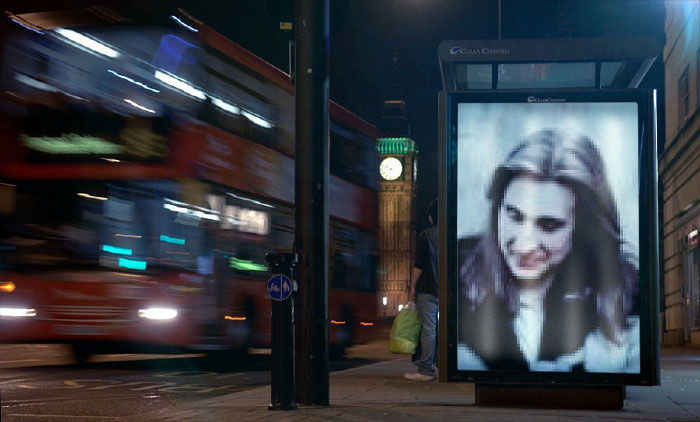
She has been enjoying making art her entire life and earned a BFA at the Kansas City Art Institute. She specializes in colorful portraits and rock & roll themed work. Her colorful style of portraits all started when she first heard Peter Gabriel's progressive & world music.
She wanted to express that in a modern tribute to him and believed bold colors help visualize imagination, personality, & creativity well. She then continued to enjoy expressing the rest of the classic members of Genesis and other musicians in that reflecting matter.
Taylor's paintings and design work have been recognized internationally and been admired by some of her favorite musicians including Genesis members: Phil Collins, Steve Hackett, Tony Banks, Mike Rutherford, along with musicians Nad Sylvan, the band YES, Hall & Oates, Eliot Lewis, Gary O’Toole, Dennis DeYoung (Styx), Chromeo, and Mayer Hawthorne.
They have been featured on many music-industry websites, social media pages, and have even been collected by some of the musicians themselves.
Taylor's portfolio and contact information can be found at TaylorRaeArt.com.
All works © Taylor Rae Hillestad
 |
 |
 |
 |
 |
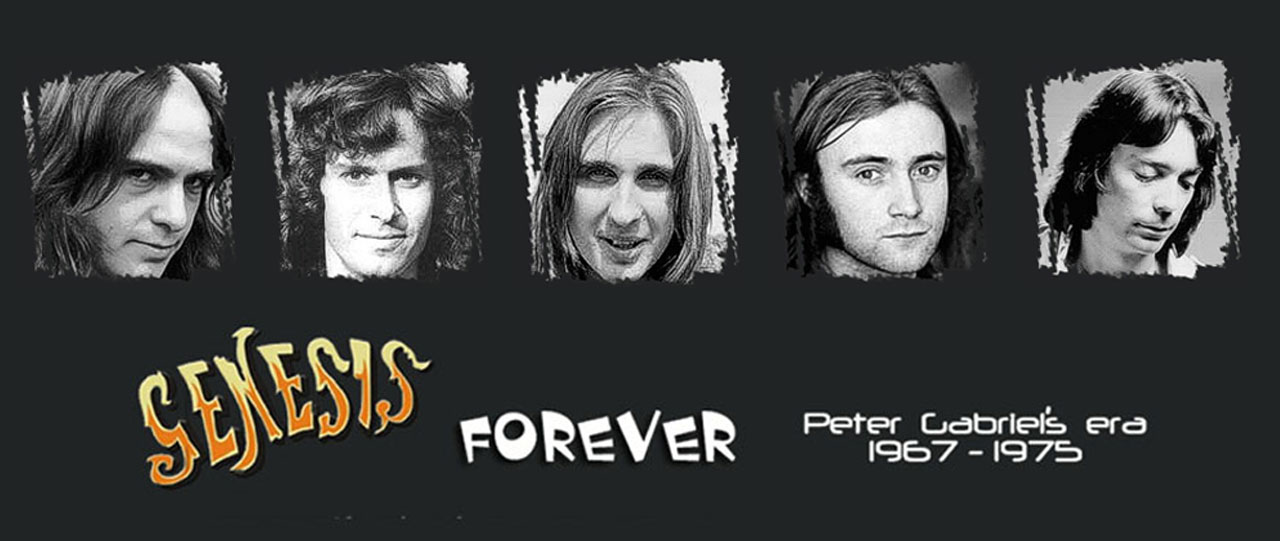
| Peter Gabriel | Tony Banks | Mike Rutherford | Phil Collins | Steve Hackett |
| click on the names to enlarge |
 |
 |
 |
 |
 |
 |
 |
|||||
 Anna Gabriel’s documentary film following her father on the Growing Up tour of 2002. With his eldest daughter filming, his second daughter singing and his new wife and baby joining him on the road, Gabriel juggles his lives as a musician and as a regular family man. The highs, the lows, the sublime, the ridiculous, the fathers, sisters, brothers, band members and road crew: Anna Gabriel's knowing eye reveals an inventive and intimate portrait of family life on tour. 40 minutes.
It has become available in 2004, yet Growing Up On Tour – A Family Portrait. A Film By Anna Gabriel has remained a more obscure gem. In fact, many fans are not really aware of this DVD. What is so special about it, and who should consider buying it?
This is no DVD for the high-end technology aficionado. It is kept quite simple. A simple size format of 4:3, normal two-channel Dolby Stereo. The source material is Digital Video, Super 8 and VHS. It was the maker’s intention that the different qualities of the recording media would show.
NOT FOR SALE - TRUBUTE ONLY
Played, recorded, mixed and mastered by Antoine Baril
Filming and video editing by Antoine Baril
Produced at Hemisphere Studio, Quebec, QC, Canada between september and november or 2016
Music composed and released by Genesis Tony Banks Phil Collins Mike Rutherford Steve Hackett Peter Gabriel
SongList
- Watcher of the Skies
- Dance on a Volcano
- Fly on a Windshield
- Firth of Fifth
- Dancing with the Moonlit Knight
- Supper's Ready
- The Cinema Show
- Robbery Assault & Battery
- Down and Out
- All in a Mouse's Night
- Second Home by the Sea
- Los Endos
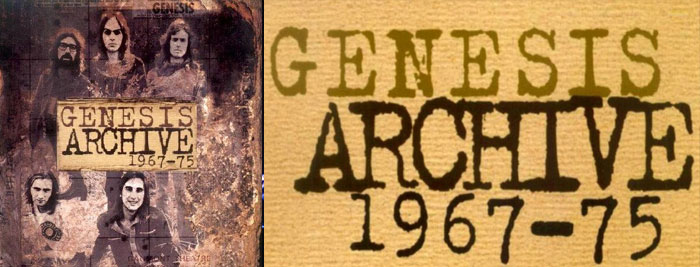
This is a weird one - it's a boxed set consisting of rarities, radio sessions, demo mixes of material from their debut album and a full live performance of the Lamb Lies Down On Broadway, but I'm not sure any one of those components quite fully delivers.
Having a full live rendition of the Lamb is something which some Genesis fans would be very keen on - witness the spectacular number of bootlegs from the Lamb tour that circulate - but I actually find it somewhat less than thrilling compared with Genesis Live or the Rainbow tracks (some of which are included here - but frustratingly not the full show, and particularly frustratingly not the excellent rendition of Supper's Ready). A live rendition of the Lamb doesn't have Eno's contributions, for instance, and nor does it quite disguise how tired and cranky the band seem to be coming across. You can see the wheels are about to come off the Gabriel-fronted version of the band.
Similarly, the BBC sessions presented are interesting, but far from complete, the rarities include obvious singles mixes, and the demos are focused on the least interesting era of Gabriel-fronted Genesis. It's an interesting grab-bag in all, but compared to bootleg rarities sets has all sorts of odd gaps.