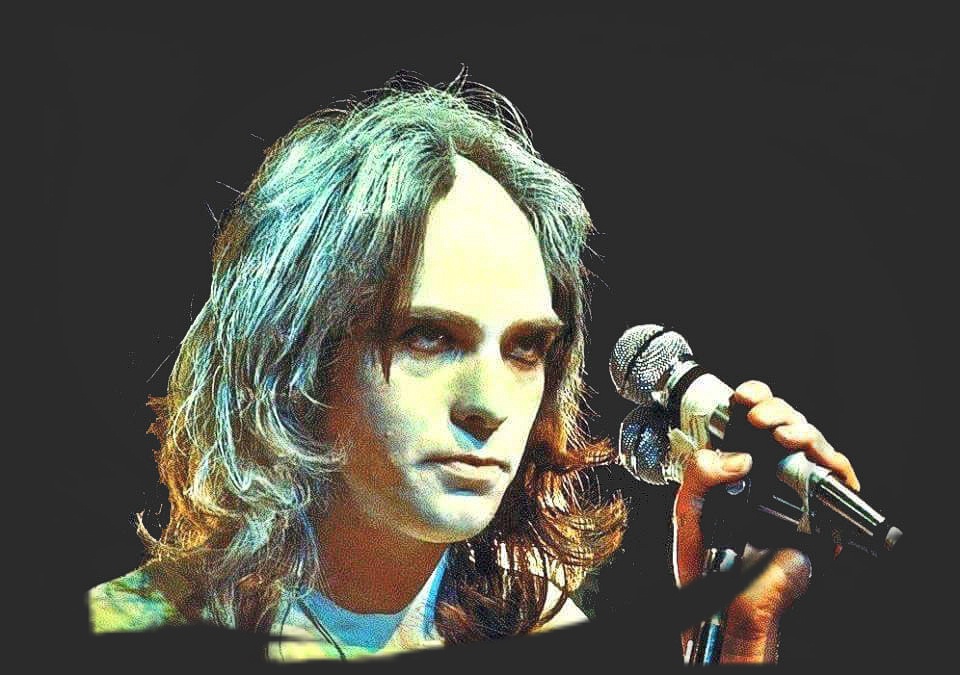
The group even enters some free territory on "The Waiting Room," though there's still an underlying structure. But individual aspects of the music aren't what The Lamb is about. Despite friction during its writing, and Gabriel's decision to leave the band early into the 102-date tour that began in the fall of 1974 (though Gabriel kept his decision to leave out of the press until after the tour was completed), The Lamb may be the Genesis album that's weathered the best over time. It may not have been a classic in the day, but it's achieved that status in the intervening years. The biggest shame is that while there's a live audio recording of The Lamb, available in its entirety on Genesis Archive 1967-75, it was never filmed, and those who saw the show know it was the culmination of Genesis' early, theatrically focused years. For those who didn't get to see the show, Genesis tribute band The Musical Box managed to acquire all the props and projection slides from Genesis a number of years ago, along with the permission to use them in launching full-scale performances.
The bonus CD/DVD that comes with 1970-1975, while crossing over some of the material on Genesis Archive 1967-75, also has a number of tracks that reveal just how advanced the group was from its earliest days. "Happy the Man" and Twilight Alehouse" are worth having as early attempts by the group at a more radio-friendly sound, and a handful of tracks from a BBC Nightride radio show are further examples of the group's early pastoral days, with the Fairport Convention influence even more pervasive.
But it's the four tracks from an aborted project called Genesis Plays Jackson, an abandoned documentary about painter Mick Jackson, that are the real gold of this bonus disc, as they reveal a number of themes that would reappear in more well-known Genesis tunes. "Provocation" opens with themes that would become part of Nursery Cryme's "The Fountain of Salacmis," as well as an instrumental section that would be reused on Trespass' opener, "Looking for Someone." "Frustration" directly foreshadows "Anyway," from The Lamb, right down to the instrumental break that would lead into Hackett's solo in the later version.
"Manipulation" possesses many of the passages that would ultimately be expanded on Nursery Cryme's "The Musical Box," including an intro that's almost identical. Only the instrumental "Resignation" has no reference to later songs, though it fits comfortably within the musical context that Genesis was already beginning to shape.
The accompanying DVD includes a final interview, as well as a 45-minute VH1 television documentary originally aired at the time Genesis Archive 1967- 75 was released, and two 1973 performances from the American The Midnight Special show—the clearest video of "Watcher of the Skies" in 1970-1975 as well as "The Musical Box."
While the video performances on the six DVDs accompanying the seven CDs of 1970-1975 are clearly a case of working with what was available— often taken from videotapes that may not have been first generation—they provide an opportunity for Gabriel-era Genesis fans who missed the opportunity to see the band at the time a chance to see what they missed. And taken together, the three hours of brand new interview footage shed considerable light on a group that has never truly been heard properly...until now. The remix/remaster work is absolutely top-notch, bringing clarity and depth, detail and transparency to music that still holds up nearly 40 years later.
With the entire Genesis studio discography now reissued and sounding as good as it likely ever will, the only question is: will there be an accompanying box set that includes remixed and remastered versions of Live (Charisma, 1973), Seconds Out (Atlantic, 1977) and Three Sides Live (Atlantic, 1982), Live: The Way We Walk Vol. 1 (The Shorts) (Atlantic, 1992) and Live: The Way We Walk Vol. 2 (The Longs) (Atlantic, 1993)? Given the live material released on Genesis Archive 1967-75 and its accompanying follow-up, Genesis Archive 2: 1976-1992 (Atlantic, 2000), it's almost certain that there's plenty more live material in the archives, so perhaps there will be more to come. In the meantime, 1970-1975 fulfills a significant need, and is the best of the three Genesis studio box sets. Taken together with 1976-1982 and 1983-1998, however, these three boxes not only document, in the best possible way, the entire studio career of one of rock's most important and influential bands, but represent, without question, the best reissue series ever undertaken.