

 It shows no or at best only the most minuscule traces of the style that would make them well-known later, and therefore frequently meets with a refusal and lack of affection. Justly so?




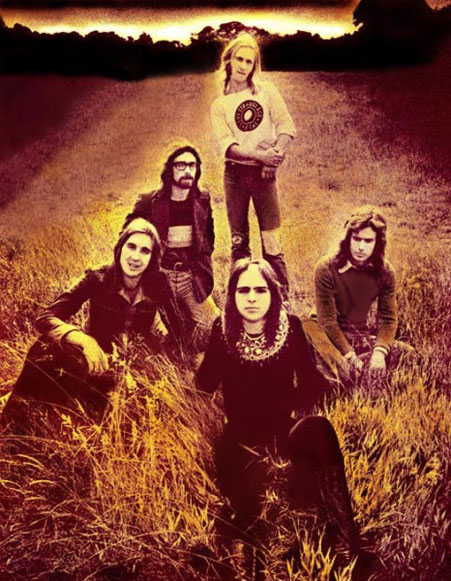




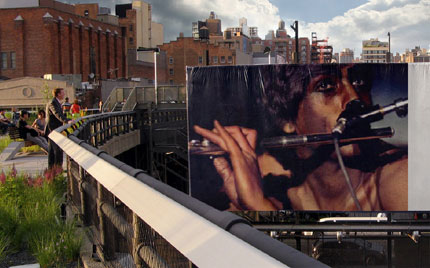
Fans of both bands tend to be mutually exclusive as well. The millions upon millions who picked up on Genesis in the 80s as a succession of world-wide hits dominated the airwaves had little idea of the band’s legendary progressive rock past. "In the later years there were people coming to our concerts who didn’t know that I drummed,” laughs Collins.
And the fervent cult following that nurtured Genesis as they became progressive rock legends in the 70s perversely drifted away as the band’s popularity increased. "I think that happens with every band that becomes successful,” reflects Mike Rutherford. "It’s just the way it goes.”
But both bands have the same core membership. Keyboard player Tony Banks and guitarist Mike Rutherford were ever-present from the first Genesis single in 1968 to the last in 1997. And Phil Collins can claim 26 years continuous service with the band from 1970 to 1996. Indeed from 1978 when they released the appropriately titled album …And Then There Were Three…, Genesis consisted of just Banks Collins and Rutherford for nearly 20 years.
For them of course, there is an obvious continuity between the two bands, summed up by Collins: "The spirit of the way we write songs has never really changed. A lot of the older fans think that Genesis should be a brand name for progressive rock or whatever, but actually Genesis is the name for a group of songwriters who have always done whatever they felt like doing under that banner.”
Banks is more specific: "We’ve always liked something to be distinctive about a song, even a simple song. There is usually an element of quirkiness about a Genesis song and that’s important to us.”
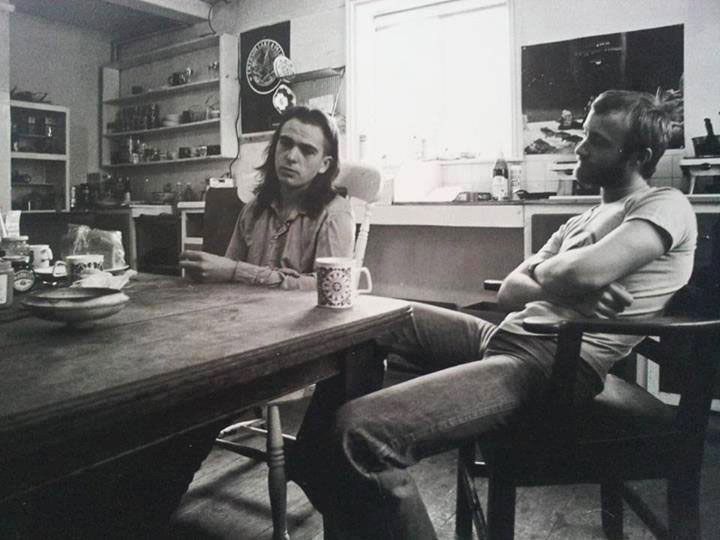 |
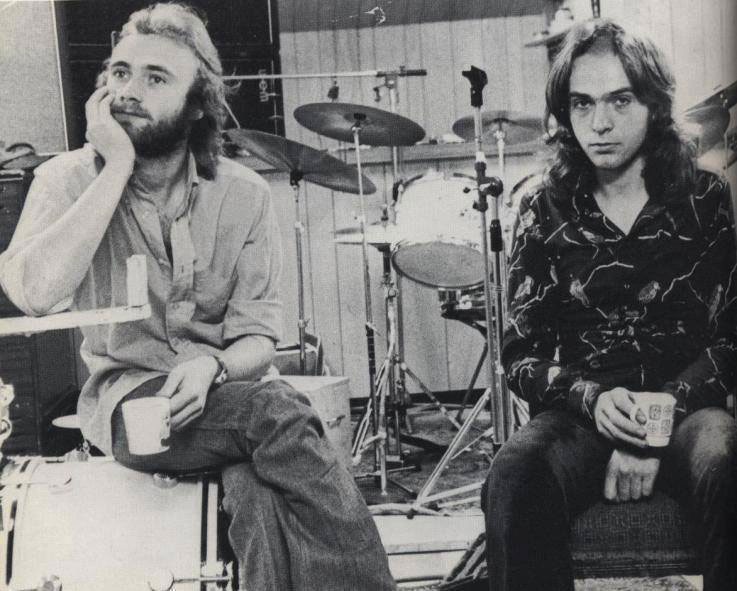 |
Nevertheless they don’t argue with the fact that 70s Genesis were a very different band to 80s Genesis. That difference can be attributed to Peter Gabriel, the original singer who personified 70s Genesis. When he left in 1975 it was widely assumed to be the end of Genesis. What nobody realised was that the songwriting and lyrics had always been very much a collaborative effort within the group.
Gabriel’s departure did not change the core musical style they had developed up to that point. But it did change the presentation and gradually set the band on a different course. This in retrospect seems like a very smart move. After all, the late 70s and the onset of punk was no time to be waving your legendary prog rock credentials in people’s faces.
Not that Banks, Collins or Rutherford will take the credit. They were simply rolling with the changes, making the most of what they had and persevering. That in itself was no guarantee of success but there was a chance they could tilt the odds a bit. The fact that it succeeded so spectacularly is something they can’t really explain.
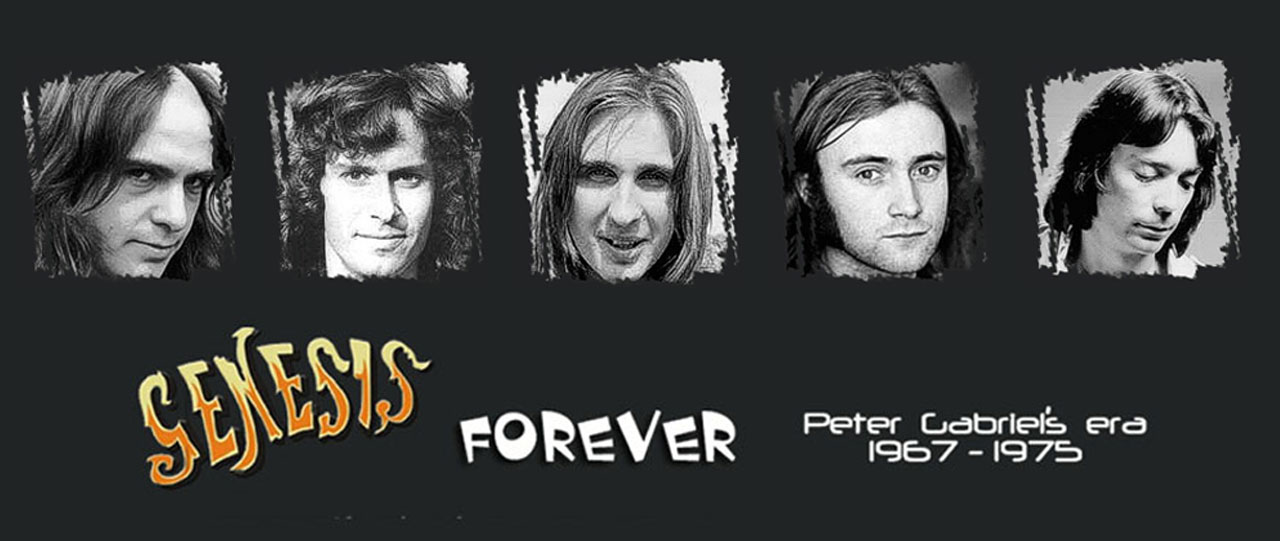
Not only is 70s Genesis different from 80s Genesis. Both are different from other rock bands. Their origins couldn’t be less rock ‘n’ roll. They were formed in 1967 in the elite public school environment of Charterhouse in leafy Surrey, where the sounds of Swinging London were struggling to make an impact. To the teachers, even the acoustic guitar was regarded as a subversive instrument.
Classmates Peter Gabriel and Tony Banks bonded over a piano where they would pick out pop songs of the day when they thought the teachers weren’t listening. In the year below, Mike Rutherford and Anthony Phillips furtively strummed their guitars. They formed ad hoc bands in various combinations and even dared to play a school concert where announcements between songs were strictly forbidden.
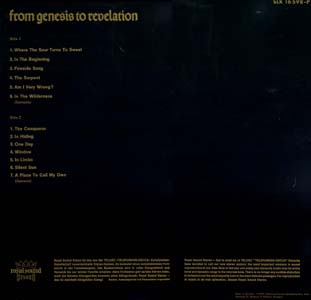
Their background meant that their songs were less reliant on the blues format, leaning more on classical motifs and lyrics drawn from poets and mythology. With the first of several drummers they recorded a demo that they passed to Old Carthusian Jonathan King who was a rising young turk in the pop business, courtesy of a hit called ‘Everyone’s Gone to the Moon’. He signed them, gave them the name Genesis and recorded a couple of singles plus a concept album called From Genesis To Revelation which was made in a day with Gabriel struggling to reach the high notes and having cold showers between takes.
To their horror, when the album came out they discovered that King had added string arrangements and half their instruments were lost in the stereo "mix”. Not that it mattered because the album sank without trace. But the fuse had been lit and instead of moving on to the next stage of their education at university they decided to pursue the group, wriggling out of their deal with King and moving into a cottage in the woods near Dorking where they worked up a new batch of songs.
It was here that the Genesis writing method came together, a blend of democracy and cunning as each member tried to push his ideas through the group committee. It was a serious and intense business with very few recreational breaks. "We used to care so much about each bit,” says Banks. "Like whether that beat should be advanced or scrapped. You could lose sleep over it. I mean it was that important.” Gabriel remembers that he and Banks were the most forceful when it came to the big decisions. "I used to drop ideas for Tony to adopt so that they became his ideas, or shared ideas.”
It wasn’t until 1970 that they ventured out to start playing gigs and discovered that audiences were often disinterested in their carefully arranged acoustic numbers but could generally be roused by a dramatic, rhythmic song called ‘The Knife’. With the rest of the band sitting down, it was up to Gabriel to provide the visual focus which involved overcoming a natural shyness.
But the incessant rehearsals had made Genesis a tight band and they soon landed a contract with Charisma Records. Their first "real” album, Trespass, in 1970 got encouraging reviews but no sooner had it come out than Anthony Phillips, regarded by the others as the key musical figure in the band, decided to leave. He’d become worn down by the frustration of trying to reproduce their complex sound in concert which then turned into stage fright.
What started as a crisis became the turning point. They found another guitarist, Steve Hackett who’d grown up on a London council estate, far from the Charterhouse environment, but his quiet, introverted personality fitted in with the band. And they decided to get themselves a proper drummer, choosing Phil Collins, another Londoner whose background was more showbiz than scholarly. He’d been a child star in the Oliver! musical and appeared as an extra in the Beatles film A Hard Day’s Night as well as playing in the short-lived rock group, Flaming Youth.
"They were different from anyone I’d ever met. I remember at the audition Mike was in a smoking jacket and slippers,” recalls Collins. "He denies it but it’s true. And the music was adventurous which I liked so I knew it would be an interesting ride.”
Genesis’ progressive rock legend begins here. Invigorated by the new group dynamic – Collins provided a rhythmic thrust to the music while Hackett’s guitar dovetailed between Rutherford and Banks - they released Nursery Cryme in 1971. It was the first of three albums that developed their endearingly eccentric style that was musically elaborate and theatrical and lyrically surreal and occasionally macabre, exemplified by titles like ‘The Fountain Of Salmarcis’, ‘The Return Of The Giant Hogweed’ and ‘The Musical Box’, their next dramatic anthem.
According to Tony Banks, the writing method was the same then as now: "You fiddle about until you find something interesting. Then you’re honing it, knocking bits off and adding others. It’s a sculpture thing. And the melody line is always very important. For some people it’s the obvious thing that goes with the chords and the feel but we have always tended to structure them much more.”
Progress was slow but it picked up after the 1972 album, Foxtrot with its 24-minute tour-de-force, ‘Supper’s Ready’, that Collins describes as "a lot of little ideas put together to make one big idea.” But the rest of the band was still sitting down and Gabriel was trying to find new ways of projecting himself visually. The others didn’t mind when he shaved the front of his head but they were aghast when he came on stage wearing a red dress and a fox’s mask. But they couldn’t argue – overnight their earnings doubled from £300 a night to £600.
"I knew no one else was into performing so I had to make sure my performance was powerful, otherwise it looked as if we didn’t give a shit about the audience,” Gabriel said later. "I always felt that the others only tolerated this visual direction. They were benefiting from it but they weren’t totally happy about it.”
The masks and costumes proliferated and the band started using stage effects – at first cheap and cheerful like the Muslim gauze curtain onto which they would project ultra-violet lights. And Gabriel’s shaggy dog stories between songs (to cover up for the interminable tuning up going on behind him) added to the band’s quirkiness.
In 1974 they had a close shave with the Top 20 when their succinct but leftfield single, ‘I Know What I Like (In Your Wardrobe)’ ("Me, I’m just a lawnmower/You can tell by the way I walk”) got to Number 21. But the accompanying album, Selling England by the Pound, is best remembered for two progressive rock classics that have come to define the genre – ‘Firth Of Fifth’ and ‘The Cinema Show’.
The next step was a concept album. Gabriel had a convoluted outline for a tale about a New York punk, Rael, and his surreal adventures in the underworld. He not unreasonably demanded lyrical control which upset the group’s democratic applecart. He got his wish but then got bogged down before being distracted by a scriptwriting offer from Exorcist producer William Friedkin. He briefly left the band in a huff and the epic, sprawling double album, The Lamb Lies down on Broadway was eventually completed in a haze of broken deadlines and exhaustion.
‘The Lamb’ remains the pinnacle of the Gabriel-era Genesis but it drove a wedge between Gabriel and the rest of the band and in May 1975, at the end of a six-month tour to promote the album, Gabriel left the band.
At this point, legendary progressive rock status notwithstanding, Genesis were £150,000 (over a million pounds in today’s money) in debt to their record company and they were generally assumed to be Gabriel’s backing band. Their prospects looked grim.
Not that Banks, Collins, Hackett and Rutherford saw it that way. They had written all the music for The Lamb and there was plenty more where that came from. They decided to write a new album and find a new singer.
The album came easily; the singer didn’t as a succession of dismal auditions demonstrated. The answer was looking at them from behind the drum kit. Collins had sung most of the Genesis backing vocals and the occasional lead part. But he didn’t volunteer. "I was waiting to be asked,” he says simply.
It turned out the rest of the band were waiting for him to volunteer. Once that little charade of British manners had been resolved Collins quickly sang his way through the songs they’d recorded for Trick of the Tail. They were still stubborn enough to look for a singer to join them on their next tour but quickly bowed to the inevitable and hired former Yes and King Crimson drummer Bill Bruford instead.
In fact Collins was immediately accepted by the Genesis audience. In retrospect it’s clear that nobody from outside the band could have replaced Gabriel. "They gave him a chance because he was one of the group,” says Banks. "But he also had the voice. He was a more natural singer than Pete. Pete was more contrived.”
People soon remarked on the similarity of the two voices. "They were saying, ‘How come your voice sounds a lot like Pete’s?’” says Collins. "But I wasn’t trying to sound like anyone. I was often singing along with Pete on the albums when we needed two voices, so my voice was always there but people thought it was Pete’s.”
But if there were similarities in the voices they were totally different when it came to the stage. Wisely realising that he could not compete with Ganriel’s sense of theatre, Collins opted for the matey approach. "I wanted to achieve more of a one-to-one relationship with the audience,” he says. "I wanted to come over as a regular bloke without the mysterious quality that Pete had. But it was a risk. It could have worked against us.”
Rutherford says it altered the perception of the band. "Pete had always been this slightly untouchable figure and we had always appeared somewhat cold on stage, but Phil broke down that barrier by being humorous and cheeky. And by doing that it was harder to take us too seriously which I think was good for us.”
Trick of the Tail outsold The Lamb by some distance and the new Genesis moved swiftly to capitalise. 1977’s Wind & Wuthering filled in the details of their revised prog rock manifesto and their reputation as a live band expanded with the help of a spectacular light show.
There was a hiccup later that year when Steve Hackett quit the band. He was becoming out of the loop musically but the others were quite clear about the direction they were following as the next album, … And Then There Were Three …, showed. They even scored their first Top Ten hit with the catchy ‘Follow You, Follow Me’.
There was another potentially more serious hiccup soon afterwards when Collins’ marriage faltered and he temporarily moved to Canada to try and save it. He failed and when he returned he dramatically increased his input into the band’s songwriting, changing the dynamic of the band yet again.
"After Peter Gabriel left we started to get into individual songs for a while,” says Rutherford. "But Genesis has always worked best when we worked together on stuff that we liked. ‘Follow You Follow Me’ was a classic example of that and we started writing together again. I think if we hadn’t started writing songs like ‘Turn It On Again’ we would have started to lose our way. Our next album, Duke, had to be good. It had to deliver.”
Duke in 1980 was Genesis’ first Number One album in Britain. It also yielded a major hit single in America with ‘Misunderstanding’, an early Collins composition that was soon followed by his phenomenally successful solo album, Face Value. Ironically that crystallised what Genesis was actually all about.
"Once we were down to a three-piece with Phil as a fully participating songwriter we started writing everything in the studio,” says Banks. "And the songs tended to be more spontaneous. It seemed to bring out the best in us, individually and collectively.”
That was conclusively demonstrated on Abacab in 1981 which Genesis recorded at their own newly-built studio and produced themselves. It was also the album that broke them in America, yielding three Top 40 hits. "It was just a matter of courage to take it all into our own hands,” says Banks. We knew we could do it. We were already producing our own sounds.”
"Abacab was the first time we ever really talked to each other,” adds Phil. "That’s why I was so excited by the album and that’s why, as far as I am concerned, the group really starts there. Duke was very much a group record but Abacab was literally just us, especially as we produced it ourselves.”
"Abacab, Genesis and Invisible Touch were for me a real pleasure to do,” says Rutherford. "Each one was an adventure we faced without any preconceived ideas. It was, ‘Here we go, hope it works and let’s see which was it takes us. And Phil’s voice had developed so much. He’d gone from being a drummer who sang to being a great singer.”
Collins was certainly getting plenty of practice with his parallel solo which was as successful as Genesis. "Now we all had solo albums it meant that Genesis only breathed life from the three of us working stuff up from scratch,” he says. "We got really good at sensing when an idea could be milked and when enough was enough. And you really couldn’t tell who created what. A lot of people think that ‘Hold On My Heart’ is one of my romantic songs but all I did was to sing along to some chords Tony was playing. The chemistry between us was kind of magical.”
Every time Genesis breathed life during the 80s and early 90s the result was a procession of hits singles (peaking with five Top 4 singles in America from Invisible Touch), a trail of videos and a record-breaking world tour.
"We seemed to grasp the art of making short songs, taking a couple of bits and making them into a song rather than dozens of bits,” says Rutherford. Banks adds: "We weren’t afraid of songs turning out differently from how we thought they would. We thought ‘Land Of Confusion’ was going to be a lot more complicated than it actually was. It seemed to naturally hone itself down into something more simple.”
Although Genesis’ record of hit singles was impressive, their albums were still selling millions as well. "The rise of MTV in the 80s meant that the public perception was that we just did singles,” admits Rutherford. "But in fact we were still coming up with long songs like ‘Domino’, ‘Home by the Sea’ and ‘Driving The Last Spike’ that were hugely popular at our live shows.”
The split in 1996 was not about musical differences. "It was geography that pulled us apart,” says Collins who had relocated to Switzerland while the others remained Surrey-bound. Banks and Rutherford had a shot at continuing Genesis with a new singer, Ray Wilson from the Scottish band Stiltskin, but it only confirmed that the singer needed to come from within the ranks – and there weren’t many ranks left.
In the end the tale of Genesis is not about two bands or even two singers. "People tend to think of the singer as the brainchild of everything in the group,” says Collins. "They thought that about Peter Gabriel and it wasn’t true and they thought that about me and it wasn’t true either. But I guess it’s why I get the blame for fucking up Genesis and taking them into the charts,” he laughs. "I didn’t do that. We did that.”
Hugh Fielder
© 2007