

 It shows no or at best only the most minuscule traces of the style that would make them well-known later, and therefore frequently meets with a refusal and lack of affection. Justly so?


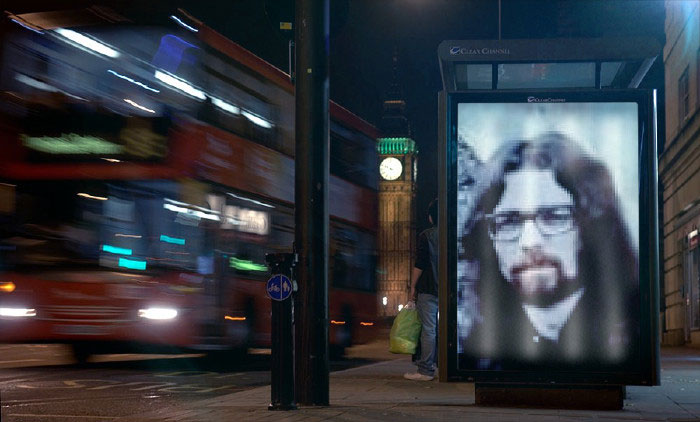

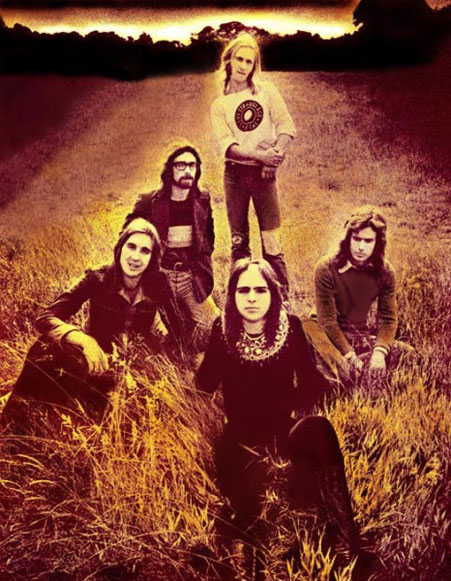




Much of the work on “The Lamb” was done at Headly Grange, a manor house in Hampshire that was used as a writing retreat by Fleetwood Mac, Led Zeppelin, and other bands. The rat-infested house was reputedly haunted, and Phil Collins later said that he had trouble sleeping there. Beyond the spooky venue, a number of factors made the creation of “The Lamb” a stressful experience. In the midst of writing, Gabriel abruptly left his bandmates for a week to brainstorm with William Friedkin, the director of “The French Connection” and “The Exorcist,” on a new project, which was a collaboration with Tangerine Dream and Philippe Druillet, the co-founder of Heavy Metal magazine. (In the end, Gabriel wasn’t involved in the resulting film, “Sorcerer,” which was released in 1977.) Gabriel’s departure, which felt like abandonment to the others, came at a bad time. Genesis was under tremendous pressure from their label, Charisma Records, which was eager to get the album out and put the band back on the road to recoup recording expenses. According to Holm-Hudson, Charisma had invested heavily in the band and, by 1972, Genesis was as much as two hundred thousand pounds in debt to the label.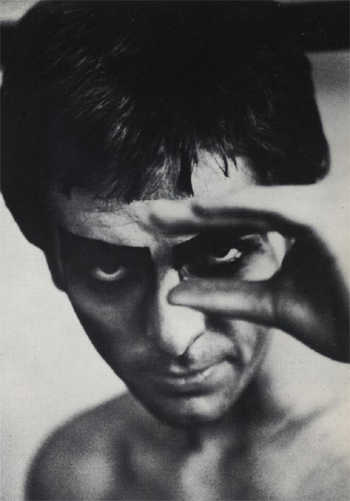 Nevertheless, Tony Stratton-Smith, the founder of Charisma, gave the go-ahead for a record that promised to be markedly different from its predecessors. It was Genesis’s first double album and the first with a single narrative that would unite all the songs. Back from his hiatus, Gabriel decided that it was time to “move beyond the democratic process.” He insisted on having complete control of the story and the lyrics. Whereas the band was used to writing together in one room, on “The Lamb” they often labored separately. This led to some difficulties when Gabriel added story elements for which no music had been composed. Some of these gaps were filled by hasty improvisation while, for others, the band recycled unreleased material from earlier recording sessions. Tensions escalated even further later in the summer when Gabriel’s wife, Jill, gave birth to their first child, a daughter. It was a difficult delivery and the baby needed to be kept in an incubator for its first weeks of life. Gabriel was frequently away from Headley Grange attending to his wife and child—an absence that his bandmates didn’t always understand. Despite these tensions, the album finally did get made and was released in November.
Using first and third-person narration, “The Lamb” tells the story of Rael, a former gang member and graffiti artist (“Rael Imperial Aerosol Kid”). The album begins with Rael stepping out of the Times Square subway station where he has just tagged his name. As he emerges, a lamb lies down on Broadway, causing a cloud-like “wall of death” to descend on Forty-seventh Street. (In true-to-life fashion, nobody but Rael seems to notice the cloud or the lamb.) The wall pursues Rael north towards Columbus Circle, finally absorbing him. Once in the cloud, Rael sees a hallucinatory procession of images from American history and popular culture: Martin Luther King, Jr., Bing Crosby, Lenny Bruce, J.F.K., and Howard Hughes among them. He blacks out and wakes up in a cave, which he soon realizes is a cage. There is a flash and he sees a network of such cages strung together, like an image from “The Matrix.” Outside Rael’s cage is his brother John, who ignores Rael’s pleas for help and walks away.
Rael pursues John through a series of encounters that can be read as literal or metaphorical—or both. Rael witnesses “the grand parade of lifeless packaging,” finds himself among the “carpet crawlers” who are writhing across the floor towards a door. Later he meets Death himself, “the Supernatural Anaesthetist,” and enters a pool with the Lamias, who eat his flesh. Rael’s journey climaxes at the colony of the Slippermen, where he becomes one of their vile number, his body covered in sores and slimy lumps. The only escape from the colony is through the help of the notorious Doktor Dyper, who removes Rael’s genitals and places them in a tube. The tube is stolen by a bird, which flies away. Pursuing the bird, Rael sees a portal back to New York City, but elects to remain in the cloud when he notices his brother struggling in the rapids of a river. He dives in and saves John only to discover that his brother’s face is his own.
The recurring and often intertwined motifs of the album are death, renewal, and escape. These themes were representative of Gabriel’s feelings as he contemplated leaving Genesis. The singer has said that “The Lamb” is “like a ‘Pilgrim’s Progress’ on the streets of New York,” a reference to John Bunyan’s allegory of religious salvation, composed in a jail and published in 1678. Both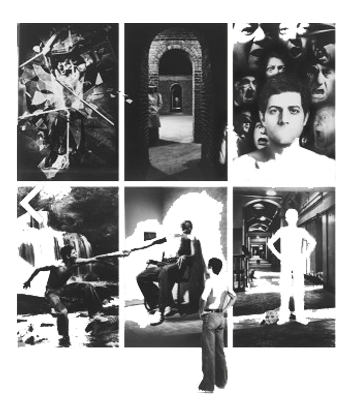 works are the products of vibrant imaginations populated by monsters. They share an overriding sense of life-or-death desperation. This was not new territory for Genesis, who often drew on Christian imagery, notably in “Supper’s Ready,” their epic retelling of “The Book of Revelation.” “The Lamb” is also indebted to Greek mythology, the Tibetan Book of the Dead, and to Alejandro Jodorowsky’s film “El Topo.” There are allusions to the poetry of Keats and Wordsworth, “West Side Story,” and the pop music of the sixties and seventies. Although the lyrics refer to such contemporary concerns as illegal drug use and the energy crisis, punning, wordplay, and sexual innuendo predominate (“mankind handkinds through the blues”), suggesting that the listener not take everything too seriously. In his parting words on the album, Gabriel spoofs both the Rolling Stones and the previous hour and a half of music: “it’s only knock and knowall, but I like it.”
The choice of Rael as a protagonist was a welcome counter to the homogeneity of progressive rock, which was produced and consumed almost exclusively by white middle-class males. Gabriel claims that he could sense the change in the zeitgeist that would soon bring about punk and disco. “Prancing around in fairyland was rapidly becoming obsolete,” he told his biographer, Spencer Bright. He wanted a story about “the most alienated city-oriented person you could find,” acknowledging that Rael would be “the last person to like Genesis.”
The shift is also evident in the music. The songs are simpler, many of them following a traditional verse-chorus-verse structure. Others consist of a repeating phrase which builds toward a crescendo. Moments of tremendous power (“Fly on a Windshield”; “In the Cage”) and surpassing beauty (“Carpet Crawlers”; “The Lamia”) occur throughout. As on previous Genesis albums, there are numerous ambient and experimental passages (to which Brian Eno made production contributions), but they are kept relatively brief. Often these interludes are functional transitions required by the larger story and the physical limitations of the LP record. While no one would ever mistake it for the first Clash album, there is far more grit to be found in “The Lamb” than in “Tales from Topographic Oceans.”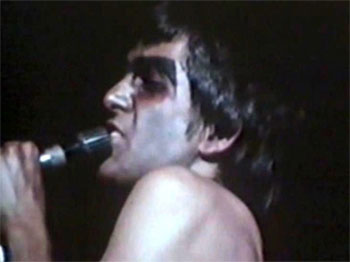 For its many delights, “the Lamb” also has numerous flaws. Rael never comes to life as a fully-rounded character. His quest feels incomplete, without a proper denouement. At times Gabriel puts words in his mouth that a kid from the barrio would never speak. On their own, the lyrics were incapable of bearing the weight of the story, requiring Gabriel to pen an expository synopsis that was printed inside the record sleeve. Some of the songs, especially in the second half, feel cobbled together. “The Lamb” also proved to be a challenge to perform live. At Gabriel’s insistence, the entire album was staged every night on tour, with only the encore set aside for older songs. An hour and a half of new material is a daunting way to try to build an audience. As on previous tours, Gabriel went through several costume changes. For the most notable of these, he was lowered to the stage inside a giant phallus from which he emerged in a Slipperman outfit that included swelling lumps, pimples, and boils. The costume also featured a set of (unreliably) inflatable genitals operated by a roadie offstage. The cramped attire made it difficult for Gabriel to position his mike properly, leading to poor amplification of his vocals. The other members of the band were not entirely taken with their frontman’s antics. In a television documentary about “The Lamb,” Collins pithily recalled the tour as “cutting edge but ‘Spinal Tap’… what ‘Spinal Tap’ was written for.”
There is, sadly, almost no video of “The Lamb” tour and what little is available—mostly from a 1975 show in Liverpool—is of poor quality. Those fragments reveal how much Gabriel had remade his image for the album. His hair was cut short and the bell-bottomed jumpsuit was ditched in favor of a white T-shirt and leather jacket. In appearance, he moved from glam to punk. At times, he even sang bare-chested, like Iggy Pop. This clip of “Back in N.Y.C.” from a 1975 show at the Shrine Auditorium, in Los Angeles, indicates how drastic the makeover was.
Early on during the tour, Gabriel announced to his bandmates that he was going to leave them. 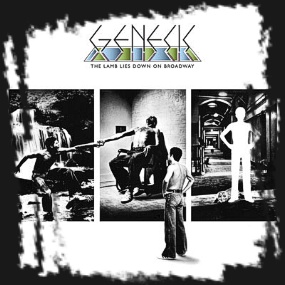 Difficult but amiable, the break-up was beneficial to all involved. Gabriel embarked on his remarkable solo career and, no matter what you may think of Collins-era Genesis, that incarnation of the band went on to sell millions more records than their “vintage” lineup ever did. A couple of songs from “The Lamb” persist in the Genesis set list, and you can still come across a track or two in the dustier corners of FM radio, but they don’t do well when separated from their host. “The Lamb” is stubbornly an album, not a collection of songs. Its integrity has been aided by its relative obscurity and its lack of a hit single or a concert film. Unlike “The Wall” or “Quadrophenia,” “The Lamb” has never been trotted out for a stadium-rock reunion tour (though Gabriel did for a time explore a movie adaptation with Jodorowsky). Since 1975, when Genesis and their lead singer parted ways, there has been only one proper way to experience “The Lamb Lies Down on Broadway.” Close the door, put on your headphones, and cue up the first track.
Article Index
Page 2 of 2