


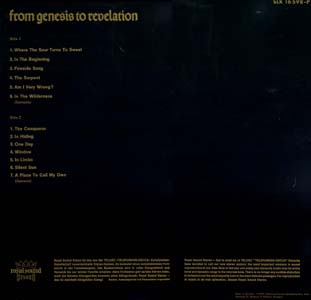
 It shows no or at best only the most minuscule traces of the style that would make them well-known later, and therefore frequently meets with a refusal and lack of affection. Justly so?







Keep your fingers out of my eye.
[One possible explanation for this puzzling opening is:
While I write I like to glance at the butterflies in glass that are all around the walls. The people in memory are pinned to events I can't recall too well, but I'm putting one down to watch him break up, decompose and feed another sort of life. The one in question is all fully biodegradable material and categorised as 'Rael'. Rael hates me, I like Rael, -- yes, even ostriches have feelings, but our relationship is something both of us are learning to live with. Rael likes a good time, I like a good rhyme, but you won't see me directly anymore -- he hates my being around. So if his story doesn't stand, I might lend a hand, you understand? (ie. the rhyme is planned, dummies).
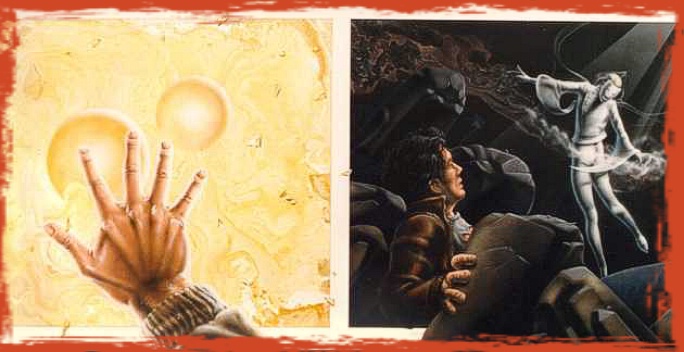 To start things off, we will set the mood for The Lamb with the following quotation from The Lamb Lies Down On Broadway's tour book. Impossible to find these days, unless you were there. Mel Huang was, and provided us with this otherwise unattainable historical backdrop. Notice Peter Gabriel being described as "multi-media" almost 20 years before Explora!
Back in the late 60's progressive music seemed all but dead, barely kept alive by the faint spark of a lingering mellotron. Rock audiences had overdosed on loud psychedelic riffs and gentle acoustic flower-power tunes, wondering all the time if there was anything more to progressive music than strobe lights, incense and the odd synthesizer. Just when adventurous rock seemed forever moving backwards, Genesis began flirting with multi-media concepts. The 60's had taken rock music through a natural evolution where technical equipment and musical proficiency had been developed to its sophisticated best. The obvious goal for forward moving 70's rock bands then, was to fuse the two together in a working relationship where music, words, lights, and visuals would ideally come together forming a unified whole. Respected today for albums of surreal musical tales and a striking stage act Genesis began strictly as songwriters determined to sell their pop masterpieces to open ears.
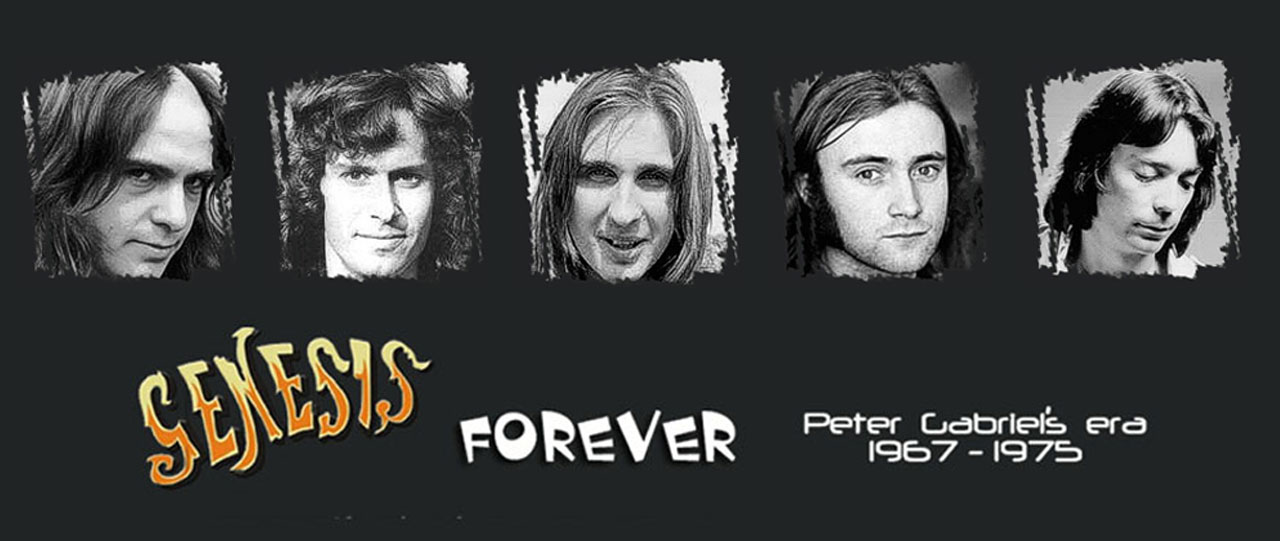
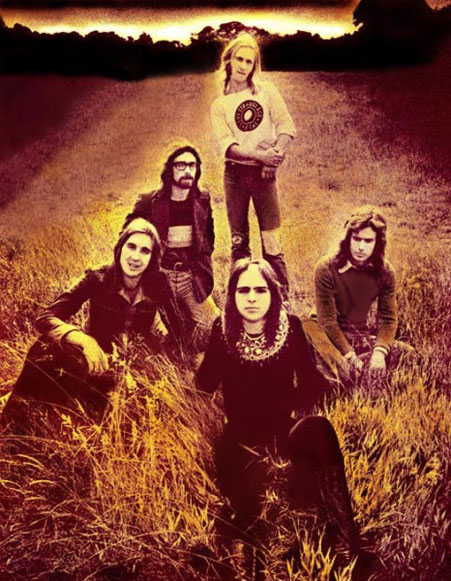
While at school Peter Gabriel, Michael Rutherford and Tony Banks began a song writing relationship that to this day forms the bulk of the Genesis fantasy. Confident that these early tunes were ideal top 40 material, success eluded them. Left with no other alternative, performing the songs themselves became the only solution. Enter the bubblegum guru Jonathan King who bestowed upon them a name Genesis, and an album, From Genesis to Revelation, which sounded more like a Moody Blues/Procol Harum synthesis than the usual Top of the Pops one hit wonders. Despite the early recording effort, the group's surrealistic feel comes through the vinyl. After securing a record deal with Charisma in 1970, Genesis recorded Trespass, and album that spurned the stage favorite The Knife one of the few Genesis compositions to resemble anything remotely similar to rock 'n roll. Trespass is a frustrating album to listen to in retrospect, for one can easily see and feel the direction the band were moving towards, and the difficulty they were having getting there. The bands present strength in both popular acceptance and artistic accomplishment is no accident for the group have evolved gradually.
From their earliest concerts and records, the group stubbornly insisted on doing everything their own way, an individuality that today seperates them from other 'progressive' groups. Genesis were the naive rockers who brought tea and toast to sleazy backstage concerts as Gabriel began miming to some of the more story-book lyrics in a last ditch attempt to reach the audience. Record companies demanded traditional single releases that they refused to create. Genesis headlined before they reached headlining status as a problem quickly evolved, what kind of band could they possibly open for? The same problem was to plague them during their first few American visits, where a relatively unknown group found themselves in the unique position of headlining concerts. Whether there were 400 or 4000 people in the audience, Genesis worked hard, hypnotically pulling the listener into their own formless world. As the lyrics began to take on a more animated form, as the music became a soundtrack for a film that was happening onstage, a clear direction evolved for the group, merging theatrical stage visuals with the music. 70's rock was at last moving forward. After Trespass, drummer John Mayhew and guitarist/songwriter Anthony Phillips left the group.
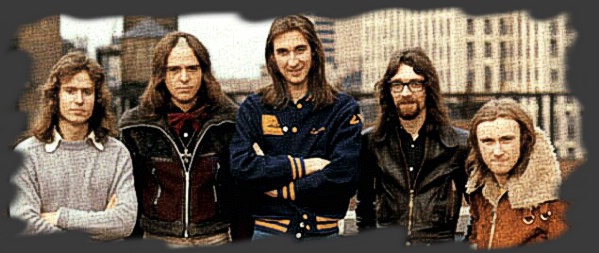
Phil Collins arrived at a time when Genesis badly needed a healthy injection of fresh blood and revitalized energy. His musical adeptness and percussive proficiency on drums made it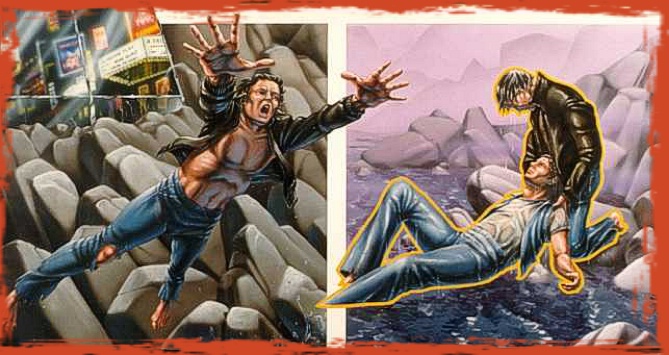 that much easier for Genesis to create the time changes so integral to their world. Enter also Steve Hackett, a guitarist capable of coloring various passages and textures instead of only being able to play the archetypal guitar solo. With Rutherford on bass and acoustic guitars, Banks on keyboards, mellotrons and synthesizers and Gabriel onstage an occasional flute, Genesis had gone through a necessary transformation, emerging unscarred as one of the few 70's bands moving towards tomorrow instead of being merely content to recall what was once yesterday. From this transitional 1971 period, Genesis began moving closer to bridging the gap between theatre and music both onstage and record. Yet the bands visual attempts at clearing up lyrical discrepancies, created some dire misconceptions which followed the group like the plague, and begged for clarification. The most common problems revolved around the group's position in the rock 'n roll hierarch, for both fans and enemies were confused about just where Genesis fitted in the rock family tree. And it came to pass that people wrongly assumed that Genesis bore a strong resemblance to bands like Yes, ELP musically and people like Alice Cooper and David Bowie visually. Musically all that bound those groups together was the keyboard based instruments used to colour different sounds. Time changes, chord structures, song construction, vocals and lyrics differ between them so much so that no obvious similarities exist. Visually Genesis share no bonds with other popular rock posers of our time.
Unlike his contemporaries, Gabriel's stage movements bear a direct one to one relationship to the lyrics. From the start Genesis have operated on the basic principle that the visuals, while often entertaining are merely a vehicle to make the songs themselves more easily understood and accessible. To this day the band insist that they are primarily songwriters who play at being musicians and then only later play at being presenters. The songs are most important, the visuals only an aid in emphasizing the songs themselves. While many of their contemporaries incorporate visuals in a purely transitional nature, content to ellicit a round of oohs and aahs with various images and stage antics that are totally divorced from the song, Genesis strive to make the two one, to use the visuals to expand and explain the song. "We're closer to cartoons than the conventional rock band", Gabriel once said. "As far as ther bands go, I think we're in a little puddle all by ourselves". Genesis are working towards something closer to the Red Buddha Theatre than the rock bands they are so often compared with. Nursery Cryme was the first album created by the present line-up and from the first disturbing notes of 'Musical Box' right throught the last grandiose mellotron chords of 'The Fountain of Salmacis' a difference between this and past albums is apparent. For the first time the band's creative intentions had been captured on vinyl and it became easier to understand exactly what the group was working towards. From the album came stage classics 'Return of the Giant Hogweed and The Musical Box' a definite attempt to fuse storybook fantasies with moddy accompaniment. Both lyrics and music began to take on unique qualities; the stories were slightly vague and subtly weird while the music added to the uneasy eerieness of the tune. The group was progressing both as songwriters and musicians.
Not content to remain stationary, the Foxtrot album made fanatics out of fans and friends out of disbelievers. The album contained an impressive 20 minute futuristic opus entitled 'Supper's Ready' that quickly became the centre of attention of their much talked about stage show. In the beginning Gabriel would don the cover painting fox-head but that caricature was only vaguely connected with the albums lyrical themes. Eventually the band presented the whole piece onstage capturing the rock star as the second coming musically and visually much to the delight of the audience. With gentle, sweet voices, flashing strobe effects, searing mellotron orchestration, and animated visuals the piece would build to a spine-tingling crescendo, crashing to a surprise ending. Genesis were becoming immensely popular, for 'Supper's Ready' transcended the standard 4 minutes of decorated visuals, becoming a definite theatre piece complete with recurring passages and themes. The band's following quickly spread to the Continent and across the Atlantic where Americans were particularly fascinated with their peculiar English surrealism. A transitional perio followed, allowing the group to catch their breath and further develop the technical side of production and musical 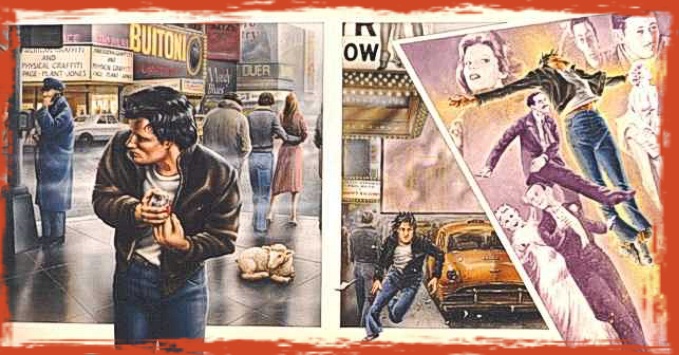 adeptness. Albums were months in the making, as they were a product of not one mind but five, and group equality was always stressed. 'Selling England By The Pound' confirmed suspicions that Genesis were becoming a self-contained unit, capable of creating and sustaining musical imagery both visually onstage and lyrically on record with the musical accompaniment integrated into the proceedingsso that the whole equalled a solid, animated fantasy. On this album the stories took a back seat to the music while the group concentrated on developing playing styles. Hackett's guitar weavings became an integral part of the moody atmosphere, as Banks wisely kept his keyboard playing melodic and lyrical instead of succumbing to the obvious desire to create a Third World War like so many of his peers and contemporaries. With the release of the album and the subsequent stage show that followed, lighting and sound systems took a giant leap forward and one excitedly wondered what futuristic delights lay ahead.
While the 'Foxtrot' tour featured an all white stage backdrop that added to the feel of the music, this tour injected backdrop projections and the use of slides, again coming closer to merging various media into one. In the beginning the slide show occasionally resembled a faimly 'what we did on our holidays' approach but quickly grew more sophisticated. Which brings us presently up to autumn 1974 and a new Genesis stage show based around their new double album 'Lamb lies down on Broadway'. Not a terribly wealthy band, Genesis continually feed profits back into the stage show. To convey the complex story line of the new album, visual aids will be used on three backdrop screens, hinting at three dimensional illusions, slowed down slides will also add to an animated feel. As always, these new technical improvements will serve as painted landscapes adding to the fantasy and clarifying the story line. While the emphasis remains on the music and players the show will be theatrical and exciting, the music and imagery will not be separate, but whole, working together to pull the listener into the Genesis fantasy and out of everyday street realities. What Genesis is working towards is the future and their present flirtation with multi-media concepts is only the beginning of a whole new world. Welcome.