


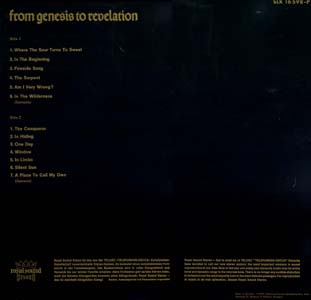
 It shows no or at best only the most minuscule traces of the style that would make them well-known later, and therefore frequently meets with a refusal and lack of affection. Justly so?



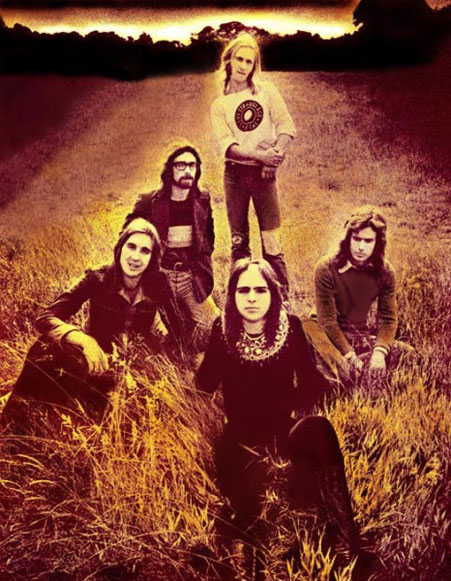




 Released in October of 1972, Foxtrot was really the album that Genesis had been working towards since their inception in 1967. The band's debut album, From Genesis to Revelation failed on most counts as the songs were often undermined by the inappropriate use of an orchestra. It didn't help much that the religious connotations of the album's concept-not to mention the group's name!-meant that it was entirely ignored by the pop music buying public. Trespass and Nursery Cryme followed in 1970 and 1971 respectively and though these are wonderful albums in their own right, there was perhaps a bit too much filler between such masterpieces as "The Knife" and "The Musical Box". With Foxtrot the "filler" was gone, despite the fact that the album clocks in at over 50 minutes, which was a lot of music to be crammed onto vinyl in those days. The album may not be as tightly constructed and played as Yes' Close to the Edge or Emerson Lake and Palmer's Trilogy, as two other examples of progressive rock classics from 1972, but the music of Genesis was never meant to be flashy or thrilling in the sense of a stadium rock band. Indeed, Genesis were barely filling clubs and small theaters in those days, which may partly explain the more acoustic and intimate elements of their music.
It is difficult to be objective about Foxtrot as it is one of my favorite albums of all time. But it's influence on popular music, particularly that of progressive rock is incalculable, which is enough to brand it as a Past Present Classic. From the haunting mellotron introduction of "Watcher of the Skies" to the fade out of the 23 minute "Supper's Ready", the listener is taken on a unique musical journey; a journey that is at once futuristic and spacey while also connoting a mythical ode to England's Victorian past. The sci-fi element is most obviously conveyed in "Watcher of the Skies", in which the listener is enveloped by Tony Banks' spacious and melancholic introductory mellotron/organ keyboard tones. The song proper fades in with the staccato, salvo like rhythm of drummer Phil Collins, guitarist Steve Hackett and bassist/rhythm guitarist Mike Rutherford. Vocalist Peter Gabriel weaves a tale of an extra terrestrial, or perhaps even that of a deity, that has come down to the earth to witness "the end of man's long union with earth". This alien watcher, saddened by the destruction of the earth by man's own hands, returns to his unknown place (or state) of being, convinced that mankind is bent on self destruction and can only look on helplessly as the rest of the universe continues to evolve ("Sadly now your thoughts turn to the stars/Where we have gone you know you never can go"). "Watcher of the Skies" goes into an exciting instrumental section and crescendos to its unforgettable finish. In many ways, "Watcher of the Skies" is a progressive rock masterpiece. Indeed, I could blather on about its musical elements and compare them to a classical piece of music, as well as comment on how the lyrics function on many levels. It doesn't take much analysis to conclude that "Watcher of the Skies" is as much a social commentary as it is a plea for spiritual and political unity for all mankind. On a literal level, the piece functions very well as a science fiction tale.
The second track, "Time Table", is probably the most obscure song on Foxtrot. It is never praised as much as "Watcher of the Skies" or "Supper's Ready". This is a shame as it has a similar theme as the former and the Victorian overtones of the latter. Musically, it is fairly simple and direct. It retains the melancholia that begins the album and if one listens carefully, Genesis' more dramatic elements appear throughout the rhythm guitar playing of Steve Hackett and Mike Rutherford that would develop more fully on albums like A Trick of the Tail and Wind and Wuthering. But Tony Banks' overtly Romantic era piano playing and Peter Gabriel's vocals are at the forefront of "Time Table". Though the lyrics tell a tale that transpires in medieval times, the chorus applies as much to modern times. Though there is some of the inherent frustration at man's inability to function at a higher capacity than its primitive brain will allow, "Time Table" is more a poignant meditation on the fact that despite our futile struggles, we are merely temporary beings. I find the imagery in the lyrics of the second verse to be as strong as anything in the Genesis canon: "Tarnished silver lies discarded upon the floor/Only feeble light descends through a film of grey/That scars the panes/Gone the carving/And those who left their mark/�And the weak must die according to nature's law/As old as they." This is certainly not something that one hears on the average pop record!!
Track three, "Get 'Em Out by Friday", is similar in structure to "Watcher of the Skies" and relies heavily on dynamic shifts and unexpected instrumental flights of fancy. It is also the most theatrical song on the album, with Peter Gabriel playing the part of several characters that the song portrays. There is a macabre sense of humor present on "Get 'Em Out by Friday" despite the song's lyrical focus on corporate greed. The first half of this nearly 9 minute piece is set in the present, with a business corporation buying a block of flats and forcing the tenants into an unhappier location. To add insult to injury, "The Winkler" raises the rent of the new location. Then the song gets really weird! In the year 2012, "the directors of genetic control" enforce a restriction of human height to only 4 feet in order to squeeze more tenants into increasingly tighter confines. Even though the image conveys a slightly Monty Python-like skit, the band are again making a serious kind of social commentary. But the meaning of the song is likely to be lost unless one follows along with the lyrics because the music is so enchantingly, well, vintage Genesis! This must have been a terribly difficult piece of music to perform live, to give it musical credence, to display the theatrical elements and yet to give the audience a feeling of oppression conveyed in the lyrics. However, as the music is the foundation of the song, the dynamic shades along with Peter Gabriel's delivery of the lyrics can be enjoyed on their own.
"Can-Utility and the Coastliners" concludes the first side of the original album. To be honest, I'm not entirely sure about the "meaning" of the lyrics. They are decidedly based in fantasy and tell of a struggle between a would-be warrior and his people. But I do not know how they relate to the title of the song. At any rate, the musical tension is brilliantly clear. Beginning with arpeggiated twelve string acoustic guitars (in itself a Genesis trademark) the song opens up with deep bass pedal tones before going into a Tony Banks solo, dominated by organ and mellotron. The song ends rather abruptly as Gabriel and the rest of the band race along to a hurried finish.
Side 2 opens with "Horizon's", possibly the track that has been played on stage more than any other from Foxtrot. The fact that it is actually a brief Steve Hackett showcase on classical guitar doesn't make it any less of an achievement than any other song on this album. Rather than taking the obvious course of showing off one's proficiency on an instrument, Hackett gives us a light, beautiful and highly melodic brief interlude before the 23 minute onslaught of "Supper's Ready". The intimate "Horizon's" would prove to be a foreshadowing of Hackett's later classical guitar instrumental albums like Bay of Kings and Momentum.
"Supper's Ready". The quintessential progressive rock epic. The kind of music that is either exciting, romantic and soul stirring or meandering and ostentatious, depending on one's viewpoint. Broken into 7 subsections, "Supper's Ready" begins with "Lover's Leap", wherein the listener may think that he/she is in for some kind of acoustic guitar ballad. The arpeggiated acoustic guitars and Gabriel's romantic lyrics paint a simple picture of peace and tranquility until the line "Six saintly shrouded men move across the lawn slowly/The seventh walks in front with a cross held high in hand". This is merely a prelude to the religious overtones that crop up during the entire suite. It would be pointless for me to attempt to break each part of "Supper's Ready" down to seven subsections and analyze them. It wouldn't make much sense to the reader without actually hearing it. I don't think the "song" is telling a story per se; rather I believe it is an attempt to tap into the eccentric upper class British subconscious. It is alternatively a parody of Victorian era sexual repression and an indictment of traditionally held British religious views. There is a good deal of Biblical imagery on display during "Apocalypse in 9/8" and the final verse of "As Sure as Eggs is Eggs" hints at a Christ like figure that "Has returned to lead his children home/To take them to the new Jerusalem." I imagine if one was to actually do an in depth analysis of "Supper's Ready", one could extrapolate all sorts of disturbing parallels with The Bible. But when I listen to "Supper's Ready", I prefer to focus on the poetry that a group of young men barely into their twenties were able to compose. This is astonishing. I think the only flaw to "Supper's Ready" is that the piece fades out. I would have preferred a more definitive conclusion, but this is really petty criticism.
Foxtrot is an experience. From the surreal and gorgeous artwork that adorns the cover to the lyrics painted over a fabric that tears into outer space on the inside gatefold, the sleeve is a model of progressive rock genius. Paul Whitehead has designed some brilliant album covers, but I believe Foxtrot is his masterpiece. It's certainly representative of the music contained. However brilliant the artwork and the music within, Foxtrot failed to become a big seller. It saw Genesis gain momentum in their native UK, reaching number 12 in the charts. In America, the album didn't even dent the Billboard Top 200. Commercially, things would improve for the band. They released a string of brilliant progressive albums through Wind and Wuthering. And Then There Were Three and Duke are also exceptional albums, but the desire to create epics was gradually giving way to radio friendly hits that saw the band becoming less of a collective unit called Genesis and more of a Phil Collins backing band. Invisible Touch was their commercial apex but their artistic nadir. So many years later, it is still difficult to believe that albums like Invisible Touch and We Can't Dance-although the latter really isn't a terrible album-were given the name Genesis. It makes Foxtrot seem all the more a fairytale�and a heart rendering masterpiece.
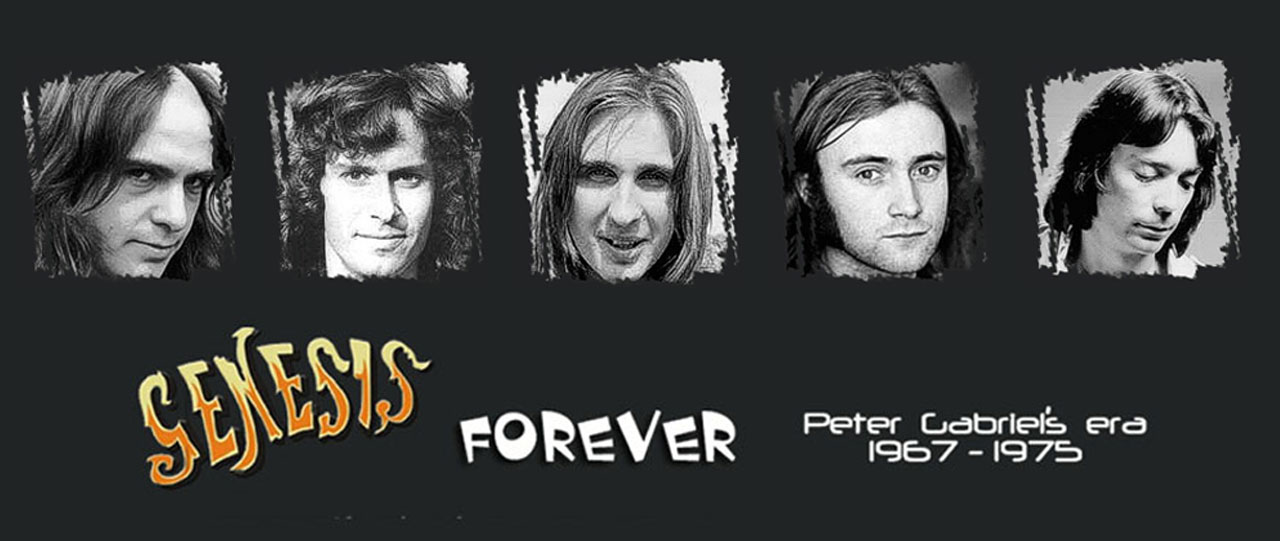
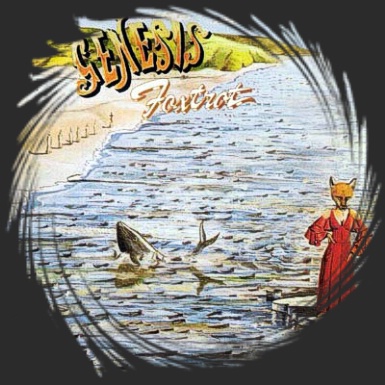 Foxtrot by Genesis. After a couple albums of extreme experimentation in theatrical rock, Foxtrot is where it all came together for Genesis. This 1972 album was the first of three, in consecutive years, that marked the creative apex during the band’s “Peter Gabriel” era. Gabriel was the band’s lead vocalist and flamboyant front man through the early 1970s who went on to have a successful solo career after his departure in 1975. Foxtrot is a solid album which struck a nice balance between jam-oriented progressive rock and theme-oriented art rock with not a weak moment anywhere on the album, making it one of the most esteemed prog rock albums ever.
The centerpiece of the album is the 22-minute closer “Supper’s Ready”, which Gabriel explained as “a personal journey which ends up walking through scenes from Revelation in the Bible.” This epic song is divided into several sections, some recurring, which straddle the line between classical and rock music and contain multiple changes in time and key signature and mood. While the five members of the band were given songwriting credit for “Supper’s Ready”, Gabriel authored most of the lyrics while drummer Phil Collins did much of the arranging and segues between the various sections. When performed live, the provided their audience with a programme which described many of the scenes with words such as;
“At one whistle the lovers become seeds in the soil, where they recognise other seeds to be people from the world in which they had originated. While they wait for Spring, they are returned to their old world to see Apocalypse of St John in full progress…”
“Supper’s Ready” launches abruptly into the first verse with vocals by Gabriel along with guitars by Steve Hackett. The lyrical imagery tells of a common domestic scene morphing into a supernatural experience (which Gabriel has long claimed was true). With various scenes and characters of varying complexity, the song previews a style employed on Genesis’s 1974 double album The Lamb lies Down on Broadway. Towards the middle of the song is “Willow Farm”, which started as a stand-alone song but acts as a light break from the serious subject matter of “Supper’s Ready” (much like an intermission in a play).
The album begins with Tony Banks mellotron intro to “Watcher of the Skies”. The album got its title from a preset “foxtrot” on the instrument and, in turn, future versions of the mellotron contain the “Watcher mix” as part of its tape set. The long introduction cross fades into the song’s main theme, which uses unusual time signatures under the chanting vocal melody of Gabriel. Lyrics were provided by Banks and Mike Rutherford, who envisioned an empty Earth being approached by an alien visitor.
“Time Table” takes a more traditional folk-rock approach with melancholy lyrics of medieval days gone by, highlighted by Banks’ piano intro and accents and Mike Rutherford‘s exquisite bass patterns. The song offers a calm and melodic approach that would be refined during the band’s “middle era” of the late 1970s. The lyric speaks of speaks of “a carved oak table that played host to kings and queens who sipped wine from goblets gold”. A short acoustic instrumental by Hackett, “Horizons” acted as a lead-in to “Supper’s Ready” at the beginning of the album’s second side. It became an extremely popular piece in the band’s live sets during Hackett’s tenure with Genesis.
Genesis in 1972“Get Em’ Out by Friday” is a unique and theatrical multi-act piece which may be the quintessential Genesis brand of song. It fluctuates in tenor and tone through the various phases of the story with Gabriel “playing” several characters with his singing. The “play” takes place in a future (ironically, 2012), using elements of reality and science fiction with the central theme being a landlord evicting tenants by force or by attrition. Under the guidelines of the government bureaucracy called “Genetic Control”, all tenants are restricted to being under four feet tall in order to fit “twice as many in the same building size”. Rutherford has commented that the lyrics of this song were the best that Gabriel had written.
The first side completes with another mini-suite “Can-Utility and the Coastliners”, which again returns to the middle ages and the 10th century English King Canute, who tried to demonstrate the absurdity of his worshipers by trying to halt the sea during a major storm;
“They told of one who tired of all singing “Praise him, praise him” / “We heed not flatterers,” he cried, by our command, waters retreat, show my power, halt at my feet…”
The song starts as a top-notch folk song, led by the pastoral guitars of Hackett and the dynamic vocals of Gabriel, but later morphs into a classic prog-rock jam led mainly by the punchy keys of Tony Banks and the skilled drumming of Phil Collins.
Foxtrot is where Genesis began to forge their legacy as a top level art rock group. Although it was far from a commercial “hit”, this was also the band’s first album to break into the charts, reaching #12 in the UK. They would have plenty of commercial hits in later years, long after they abandoned their penchant for art rock.
The winter of 1971 was one of discontent after the unspectacular release of Nursery Cryme. After five years of untiring work and many disappointments the band did not really feel they had made that step ahead. In January 1972, however, they could unexpectedly see the light at the end of the tunnel.
The light came from Belgium where Genesis’ second album topped the charts. This led to their first invitation abroad – and their TV premiere. The band realized that they did not have to focus on their home country to be successful. Soon after they received more surprising news: Their current album had already made it to #4 in the Italian charts. Knowing that the number of their supporters had grown so much gave the band lots of self-confidence. Tour obligations in England did unfortunately not permit them to make their Italian fans happy by playing concerts there right away, but the summer break in the UK proved very convenient.
The shows in Italy and the impressions the band gathered there were very important for their new album because it all was a source of inspiration for the musicians. The band became aware that there were people out there who shared their musical preferences. For the first time they were perceived as stars. Says Peter: “They sent us to Italy for almost the whole summer in order to get us over the period between the end of term at university in June until the beginning of the next term in October. Our weekly income was precarious. Many people thought we had been born with silver spoons in our mouths and that we could always boomerang back home to our parents, but we really did not get any financial support.”
Watcher Of The Skies is a product of this tour: “Mike and I wrote the lyrics for Watcher Of The Skies in Naples when we were staring at this landscape behind the hotel. It was a total wasteland – incredible. We had this idea of an alien that lands on a planet and sees this world in which there was life once, but where now nobody can be seen”, says Tony. Other songs that had been written by this point were Can-Utility And The Coastliners, Get ‘Em Out By Friday (their first song to contain social criticism) and a song that had been extensively tested live, Happy The Man. This last song had been recorded before the Foxtrot recording sessions proper, and it was released to promote the album though it did not end up on the record. Horizons is an instrumental piece for classical guitar that Steve Hackett pulled out of his hat: “When we did Foxtrot I still felt a bit self-conscious because I felt I did not contribute enough to the band. I remember asking: ‘Do you think I should leave because I do not write as much as the rest of you?’ Anyway, they calmed me down by praising my guitar playing, which was the first time I really got any feedback from them. I had an unaccompanied piece called Horizons on the album. It was not just their concession to me. It was something they all liked.”
The band’s euphoria promised a steady stream of ideas when they met in summer to work on their next album. Mike: “Some of it we wrote at a doctor’s house near Chessington, but most of it was written in Ina Billings’ dancing school in Shepherd’s Bush. We were downstairs in a rehearsal room, which meant that we would hear the stamping of the shoes the whole day long.”
Perhaps this noise was a kind of inspiration for the piece of music that many Genesis fans consider The Masterpiece. Tony: “I think Supper’s Ready is by far the best thing we have written – not least because of the combination of ideas.” The bizarre story is in part based on a very moving spiritual experience Peter had with his then wife Jill. Tony describes the way Supper’s Ready developed: “We put it together over a period of two weeks, and we would arrange other songs at the same time. We sorted it by throwing together all the bits we had, and I thought it would become exactly like Stagnation unless we were careful. So I thought we should do something really crazy after this very romantic bit that became How Dare I Be So Beautiful, and this crazy thing was going right into Willow Farm, just stop the song and hurl ourselves into it. Willow Farm was a little song Peter had finished, words and music. Suddenly we all felt good about the idea and put Willow Farm in there, and that gave us the big push to write the rest. The Apocalypse part came from that, it was a kind of improvisation I did with Mike and Phil.” Peter’s personal relation to Supper’s Ready led to good musical results: “It was the first time I felt I had got something good from my voice because I felt I was really singing from my soul – almost as if I were singing for my life.” At the time, however, nobody realized that they had written a real milestone. Remembers Mike: “We did not really realize what we had, we were worried about other songs.”
In August a collective of musicians who had become more mature, more experienced and more self-confident went into Island Studios in London to record their new material they way they wanted it to sound. Things had changed since Nursery Cryme. The musicians had really become a band, they had established their own style and also their sound. Genesis could have produced the album themselves (and would have liked to) because no-one knew better what the band wanted than the band themselves, but Charisma insisted that an external producer be brought in. This did not sit very well with Phil: “Charisma thought we needed a producer, and we made it difficult for everyone because we knew we could do it ourselves. From the middle of Supper’s Ready, from Apocalypse In 9/8 onwards we started to sound really good on record.” The fired producers were Bob Potter and Tony Platt after him and they could not stand either the music or the musicians. In the end, Genesis found a good team in David Hitchcock and a technician and Genesis fan called David Burns.
Recording and producing the album took the best part of two months. Apart from the tracks that made the album the band also recorded Twilight Alehouse. The song hat been a staple in their live repertoire, but it was released only a year after Foxtrot. All in all they were visibly happy about the result. Says Mike: “Foxtrot is probably one of my favourite Genesis records, mainly because of Supper’s Ready.” Tony agrees: “For me it is a really exciting album, very melodramatic, great treble, depths and contrasts. When you listen to it it is very original and exciting, and a very peculiar album as far as writing it was concerned.”
Tony Stratton-Smith, their manager and boss of Charisma, had tears in his eyes when he first heard the completed recordings for the album: “They’re going to make it with this record!” were his words to Richard Macphail, a close friend of the band. Foxtrot was released in October 1972, and everybody agreed that this simply had to be the breakthrough for the band. Fans and critics alike deemed it a masterpiece and took it to #12 in the UK charts. It had become clear that this band could not be ignored anymore, especially not at home
I have blogged about the Genesis song Supper’s Ready before (links to those previous posts at the end of this one). After an introduction to Genesis by way of their music from the Phil Collins era, my cousins played for me and then actually gave me one of their LPs, the album Foxtrot which includes the song/suite that is the length of an album side, Supper’s Ready. Long songs/suites are of course typical of prog rock. I will confess that even long after I had become a huge fan of Genesis, the song “Supper’s Ready” in its album version never really grabbed me. It intrigued and puzzled me, and I appreciated it, but one thing it never really seemed to be was rock music. Even as I returned to it looking at the lyrics and thinking about what I would write about the song in the book I am writing together with Frank Felice on progressive rock, this remained true. Then, just very recently, I watched this video of a live performance from the Peter Gabriel era, and my entire impression of the song shifted. Seriously, watch it or at least listen to it:
Perhaps one of the points I should make in the book, but will at least make here, is the parallel between music performed live and lived religion. A number of the New Testament authors emphasize the point that Paul makes particularly succinctly in the phrase “the letter kills, but the Spirit gives life.” A text is at best a shadow of a lived reality, whether it is a musical score or a Gospel. Some bands, to be sure, are very polished in recordings and their live performance is but a shadow of it. For others, like early Genesis, the reverse was often the case. In an era in which there is a lot of scripture-focused religion that seems to be lacking the Spirit and life, not only in the sense that is sometimes leveled as an accusation, that they are lacking in vibrancy, but in the sense that the lived reality among the most staunch biblicists, conservative Evangelicals, has shown itself to be full of hatred, partisanism, idolatry, and gullibility.
The Bible is like sheet music. The point is not to praise its authority or to boast of the importance of sticking to it faithfully, but to perform it.
Speaking of recordings, the performances of Evangelical leaders today are being noted and, thanks to the internet, are heard far and wide and will not be easily forgotten. I’m glad that we have recordings of musical performances from the past like the Genesis one I shared above. I suspect that many Evangelicals will not be so grateful for the fact that, for years and perhaps decades to come, one will be able to go onto YouTube and hear once again the things that they said, the lies they believed and told.
Dare I hope that perhaps this analogy I’ve made, at the intersection of Genesis (the band) and religion, might lead some Evangelicals to think harder about the nature of scripture, their religion, and the legacy of how they are performing their religion in our present context?
One thing that we do here at Cool Album of the Day is endeavor to bring you something special for our milestone numbered posts. As you’ve just read, this piece represents entry number 700. So today we bring you an album that more than arguably could be considered the best progressive-rock album of all time. It contains a song that could also potentially be considered the best progressive rock song of all time. You already know the album is Foxtrot, and the song of course that I’m referring to is “Supper’s Ready.”
Some may say that Genesis’ magnum opus should be considered The Lamb lies Down on Broadway, and they very well might be right. But I still see a way where The Lamb could be considered their magnum opus album even if Foxtrot is considered the best progressive-rock release of all time and “Supper’s Ready” the best song. That might be crazy and not make any sense at all. However to 1970s Genesis fans, I’m thinking it does. To make this even more confusing, I’d also have to figure how Selling England by the Pound fits in the mix since I consider that their best album! Now I know that may I have completely confused us, but you know what, that’s okay because that’s the point, Genesis can be a confusing band, just look at Foxtrot for example. For years I’ve looked for and asked about the meanings of these songs and I don’t believe I’ve received the same response twice.
The album begins with the long time concert staple “Watcher of the Skies.” What this one is about, again who knows. I’ve read so many different ideas including a story about aliens landing on earth. I can actually see some of that in the song, especially if you squint. I recently listened to this one for the first time in years. Sure the mellotron still is haunting, and the 6/4 time signature is interesting, but what really jumped out at me was how good the Phil Collins’ drum track was. I’ve never forgotten how tremendously he could play, but I did forget that this is one to use as a showcase for those that didn’t know or don’t remember.
“Horizons” is a beautiful Steve Hackett guitar piece. He’ll still perform this one every so often.
As I mentioned, the earlier showcase of this album will always be “Supper’s Ready.” 22-plus minutes in length, yet it does not include an unnecessary second, it’s never once seemed or felt to be that long to me. Some of those epic songs from the past can get old in a hurry. Not so on this one.
I again ask the question, what’s it about and once again, I’ve read many theories. Is it about the end of the world, is it about the battle of good over evil? Let’s put them together… is it about the triumph of good over evil at the end of the world? Why not! I do know this, not knowing exactly did make me want to hear it again so I could perhaps figure it out. Maybe that’s what the meaning was!
This is the final stanza. So an interpretation of some type of Apocalypse can’t be too far off the mark.
“There’s an angel standing in the sun, and he’s crying with a loud voice / “This is the supper of the mighty one”, Lord of Lords, King of Kings, Has returned to lead his children home, To take them to the new Jerusalem. “
If you ever bump into Peter Gabriel, please ask him about some of those song meanings. I’m sure he’d be glad to share them with you.