Author: Steffen Gerlach
Photos: Brian Rootes, Brian Roberts
English by Martin Klinkhardt
The first rehearsals, the first song, the first recording, the first single, the first change in line-up, the first break period … There had been a string of firsts in the two-and-a-half years of the band’s history since Easter 1967. One important first was still missing, though: A live performance!
It was something they had not planned, for the band saw themselves as a songwriters’ cooperative who were lucky enough to record their own songs. A career as a band was not their goal, and when the commercial failure of From Genesis To Revelation became evident during the months of their inactivity it did, understandably, nothing to change that. Still, their time together had left its marks, and when Anthony Phillips, Mike Rutherford, Peter Gabriel, Tony Banks and John Silver came together again in the summer of 1969 to make music and be creative they all felt that that was what they enjoyed best.
Their old friend Richard Macphail shared their enthusiasm. After several months in Israel he was excited at how much potential their band sound had developed. He encouraged them to go on and supported them as their handyman. In the end they decided to focus on Genesis. John Silver was the only one who got cold feet. The drummer decided against a career as a musician and for university in the United States, but he kept working on new material with the band until he left the country. The one-year contract with Jonathan King’s JonJo label expired at the end of August 1969, so the band had to go on without external support.
 On August 20 they paid for studio time at London’s Regent Sound studios to record a demo with four new songs to present to labels and promoters. They knew that they would not be able to go on without live performances and new fans. They wanted to start playing live in autumn, and the band were looking for business as well as a new drummer. From September 22 to October 3, they rehearsed at Send Barns, the house of Anthony Phillips’s parents near Woking, before they transferred to a place near Wotton where Macphail’s parents had a cottage they wanted to sell the next spring. Thanks to Macphail’s insistence they were allowed to live there for the time being. There were six of them, the four musicians, Macphail and the new drummer John Mayhew. He used to give everybody in the London music scene his number because he was looking for a new gig. In the end it fell into Genesis’ hands, and the got the job not least because of his experience as a live drummer.
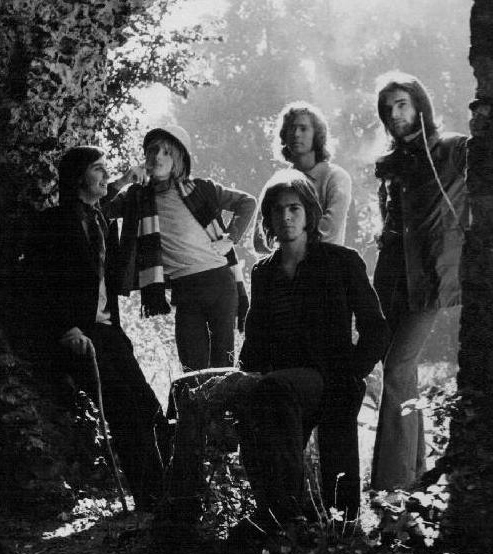 The band got a gig as the support act at Brunel University, London, on Saturday, November 1, 1969, which was a kind of showcase for labels and promoters. The band’s played their very first live performance a week before that, though, on Sunday, October 26, at a private event (and NOT on the 23rd October, a date whoch is beong seen often in publicatiuons). There was a birthday party in Chobham, Peter Gabriel’s home town in Surrey, and a live band was wanted for that. The mother and sisters of birthday boy Anthony Balme (who turned 21 on October 27) set up the event, and Mrs Balme asked her friend Irene Gabriel, Peter’s mother, whether her son’s band could play there for 25 pounds. The lads agreed! (Read a very detailed research into that event on this Italian blog) The party took place at the Balmes’s, a villa called Garth House in Chobham. The band were to play at the inner court. Unfortunately, Sunday turned out cold so that most party guests preferred to stay inside. Of course, the band’s repertoire was not necessarily easy to dance to, but that did not stop Genesis from going through with their “public rehearsal”, as it were. Little is known about the equipment the band used (Tony Banks had bought a Hammond C3 organ which he played through a homebuilt Leslie amplifier while Ant used a Vox AC30 amp) for there are neither photos nor any kind of audio/video recordings from that night. One thing that did survive from that night was a document that merits closer inspection: the set list of the night in Peter’s handwriting!
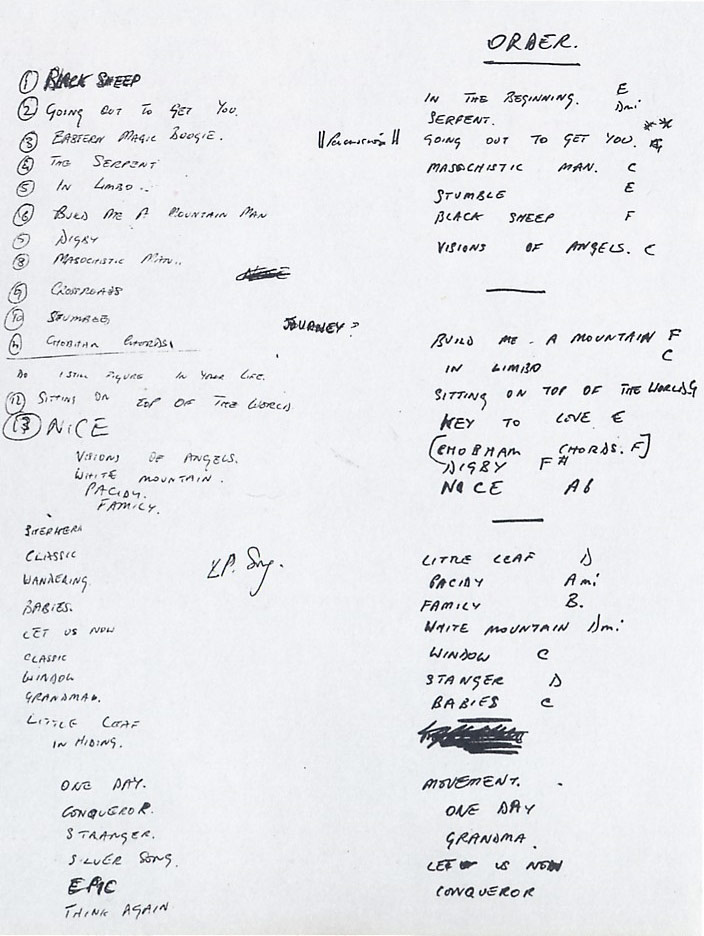 This is most instructive, for it reveals where the band were standing at this crucial moment in their history, shortly after a euphoria-filled creative summer and the decision to go pro after the Jonathan King disaster and shortly before the intense period at the Macphail’s cottage in the winter of 1969/70 that would shape the band to a band with their own sound and make them into a live act to be reckoned with. Which of the more than 50 songs made it into the first live set? What old songs did the band discard, which new songs did they consider good enough to play live? Peter Gabriel’s handwritten notes give us a glimpse into the musical world of Genesis as of October 1969. There is a shortlist of songs on the left side of the sheet, while on the right we find what was probably the set list of the night.
We have created a Youtube Playlist so you can listen in, as it were.
The first set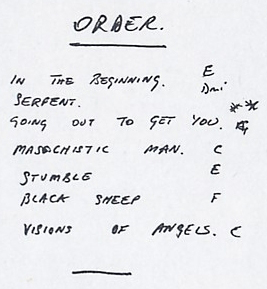 The band kick of their first live gig aptly with In The Beginning, a rock song by Phillips with lyrics by Gabriel. It was first recorded as a demo in the summer of 1968 and again, in September, for their debut album From Genesis To Revelation.
They keep up the momentum with The Serpent, another uptempo song from From Genesis To Revelation. This Banks/Gabriel composition was first recorded with different lyrics on Easter 1967 on the band’s very first demo tape as She Is Beautiful. This very first collaboration between Banks and Gabriel prompted Jonathan King to offer the band a contract. In summer 1967, another demo was recorded for King.
The lively piano-based Going Out To Get You, probably also written by Banks and Gabriel, came about in summer 1969. It was one of four tracks the band recorded on August 20, 1969, for their new demo tape after their contract with King ran out. The song would develop and remain in Genesis live sets well into 1972. Early in 1971 a studio version of it is produced as the potential first single of the new line-up of Banks, Collins, Gabriel, Hackett, and Rutherford – this recorded is probably lost.
Little is known about the next song, Masochistic Man. Written in C (according to the set list), we only know one line of the lyrics Gabriel wrote for the song. The song has apparently never been recorded, but it was played live regularly in 1969.
After four of their own songs the band played the first of two cover songs in their first set. The Stumble is an instrumental blues classic. The original was written by blues legend Freddy King with Sonny Thompson, but it was probably the popular 1967 interpretation by John Mayall & The Blues Breakers that Genesis used as a blueprint. Incidentally, Steve Hackett would go on to cover this song on his 1994 album Blues With A Feeling, too.
Black Sheep was the second cover in the set. The original appeared on the debut album of SRC (Scot Richard Case), a psychedelic rock band from Detroit. The band are considered an early influence on Genesis. The prominent use of Hammond organ, similar to bands like Procul Harum, stressed that.
The first set ended with Visions Of Angels, Anthony Phillips’ most important composition to that point. Phillips wrote that song on the piano in the vein of contemporary Beatles or Beach Boys songs in early 1968. It was recorded during the album sessions for From Genesis To Revelation in early September 1968, but since the band did not like any of the takes the song was not used on the album. The song was a staple of the live set until Phillips left the band; it was also recorded for the band’s next album, Trespass (1970).
The second set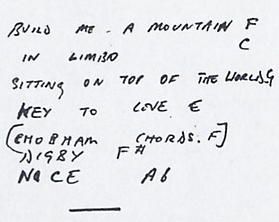 The second set began with Build Me A Mountain, another song from the From Genesis To Revelation album sessions in September 1968 that did not make it on the album. It stayed in the live set list for a while. An acetate of the song has a piano intro from Tchaikovsky’s Swan Lake theme. Whether that was also part of the live performance is not known.
In Limbo is another song from From Genesis To Revelation. It was written by all the band together. The brass arrangement on the song is unlikely to have been performed live by the band.
The second set had another two cover songs. Sitting On The Top Of The World was first released by the Mississippi Sheiks in 1930 (and written by their band members Walter Vinson and Lonnie Chatmon). The Genesis performance of this frequently covered song would have been based on the version Cream released in 1968 on the album Wheels Of Fire – Eric Clapton wanted to play this song with the band.
Key To Love was the second cover that related to Clapton. It was written by John Mayall and appeared in 1966 on his blues rock album John Mayall Blues Breakers with Eric Clapton, also known as The Beano Album.
Not much is known about the song Chobham Chords other than it is played in F. Since Chobham is Peter Gabriel’s home town it is possible that this is Looking For Someone, a song Peter brought to the band and that was completed by Tony Banks. Looking For Someone appears in setlists as early November 1969, was recorded as part of the BBC Night Ride session on February 22, 1970, and became the opening track on Trespass.
Nothing at all is known about the next song on the set list, Digby (Of The Rambling Like). Digby is the name of a small place near Lincoln. The song was played at other shows, too, but it has never been recorded.
The second set ended with the brand new number The Nice. It is another song written by Gabriel and completed by Banks. With it, Genesis pay homage to one of their favourite bands of the day, The Nice, whose keyboarder Keith Emerson would go on to big success with ELP. The organ in this song that was later rechristened The Knife, followed Emerson’s style and marked a change towards darker, more aggressive rock songs. The Knife as a mock protest song became a live classis for the band. It was usually played as the last number in the set and could go on for more than 15 minutes at some shows. Because of album length issues on vinyl records it was recorded in a shorter version for Trespass in 1970. It was also released in two parts as the A and B-side of a single and would be played quite regularly until Peter Gabriel left the band in 1975. The last time it was performed was a short version with Phil Collins as the front man on the Duke tour 1980!
The third set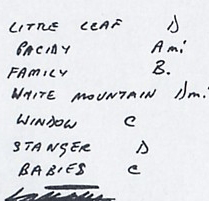 While the first two sets were rock sets, as it were, the band approached their calmer, more romantic songs. They started off with Little Leaf, an acoustic song penned by Phillips during the band’s inactivity after the recordings for From Genesis To Revelation. The song was recorded by the band at Phillips’ parents’ home in summer 1969, but the recording is presumably lost. Anthony Phillips has since revealed that he remembers one of the lines of the chorus as particularly embarrassing (“bury my sorrow in fields of tomorrow”). In 1976 he recorded a solo guitar version of the song (released as Old Wives Tale on Archive Collection Volume II) and a reworked guitar duet version of the song in 1982 (released on Privat Parts & Pieces III – Antiques). It has also been rumoured that the first 50 seconds of Resignation, a song recorded on Janury 9, 1970 at the BBC for the Jackson Tape, are a part of Little Leaf.
Pacidy is a dreamy song in 6/8 and was mainly written by Mike Rutherford with some parts by Anthony Phillips before it was completed by the band. It was one of the four songs that were recorded as a demo on August 20, 1969, though the version fans know is from the BBC Night Ride session recorded half a year later, on February 22, 1970.
Family is another Phillips / Rutherford song that was also recorded in the demo session in August 1969. It was recorded in a slightly changed version as Dusk on 1970’s Trespass album.
Another track from From Genesis To Revelation found its place in this set. Window is the third song by Phillips and Rutherford in this set. It may be doubted that the brass and string arrangements from the album version were recreated live in this acoustic song.
White Mountain was the fourth track of the August 1969 demo, and it found its place in the live set, too. The basic idea for the song came from Anthony Phillips and Mike Rutherford. It was developed by the latter and Tony Banks. It appeared in Genesis set lists while Phillips was in the band, and it was recorded for Trespass. The last time it was played live was in 1976 during Phil Collins’s debut tour as the singer.
Stranger was quite a new composition by Anthony Phillips. He wrote it in the summer of 1969. It was recorded (albeit with some flaws) on tape with Mike Rutherford. It was also recorded as a band version by Night Ride producer Alec Reid in 1969 and/or 1970, though those recordings seem to have been lost. Nicknamed “Strangler” because Phillips found it hard to hit the high notes in the middle the song did not survive for long in live sets. The only version of the song that has been released ever is from October 1990 when Phillips recorded a solo version of it as a bonus track for the re-release of his first Private Parts & Pieces album.
Babies was the last song of this set. Nothing is known about the song other than that it appears to have been played in C.
The fourth set (Encore?)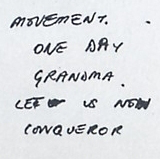 The fourth and last live set may possibly have been the encore block. It is unclear whether it began with The Movement or with There Was A Movement. The titles indicated different songs according to band statements. The unreleased song There Was A Movement was recorded (at least once) as a demo on March 13, 1968. The Movement on the other side only developed during the summer of 1969. With its peak length of up to 40 minutes it is considered the band’s first “mammoth track” that spawned many other songs such as Stagnation (released on Trespass in 1970), Moss (unreleased), The Light (performed live in 1970/71), Get ‘Em Out By Friday (released on Foxtrot in 1972) and The Colony Of Slippermen (released on The Lamb Lies Down On Broadway in 1974). It is said to have been recorded at John Silver’s parents’s home.
One Day is another song from From Genesis To Revelation. This anthemic Banks/Gabriel composition was recorded as a demo in summer 1968 before it was recorded for the album in September 1968.
Nothing is known about the next song in the set, which is called Grandma. It appears to have been played live until spring 1970.
Anthony Phillips wrote the penultimate song of the set right after the sessions for From Genesis To Revelation when everybody went their ways. Let Us Now Make Love was frequently played live while Phillips was in the band. It was recorded for the BBC Night Ride sessions on February 22, 1970. In October 1990, Phillips recorded an instrumental version as the bonus track for the re-release of his Private Parts & Piece IV: Ivory Moon album.
The band finished their first concert with the strong Banks / Gabriel track The Conqueror from their debut album.
A number of other songs were shortlisted but did not make it into the first live set. Amongst those are cover versions of Crossroads (originally by Robert Johnson in 1937, better known in Cream’s 1968 version) and Do I Still Figure In Your Life? (originally by The Honeybus in 1967, with a more popular version by Joe Cocker in 1969); both were played at later concerts. The shortlist also named In Hiding (from From Genesis To Revelation), Silver Song (Ant wrote the farewell song for John Silver in the summer of 1969; it was recorded in 1973 with Mike Rutherford and Phil Collins), Tony Banks’ song The Shepherd (recorded for the BBC Night Ride session on February 22, 1970 and played live, too) as well as the unknown songs Eastern Magic Boogie, Classic, Wandering, Epic and Think Again that may have ended up later in different songs.
All in all
The songs from From Genesis To Revelation were not discarded! Six song from the album and two additional songs from the sessions made it into the live set. All four tracks from their most recent demo were played. At least three of the songs that were played made it until the BBC Night Ride session in February 1970, and it is safe to assume that at least the proto-versions of all Trespass songs were part of the set. Variants of two or three songs ended up on Anthony Phillips’s albums, while four to five tracks remain unidentified for us. Then there are four cover versions of songs the band liked at the time. It is easy to see that progressive elements such as the use of calm twelve-string guitars and harsher psychedelic rock moments were moving to the fore. This set list of 26 songs is unique, though, for it was not a regular gig – the band had to cover a full evening.
Their next (and first public) gig at Brunel University on November 1, 1969 was much shorter. Their support performance for Caravan and The Idle Race was riddled with slip-ups. According to the memories of various band members they played these songs. In The Wilderness, Masochistic Man, The Stumble [cover], Black Sheep [cover], Built Me A Mountain, In Limbo, Digby, Little Leaf, Babies, Key To Love [cover], Looking For Someone (Chobham Chords?), Twilight Alehouse [new!], Sitting On Top Of The World [cover], Pacidy. The band had taken the first steps!
by Daryl Easlea
The 17 months between April 1974 and August 1975 remain the most controversial in the illustrious career of Genesis, firstly with the overblown Lamb... and then Peter Gabriel's departure
Get everything Genesis related here
This article originally appeared in Prog #56.
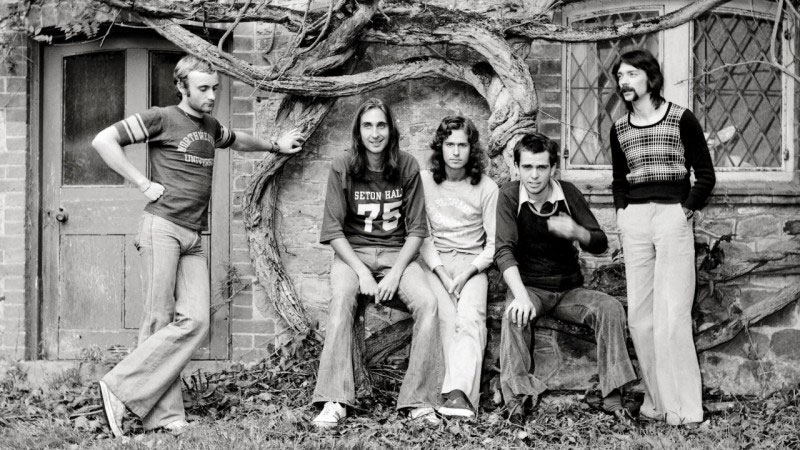
On August 16, 1975, Melody Maker posited a front-page question. Pushing a story regarding Frank Sinatra’s return to the UK down-page, it pictured Peter Gabriel in his full Watcher Of The Skies batwings, next to the legend: ‘GABRIEL OUT OF GENESIS?”. It became clear that the most mercurial of 70s frontmen was no longer working with the band he had co-founded at Charterhouse School in 1967.
All five members – Gabriel, Tony Banks, Phil Collins, Mike Rutherford and Steve Hackett – it seemed, had a great deal to lose. They had just 10 months previously released the double album The Lamb Lies Down On Broadway, which was, for many, their most complete artistic vision to date. They had finished a US and European tour of the album that had offered one of the most complex multimedia stage shows of the age. After years of toil, the undying faith invested in them by their record label, Charisma, and with new manager Tony Smith, the band seemed on the verge of actually making some money.
But for this incarnation of the group, it was the end, and the protagonists had known since late 1974 what was going to happen. It was a testament to their long-standing relationship that they remained together, tight-lipped, working their way through their long tour. The recording, content and the performances of The Lamb Lies Down On Broadway laid bare the divisions within the group.
After the success of the Selling England By The Pound album and tour, Genesis began writing their next album. With a Top 30 UK single behind them (I Know What I Like (In Your Wardrobe)) and modest chart success in America, it was clear that their next work would garner considerable attention.
Genesis relocated to Headley Grange in Hampshire in late spring 1974 to start the writing and rehearsal process. The former poorhouse had been owned by Aleister Crowley, which had drawn devotee Jimmy Page of Led Zeppelin to record there. It was in a state of some dilapidation with rats scurrying about. Although Mike Rutherford said in recent documentary_ Sum Of The Parts_ that Headley Grange was “a funky old place… a nice atmosphere”, Steve Hackett recalls: “If anything was a haunted house, that was. You’d hear extraordinary noises at night – it was almost impossible to sleep.” The album was to be sketched out with the band playing and delivering material to Gabriel who was to write his lyrics in a separate room.
The group had a surfeit of musical ideas and decided to release a double album. “I went down to the Grange where they were rehearsing,” co-producer John Burns says. “I’d worked with Traffic and Jethro Tull, but I hadn’t done any doubles. They were seen slightly as white elephants, like ‘the white album’, but then Exile On Main Street came out, which was, to begin with, really slated by the press, but I loved straight away.”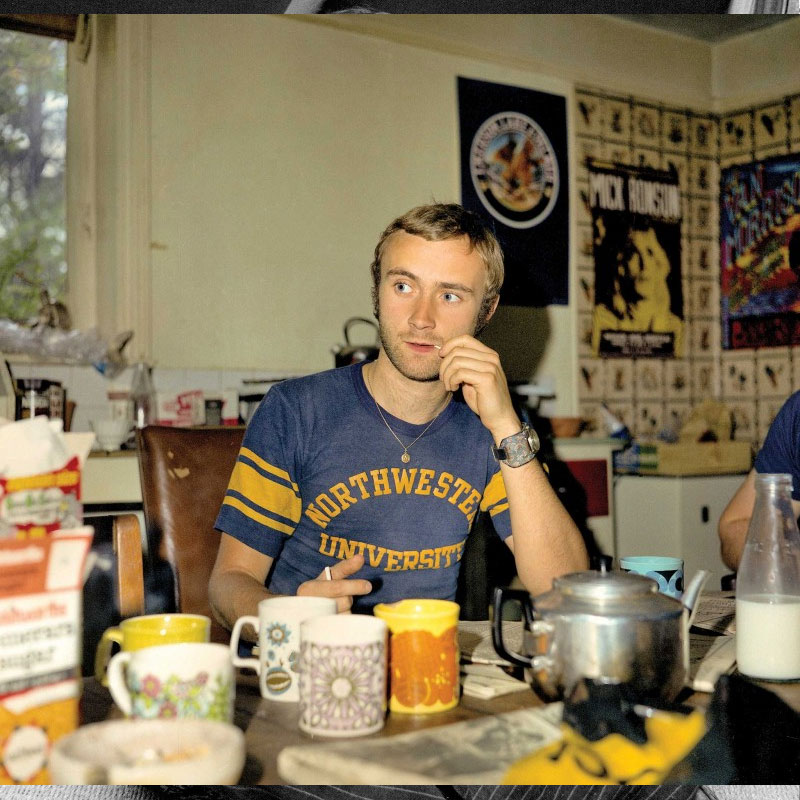
Above: Phil Collins by RICHARD-HAINES/PHOTOGRAPHS FOREVER
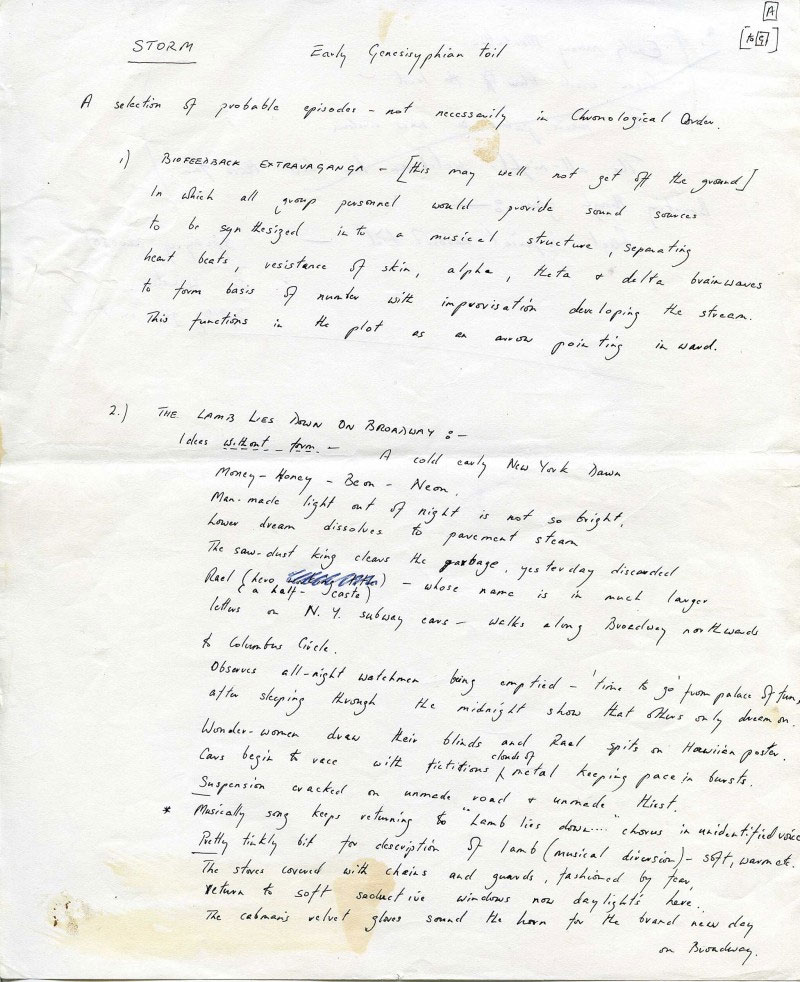
Two ideas had been suggested for the theme of the album. Influenced by Alejandro Jodorowsky’s 1970 Mexican cult movie, El Topo, Gabriel came up with the character of Rael, a Puerto-Rican street punk who embarks upon a form of Pilgrim’s Progress in New York, to be known as The Lamb Lies Down On Broadway. Alongside Gabriel’s concept of Rael, there was another idea – principally supported by Mike Rutherford, to write an album based around The Little Prince, the 1943 novella by Antoine de Saint-Exupéry. Gabriel was vocal in sidelining Rutherford’s plan: “Too twee,” was his assessment of the idea.
Gabriel, however, had more on his mind: he was distracted by a request from The Exorcist film director William Friedkin. Friedkin had read Gabriel’s essay on the sleeve of Genesis Live and wanted Gabriel to come up with concepts for a new film. “He was trying to put together a sci-fi film and he wanted to get a writer who’d never been involved with Hollywood before,” Gabriel said in 1984. “We were working at Headley Grange… I would go bicycle to the phone box down the hill and dial Friedkin in California with pockets stuffed full of 10p pieces.”
Rutherford has said it was “a strange feeling when one of the guys you are working with is a little less keen than you. It made it funny all round, really.”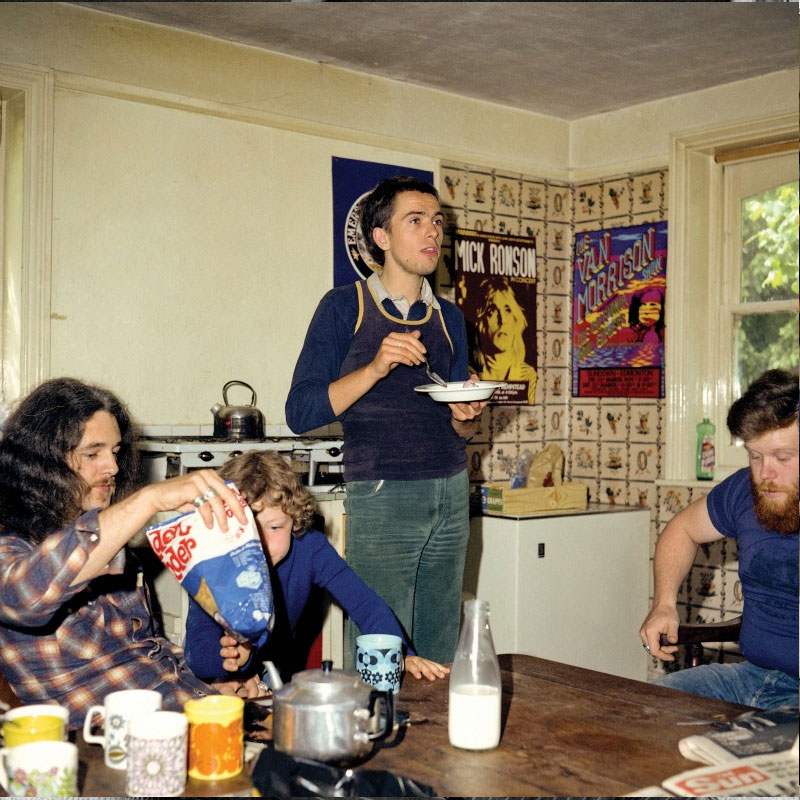
Above: In the kitchen.... by RICHARD-HAINES/PHOTOGRAPHS FOREVER
More importantly than the band or Friedkin, Gabriel’s wife Jill was having severe difficulties at this time with her pregnancy, and problems continued after the birth of their child, Anna-Marie on July 26. There were life-changing events happening around him. “When Angie and I had a baby and Tony and Margaret had theirs later, we realised it was life-changing.” Mike Rutherford said in 2013. “Pete’s came very early on and we were not good at change. We were very unsympathetic towards him. That was a big part of the problem really.” Steve Hackett was very aware of what was happening as he was in a similar boat: “Pete was going through his version of hell, and I was going through mine. My first marriage broke up and I had a son. There was a tremendous amount of guilt; I just wanted to get on with the music, but modern life just kept crashing in all the time.” With all of this happening, it was a wonder an album was made at all.
With rehearsals completed and a concept in place, the band decamped to Glaspant Farm, Newcastle Emlyn, Wales to record. John Burns was returning for his fourth album with them. “I’d been to public school and been through that crap, so on that level, I got on incredibly well with Peter and Tony,” he laughs. Using the Basing Street Mobile, the recording took place in the farm’s barn with Burns and engineer Dave Hutchins outside, looking at the proceedings through a small closed-circuit television in the mobile studio.
“It was basically a cowshed with a pitched roof,” Burns says. “I had to send out hardboard to nail up around the drums.”
“It wasn’t really finished, so it just felt like camping out,” Hackett adds. “It was madness really. It was an album that was created in a number of derelict houses.” However, it was far from being all doom and gloom: “We had lovely weather,” Burns recalls. “Phil’s then-wife and my then-girlfriend were there. It was a nice atmosphere; there were mattresses on the floor – the girls would cook, and sometimes Tony would chip in.”
Meanwhile Gabriel to-ed and fro-ed with both Friedkin’s storyline and the weighty, portentous plot for The Lamb, between the hospital in London, his family and Wales. Without Gabriel’s full-time presence, Banks, Rutherford, Collins and Hackett worked on the musical ideas. “Peter was pretty absent at the farm,” Burns remembers. “He would come down from time to time. I was aware there was something going on with Peter, but quite honestly, I had my hands full. I’d seen bands break up and get back together again. I had to let it go over my head. The main thing was to get the album finished.”
Gabriel’s insistence that he held onto all the lyrics and the artistic flow-through of the story created further divisions. “We had written a lot of stuff,” Tony Banks said in 2013. “90 per cent of the record was there, so we just carried on the idea of the album. Peter was getting difficult, and suddenly he had a different attitude. And from that moment, it wasn’t as much fun.”
“It’s a strange feeling when one of the guys you are working with is a little less keen than you... it made it funny all round, really.”
https://www.youtube.com/watch?v=sqBvKMdlW4Q
Gabriel asked if he could take a break from the album: the group refused to let him. “Friedkin freaked when he heard he could be responsible for breaking up the band,” Hackett says. “Pete came back to it.”
With both Charisma boss Tony Stratton-Smith and Tony Smith working out a middle ground for the group, Gabriel ultimately did not work on Friedkin’s project, which became Sorcerer.
“Our time was up,” Hackett says. “We’d exhausted everyone’s patience by turning it into a double album – schedules were going out the window left right and centre.” At the start of September the band moved to Island Studios, West London to finish the recording. “We had a month off,” Burns recalls. “I presume that was to sort out Peter’s stuff as he hadn’t much in the way of melodies or lyrics.”
The recordings so far had importantly shown Banks, Collins, Hackett and Rutherford that they could create music without the involvement of Gabriel. When Gabriel came back all he did was fill everything with words. The sessions have a reputation for being fraught. “Yes, sometimes they were,” Hackett says. “It wasn’t easy for Pete. His ideas were really important to him for that project.” And Gabriel’s main idea was Rael.
Rael. One of Gabriel’s most loved, debated and discussed characters. “Yes, of course there was a bit of me in Rael,” Gabriel said in 2012. “The thing is: he was freer than me to live out things that I was never going to be able to.” One of the most obvious, political statements was Rael’s look, an integral part of the concept. Gabriel wore an open leather jacket and white T-shirt, with his hair cut short. It was something that prog rockers were not doing in 1974. Although his character was rooted in the supernatural and at times, the mythical, this was about as far away as he could get from the romanticised England of the previous release. Setting his tale in New York at once gave the music a link to the burgeoning underground and art scene. This was the New York that incubated punk and disco: a dangerous place synonymous with murder, drugs, prostitution and violence.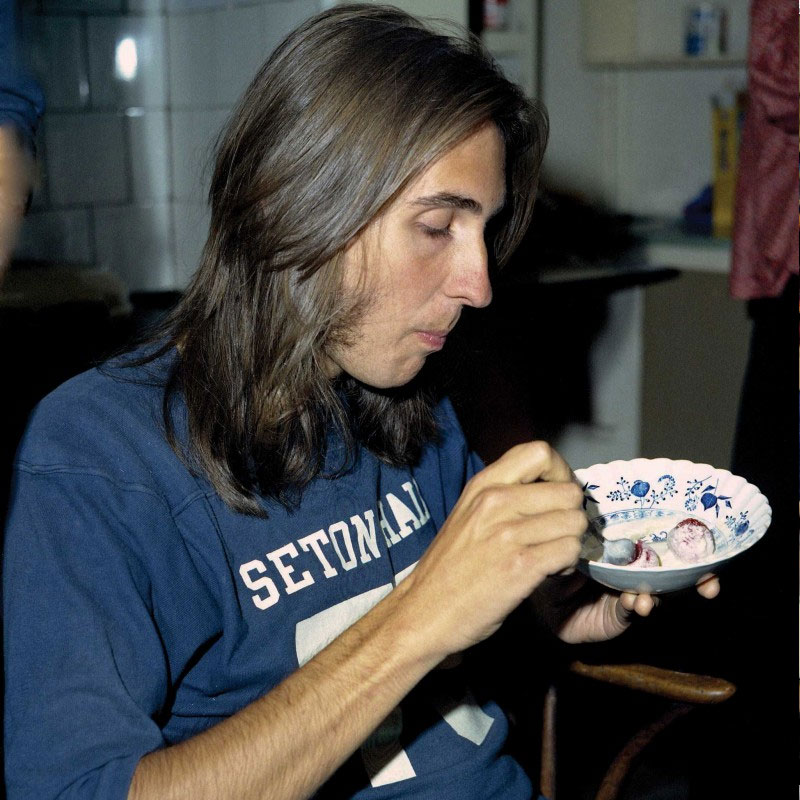
Above: Mike Rutherford by RICHARD HAINES/ PHOTOGRAPHS FOREVER
New York provided a huge inspiration for the group’s music. When they first went there in 1972, they were all no older than 22, and New York then wasn’t the pop-on-a-plane-shopping-weekend package it is today. As a result, the music reflects “The density of a city that is on permanent overload,” Steve Hackett says. “The first time we were there, we were not able to sleep at night because of the sound of the sirens. It seemed that the city was permanently on fire.”
At Island Studios, Gabriel engaged Brian Eno to assist, notably on The Grand Parade Of Lifeless Packaging on which he put Gabriel’s vocals through his ARP synthesiser. “Eno was a breath of fresh air,” Hackett recalls. “He came in full of enthusiasm – he added some radical treatments. He was intelligent and passionate about stuff.” Gabriel credited Eno for ‘Enossification’ and Banks felt that it was too much. “His contribution to the album is minimal actually,” he said in 1992. “I often wonder why we even credited him, because what he did was very little.”
As with all of Gabriel’s recordings, the lyrics came last, often at the 59th minute of the eleventh hour. “We would do a compilation of two or three vocal takes based on two or three tracks.” Burns recalls. “He would sing it different every time. I’d have to drop in ts and ds. I got very good at that. Phil, Mike and I all smoked dope. Sometimes when you are stoned with someone who is not, you can mis-communicate – but there was absolutely no way that that was ever a problem with Peter, who didn’t drink or smoke – he was naturally that way.”
The Lamb Lies Down On Broadway was finally delivered in late September 1974, ready for November release. It was unlike anything Genesis as a group had recorded before, or, as a whole, since. It looked and sounded different. Go-to 70s album designers, Hipgnosis, designed its arty, angular photographic sleeve, featuring male model Omar as Rael. Shot in black and white, it was a huge step away from the otherworldly paintings of Betty Swanwick or Paul Whitehead. With George Hardie’s graphics – including a new, line-drawn logo – and his graphically stunning inner bags, the sleeve, shot in Wales and in the vaults and tunnels under London’s Roundhouse offered purchasers a cornucopia of stoned interpretation.
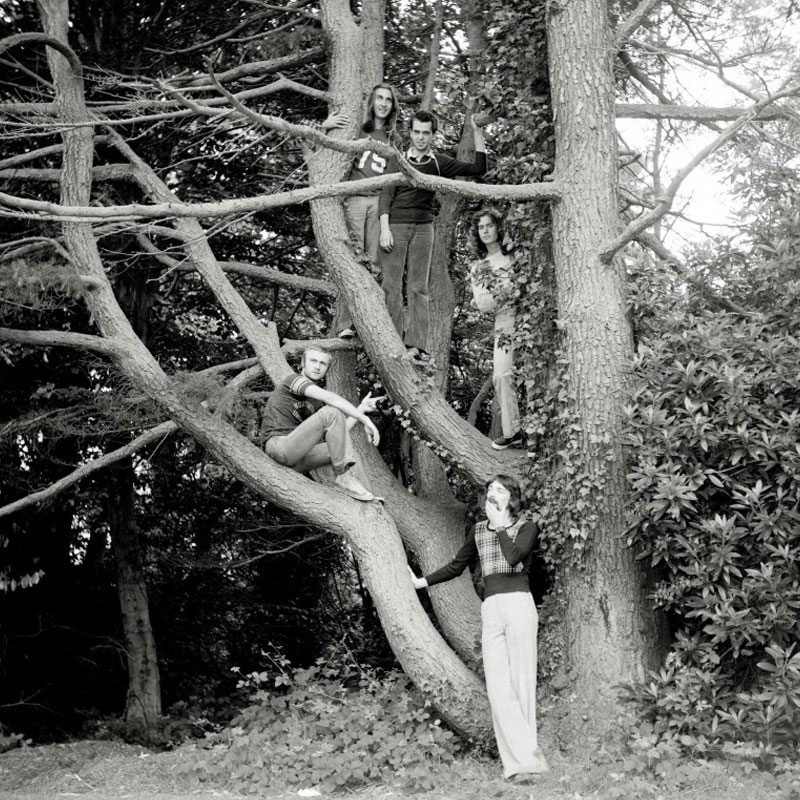
Above: Tree huggers by RICHARD HAINES/ PHOTOGRAPHS FOREVER
What added further to the density of the concept was Gabriel’s’ impenetrable text laid out across the album’s gatefold sleeve. Here were five columns of tiny words, telling the story of Rael, and his struggles in subterranean New York to locate his brother John. The reader is introduced to characters such as the Slippermen, Lillywhite Lillith, the Lamia and Doktor Dyper. “I think some of the lyrics are great,” Banks said in 2013. “But I don’t enjoy the story as a whole. It owes quite a bit to Kurt Vonnegut’s The Breakfast Of Champions. It encourages the idea
that the album was dark and dense, and it isn’t really, it’s got some quite light pieces.”
“It’s like a poem everyone can read differently,” Mike Rutherford added. “It lacked cohesion. It was a wonderful journey, but I feel that a conversation should be able to be explained in one long sentence or in a paragraph and you can’t really with The Lamb Lies Down On Broadway.”
If the artwork foxed you, wait until you heard the music. Given its problematic inception, the music on The Lamb Lies Down On Broadway with its incredible, metallic soulfulness ranks among the very best the group had ever recorded, with its rousing title track – the final song that Tony Banks and Gabriel wrote together – moving to the show-stopping Fly On A Windshield, which, in Banks’ opinion has Genesis’ single greatest moment where the full weight of the band slams in. Back In NYC is one of the hardest things the group ever recorded with Gabriel moving frequently from a scream to a whisper. The folk-soul of The Carpet Crawlers serves as a five-minute distillation of the group’s glory. Riding The Scree contains 14 seconds of the funkiest Genesis ever got on record. The album concludes with it, all acoustic guitars and showboating, with Gabriel’s pun on the then-current Rolling Stones’ single and album, It’s Only Rock’n’Roll.
The Lamb… was finally released on November 18 1974, just over a year after Selling England By The Pound.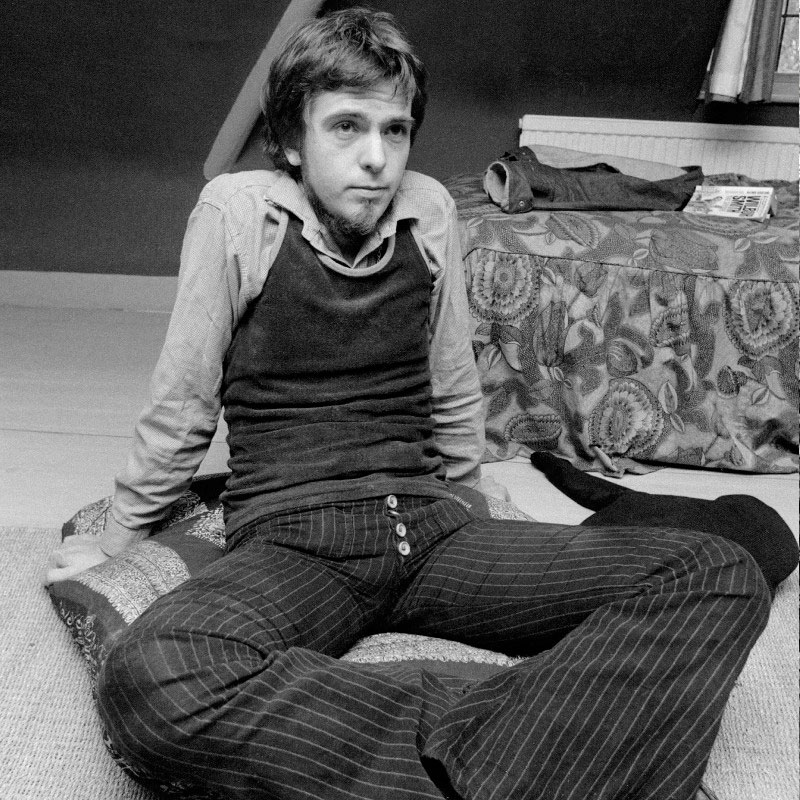
Above: Peter Gabriel, by ROBERT-ELLIS/ REPFOTO
With its sheer wealth of material and its impenetrable plotline, The Lamb Lies Down On Broadway was not, however, accepted warmly at the time. Melody Maker journalist Chris Welch, one of the group’s most ardent supporters in the UK, led its detractors: “Genesis have given us so much, and deserve respect for their efforts. Perhaps we must be patient and wait for The Lamb to grow on us. But I have the feeling it is a white elephant.”
If patience was what was required with the album, what on earth was needed when it was played in concert? It was conceived for live performance. The complexities thrown up by the 102-date tour that supported the album are well documented. Firstly, there will always be issues, no matter how devoted your fan-base, with playing a new album in its entirety with hardly any concessions toward older material. To compound matters, when the tour started, the album hadn’t even been released, and audiences, especially US ones, who had just acclimatised themselves to the group’s material were confronted with unfamiliar, complex songs and an ahead of its time slideshow. Collectively, they had heard about the man with the flower and the old man’s head and the batwings and they wanted to see some more. Instead they were confronted with a bewildering array of images, music unlike anything by the group to date and the lead singer looking like a short-haired street punk.
Three dates into the US tour, at the Swingos Hotel, on November 25, 1974, Gabriel told the band of his decision to leave them. In an orange-walled hotel room, Gabriel announced his intention at a meeting hastily convened by Tony Smith. Gabriel said in 2007: “The hotel was part of rock’n’roll culture and I realised, ‘I’m part of this machinery and I don’t feel this is where I should be or who I am’. I could feel the pressure mounting and I had to punch my way through it.” The band initially went into denial, and thought they could persuade him to stay as Gabriel agreed to honour all touring commitments into May of the following year, but it was clear Gabriel was not for turning. Banks had lost his old friend and sparring partner. “In some ways I felt a sense of personal loss,” Banks said. “But it was a relief as well, I can’t deny that. We then had something to prove, which gave us a new goal. Fortunately the audience wanted to stay with us.”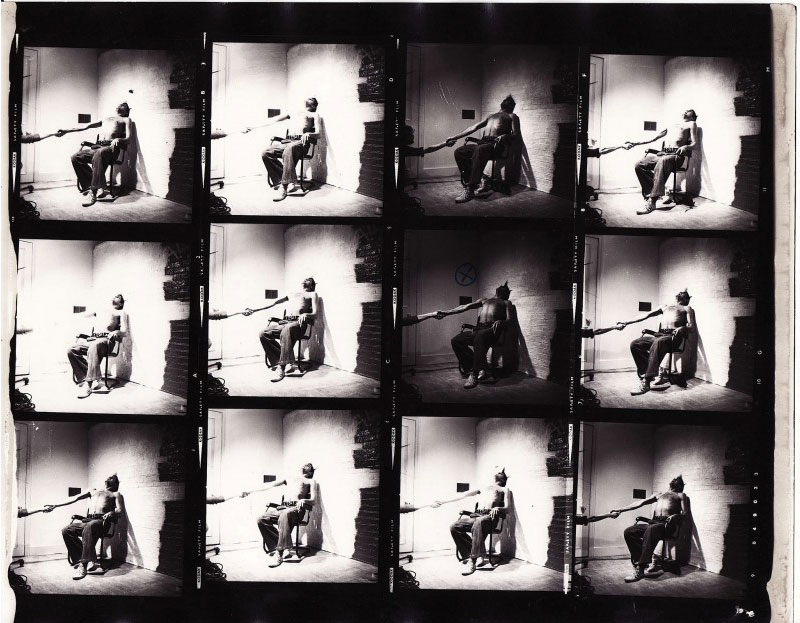
Above: Cover-shoot by AUBREY-POWELL.
In April 1975, Gabriel performed his final public duty aside from the gigs as a member of Genesis. Charisma gave a reception for the group at the Savoy Hotel on London’s Strand, to celebrate the gold album sales of Selling England By The Pound and The Lamb Lies Down On Broadway. To commemorate their elevation into rock royalty and critiquing it at the same time, Gabriel wore a waistcoat made out of pound notes. There is a picture taken of the five of them and it speaks volumes – Gabriel looks relieved, delighted almost, waving a fond goodbye. The remaining four are positioned, calm and serene, as if it is their first solo press shot. The gap between Banks and Gabriel can only be a matter of inches, but it could be miles. The tour eventually ended in France a month later; quietly all five went their separate ways.
And so, four months after they had last played together as a five piece, it was time for the story to go public. The two factions had gone on with their lives. Hackett quickly made the Voyage Of The Acolyte, while the other three began shaping what was to become
A Trick Of The Tail. Gabriel was now ensconced in family life in the West Country when the news hit Melody Maker in August 1975. All five seemed vaguely surprised with all the attention it suddenly received.
Both parties issued a press release in response. Melody Maker printed Gabriel’s in its September 6 edition. It was a deeply personal statement that he delivered by hand to the UK music press. He talked about growing cabbages and suggested he would at some point return to music and that there was absolutely no animosity between him and his old friends.
The letter concluded with a characteristically theatrical finale: “The following guesswork has little in common with the truth. Gabriel left Genesis:
1) To work in theatre.
2) To make more money as a solo artist.
3) To do a ‘Bowie’.
4) To do a ‘Ferry’.
5) To do a ‘furry boa around my neck and hang myself with it’.
6) To go see an institution.
7) To go senile in the sticks.”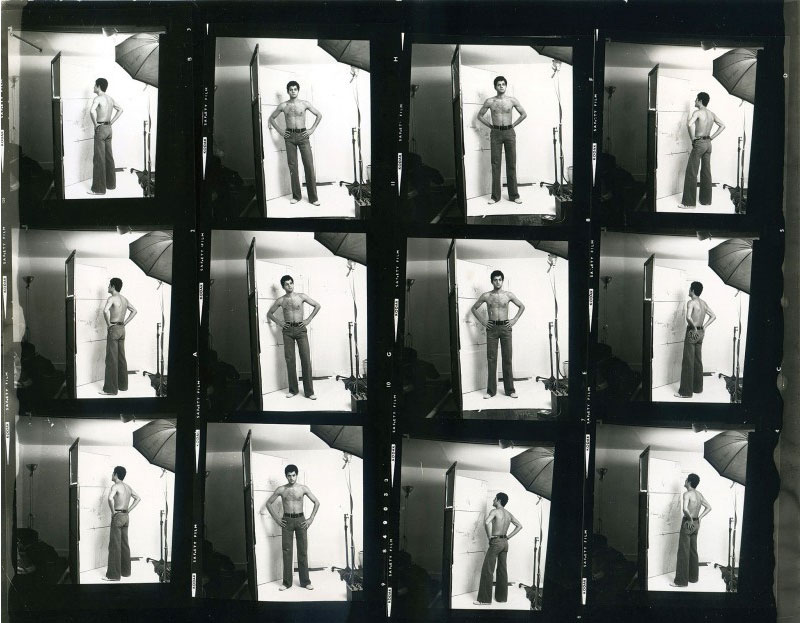
Above: Cover shoot 2 by AUBREY-POWELL.
In August 1975, Genesis issued a simple statement: “They are now looking for a new singer. They have a few ideas but nobody has been fixed. The group are all currently writing material and rehearsing for their new album, and they will go into the studios shortly to record. The album will be released at Christmas and Genesis will go on the road in the New Year.”
Of all of Genesis’ work, The Lamb Lies Down On Broadway is the one that people return to, an ultimate vindication of the group’s toil. Peter Gabriel looks back at The Lamb with great affection; he told Prog in 2012: “I’m not sure if the story made much sense to most people, but it did mean something to me, in essence, it was about an awakening. He was on a journey to find himself, in a seductive, magical place.” Much has been made of the varying indifference that other members have had towards the project, and many look to Tony Banks’ range of reactions across the years to The Lamb.
“Peter and Tony got on, but they were rivals, basically,” John Burns – still one of the country’s key analogue producers – concludes. “Tony is definitely the influence for the Genesis sound; it was a keyboard band, really. Peter had all the live things, the dressing up. I love it as a work of art.” Hackett adds, “The agenda goes back a long way with the Genesis guys, they were always competitive with each other; they still are today, even though there isn’t a band.” There is one fan in the camp, Phil Collins, whose playing on the album is, like Banks’, never less than remarkable. He said in 2014: “The Lamb Lies Down On Broadway was the best we’d ever been on a record.” And to many, it remains that way.
By David Segal November 26, 2002
For fans of pop bombast, these have been fallow years. Britney and Justin have never heard of it, indie-rockers revile it, and all those alt-metal acts are too busy fabricating hostility to bother with anything high-concept. As for rap, you're more likely to find Jesse Helms at a Snoop Dogg concert than old-school grandiosity.
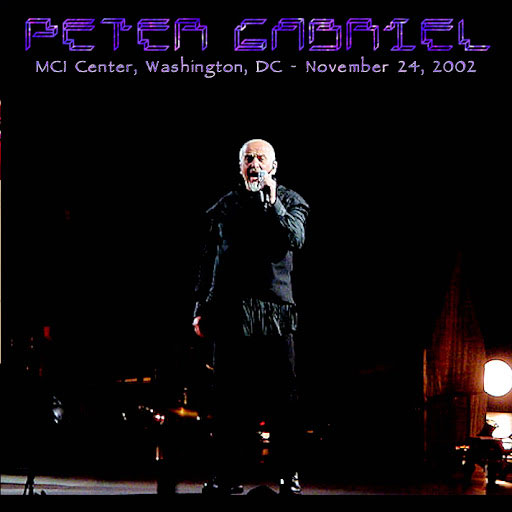
On Sunday night at MCI Center, Peter Gabriel brought the bombast. All the hallmarks were there: elements of theater, self-seriousness, inscrutable platitudes and a caravan of freaky props, including a giant ball of bubble wrap with a Habitrail of sorts inside. The show was in the round -- the stage was planted in the middle of the arena, a gambit common in bombast's '70s-era heyday. It spun in one direction or another on nearly every song.
And there were costumes. Gabriel's seven musicians were dressed in black overcoats they could have borrowed from the set of a "Matrix" sequel. Gabriel wore a black karate-style wrap that gave him the look of Obi-Wan's kid brother and, it turned out, doubled nicely as action-wear. Over the course of a 2 1/2-hour show he walked upside down, rode a silver bicycle, jogged in circles and rolled around in that bubble ball, which he steered with hand straps and some energetic footwork. At moments, it looked like he was getting the world's silliest workout.
In our post-"Spinal Tap" world, it's hard to imagine that Gabriel was taking all of this seriously. From his early days as a prog-rocker in Genesis -- he once showed up onstage wearing a triangle face mask -- there was just the faintest trace of in-on-the-joke winking. But not much. The guy clearly has a solemn, Broadway side, and now that he's 52 years old we can assume it hasn't faded with age.
At moments he slipped over that fine line that separates clever from stupid. When his daughter, backup singer Melanie Gabriel, sat in a steel dinghy and was slowly rotated around the stage for a lap or two, sitting stock-still, things were getting too precious. As a feat of nerve and stagecraft, though, the show offered plenty of moments of utterly berserk fun.
Fun, though, wasn't always the point. Gabriel started slow and eerie, alone at a keyboard console for "Here Comes the Flood," a moody puzzler from his first solo album in 1977. And the tone for much of the night was established by "Up," his first album in a decade and a pretty dreary excursion through an industrial dystopia where, apparently, catchy hooks are outlawed. "Up" has sold poorly -- about 125,000 copies, according to Nielsen Soundscan -- which might explain why the show was so meagerly attended. It looked as though thousands of seats were empty.
Gabriel spent most of the evening wearing a wireless headset, roaming around the stage without an instrument to play, which freed him to run, pedal and dance through the odd decathlon he'd set up for himself. The band, which included bassist Tony Levin and the tireless drummer Ged Lynch, added real menace to those "Up" downers, a few of which summon an almost Orwellian atmosphere. ("Signal to Noise" could be Muzak at a very frightening factory.)
Gabriel brought in the Blind Boys of Alabama, who had opened the show with a moving set of gospel standards. For "The Barry Williams Show," a poke at confessional talk shows, he pointed a video camera at the crowd while his own image as a cameraman was imposed on a circular scrim that hovered for parts of the show.
Gabriel wisely switched musical moods about as often as new egg-shaped thingies and cone-shaped scrims descended from the ceiling -- which was often. A pair of Tanzanian singers enlivened "Animal Nation," and when Gabriel turned up the lights to play hits like "Sledgehammer" and "Solsbury Hill," a celebration ensued. Without that celebration, the night would have demanded too much of an audience that clearly had little emotional connection to Gabriel's slightly frigid new songs. The guy is surely one of the last great maestros of bombast, but if you're going to watch an adult roll around in a giant plastic ball, it's more entertaining if you can hum to whatever he's singing.
Maestro of bombast: Gabriel's showmanship eclipsed his music at MCI Center on Sunday.As stagecraft, Gabriel's show offered moments of utterly berserk fun.
The Dork Report March 22, 2010
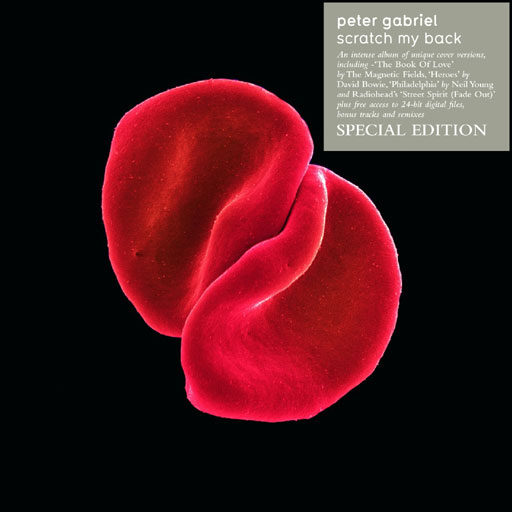
As a Peter Gabriel fan for over two decades, it’s difficult to admit that I find myself struggling to appreciate his first new album in years.
There have always been three core things to love about Gabriel’s work: his literate songwriting, meticulous soundscapes, and emotionally expressive voice. Behind the creepily organic album art, Scratch My Back is an experiment in subtraction. It finds Gabriel covering other artists’ songs, accompanied only by solo piano or orchestra (the oddly defensive marketing pitch “No drums, no guitars” says it all). That leaves only the voice. Soulful and gravelly even as a teenage cofounder of Genesis in 1967, Gabriel’s voice should be more than enough to justify anything, so my pat reduction here is not totally fair. Gabriel and John Metcalfe clearly labored over these orchestral arrangements, but I miss the complex sonics of the rock and world music instrumentation that has characterized most of his music for over 40 years.
Gabriel did very nearly the opposite a decade ago, when his high-concept millennium project Ovo made a point of casting Paul Buchanan and The Cocteau Twins’ Elizabeth Fraser to sing his songs. The most recent collection of his own songs was 2002’s Up, followed in 2009 by the collaborative project Big Blue Ball. Casual fans of his music might not be aware that Gabriel is an active humanitarian, particularly as cofounder of Witness and The Elders, so the temporal gap between his musical ventures is not entirely explained by chronic procrastination (although he would probably be the first to admit he’s easily distracted). Gabriel has stated that he hopes to work on more song-swap projects in the future, but first plans to work on some of his own songs. How long until he prepares a new album over which he can claim sole authorship?
Gabriel told the New York Times:
“I was trying to make a grown-up record […] This is treating people as if they can handle difficult music and words. Not that I’ve courted the lowest common denominator before, but there’s a playfulness and childishness in some of my older work that isn’t present on this record.”
He is presumably referring to the media satire of “Games Without Frontiers” and “The Barry Williams Show”, the randy sex romps “Sledgehammer” and “Kiss That Frog”, and the vaudeville silliness of “Excuse Me” and “Big Time”. Gabriel is one of the few musicians that I first listened to as a teenager, but whose music has aged with me. So I would have expected myself to appreciate an album of him covering many songs that I know and love well (particularly David Bowie, Lou Reed, Elbow, and Talking Heads), but I find that I don’t know what to make of Scratch my Back even after repeated listening.
Many songwriters lose their dark edge as they age (case in point: Pink Floyd’s once tortured, prickly Roger Waters is now a big smiley softie), and by all accounts Gabriel should have been following that track too. After leaving Genesis in 1975 to deal with family issues, his first four solo albums were increasingly dark and sinister. But 1986’s So marked a noticeable turnaround in tone and an apparent psychic healing. Now reportedly still pals with his old Genesis cohorts, aging gracefully into a potbelly and gnomish goatee, remarrying, fathering two new sons, and reconciling with his two daughters from a previous marriage, he seemed to be transforming into a cuddly grandfather figure. A trickle of releases over the past decade showed him favoring directly-worded songs for children, including the Oscar-nominated “That’ll Do” (from the movie Babe), the unsubtle “Animal Nation” (from The The Wild Thornberrys Movie), and “Down to Earth” (from Wall-E).
Suddenly, he appears to have reversed back into depressive territory. Nearly every song chosen for Scratch My Back has been transformed into a mournful dirge. Especially when listened to in one sitting, I find many of the interpretations to be too depressing, and I actually like depressing music. My favorite examples along these lines are Michael Andrews and Gary Jules’ cry-your-guts-out cover of Tears for Fears’ “Mad World” (from the movie Donnie Darko), and Elbow’s agonizingly heartrending version of U2’s “Running to Stand Still” (from the War Child benefit album Heroes).
Gabriel’s version of The Magnetic Fields’ “Book of Love” has apparently become something of a sensation on YouTube, licensed in television shows, and played at celebrity weddings. Perhaps I’m coldhearted, but it does absolutely nothing for me. Songwriter Stephin Merritt says his version was sarcastic, while Gabriel’s is deadly serious:
At first I thought, How hilarious, he’s got a completely different take on the song. But after a few listens I find it quite sweet. My version of the song focuses on the humor, and his focuses on the pathos. Of course, if I could sing like him I wouldn’t have to be a humorist.
Did Gabriel just plain miss Merritt’s point, or did he intentionally transform it into something sentimental, singing the same words but altering the instrumentation and delivery? All that said, something to cherish in Gabriel’s cover is the presence of his daughter Melanie on backing vocals.
Elbow’s “Mirrorball” is one of the most ravishing love songs I’ve heard. Elbow remixed Gabriel’s “More Than This” in 2002, providing a more organic rock structure to Gabriel’s perhaps over-processed studio original. But Gabriel does not return the favor here, turning their gorgeous love song into a depressive bummer.
The once case where Gabriel’s bummer-o-vision may have actually been appropriate is with Paul Simon’s “Boy in the Bubble”, which actually does have very dark lyrics.
The original recording of David Bowie’s “Heroes” boasts an unforgettable lead guitar line from Robert Fripp, which by his own rules Gabriel must subtract. He sings Bowie’s Berlin-inspired lyrics in cracked, anguished tones, not an emotion I associate with the song.
The one song I liked immediately was “Listening Wind”. The original is one of the odder tracks on Talking Heads’ Remain in Light, and Gabriel rather amazingly draws out a catchy melody embedded in the experimental song.
The Special Edition includes a second cd with four bonus tracks: a cover of The Kinks’ “Waterloo Sunset” and alternate versions of “The Book of Love”, “My Body is a Cage”, and “Heroes”. It might have been interesting to also include some of Gabriel’s past covers, including The Beatles’ “Strawberry Fields”, Leonard Cohen’s “Suzanne”, and Joseph Arthur’s “In the Sun”. I would have also very much liked to hear instrumental mixes of some of Metcalfe’s orchestral arrangements.
by Khoa Tran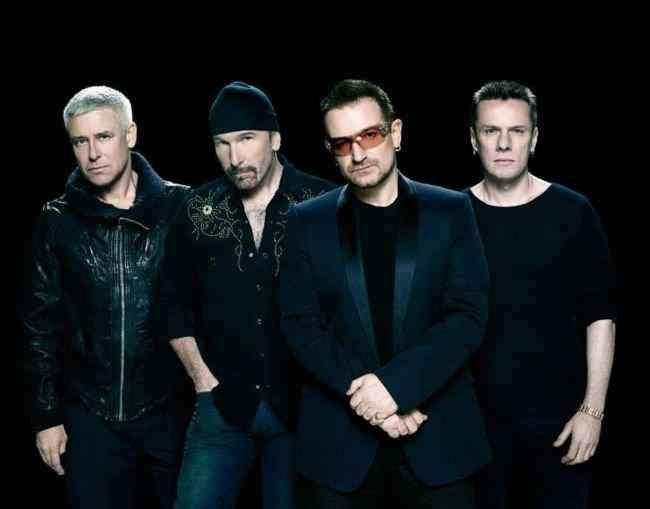 A few years back, I saw a film called Waking the Dead. Directed by Keith Gordon, and with Billy Crudrup and Jennifer Connelly in the lead roles, it wasn't the most commercially successful of films, but it's a powerful story nonetheless. The emotional climax of the movie was accompanied by a song that just struck me numb. It was a soft, subtle piece of synthesiser-based music with a gorgeous ambience. The voice wasn't Bono's, but I thought: this song wouldn't be completely out of place on The Unforgettable Fire. The end credits revealed that the song was Peter Gabriel's "Mercy Street." Some quick 'net searching soon explained everything: "Mercy Street," is from the So album, produced in 1986, two years after The Unforgettable Fire, by none other than my favourite fellow transplanted Franco-Canadian, Daniel Lanois. As I became a fan and learned more and more about Peter Gabriel, I discovered that he and U2 have crossed musical paths on more than one occasion and in quite some interesting ways.
At first glance, U2's and Gabriel's musical carreers started out differently enough. Gabriel was the colourful, charismatic lead singer of the progressive rock band Genesis. The members of U2 were, or at least thought they were, in a punk band, which is about as far away from prog rock as you can possibly get. Oversimplifying somewhat, Progressive Rock was a style popular in the 1970s (and to a lesser extent in the decades that followed, right up until present day) which featured bands with virtuoso musicians writing longer, more complex songs and instrumentals, fusing elements from jazz and classical music. While prog was able to produce some great music, it is often criticised for musical excess. Punk rock can be seen as a musical reaction to Progressive rock, with stripped-down arrangements and simple songs usually featuring no more than three chords. Bono is famously dismissive of Prog, identifying himself more with the punk movement. In the early days, he and the rest of U2 were teenagers who, though extremely limited musically, had something to say, and had a passion and the "do-it-yourself" punk attitude that was seen as a breath of fresh air from the musical snobbishness associated with prog. (As an editorial aside, I'd like to point out that while prog was responsible for some garishly excessive musical missteps, punk was equally responsible for some overly simplistic and banal output. Punk's anti-musicianship attitude was a less than positive one, and both genres produced good and bad music).
From these two rather opposite ends of the rock music spectrum, U2 and Peter Gabriel ended up meeting somewhere in the middle. Gabriel eventually left Genesis and produced some very accessible and commercially successful music (though notably very artistic and experimental music all the while). U2, on the other hand, soon outgrew its early musical limitations and matured to write and produce music, which although stylistically and thematically inventive, has remained essentially accessible to popular music audiences and critics (to which the band's immense success over the years with Grammy awards can no doubt attest).
Their early careers paralleled one another in the sense that it wasn't until their respective fifth albums, The Joshua Tree, and So (both of which involved Lanois) that they really achieved commercial success. Both have supported Amnesty International, and both of their careers benefitted from the Conspiracy of Hope tour in 1986: U2's "Bad" and Gabriel's "Shock the Monkey" were reputed to have been among the highlights of the set.
The Lanois connection is definitely the most palpable, as he has produced career-defining albums for both of them. In between working on The Unforgettable Fire and The Joshua Tree, Lanois produced So for Gabriel. After the difficult Achtung Baby sessions, he tackled Us.
But aside from Lanois, they've shared another common producer. In 1980, the same year he produced Boy for a fledgling U2, Steve Lillywhite worked with Peter Gabriel on the latter's untitled third album (his first four albums, in fact, were deliberately untitled, and are commonly referred to by their album cover images. In the case of the third album, it's sometimes referred to as "Melt"). This album yielded the well-known hits "Games Without Frontiers" and "Biko." "Biko" could be thought of as Gabriel's "Pride (In the Name of Love)." While the U2 song is a tribute to the late Rev. Martin Luther King Jr., "Biko" deals with the torture and death of South African anti-apartheid activist Stephen Biko in 1977.
In addition to Daniel Lanois, U2 and Peter Gabriel have yet another Canadian connection from Québec: Bono and Gabriel both contributed songs to the 1995 Leonard Cohen tribute album (Cohen is from Montréal, and Lanois was born in Hull), Tower of Song. Bono offered a haunting, yet gritty, almost acid-jazz rendition of "Hallelujah," while Peter Gabriel contributes a version of "Suzanne." Cohen's original, with its sparse, troubadour-like singer and a classical guitar arrangement, lets the song's lyrics evoke hazy images of a relationship with a half-crazy woman down by the river. Peter Gabriel tries to replicate this effect in the music itself, slowing down the song's tempo and using lots of atmospheric synthesiser padding.
Peter Gabriel, in his Genesis-fronting days, was known for his elaborate costumes and onstage charisma. One might find the link a bit tenuous between his "Britannia," and "Flower" costumes, and Bono's The Fly, Mirrorball Man, and Mr. Macphisto personae, but there's something else he might owe to Gabriel. Bono's stage-diving (at least the intentional ones) might never have happened had not Iggy Pop and Peter Gabriel pioneered the stunt in the 1970s. While Bono's "unintentional stage dives" over the years have left him with a dislocated collar-bone, a sprained ankle, and a bruised ego, Gabriel once broke his leg during a stage dive as the lead singer of Genesis, but reportedly got back on stage and was able to finish the show.
Peter Gabriel has had an array of guest singers and musicians contribute to his records and to his live performances, counting among them J. Shankar (who played violin on a live version of "Bad" with U2 at a 1993 ZooTV show in London), Kate Bush, Paula Cole, Nusrat Fateh Ali Khan, his own daughter Melanie Gabriel, as well as the popular and controversial Irish singer, Sinead O'Connor. O'Connor, of course, is known by U2 fans for having collaborated with U2 (and variously the members of U2) on "I'm Not Your Baby" (from the soundtrack of Wenders' The End of Violence), "You Made Me the Thief of Your Heart" (from the soundtrack of In the Name of the Father), and "Heroine" (from the soundtrack of Captive, a film which had its score written mostly by the Edge). She was also the voice of the introduction to "Bullet the Blue Sky" during the Elevation Tour. Sinead O'Connor features prominently on the Lanois-produced 1992 album Us, providing backing vocals to such songs as "The Blood of Eden," and "Come Talk to Me."
@U2's resident Answer Guy was able to provide me with some valuable insights, as a fan who has been fortunate enough to have seen (and to have been of an age to have seen) both U2 and Peter Gabriel many times over their long and storied careers. Answer Guy would argue that "Biko" is also U2's "40": "There would be no one-guy-leaves-at-a-time-at-the-end-of-the-show with U2 had Peter Gabriel not done it first." As well, "there would be no 'outside it's america' spotlight play by Bono, had Mr. Gabriel not done it in his live shows. Long before Bono cut his chin on a hand-held spotlight, Pete was shining his light on the crowd." Finally, AG concludes nicely that U2 and Peter Gabriel have "copied each other especially in producers and in what they wanted to accomplish live. Bono begs for attention on stage and Gabriel somehow "demands" it through some force of will. '40' made me happy at the end of U2 shows. 'Biko' brought tears to my eyes every time."
And perhaps, in the end, between U2 and Peter Gabriel, producing decades' worth of great music and moving audiences with compelling live performances are the greatest connections of them all.