by Daryl Easlea
The 17 months between April 1974 and August 1975 remain the most controversial in the illustrious career of Genesis, firstly with the overblown Lamb... and then Peter Gabriel's departure
Get everything Genesis related here
This article originally appeared in Prog #56.
On August 16, 1975, Melody Maker posited a front-page question. Pushing a story regarding Frank Sinatra’s return to the UK down-page, it pictured Peter Gabriel in his full Watcher Of The Skies batwings, next to the legend: ‘GABRIEL OUT OF GENESIS?”. It became clear that the most mercurial of 70s frontmen was no longer working with the band he had co-founded at Charterhouse School in 1967.
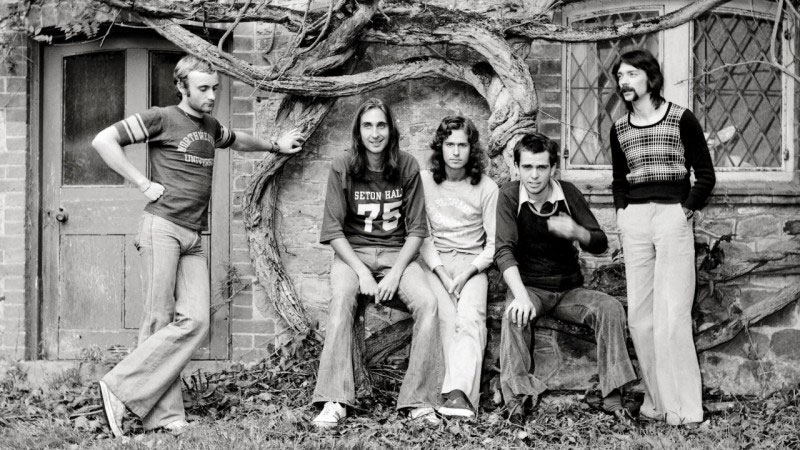
All five members – Gabriel, Tony Banks, Phil Collins, Mike Rutherford and Steve Hackett – it seemed, had a great deal to lose. They had just 10 months previously released the double album The Lamb Lies Down On Broadway, which was, for many, their most complete artistic vision to date. They had finished a US and European tour of the album that had offered one of the most complex multimedia stage shows of the age. After years of toil, the undying faith invested in them by their record label, Charisma, and with new manager Tony Smith, the band seemed on the verge of actually making some money.
But for this incarnation of the group, it was the end, and the protagonists had known since late 1974 what was going to happen. It was a testament to their long-standing relationship that they remained together, tight-lipped, working their way through their long tour. The recording, content and the performances of The Lamb Lies Down On Broadway laid bare the divisions within the group.
After the success of the Selling England By The Pound album and tour, Genesis began writing their next album. With a Top 30 UK single behind them (I Know What I Like (In Your Wardrobe)) and modest chart success in America, it was clear that their next work would garner considerable attention.
Genesis relocated to Headley Grange in Hampshire in late spring 1974 to start the writing and rehearsal process. The former poorhouse had been owned by Aleister Crowley, which had drawn devotee Jimmy Page of Led Zeppelin to record there. It was in a state of some dilapidation with rats scurrying about. Although Mike Rutherford said in recent documentary_ Sum Of The Parts_ that Headley Grange was “a funky old place… a nice atmosphere”, Steve Hackett recalls: “If anything was a haunted house, that was. You’d hear extraordinary noises at night – it was almost impossible to sleep.” The album was to be sketched out with the band playing and delivering material to Gabriel who was to write his lyrics in a separate room.