II: The Guaranteed Eternal Sanctuary Man
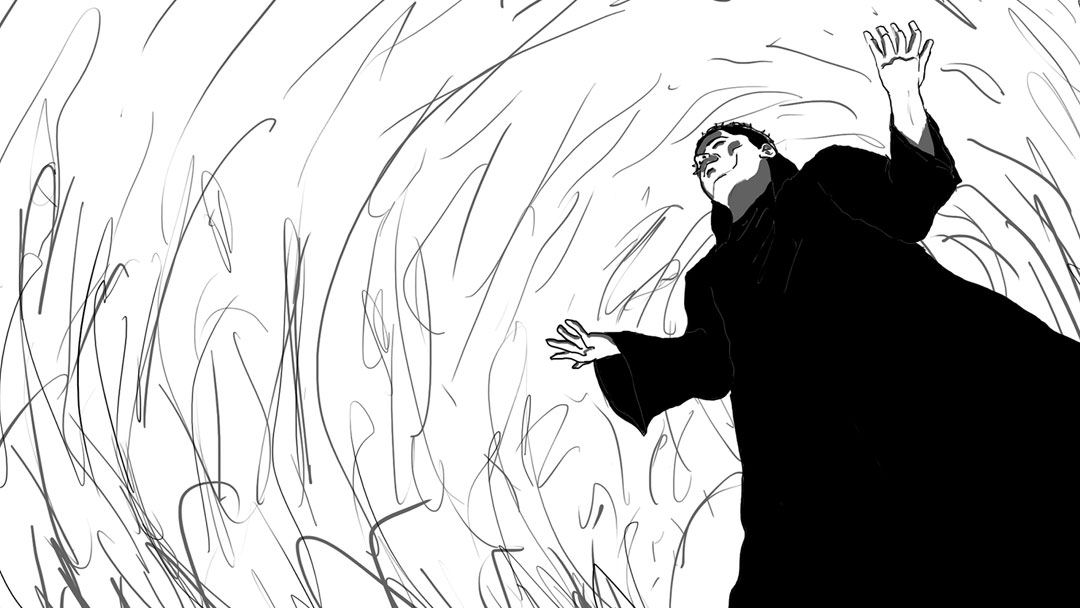
Meanwhile, we are brought to the part of town that is the base of the other figure; the Guaranteed Eternal Sanctuary Man (GESM), a false prophet who preaches control and violence over natural orders. The look of the GESM is based on the crown of thorns Gabriel would don during live performances of this song. He preaches a "highly disciplined scientific religion" (as stated in the band's program for live concerts), paradoxically warping the good nature of both fields in the pursuit of his own ends.
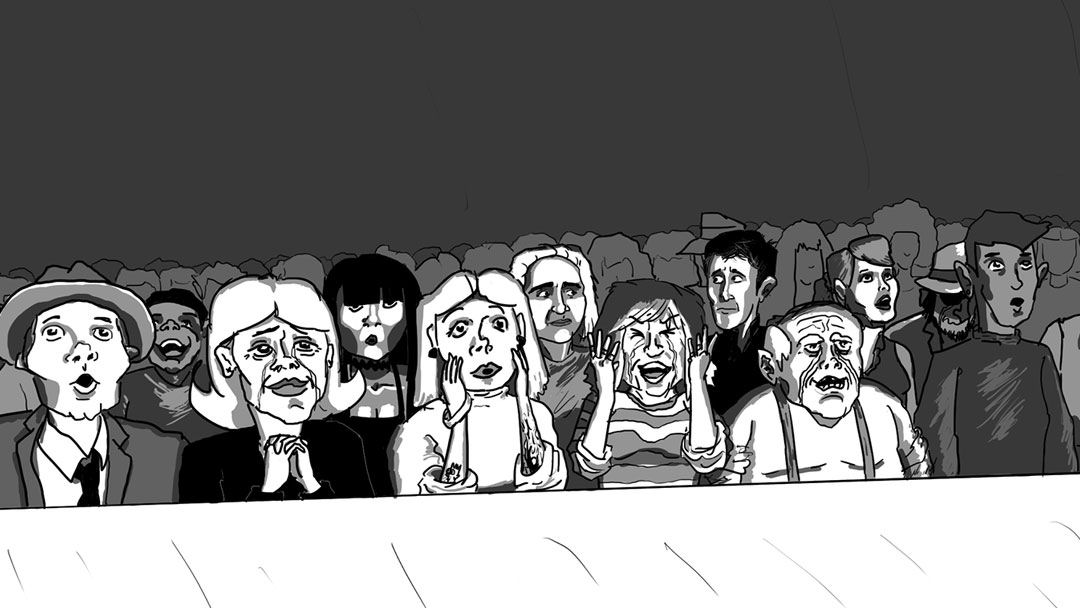
The GESM dazzles his audience with his apparent control over fire, with only the POV cognizant enough to question his abilities. Their sudden appearance in the town implies that despite daybreak, they are still within a dreamlike state, with some force urging them on, as if some great epiphany lies further down the rabbit hole. The POV try to convince the others present that they've been tricked, but the GESM has them under his spell.
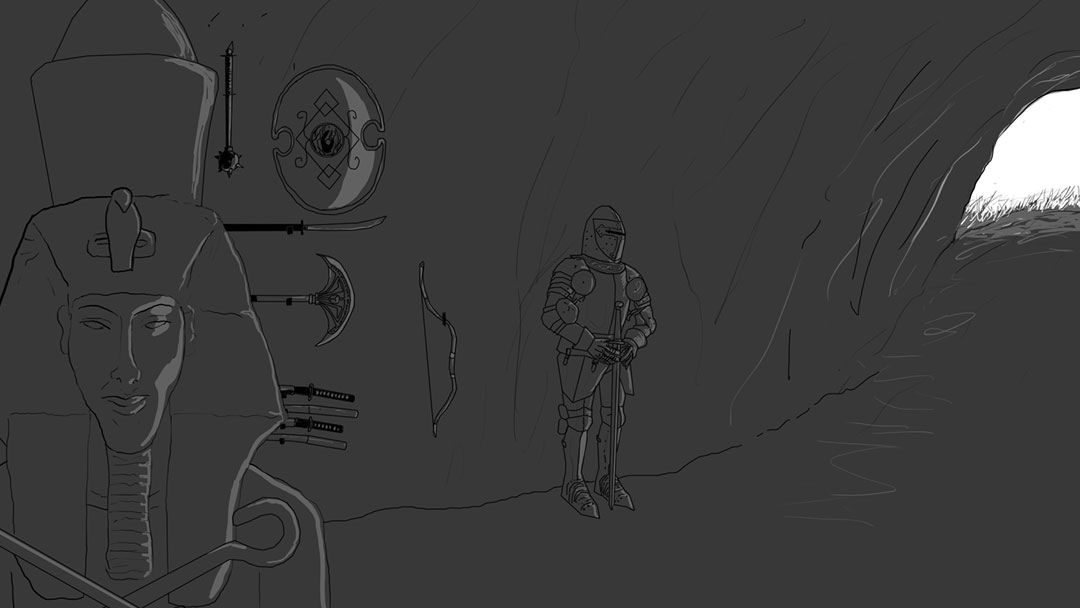
More dangerous than his captivated audience though is the GESM's insistent need to proselytize. As his display of his powers ends, he begins ushering his mob of followers into a dark cave, with the POV caught amongst the crowd.
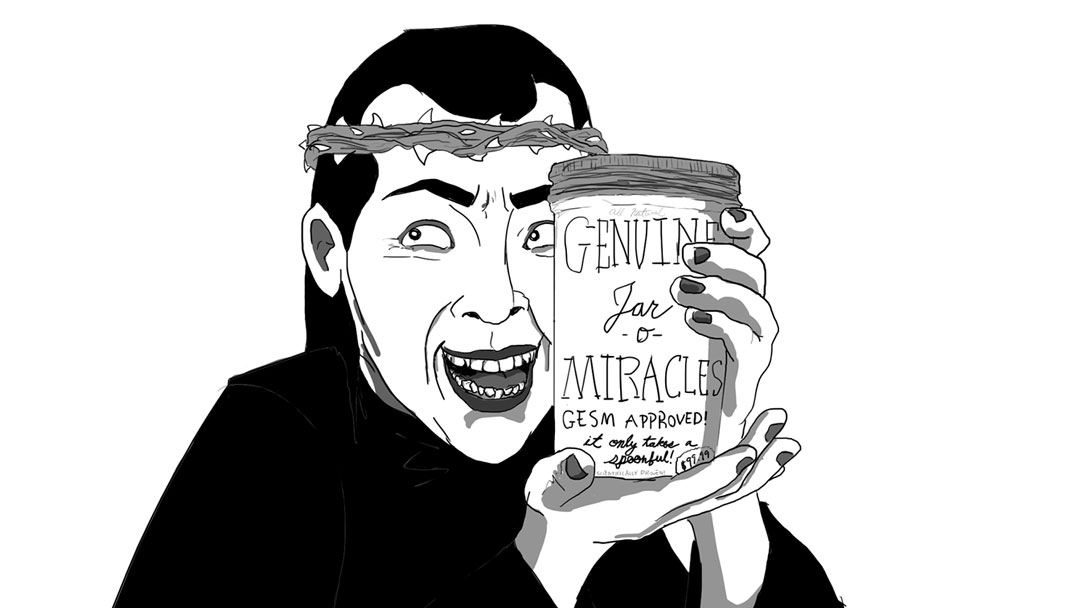
As the POV are forced into the cave, the GESM hawks his "a spoonful of miracles," which signified for me the hypocrisy of using religion to sell commercial cure-alls. The idea that one can buy their salvation negates the very notion of spirituality, and false prophets like the GESM are more than happy to offer the easy way out at a fair price.
Interlude
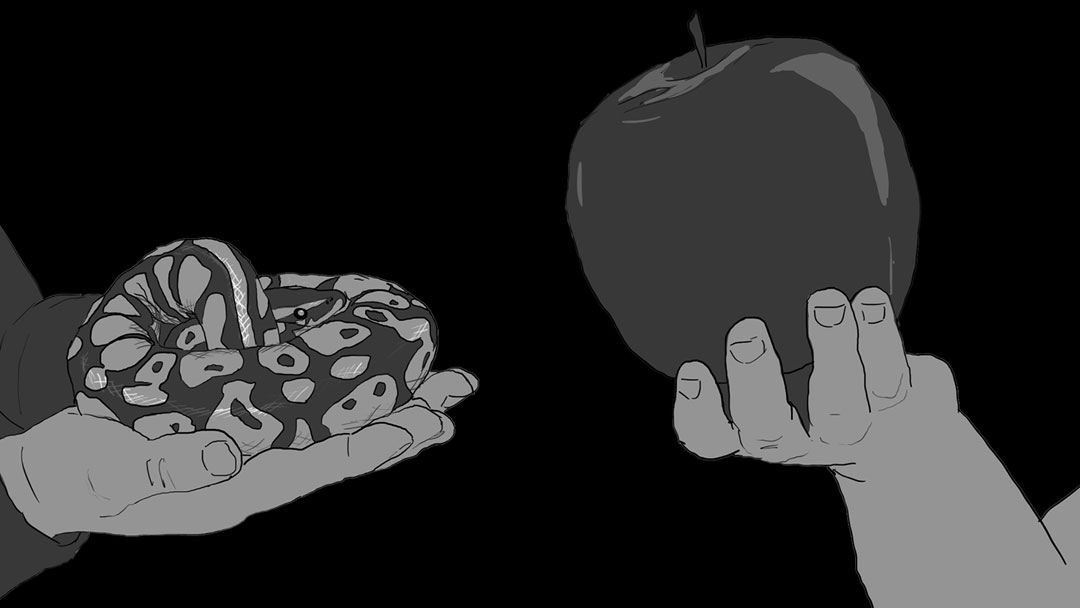
As the section ends, it transitions to the next with a quiet reprise of the first section's melody. School children sing a nursery rhyme about caring for a snake, which I turn into a reversal of the biblical offering of forbidden fruit. The fact that they will keep the snake "snug and warm" suggests an almost blatant understanding that the crowd knows what they are doing is wrong, and yet they lack the willpower/desire to repent.
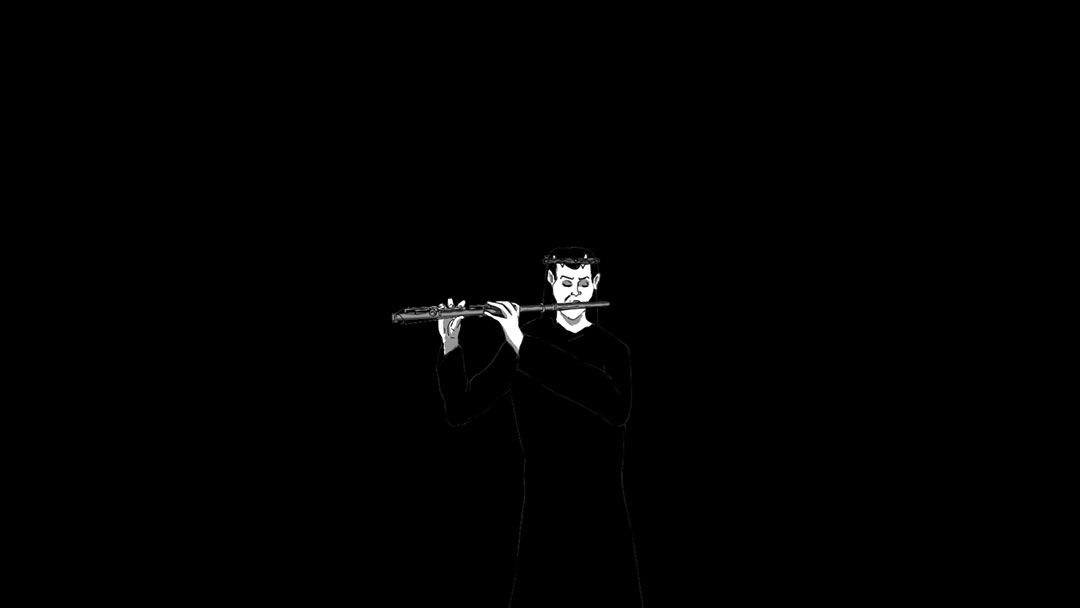
Building on this, I connect the flute used in this interlude with the later reference to the "Pied Piper," another sort of false prophet who led children away against their will with the melody of his music.