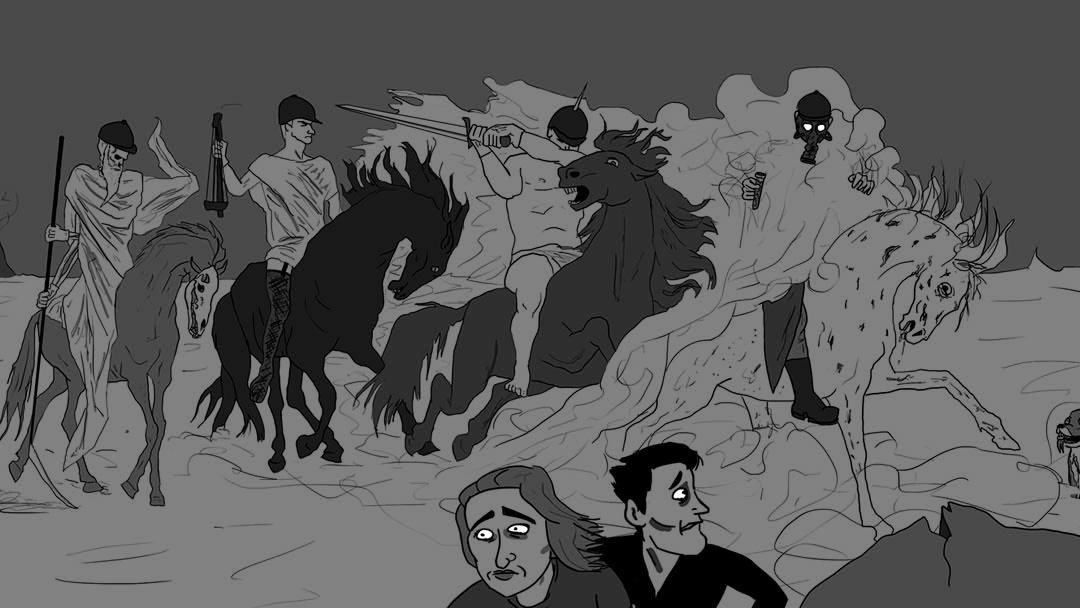
V: Willow Farm
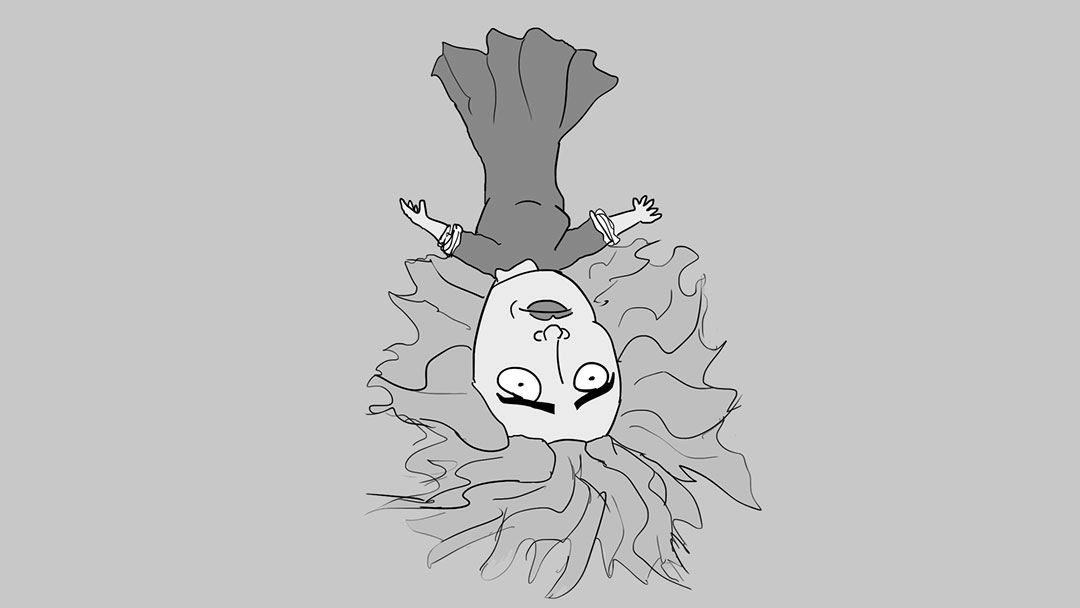
The change in font used in the video alongside the abrupt turn to color capture the divergent mood of this section. But rather than consider it a random change of pace, understand that it is integral to the journey this song articulates. Here, all barriers are broken as dream and reality become singular, viewing the cycle of the world all at once rather than sequentially. The POV are at the mercy of the puckish Flower, who is based on the flower mask Gabriel would don during live performances. The POV remain our audience stand-in, with the male literally grounded and the female making a concerted effort to not be spirited out of the comic's frame.
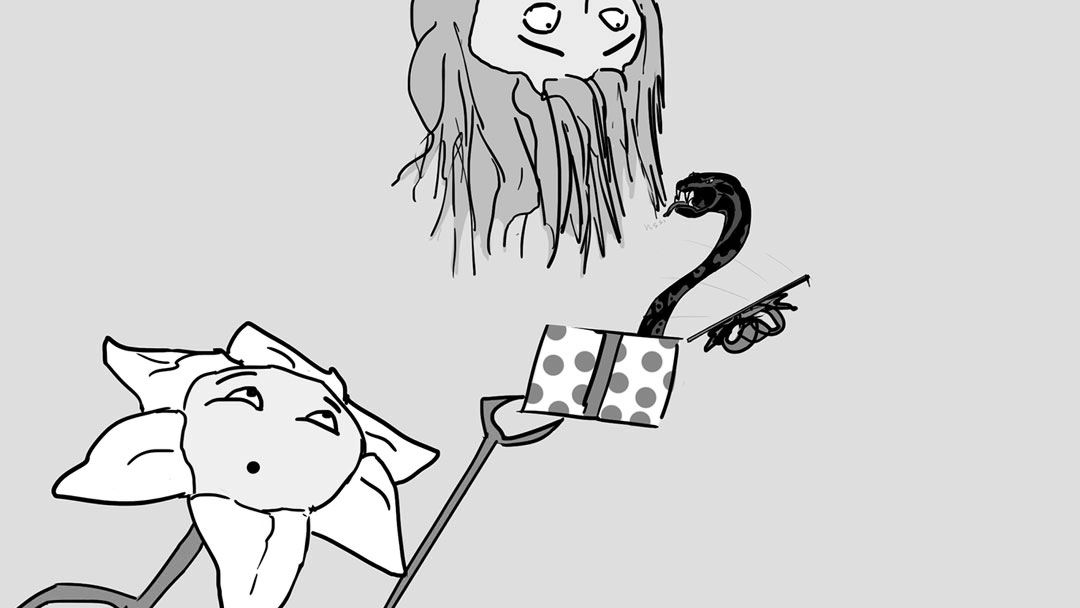
The truthful admittance that "everyone lies" at Willow Farm is a good example of the word play present throughout this section. It recalls both Carrollian and Pythonesque humor, and as with any joke it shouldn't be taken too seriously. Thus, the symbolism I crafted earlier with the snake is recast as a lark, a self-referential stab at my own need to overanalyze.
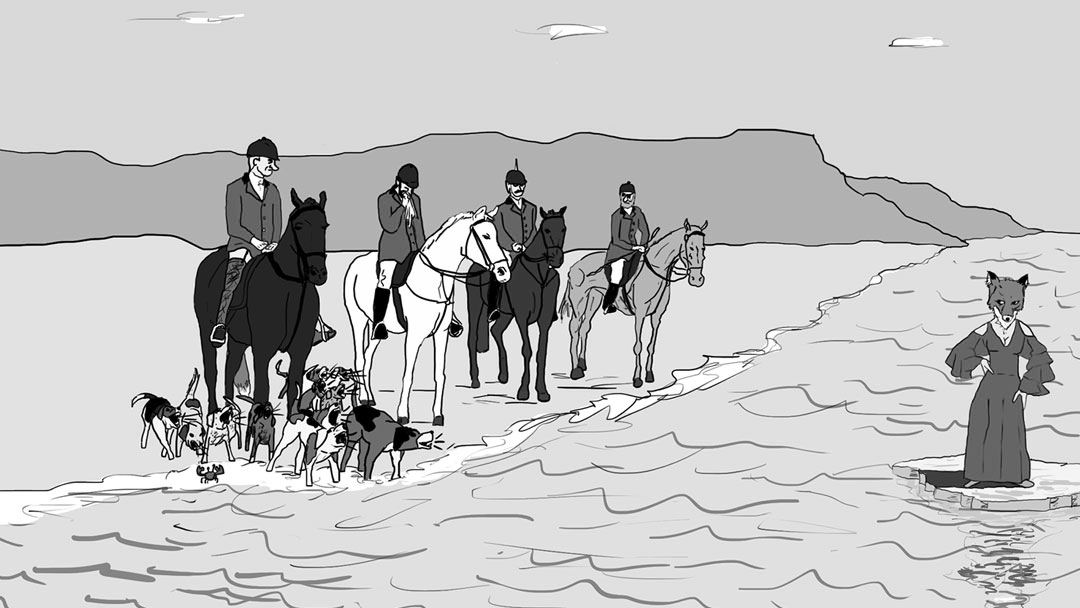
This metafictional treatment is inherent to Willow Farm, which knowingly breaks the fourth wall by referring first to the album this song is part of (Foxtrot) as well as the band's earlier piece "The Musical Box," off Nursery Cryme (1971). Fox is purposely spelled "focks" as even the words must transform to suit the fluctuating reality of the world (to make a rhyme with "rocks"). As such, I reimagine the album's cover with the hunting party and fox parodying the imagery that influenced their own conception, like a snake eating its own tail.
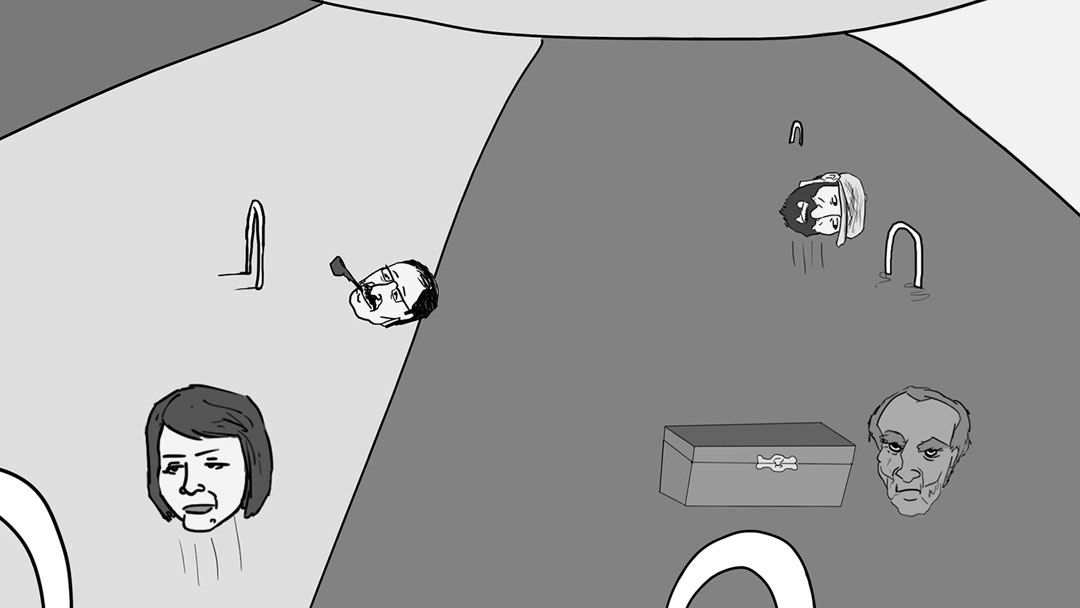
As the lyrics also reference "The Musical Box," Nursery Cryme's album art helps establish the imagery and color palette for a large part of this section. Beside "mum and dad" are "good and bad;" the bad a nod to the live performance of the song, where Gabriel would don a dirty old man mask. The good the head of the Farmer, a caretaker and active participant of Willow Farm. While he tends to its garden and reaps its harvest, he does not attempt to live outside its cycle like the GESM, accepting it as natural and unavoidable. It is the illogical, surreal loop of mortality.
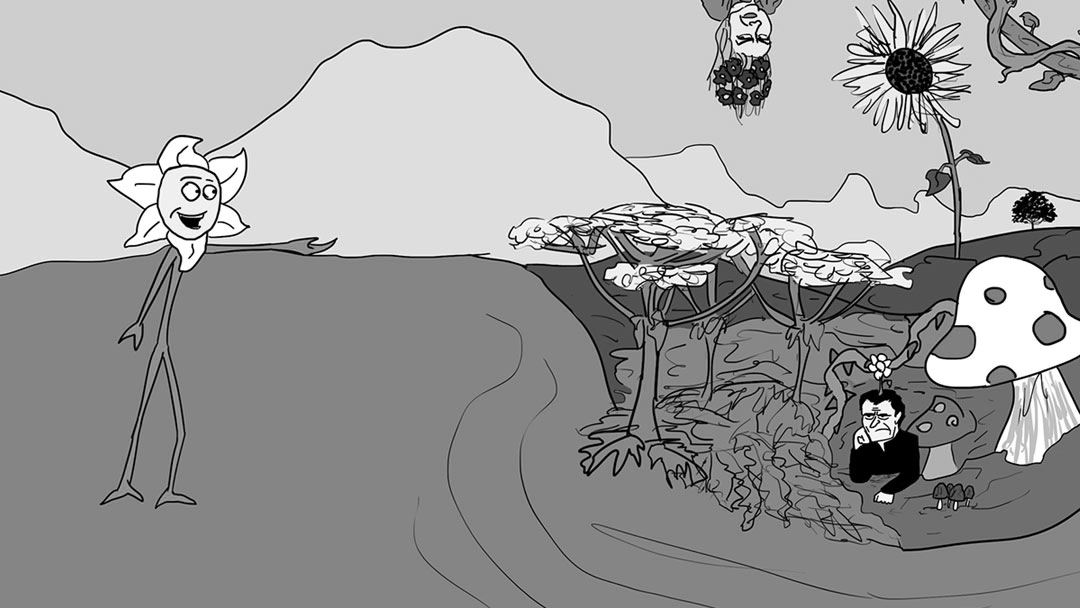
The section goes through its motions, subjecting the POV to a barrage of random changes. The consistency of this change almost renders it still, as things both are and are not simultaneously. Everyone truthfully lies, and the fact that the POV never seem to enjoy their time here can be considered evidence for why living with a notion of time (and living as a mortal) is not something to take for granted.
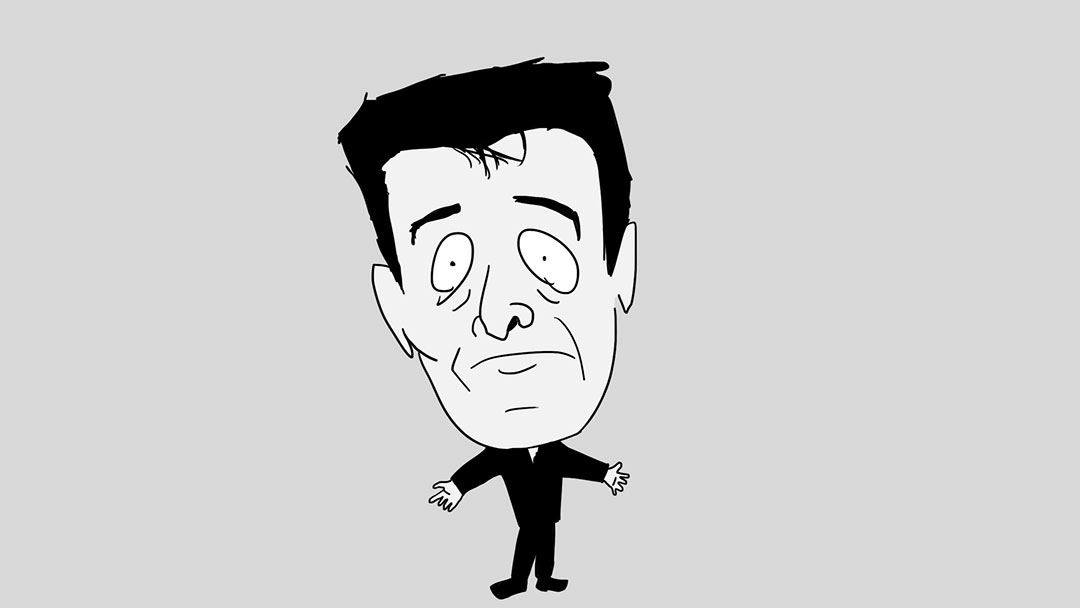
As the section changes its melody and tempo, my illustrations amp up their omniscient attitude. As we - the audience - are aware (or can at least look up), the career trajectory of the band members, I play with this hindsight by connecting here the male POV with his physical model: Peter Gabriel. By basing his appearance off Gabriel and filling the world of Supper's Ready with the visual manifestations of his personality (as he'd express through stage and video with his array of costumes), I draw a nonlinear path through his career to gain an understanding of his evolution as an artist.
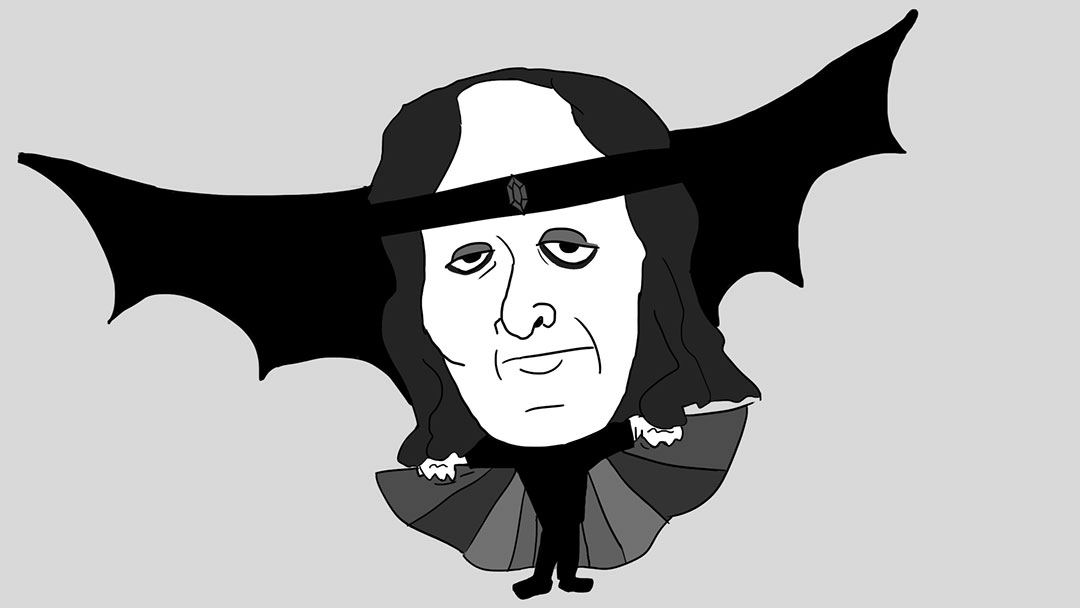
So alongside costumes from his Genesis years (including the Watcher from "Watcher of the Skies," off Foxtrot) are also nods to his solo work, as one must consider the spectrum of his artistic journey to truly appreciate what makes him a unique creator. This is a lesson one should apply to any artist one wishes to gain an understanding of.
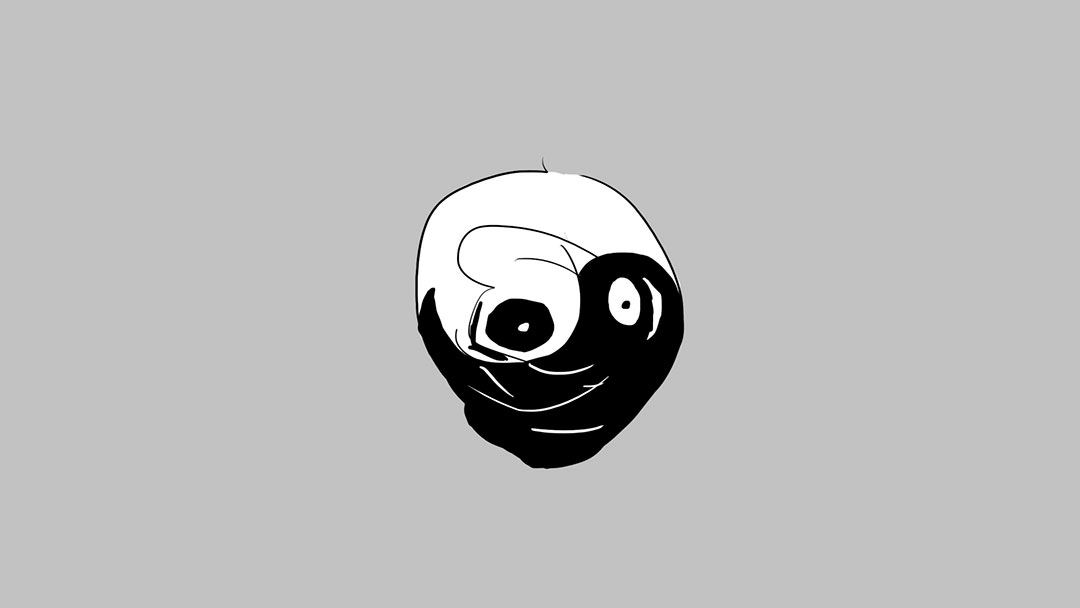
Synchronized with "Dad to dam to dumb to mum," an important transitional moment occurs in which the two POV are shown as yin and yang, equal parts of the same wheel. Along with their unity, the background rests as a hue midway between the blue and pink of each segment.
With the female POV, I present a parallel study of the growth of the band with and without Gabriel's presence. This is because I feel it is wrong to champion one period or the other when it comes to a progressive rock band like Genesis, for how else are they meant to be progressive than by evolving their sound and direction? And while I personally enjoy the Gabriel-era albums more, there is a lot of great music in the Collins-era that should not be overlooked out of some misplaced loyalty.
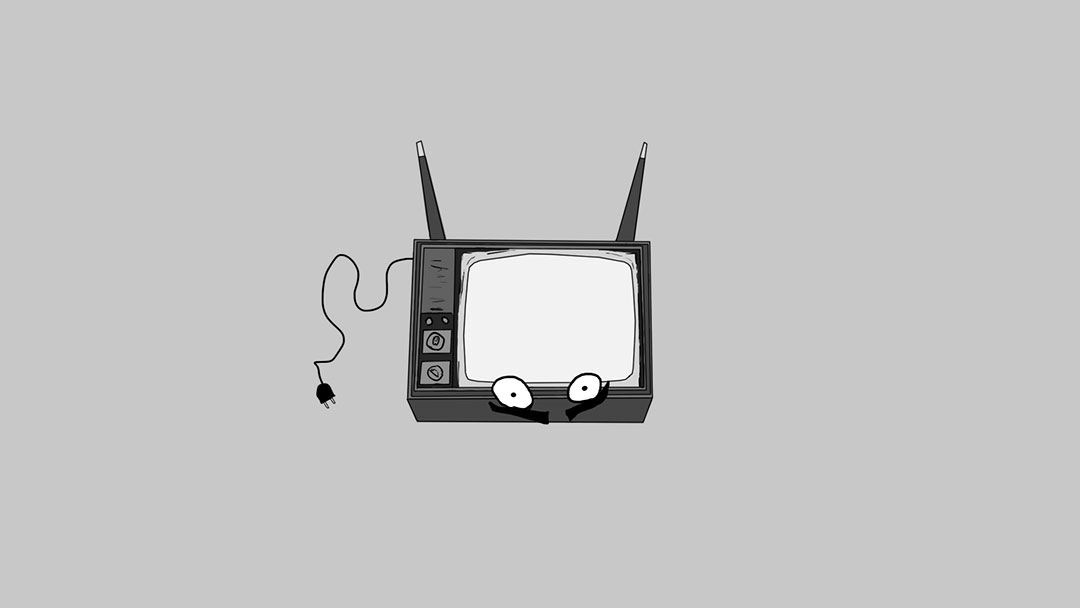
Questions of loyalty led me to explore through veiled song references how the band's music has dealt with the relationship between men and women throughout their years, finding that often it is through narratives that are less than healthy...
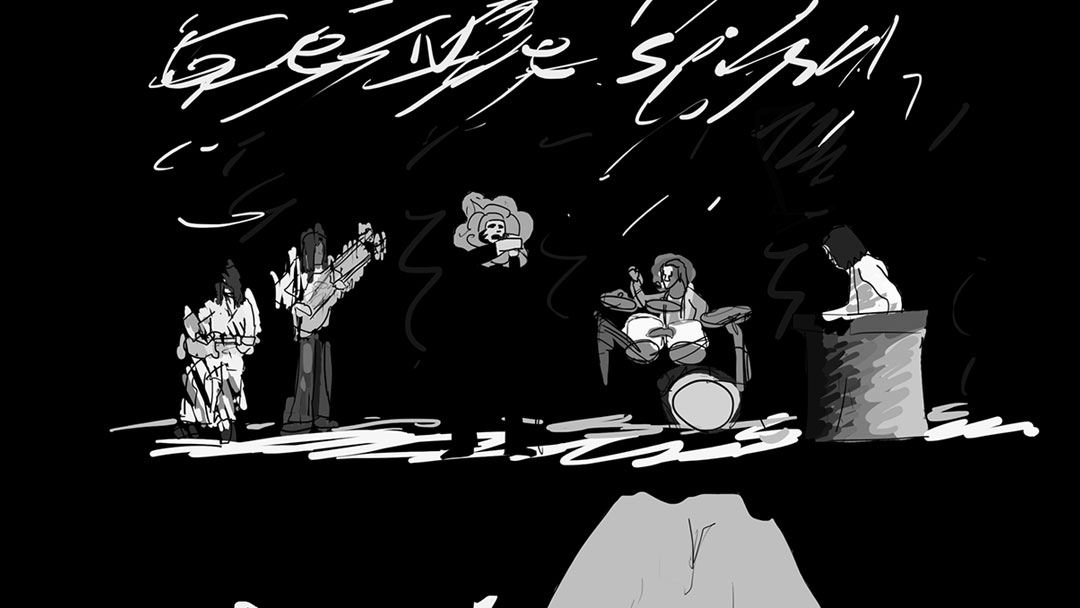
The comic reaches its peak metafictional state with an image of the POV witnessing Genesis performing the song in which they are in fact an illustration of (during the Willow Farm section no less). The headache this looping creates, like an infinity mirror, reflects the darker tone the section takes on, with the Flower sounding oddly hypnotic and controlling, especially at the line "you've been here all the time." His attitude begins to creep in a way similar to the GESM, revealing that even with the notion of one being good and the other not, together they are sides of the same coin, and like yin and yang cannot exist without their opposite.
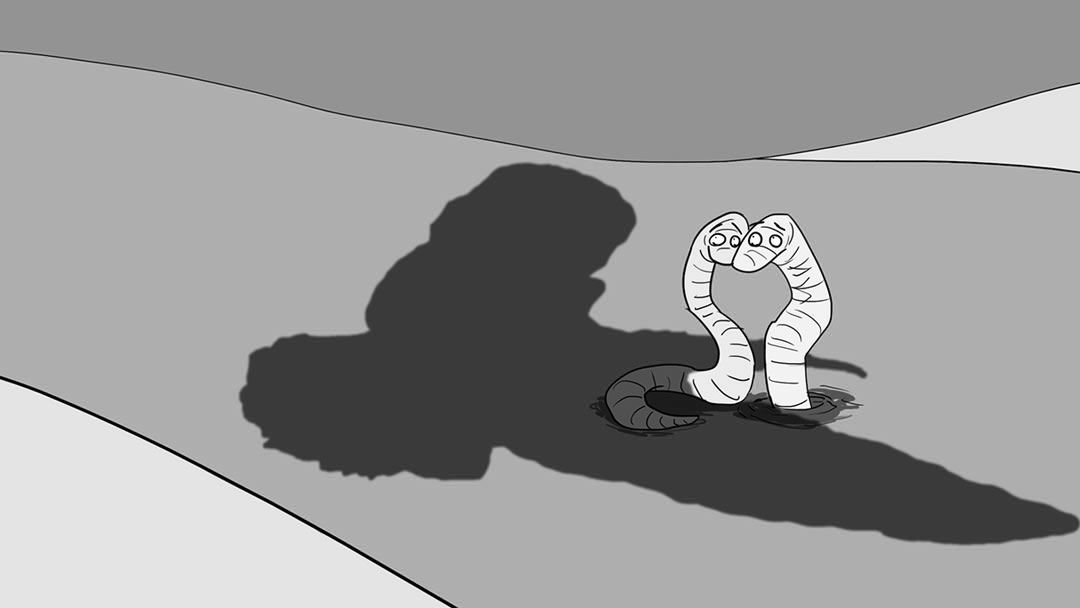
As the Flower recounts that the POV are "under the soil," my illustration turn for guidance to the introductory speech Gabriel would typically make before a performance of Supper's Ready. He tells a story involving worms and a dirty old man. You can research the speech yourself (as I won't do it justice here), but near the end, in the presence of the writhing worms, the old man whistles a tune. To us, it may sound like a simple song, but as Gabriel puts it, "to the birds it meant supper is ready." The predator/prey relationship is a natural part of the mortal cycle, yet when our POV (and audience surrogate) is cast as the latter, we are inclined to root for their survival. Narrowly they escape underground, and the Flower's game is over.
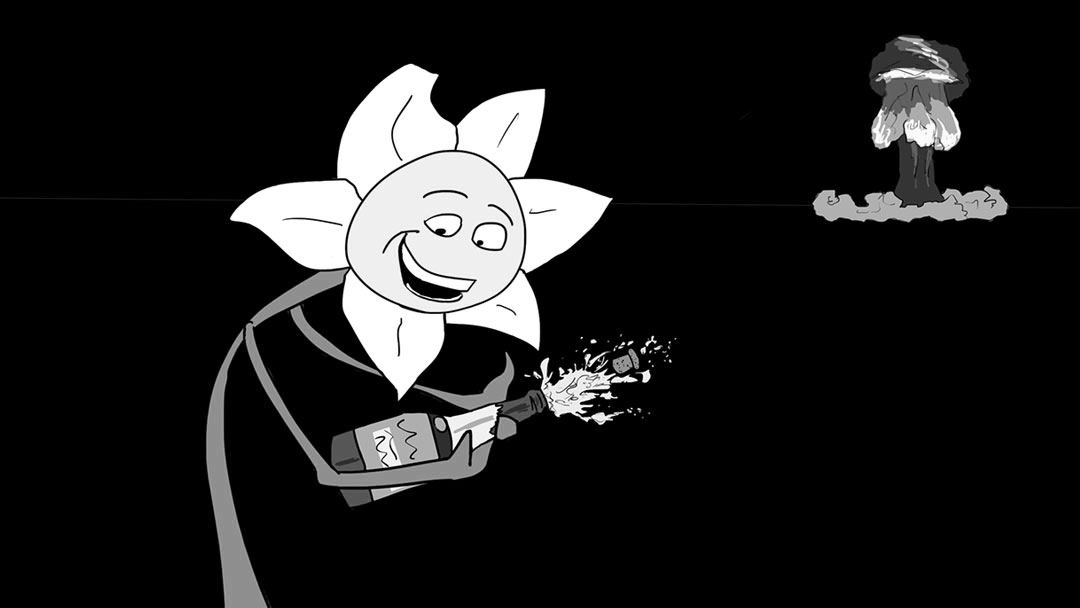
While the POV make their escape, the carefree Flower finds the tables turned. The portending doom at the end of Willow Farm is important in linking this joyful section with the dramatic penultimate one. Like a tree falling in a forest, the absence of the POV cause time to march forward at an accelerated rate. Willow Farm may deal with all the world at once, but the next section deals with its inevitable end and the break between the mortal cycle and the immortal full stop.
Interlude
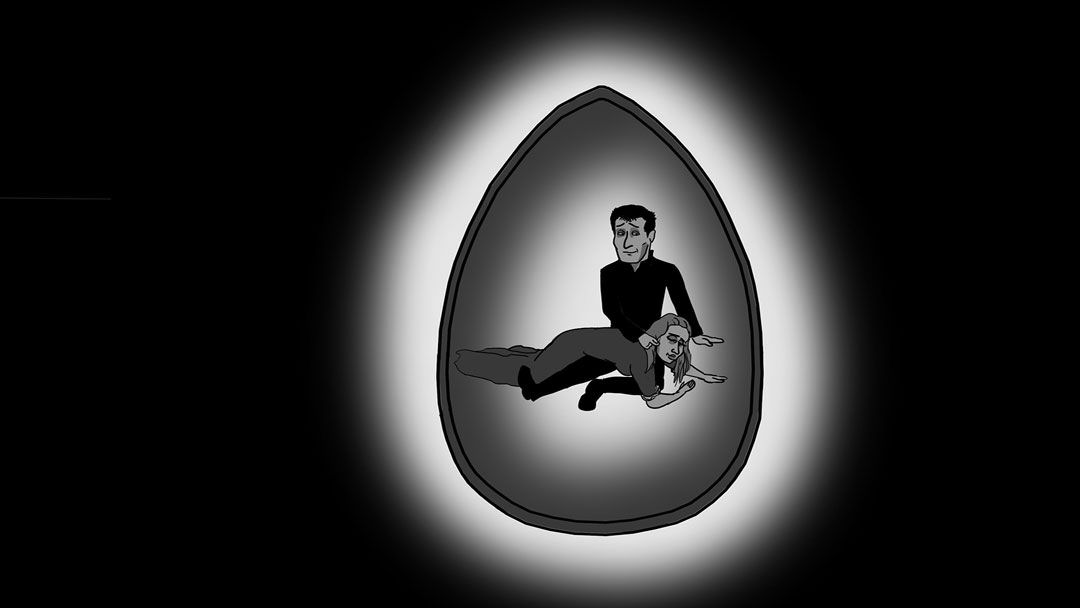
After the hectic Willow Farm, the POV find relief within a somber instrumental piece. Returning to their human forms underground, they become encased in a protective seed. Although their spirits are low and drained, the male POV finds solace in a tender moment, gently brushing a hair off his lover's face. Their journey is difficult, but taking it together helps them face any obstacle. Soon after, the seed grows roots, and the POV are transported back to the surface world.
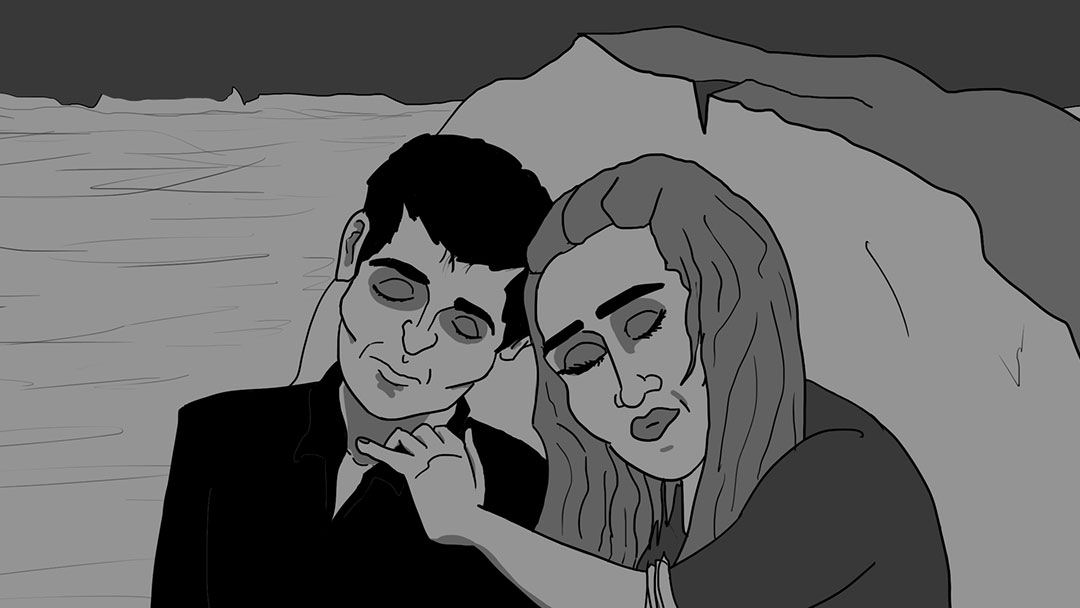
They are returned to a grayscale world, and like Odysseus perhaps they dream their journey has finally ended. But while the chaos of Willow Farm is long gone, when they awake they are faced with a new terror; the realization of just how much time has passed since they've been away...
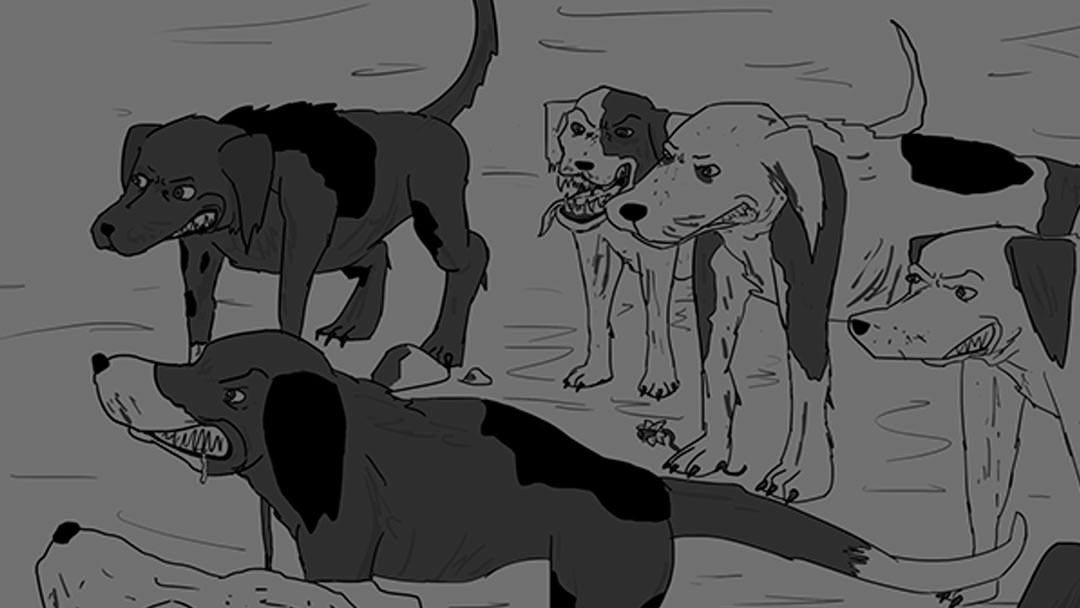
They awake to find the 11 foxhounds around them, all mutated into savage beasts. And as the gray tones give way to shades of blood red, the lead hound clenches within its demonic jaws the limp body of the dead fox. It is the dawn of the end of the world.