


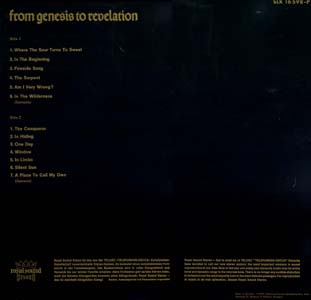
 It shows no or at best only the most minuscule traces of the style that would make them well-known later, and therefore frequently meets with a refusal and lack of affection. Justly so?











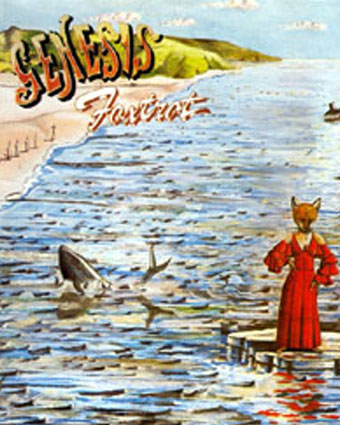 The second album with the classic lineup, Foxtrot finds Genesis refining and expanding on the ideas presented on Nursery Cryme. This is easily one of my favorite Genesis albums, and to me, it's kinda like Yes' Fragile in that it marks an important transition from Nursery Cryme to Selling England and The Lamb. On to the songs:
Watcher of the Skies- What an intro. Tony's mellotron work is amazing here, love the chord progression. Tony has always been a master of interesting chord progressions, and the intro is a perfect example. I really love how the rhythm section slowly creeps in for the verse. Mike Rutherford's bass work is exceptional throughout this song, driving the song's syncopated rhythm furiously along. Phil seems to be following Mike a little bit. Steve Hackett's guitar work is very tasteful as well. Love the dynamic contrasts used in this song, it really adds to the drama this song creates, especially at the 5:55 to 6:20 marks. That section really builds nicely into the return of the mellotron for the end of the song. Lastly, Steve Hackett's guitar line on the end blends perfectly with Tony's mellotron. Classic Genesis.
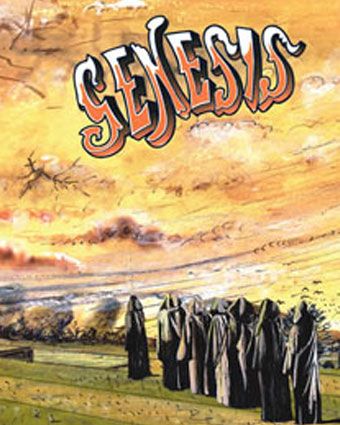 Here it is. You hear those chords on that mellotron, and it's time. There's no introduction to this. You all know what's coming.
First up, "Watcher of Skies". Epic intro, as mentioned before, building with the high hat and bass until we get driving rock euphoria in 6/4. Peter's gruff voice speaking waves about some alien visitor observing life Earth. The organ swells with chords in the background. As an added bonus for those of you familiar with this Genesis standard and want more out of another hearing, listen to the bass lead back into the chorus from the first bridge. Awesome Mike. Love the harmonies of the vocals, love the concept, great bass, epic ending, just like the beginning.
The first few years of the early-70s must have been exciting to see all of these UK bands get more and more ambitious at the same time, each of them trying to outdo themselves and each other with long-form and multi-partite compositions, changing and even complex time signatures, and obviously technical instrumentation: Pink Floyd (“Atom Heart Mother”), Jethro Tull (“Thick as a Brick”), Yes (“Close to the Edge”) and Genesis (“Supper’s Ready”), and each of these cases felt like a leap (ie. the previous longest Genesis song, “The Musical Box,” was less than half the length of “Supper’s Ready”).
 There are few fundamental pillars in the progressive rock universe where i disagree with the general consensus of an album’s legendary status despite my own personal enjoyment experienced, however there are a scant few examples of albums where the majority of listeners are on a total polar opposite of yours truly. On this short list of antithetic classics lie two albums by the great symphonic prog band GENESIS which totally rub me the wrong way and in many ways. While the band started out with the weak pop album “From Genesis To Revelation” in 1969, they took a complete 180 with the followup “Trespass” which not only sounded like a totally different band which found a unique balance of team members
 Same as with Close to the Edge, this is a classic of progressive rock for the one big triumphant suite that takes up one side of the entire record. Both of those are masterpieces. Foxtrot ranks higher in part because "Supper's Ready" might be a liiiiittle bit better than "Close to the Edge", but mostly because the other side does have some really good stuff to justify it being an album and not a mere EP.
This is Genesis' second album with their classic quintet line-up and the first of their two great albums. It doesn't sound quite as clean as Selling England By the Pound but, given that this album is more about "atmosphere" than any of their others, there's no need to hear every instrument in detail,